


“Travel far enough, you meet yourself” – David Mitchell
Day 1: The Beginning of an Epic Adventure
After months of planning and anticipation, it was finally time to embark on an epic journey that would take us through the rugged landscapes of Utah and northern Arizona. Our group was set to explore over 2,500 miles of stunning wilderness in just 8 days, a trip that would be filled with adventure, discovery, and a few surprises. Little did I know, this would be the first of many unforgettable adventures with Bill—someone I had never met before but would soon share this incredible experience with.
Meeting Bill and the Group
The adventure began at the Dino lots just outside of Denver, where the group met. Bill and I were paired together for the drive since we both had to leave after work. Climbing into his 2007 Jeep Wrangler, I was hopeful for a smooth journey but also a bit apprehensive about what the next few days might bring. After all, spending hours together in a confined space with someone you barely know can go one of two ways: a great chance to bond, or an unbearably long, quiet drive.
To my relief, Bill was warm and easy to talk to right from the start. We hit it off immediately, chatting and sharing stories as we left Colorado behind and headed west toward Utah. It didn’t take long to realize that we both shared a love for the outdoors and were in need of this adventure. The miles flew by as we got to know each other better. In fact, we were so deep in conversation that we missed a few turn-offs, but neither of us minded; we were having too much fun.
First Stop: Canyonlands and Cacti
After hours of driving, we finally reached the dispersed camping area just outside of Canyonlands National Park’s Needles District. It was late—around 11:30 p.m.—and pitch black, expect for the occasional flash of headlights from a distant vehicle. As we carefully navigated the dirt roads, cows darted across our path, adding a bit of unexpected excitement to our arrival.
Exhausted from the long drive, Bill and I decided to forgo setting up our tents in the dark and chose to sleep in the Jeep instead. It turned out to be a wise decision. As we rolled out our sleeping pads and bags, we could hear our friends stumbling around in the dark, stepping on cacti as they tried to set up their tents. Their occasional yelps of “ouch!” echoed through the night, and we couldn’t help but feel a little relieved by our decision. We laughed about our fortunate decision as we prepared for the day ahead.


Day 2: Exploring the Wonders of the Southwest
Newspaper Rock – Goosenecks State Reserve – Monument Valley – Dinosaur Tracks – Little Colorado River – Grand Canyon, South Rim – Historic Route 66
Newspaper Rock: A Glimpse into Ancient Stories
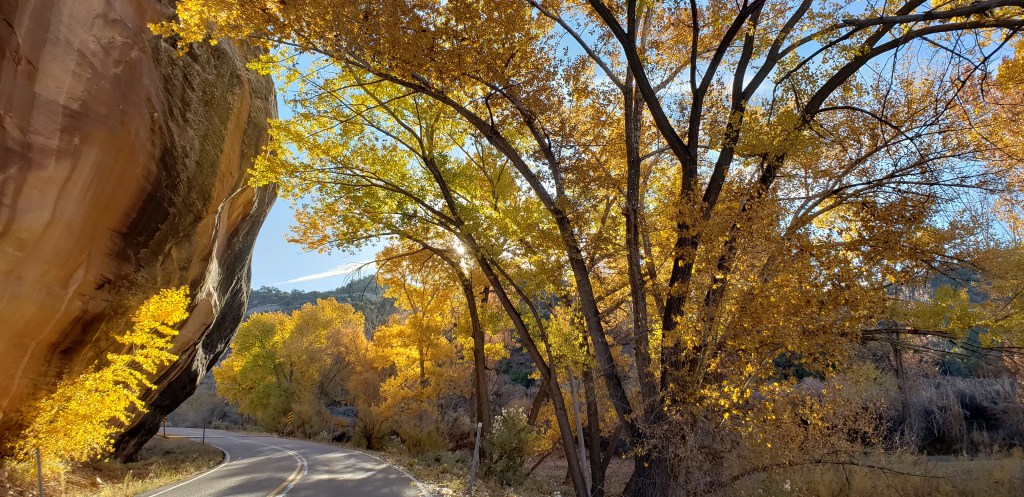
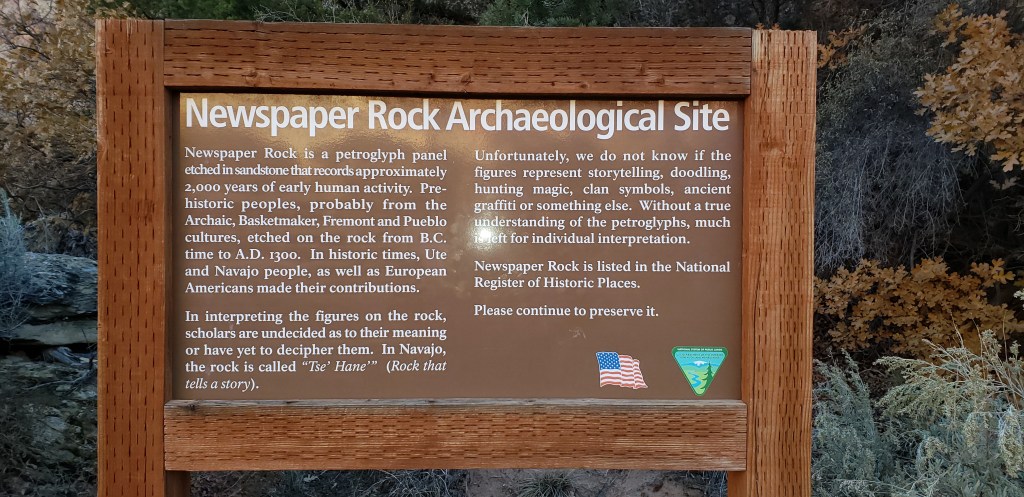
The next morning, we got an early start for a long day of driving and sightseeing. Our first stop was Newspaper Rock, a historic site known for its ancient petroglyphs. As we made our way down the winding roads, we couldn’t help but admire the vibrant fall colors that surrounded us. The trees were bursting with hues of yellow and orange, painting the landscape in a way that only autumn can. It was the perfect backdrop as we drove toward Newspaper Rock, both of us eager to see what the day had in store.
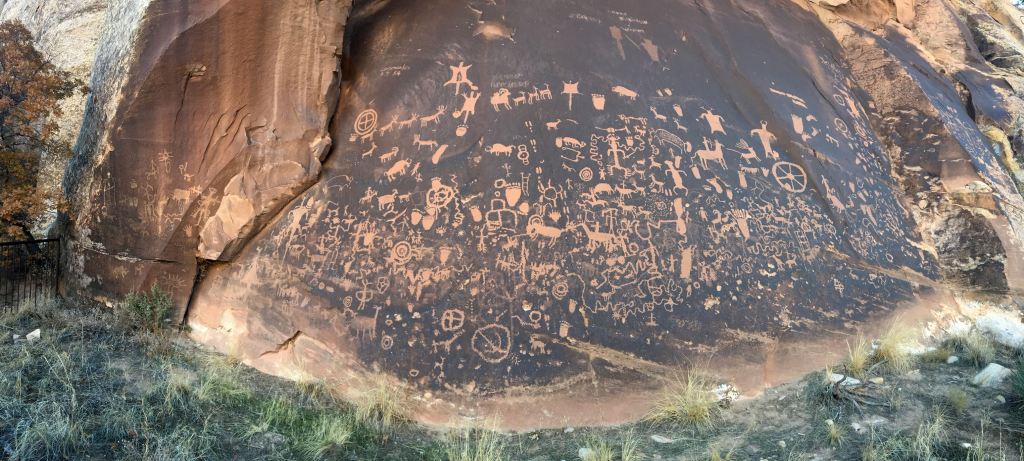
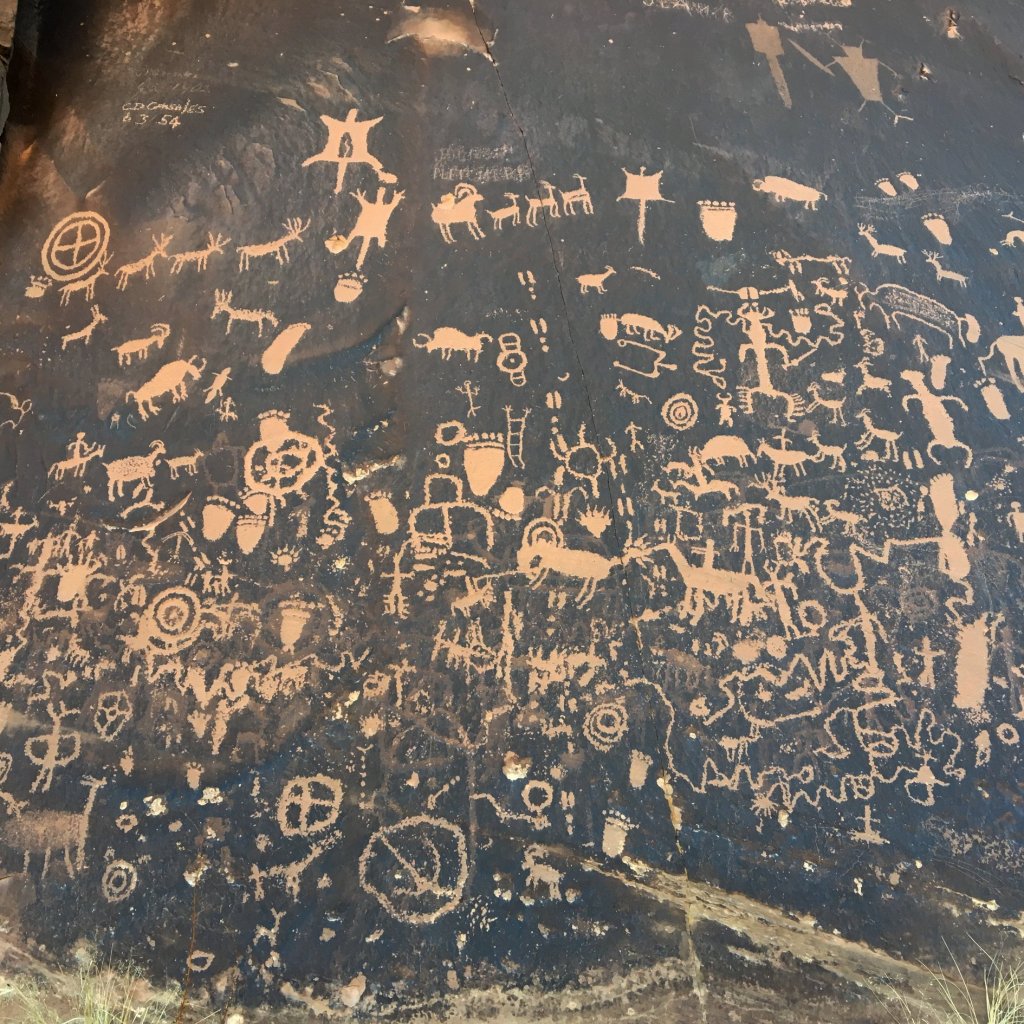
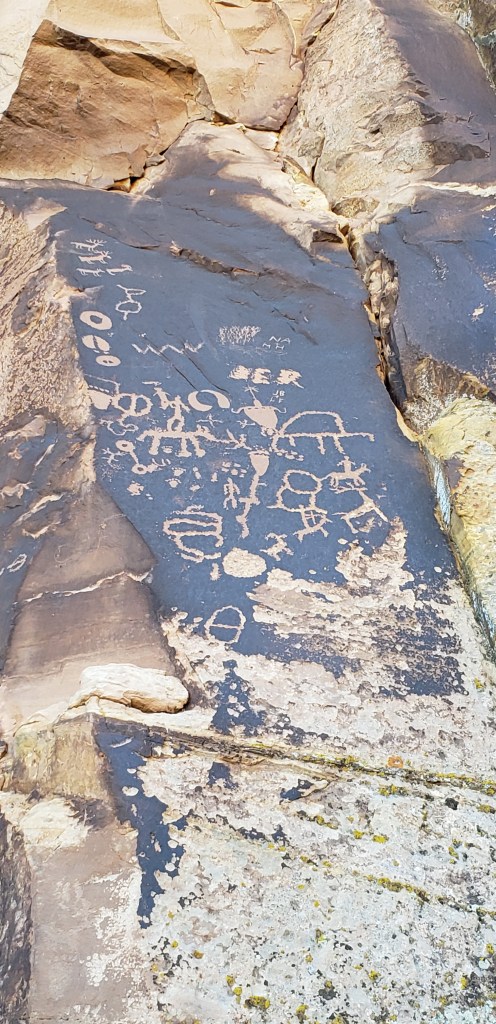
Arriving at Newspaper Rock, located in the Indian Creek Corridor of Utah, we were greeted by one of the largest collections of petroglyphs in the country. The sheer size and detail of the engravings were awe-inspiring. For more than 2,000 years, Native American Indians have been etching their stories, hunting patterns, crop cycles, and mythologies into this stone canvas. Standing before these ancient markings was a humbling experience, offering a poignant glimpse into the lives of those who came before us. As we took in the intricate drawings, we reflected on the long history and rich cultural significance of the place.

Goosenecks State Reserve: A Stunning Canyon View
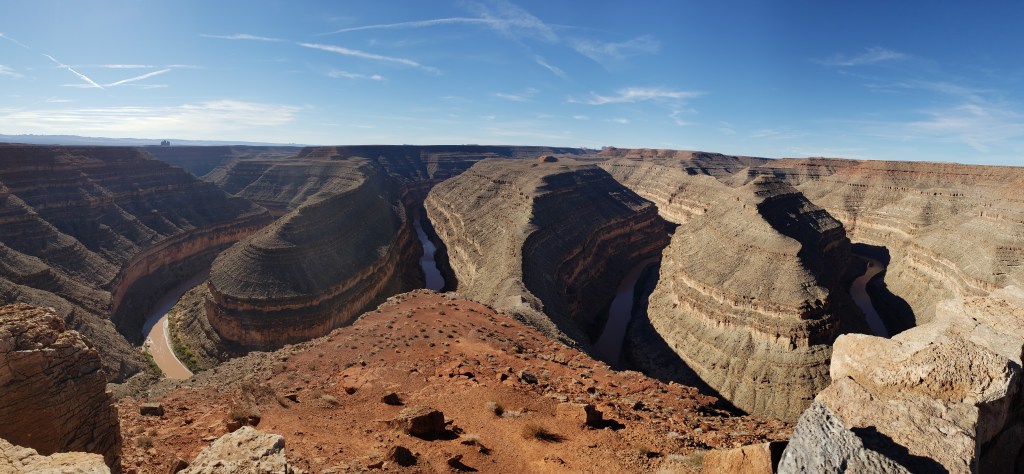
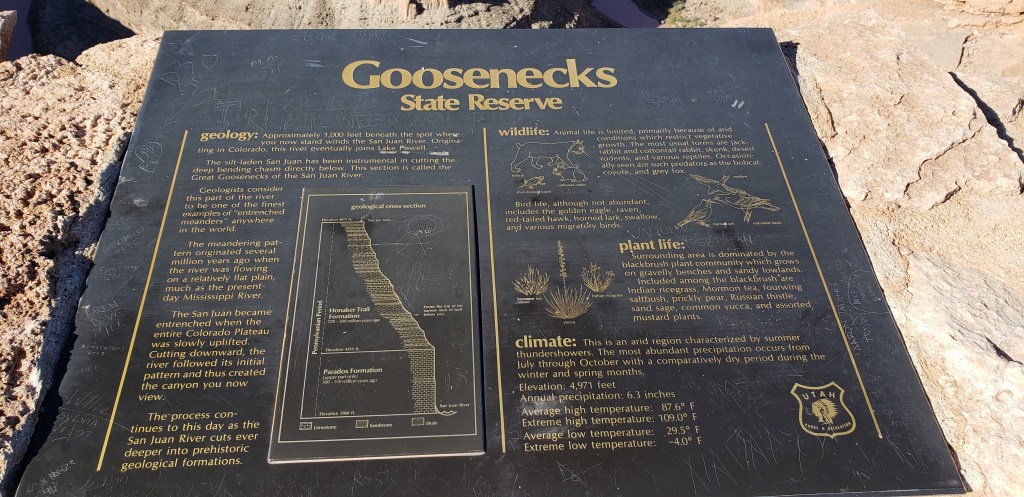
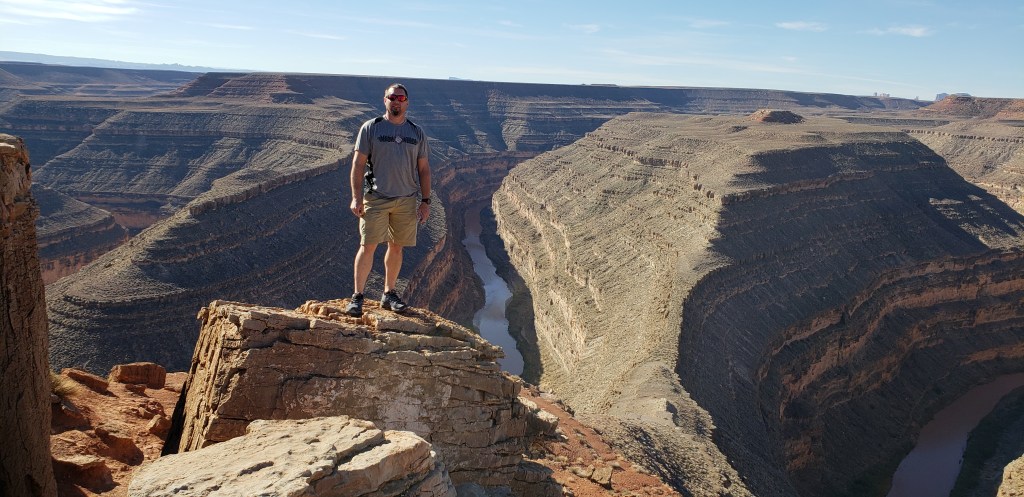
Our next stop was Goosenecks State Reserve, Utah, where the San Juan River has carved a breathtakingly deep canyon into the earth, dropping nearly 1,000 feet below the viewpoint. Standing at the edge, we marveled at the winding river far below, which originates in Colorado and eventually joins Lake Powell. The sweeping curves of the river created a stunning view, showcasing the power of nature over time. In that moment, it was impossible not to feel small against the backdrop of such a vast, ancient landscape.
Monument Valley: An Icon of the American West
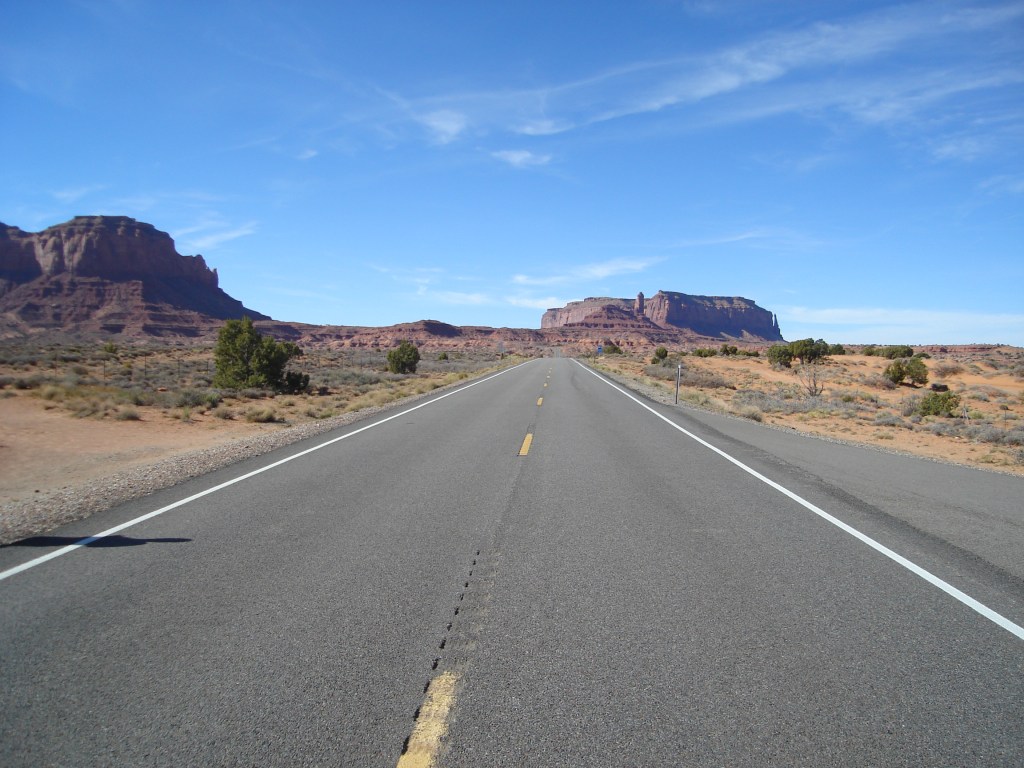
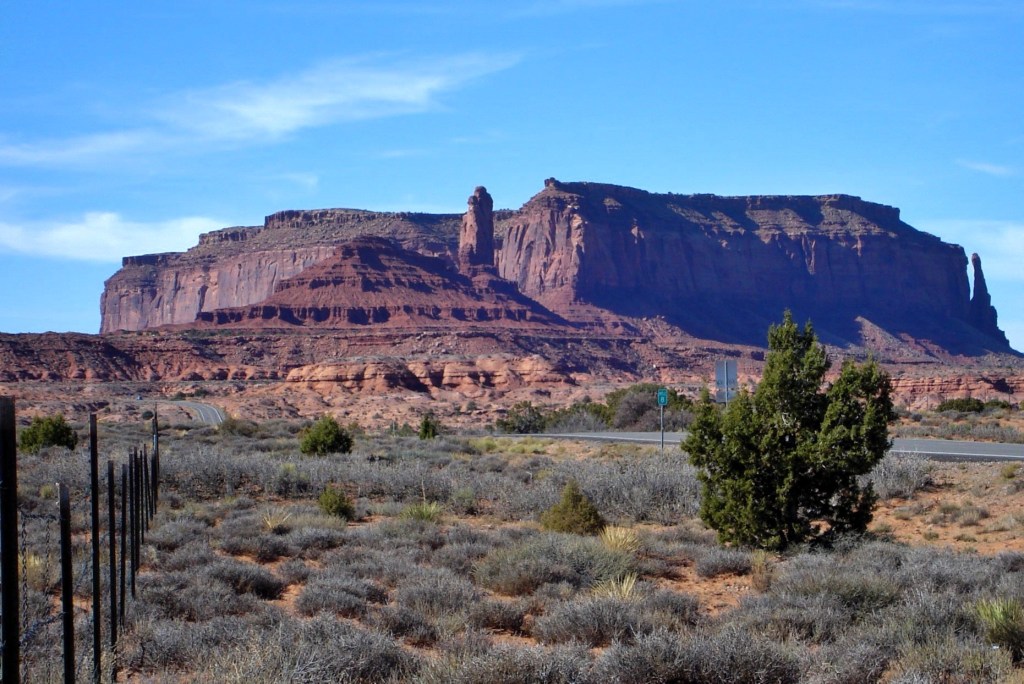
Next on our journey was the iconic Monument Valley, straddling the border of northeastern Arizona and southeastern Utah. Established as a park in 1956, Monument Valley features an otherworldly landscape of rugged sandstone hills and soaring rock spires, rising dramatically from the desert floor. As we approached, it was clear why this place is often seen as the heart of the American West. The towering formations stood as stunning testaments to the sculpting power of wind and water over millennia, each rock appearing to be shaped with nature’s own creative license. It felt like stepping into a scene from a postcard, with views that left us speechless.

Navajo Moenave Dinosaur Tracks: A Taste of Prehistoric History
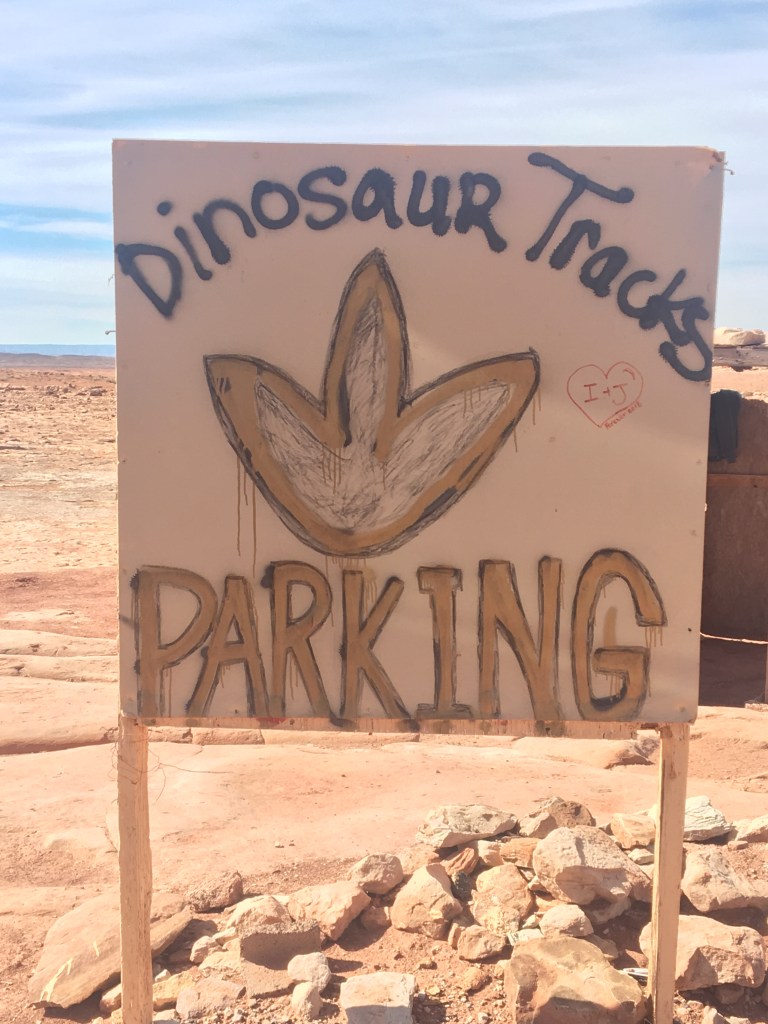
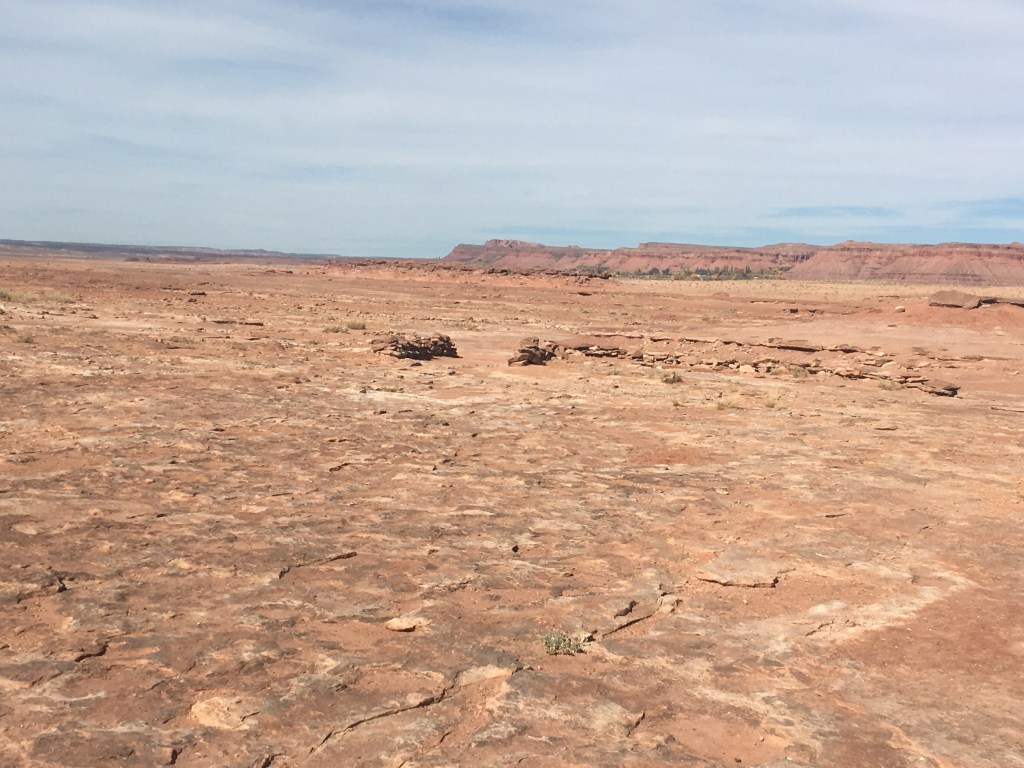
As we continued our adventure, Bill and I spotted a small off-the-road attraction called the Navajo Moenave Dinosaur Tracks in Arizona. Intrigued, we decided to stop and check it out. The area was scattered with hundreds of fossilized dinosaur tracks, but I couldn’t help but wonder, are they real? A local guide quickly appeared, offering to take us on a tour. He brushed away the sand and poured water over the prints, making the tracks more visible. At first, I was skeptical, but he assured us that paleontologists from Northern Arizona University (NAU) had verified the authenticity of these ancient markings.
The surrounding landscape resembled a scene from a science fiction film—rocky, red soil with sparse vegetation. It was easy to imagine we were walking on the surface of Mars, with nothing but the quiet desert and the distant horizon in view.

Little Colorado River Navajo Tribal Park: A Hidden Gem
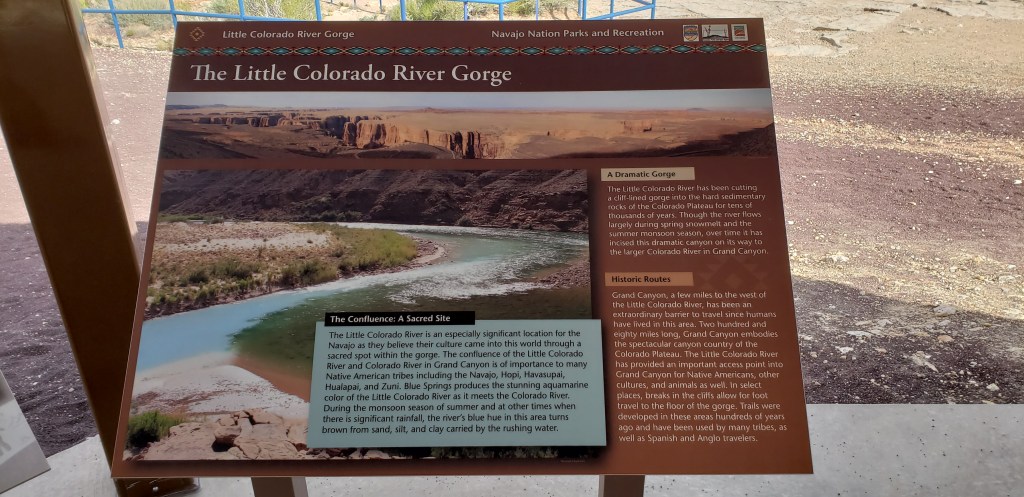
Our next destination was the Little Colorado River Navajo Tribal Park in Arizona. As they say, “Always take the scenic route,” and that’s exactly what Bill and I did. Before reaching the Grand Canyon’s South Rim from the east, we made a stop at the Little Colorado River Gorge Overlook. Situated within the borders of the Navajo Nation, the largest Native American reservation, this overlook offered us a spectacular view of the Little Colorado River.
The river had carved out a stunning canyon of its own, a hidden gem that stood in contrast to the more famous Grand Canyon. Its rugged beauty and the interplay of light against the rock layers made it a breathtaking sight—an oasis of natural splendor within the vast desert.




The Grand Canyon: Awe-Inspiring Majesty
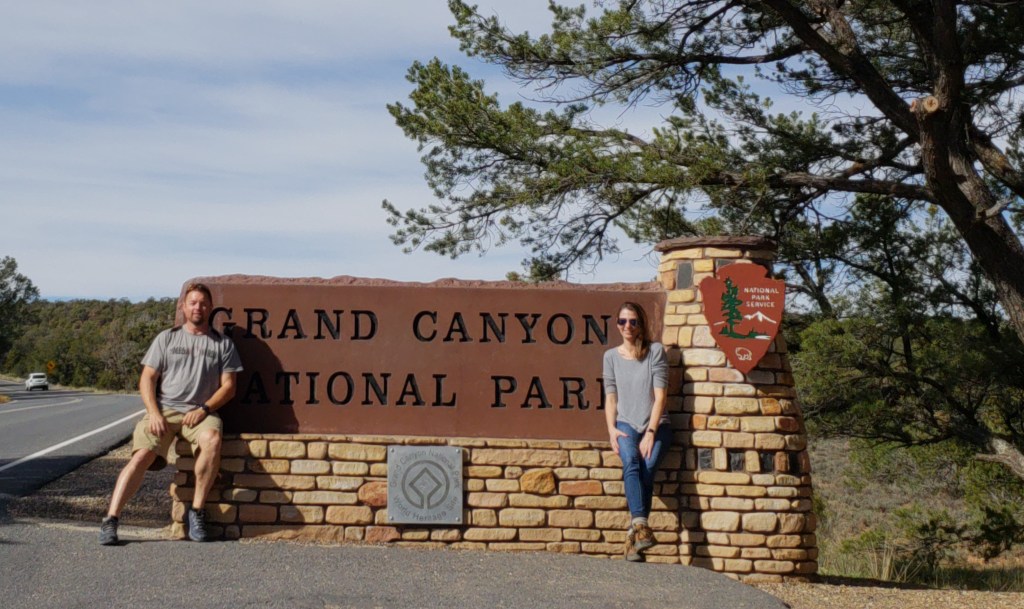
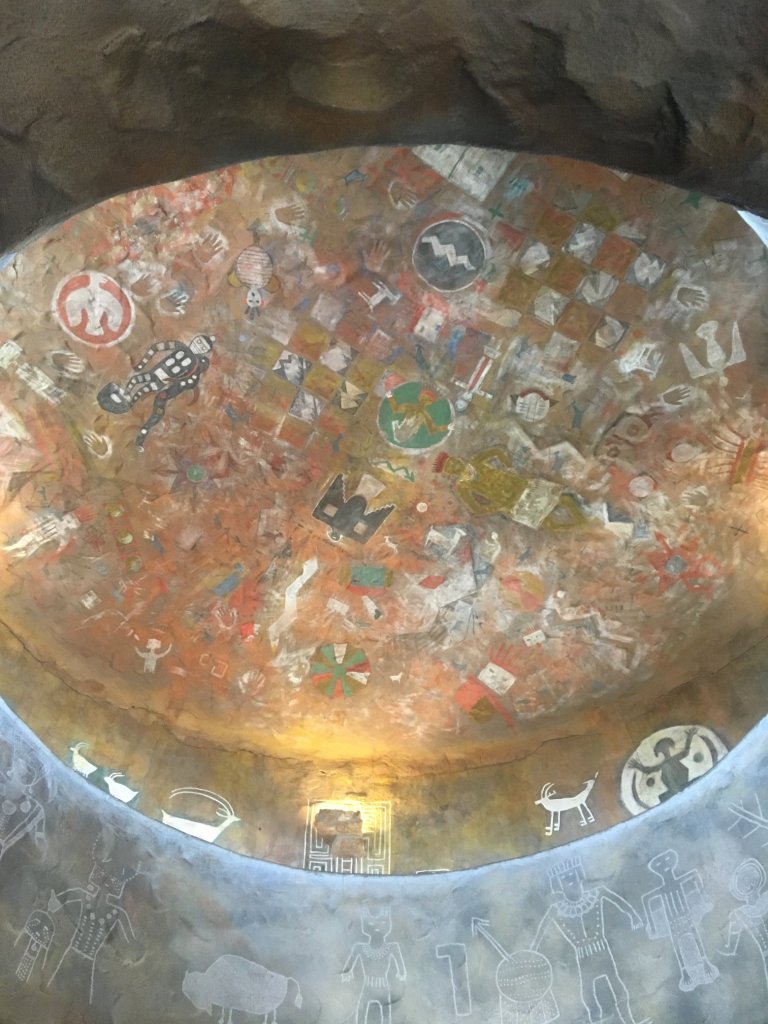
Next, we arrived at the South Rim of the Grand Canyon, Arizona. It was my first time visiting this world wonder, and I couldn’t have asked for better company. Bill, who somehow managed to tolerate me after being confined together in a vehicle for 24 hours, made the experience even more memorable. Our first stop along the South Rim was the Desert View Watchtower. Perched on the canyon’s edge, this impressive structure reflects the architecture of the ancestral Puebloans from the Four Corners region. Inside, the walls are adorned with murals by Hopi artist Fred Kabotie, adding cultural depth to the stunning scenery.
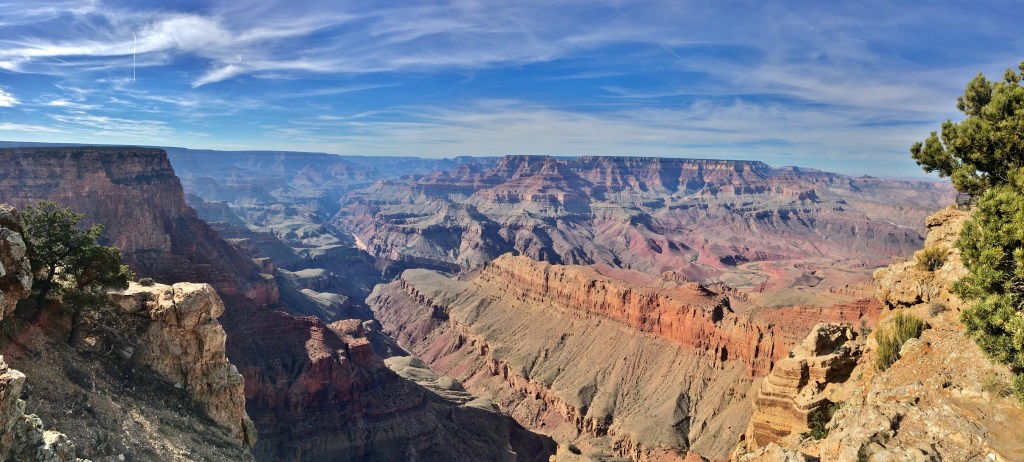
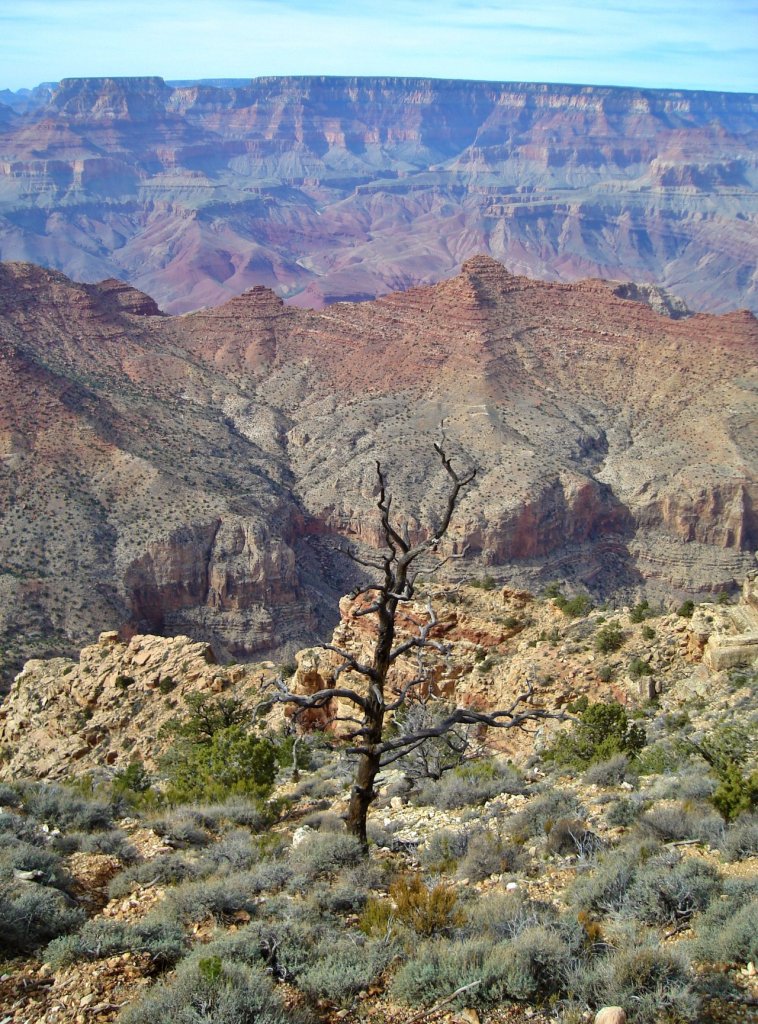
As we continued along the rim, Bill and I took our time, stopping at several overlooks to take in the breathtaking views. I can now confirm that no photo can truly capture the majesty of the Grand Canyon. No words can truly capture the awe you feel when you first stand at the rim and gaze upon the immense chasm before you. The vastness, the vibrant colors, and the sheer beauty of the natural landscape left me speechless.
Standing at the South Rim, we were treated to views of the Painted Desert, the deep canyon, and the winding Colorado River. It felt surreal, almost otherworldly, gazing out at such a magnificent sight for the first time. There is nothing more majestic or humbling than the Grand Canyon’s grandeur.
As Kevin Fedarko once said, “If there is a point to being in the canyon, it is not to rush but to linger, suspended in a blue-and-amber haze of in-between-ness, for as long as one possibly can.” That’s exactly what we did—letting the moment, the beauty, and the tranquility of the canyon sink in as we stood in awe of nature’s masterpiece.



The Final Leg: Historic Route 66 and the Havasupai Trailhead
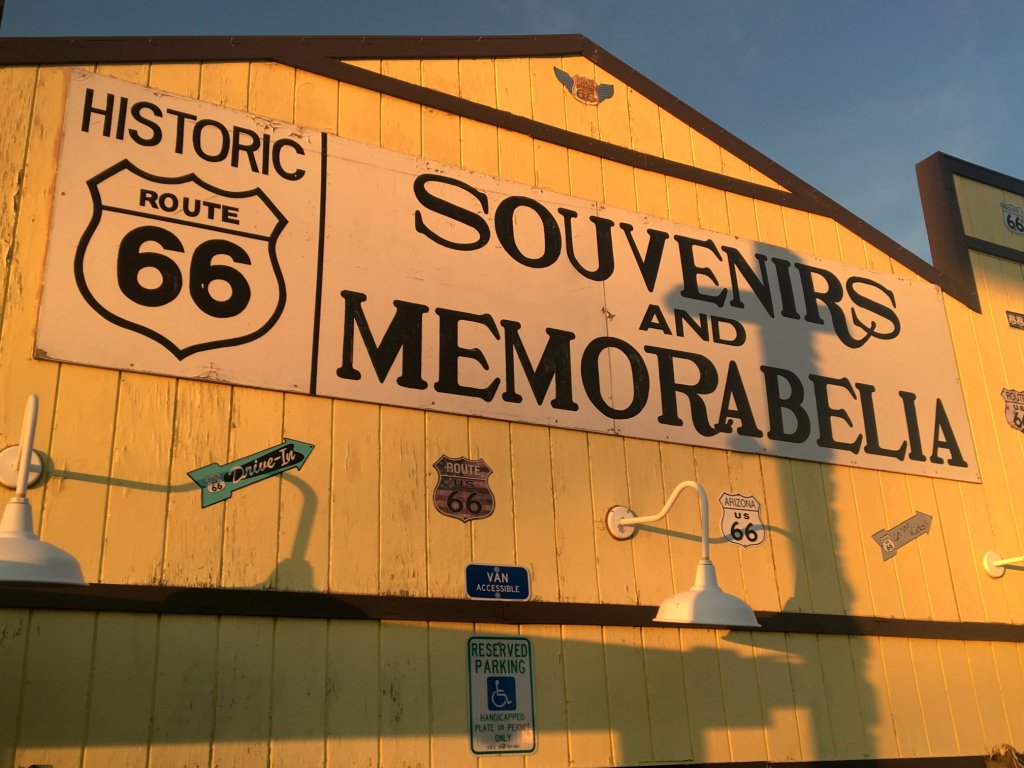
Historic Route 66: A Step Back in Time
Our last stop on the trip took us along the legendary Historic Route 66. As we drove through the quaint town of Seligman, it felt like we’d been transported back in time. Seligman’s Main Street is a living snapshot of the past, lined with historic, locally-owned businesses that have weathered the years, each telling its own unique story. We made a quick pit stop for gas and grabbed a bite to eat before heading toward the remote area of Supai.
An interesting piece of history: this area was originally the homeland of the Havasupai people, and Seligman itself began as a Havasupai settlement. The town’s deep connection to the land added another layer of richness to the journey, reminding us that every stop along this adventure had a history all its own.
Arrival at Havasupai Trailhead
After a long day on the road, we finally reached the Havasupai Trailhead. Exhausted from our travels, Bill and I decided to rest in the Jeep for the night, knowing we’d need our energy for the backpacking portion of the trip. We were both eager to start the next chapter of our adventure, but for now, we settled in for a well-earned rest, ready to tackle the trail as soon as morning arrived.



 Western Wanderlust Chronicles
Leave a comment