


The Journey Begins
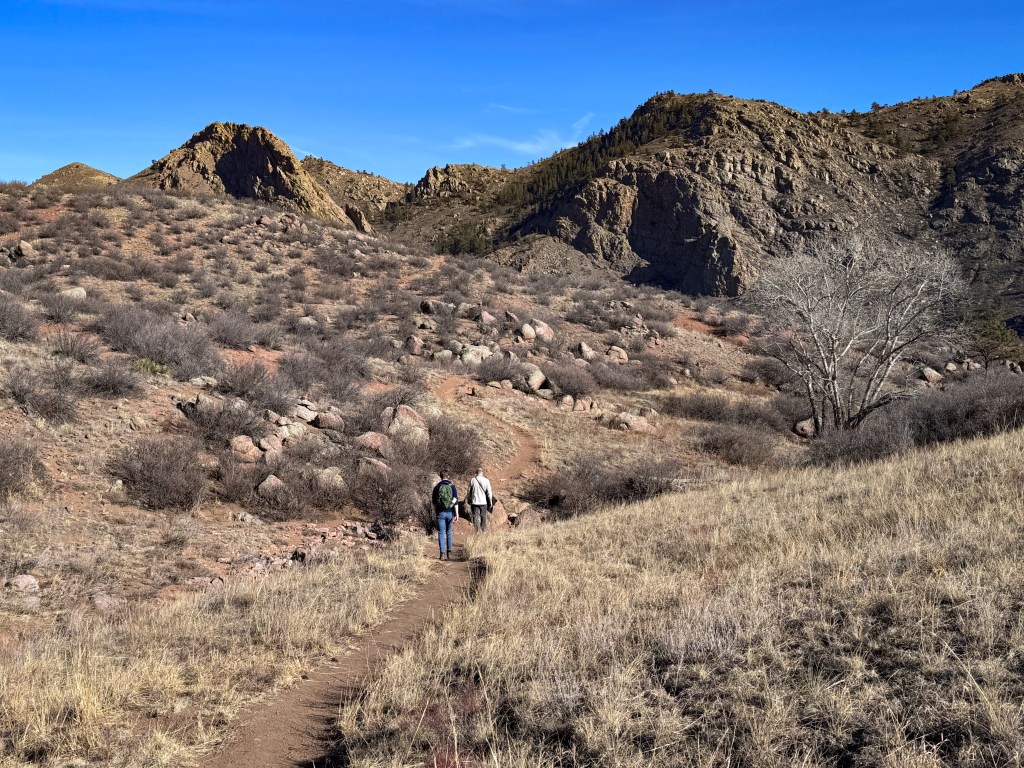
The journey to Lake Helene in Rocky Mountain National Park begins at the Bear Lake Trailhead, winding through dense pine forests and past scenic overlooks like Two Rivers Lake. This 7-mile round-trip trek ascends approximately 1,100 feet, offering a blend of steady inclines and flatter sections with sweeping views of surrounding peaks. While this trail is a beautiful fall hike, experiencing it in winter was a whole new adventure—one that took my breath away.
Setting Out
My friend Juan and I set out from Bear Lake under a bright winter sun, microspikes on our boots and snowshoes strapped to our packs. The trail was well-packed and easy to follow for the first 2.5 miles, with all junction signs still visible—a luxury in winter, as deep snow can often bury them. The morning light filtered through the evergreens, casting long shadows on the snow, and the crisp mountain air carried the scent of pine. Despite the season, the temperature was surprisingly moderate, making for a comfortable climb.
Navigating the Winter Terrain
The route meandered through subalpine spruce, some impressively large for being so close to the treeline. Though we knew the way, the snow-covered landscape altered the familiar path, making route-finding more challenging. The winter trail deviates slightly from the summer trail—while summer hikers barely notice Two Rivers Lake, in winter, the frozen expanse becomes a key landmark, guiding travelers toward Lake Helene.
As we ascended above Bear Lake, breathtaking views of Glacier Gorge and Longs Peak unfolded. However, beauty was not our only consideration—Colorado’s snowpack had been particularly unstable this winter, increasing avalanche danger across the backcountry. Three known avalanche-prone areas stood between us and Lake Helene, requiring careful navigation. One slope, a talus field buried in snow, approached the 30-degree threshold for avalanche risk. I had checked with the rangers beforehand, but current conditions were uncertain. Upon reaching the area, Juan and I assessed the terrain, sticking as low on the slope as possible and proceeding with caution.


Reaching Lake Helene
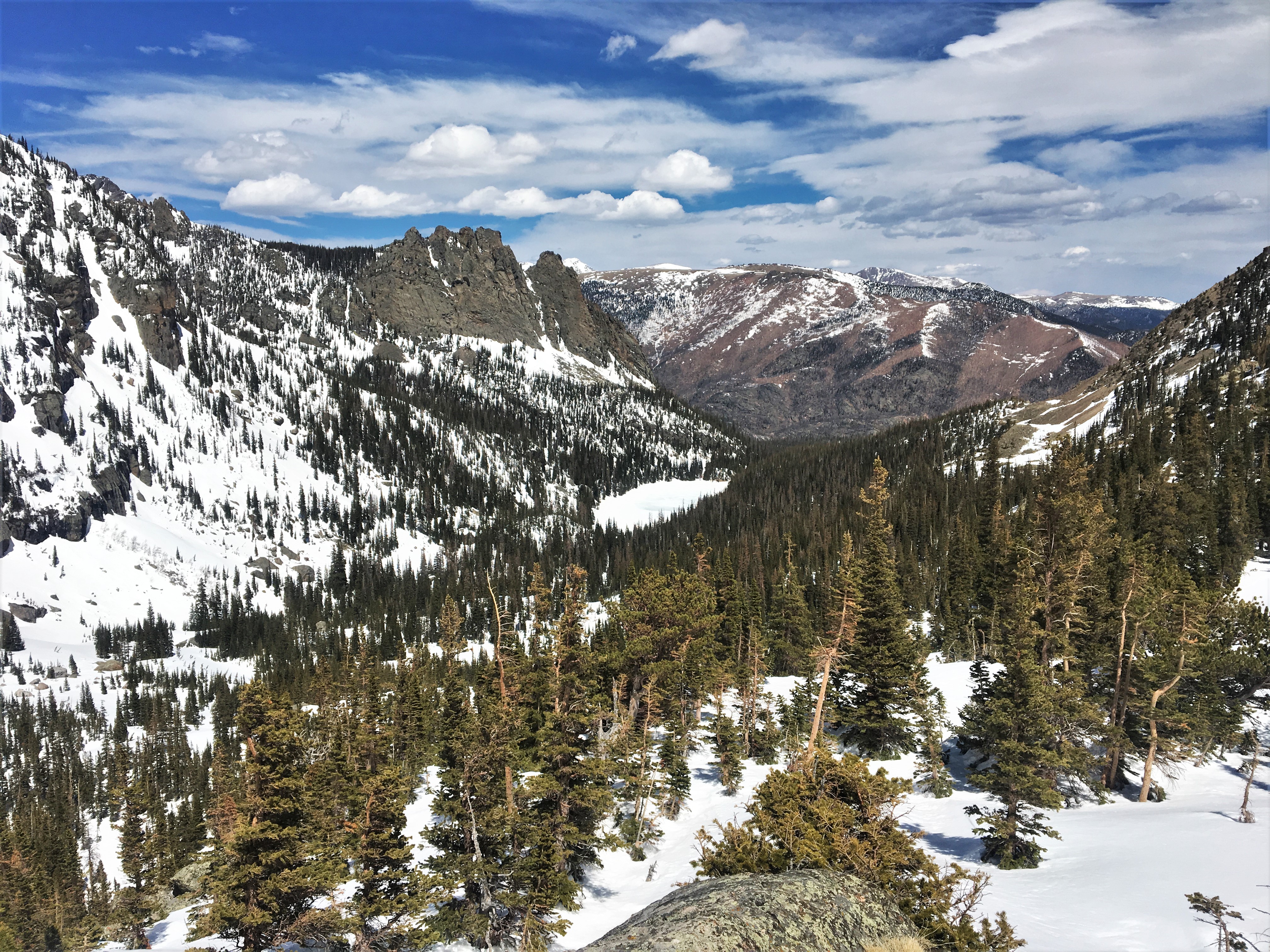
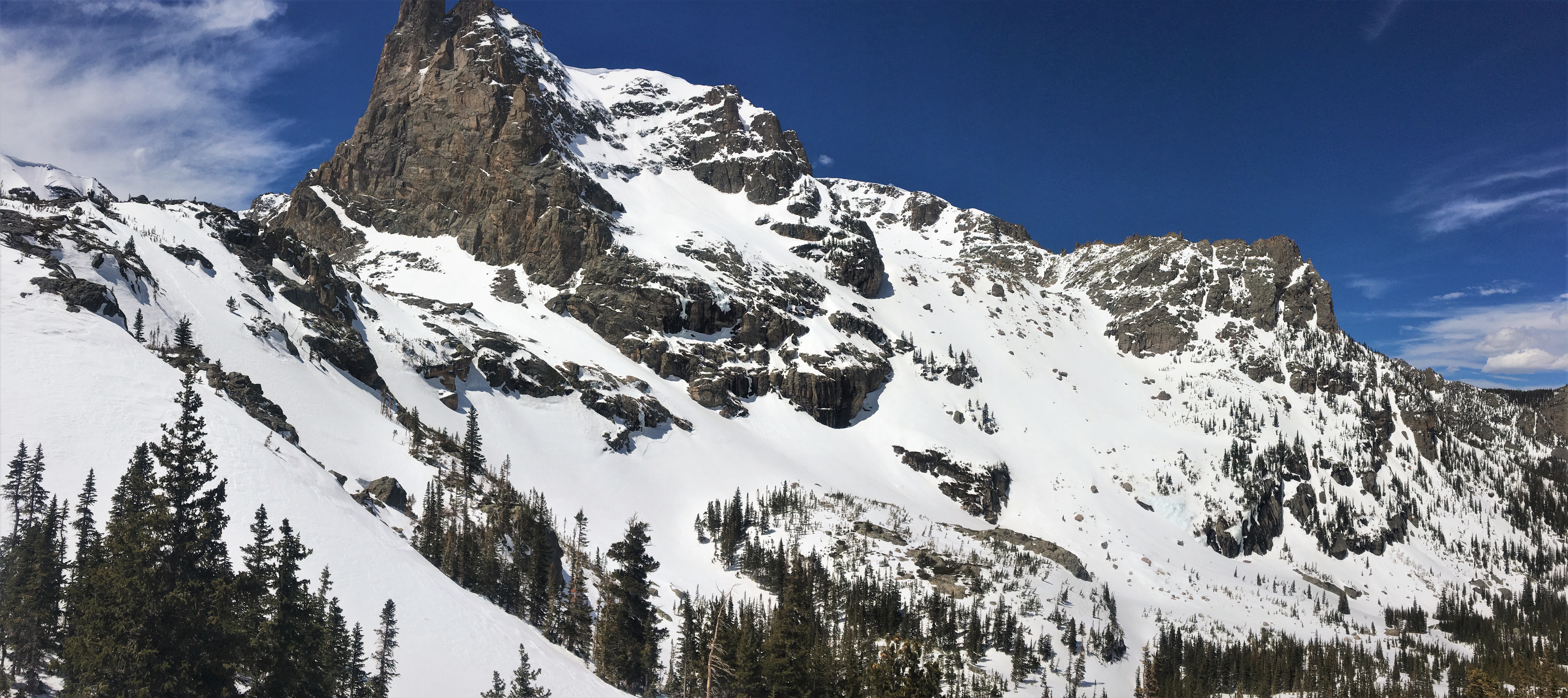
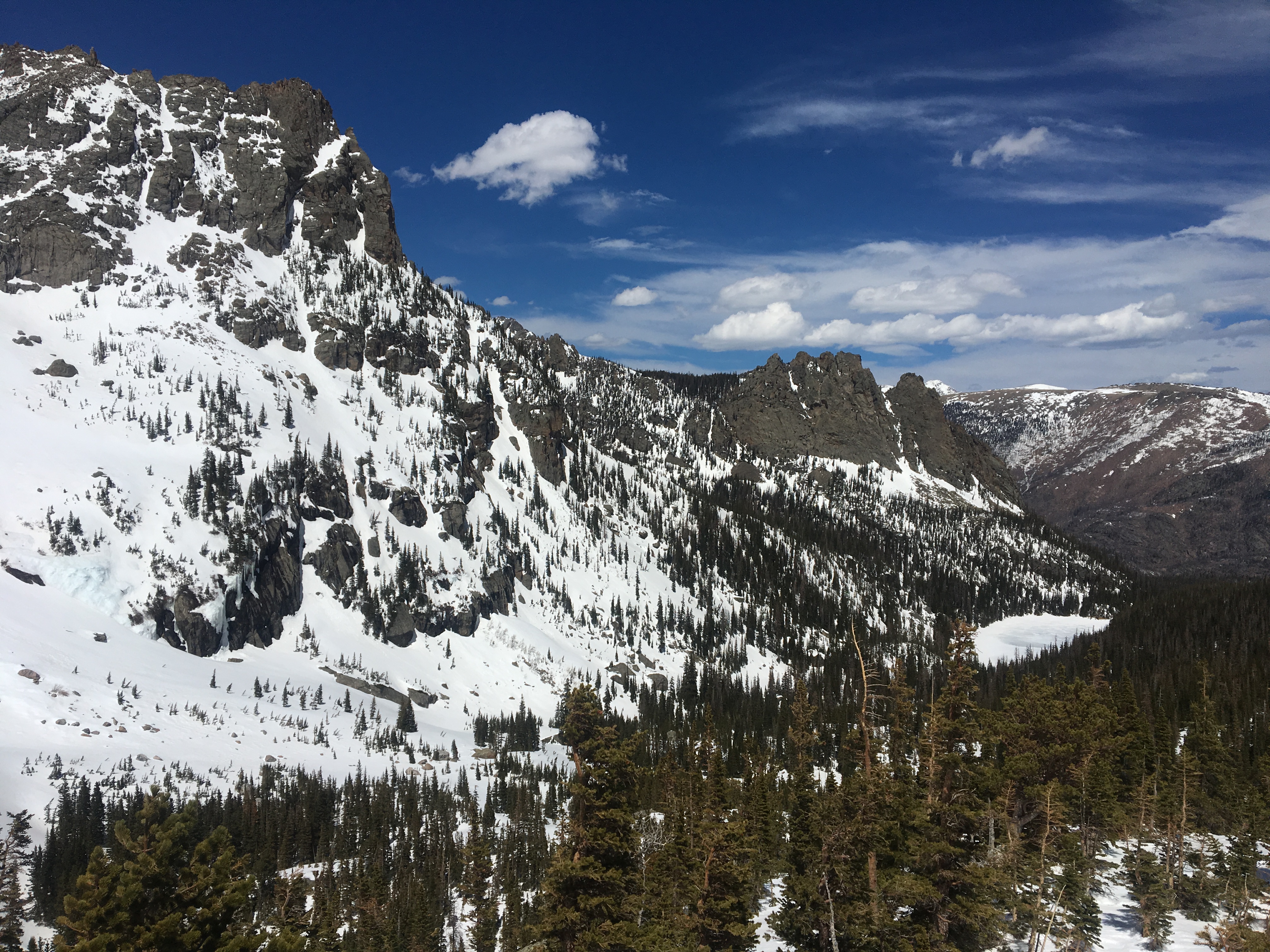
Beyond the avalanche terrain, the trail skirts the northern side of Flattop Mountain before descending toward Odessa Gorge. Here, Lake Helene and Two Rivers Lake rest beneath the dramatic rise of Notchtop Mountain, their snowy surroundings transforming them into a winter wonderland. From this vantage point, we took in stunning views of Little Matterhorn, Ptarmigan Point, and Flattop Mountain, their rugged peaks dusted in white.
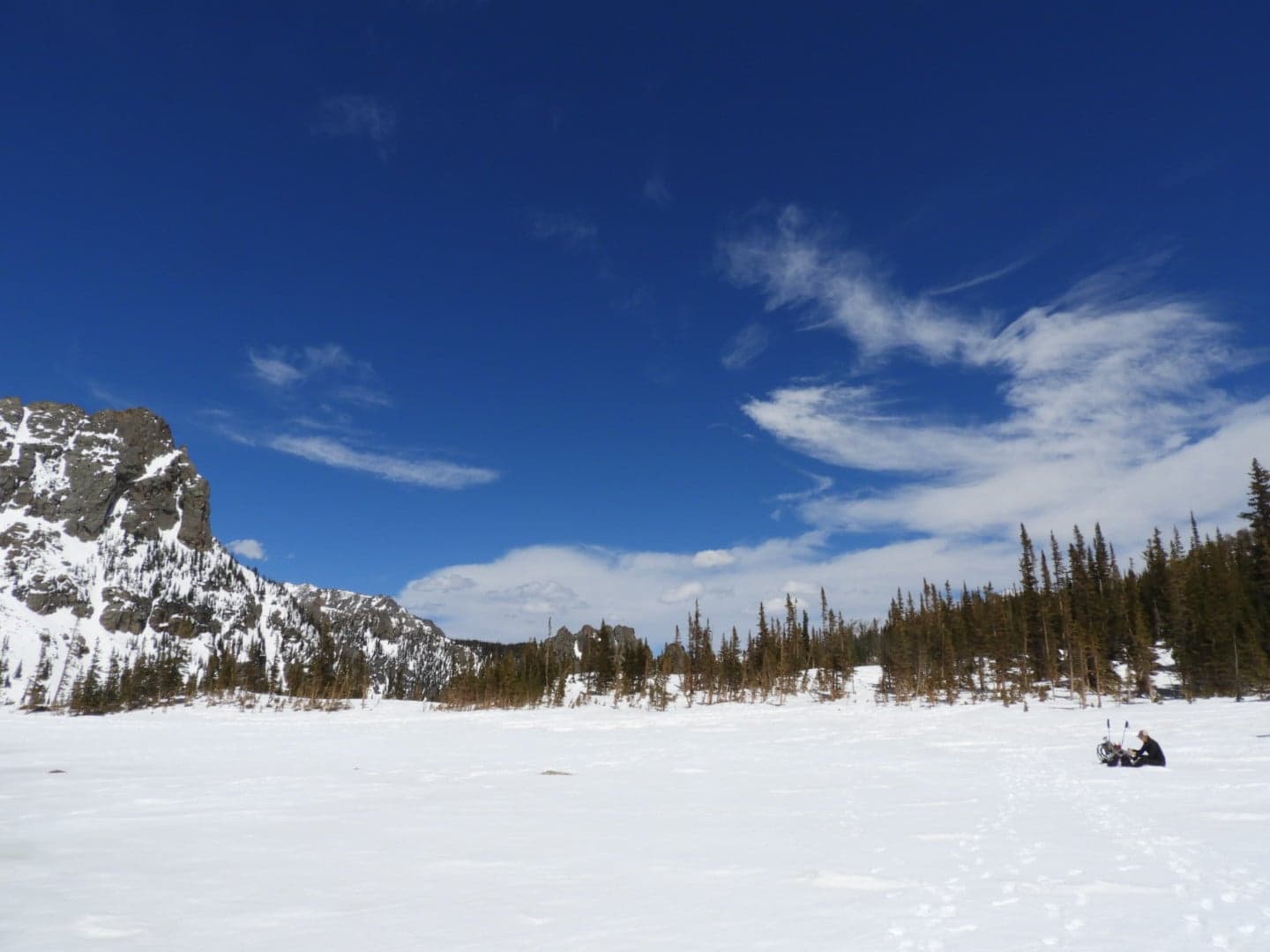
Usually, Lake Helene is battered by fierce winter winds, but luck was on our side—the day was calm and sunlit, the frozen lake shimmering under a brilliant blue sky. Snow blanketed the landscape, muting all sound except the occasional whisper of the breeze. I settled onto a snowy perch, unwrapped a snack, and soaked in the peacefulness of the moment.
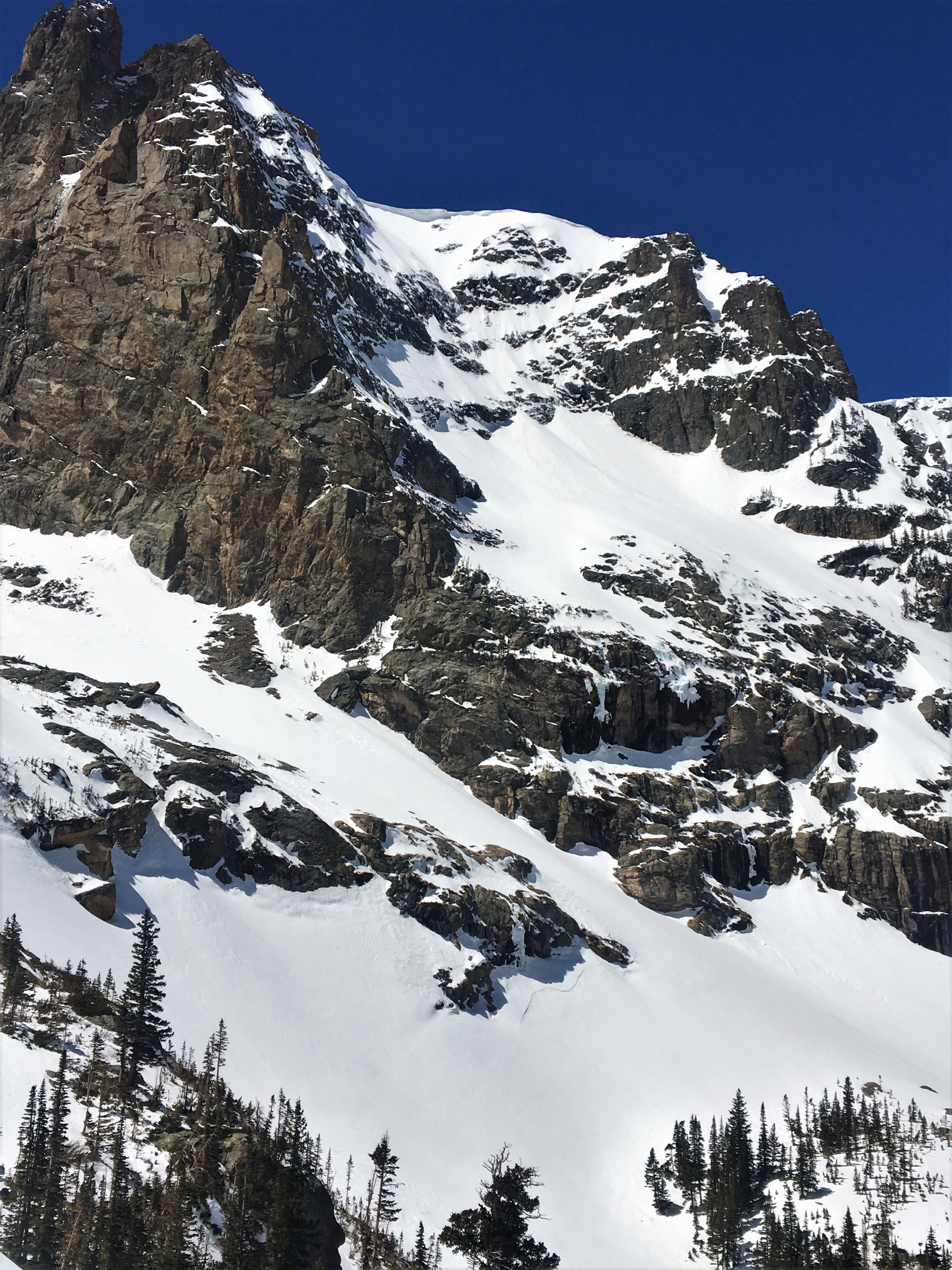
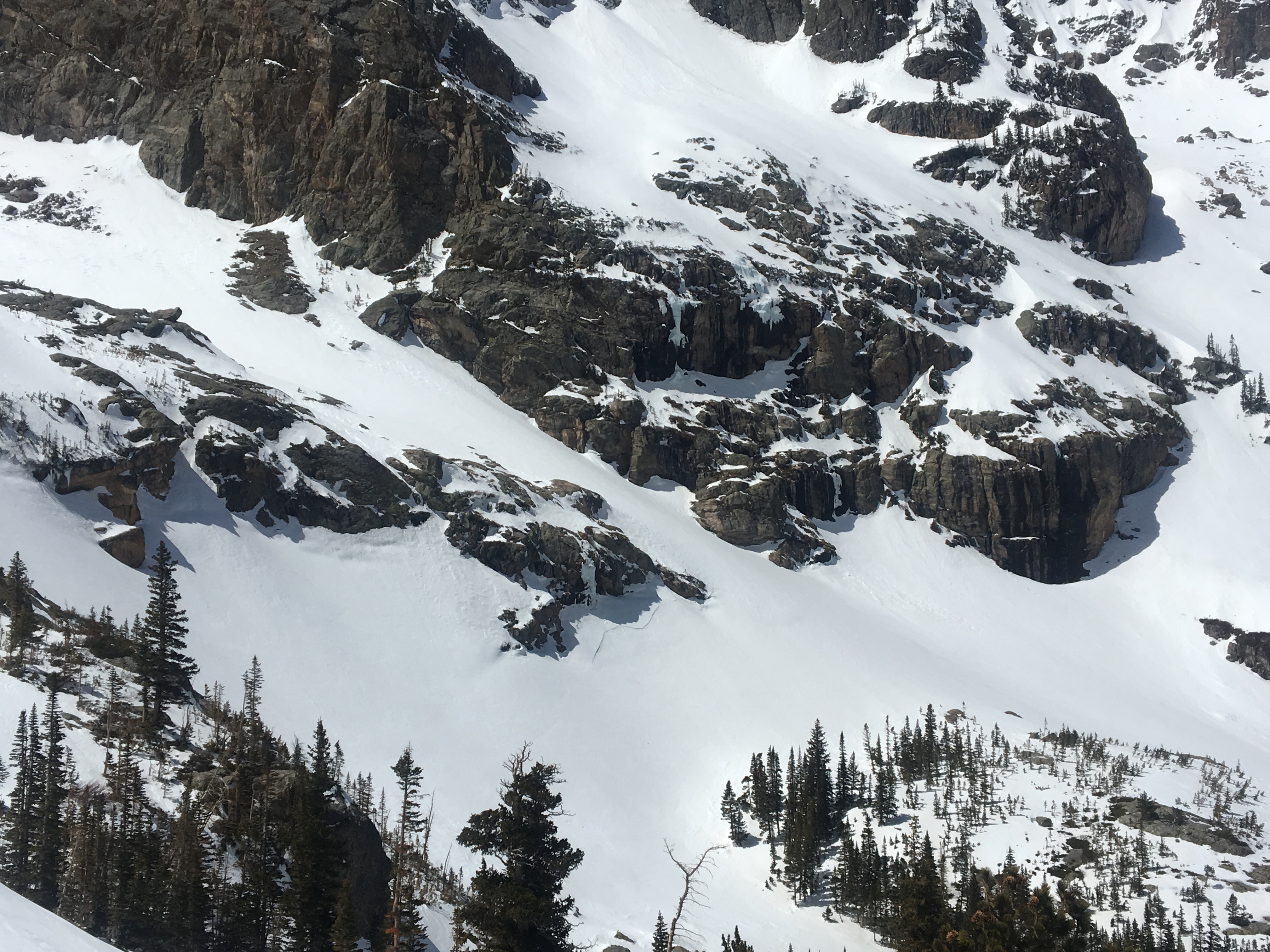
Across the lake, was Grace Falls. It was mostly melted, and we could hardly see the falls. Though we considered venturing closer, a fractured line in the snow warned us of potential avalanche risk, and we wisely decided to admire from afar. Instead, we explored the area around Tourmaline Gorge, marveling at the towering forms of Notchtop, Knobtop, and Little Matterhorn. The landscape was a breathtaking expanse of rugged, snow-covered peaks rising dramatically against a deep blue sky. Jagged rock formations jutted from the pristine white slopes, while evergreen trees dotted the lower elevations, their dark green needles contrasting sharply with the snow. Looking down into the gorge, we could see the vast wilderness stretching beyond, with rolling ridges and distant valleys painted in shades of winter. The scene was both humbling and awe-inspiring, a perfect snapshot of Rocky Mountain National Park’s untamed beauty.

The Journey Back
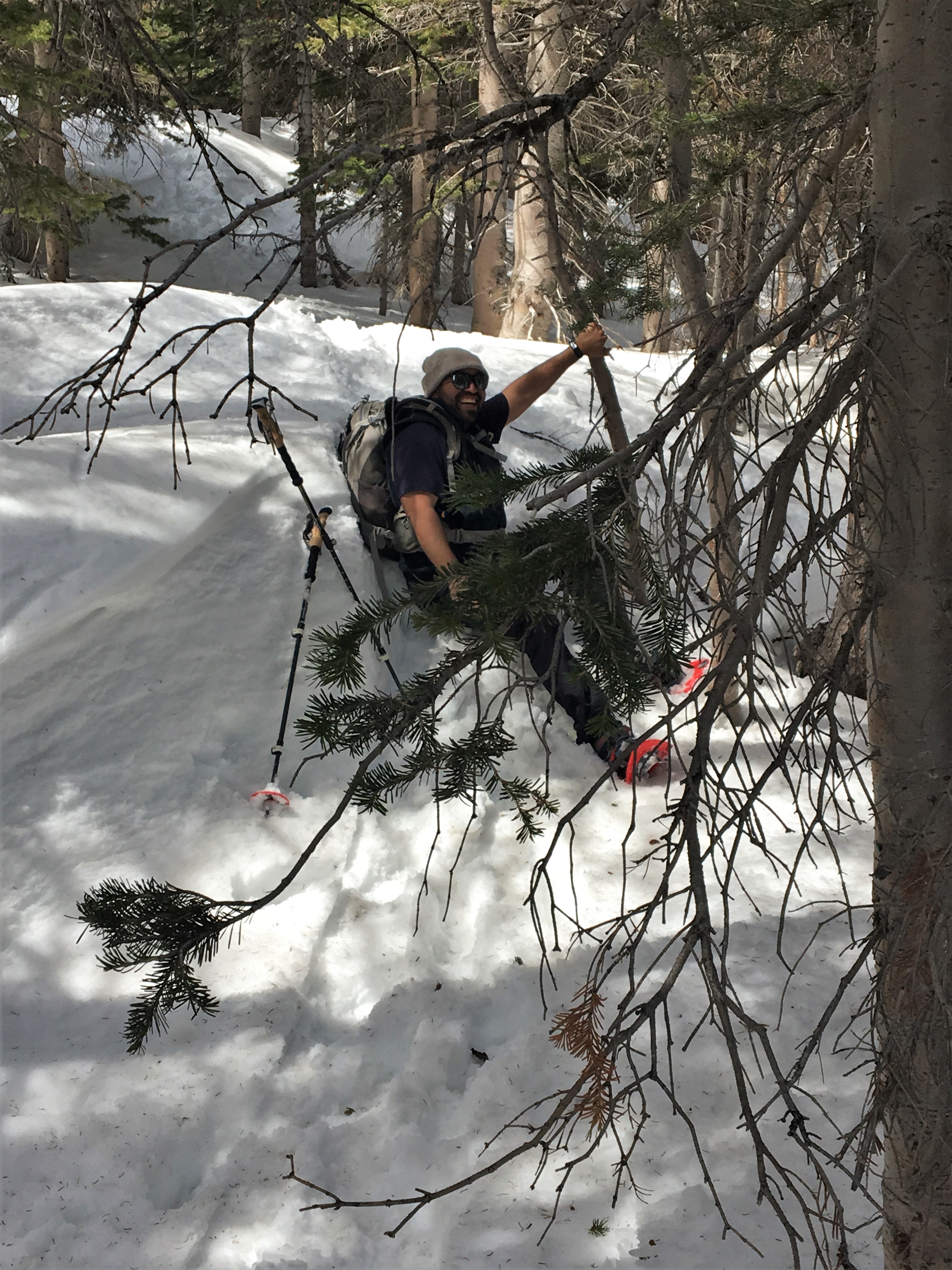
On the return journey, we detoured around Two Rivers Lake, eager to explore its forested perimeter. Breaking trail in deep snow proved exhausting, however, and we quickly learned the limits of even our snowshoes. “Think light thoughts!” I joked as I tried to glide across the snow, but Juan wasn’t as lucky—more than once, he disappeared into unexpected drifts. Laughter echoed through the trees as we trudged back to the main trail, where packed snow made for easier travel.

Reflection & Final Thoughts
As we neared Bear Lake, I reflected on how fortunate we were to have such perfect conditions. Too often, winter excursions in the Rockies are met with brutal winds, frigid temperatures, or sudden storms. But on this day, Lake Helene welcomed us with rare tranquility, gifting us an unforgettable winter adventure in the heart of Rocky Mountain National Park.
For those looking to explore this trail in winter, proper preparation is key—checking avalanche forecasts, carrying the right gear, and staying flexible with plans. But when the conditions align, the reward is an awe-inspiring journey through one of Colorado’s most stunning landscapes.
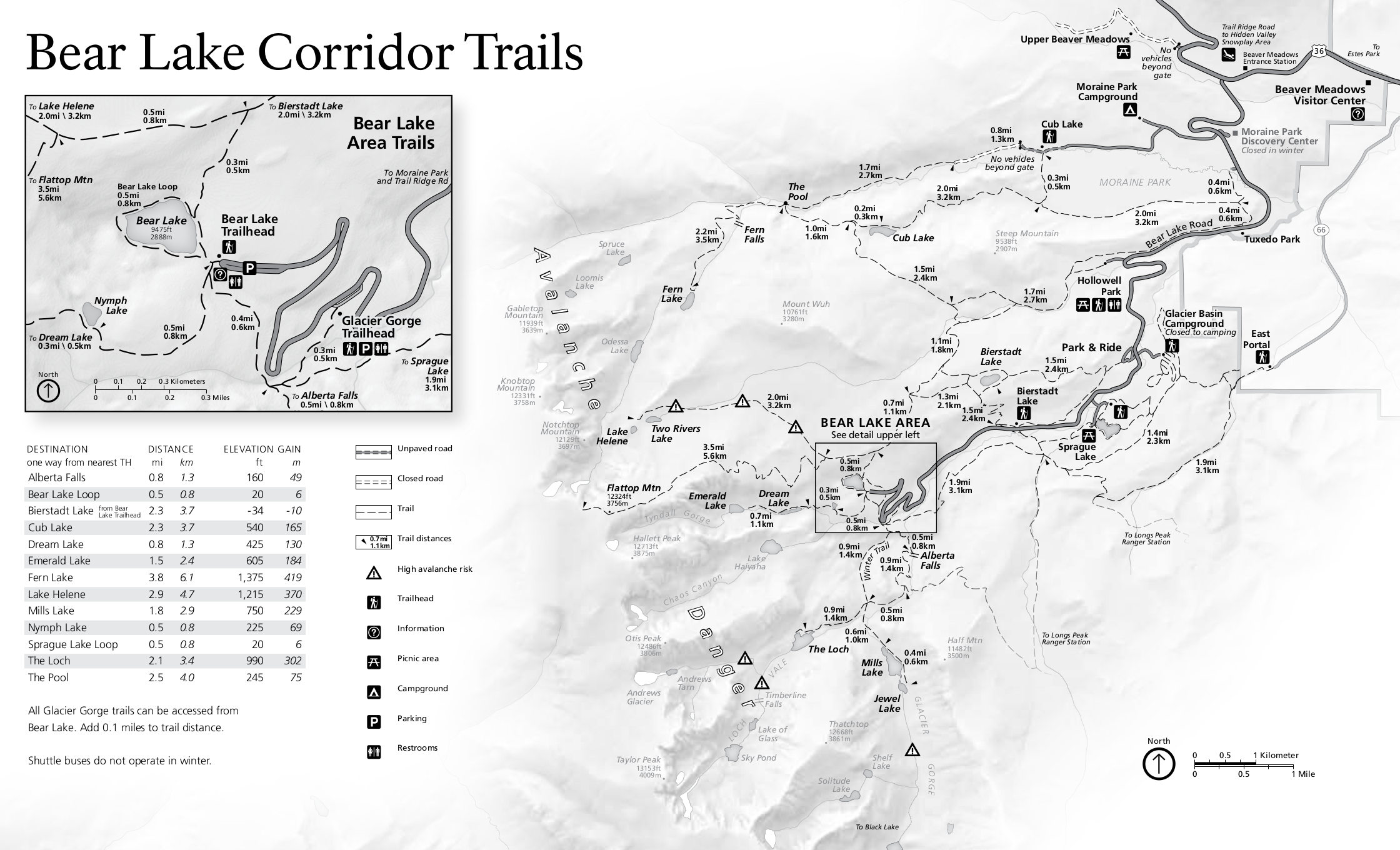
Winter Trail Map of RMNP Bear Lake Corridor
For those venturing into Rocky Mountain National Park in winter, having a reliable map is essential. The Bear Lake Corridor is a popular starting point for numerous winter hikes, including the route to Lake Helene. This map provides crucial details on marked winter trails, potential avalanche zones, and trail junctions that may become obscured by deep snow. It helps hikers navigate safely, showing key landmarks like Bear Lake, Flattop Mountain, and the Odessa Gorge area. Whether you’re planning a day hike or a backcountry adventure, reviewing this map beforehand ensures a safer and more enjoyable experience.






 Western Wanderlust Chronicles
Leave a comment