


A Canyon That Dares You to Enter
The second day drew us deeper into the wilds south of Poison Spring, into a serpentine sandstone labyrinth with a name that dares you to enter—Constrychnine. A blend of constrict and strychnine, the name alone feels like a warning. And yet, we couldn’t resist.
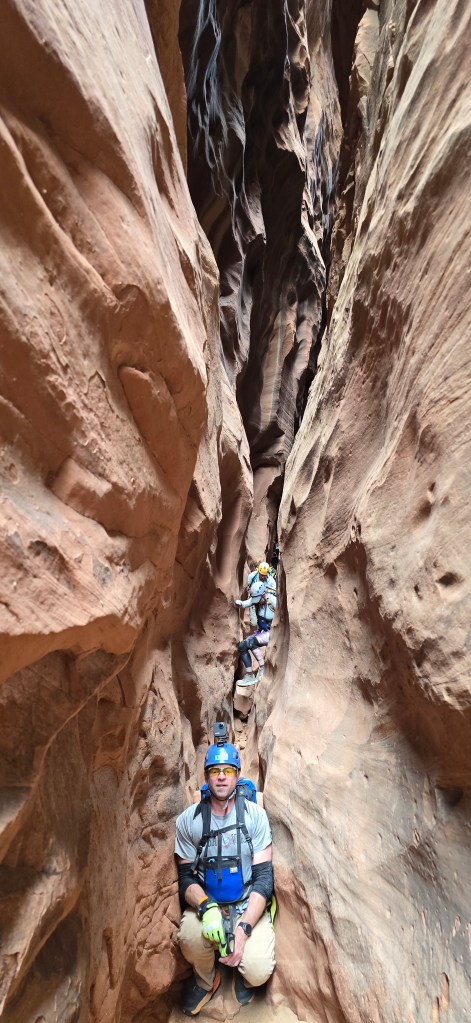
From above, there’s little sign of the complexity hidden below—just open sky, sunlit slopes, and desert scrub. But once inside, the canyon tightens its grip. The narrows grow darker, deeper, more twisted. Walls ripple with textures shaped by wind, water, and time, narrowing to shoulder-width in places before opening up into chambers of gold and shadow. It’s a place that demands your full attention—a test of skill, trust, and calm under pressure.
This wasn’t a casual stroll. It was an immersive journey through silence and stone, where each rappel peeled back a new layer of raw beauty. Constrychnine didn’t just challenge us physically—it required presence, precision, and surrender.

Anchor Lessons and the First Big Drop
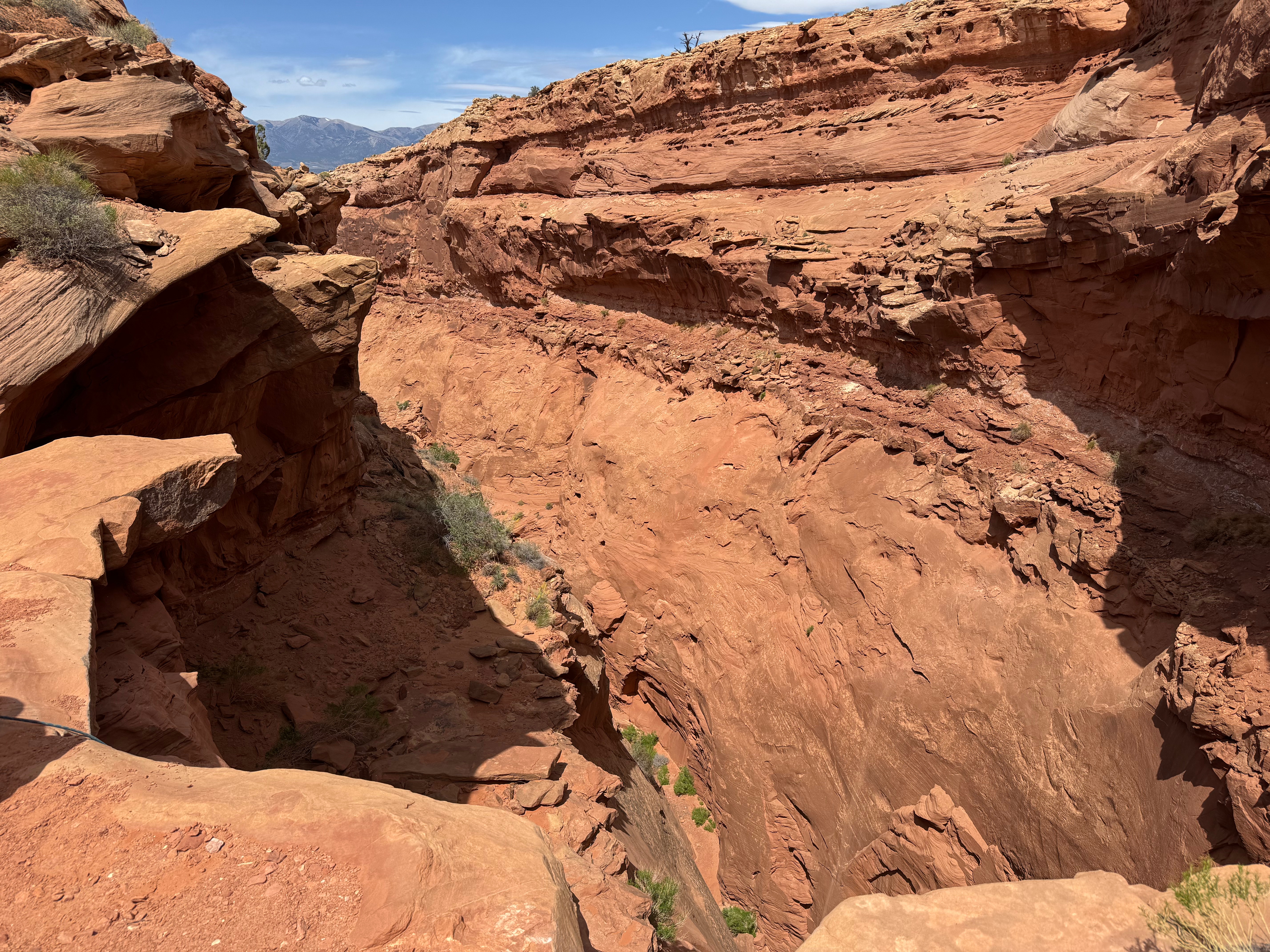
We were a team of nine, standing at the edge of an abyss. The canyon doesn’t gradually begin—it plunges abruptly between massive, tapered walls, as if the earth itself cracked open to reveal its core. When we arrived at the first major drop, a group was already starting their descent down the 115-foot rappel. While we waited, we scrambled around a smaller drop and used the opportunity for a quick lesson in rope ascension. It’s one thing to know how to rappel—another to reverse the process.
When the rappel cleared, we were taught how to build an inspectable cairn anchor and carefully walked through the setup process. I also received a hands-on lesson in managing a backup line—serving as the human backup by anchoring with my body weight. It was a valuable moment to practice trust and responsibility, and a reminder that every team member plays a critical role in keeping the group safe.
The start of the rappel was awkward, requiring a bit of maneuvering before I found a small ledge for a “soft start.” Then it was down into the belly of the beast—vertical walls narrowing around me, warm light reflecting off sandstone as I slid deeper into the earth.

Rappel Two – Into the Abyss
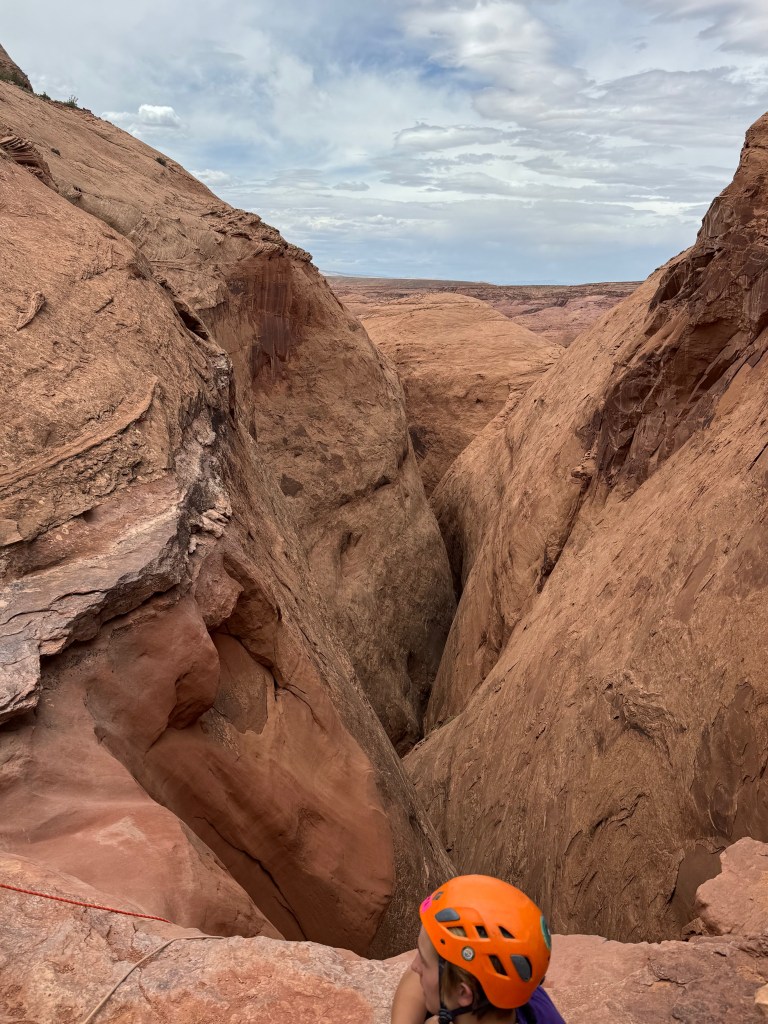
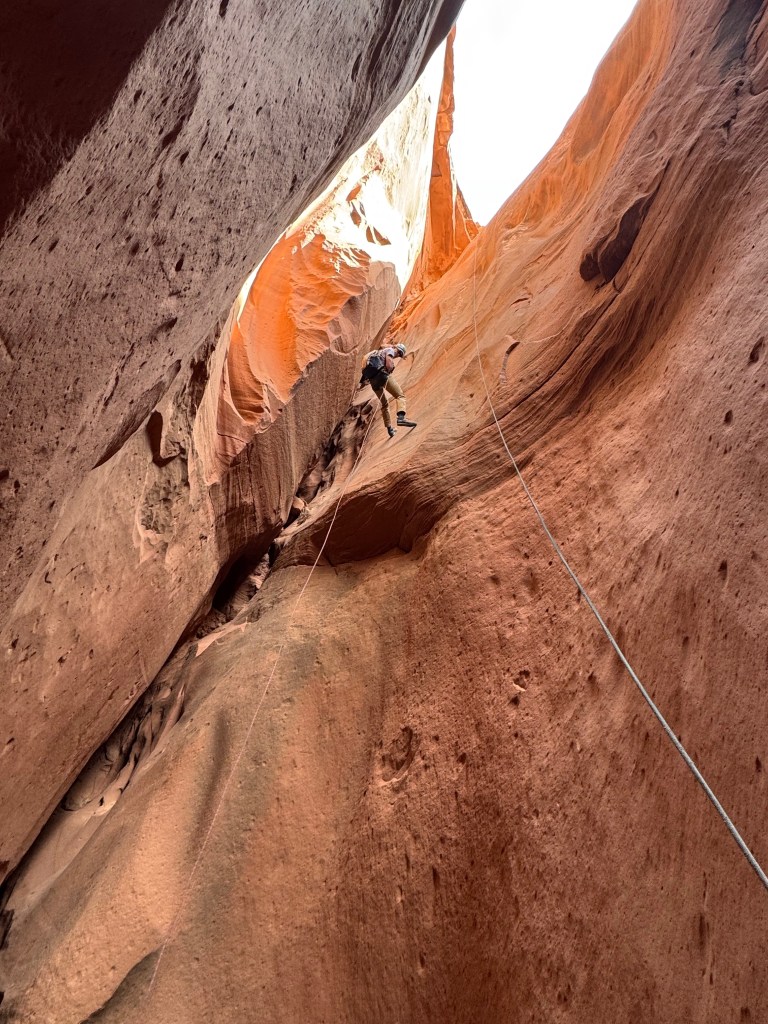
Not long after, we reached the second rappel: a massive 165-foot drop. The rappel feels like leaping off the edge of the world and slowly lowering yourself into a sandstone abyss. It’s dramatic. Beautiful. And a little nerve-wracking. Once you’re down, the only way out is forward.


Flared Downclimbs and Choices
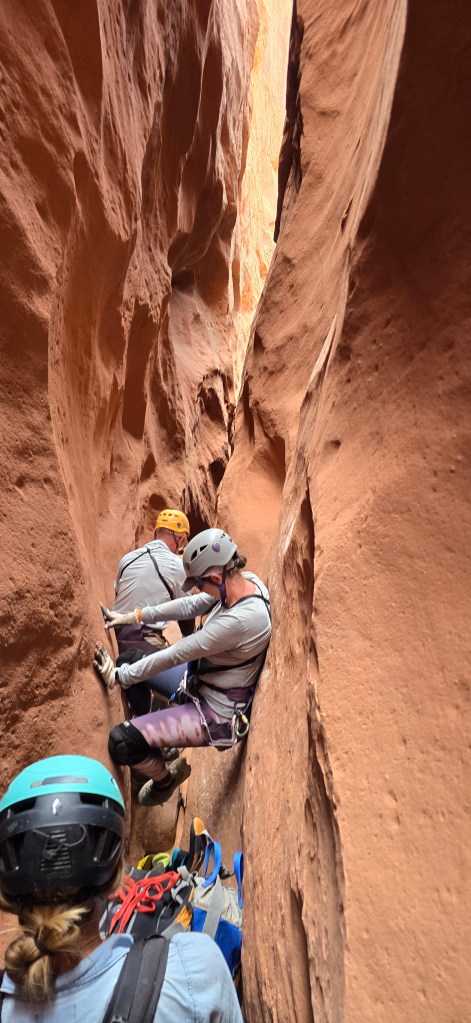
Shortly after the rappel, we approached a tricky downclimb. It looked manageable at first glance, but the walls flared out just enough to feel unstable. A few members of our group chose to descend unassisted, using careful stemming and friction. I opted for a belay from above—playing it smart and safe, especially with how slick the rock was in places. With the rope, I descended the first two-thirds with added stability and control. It was a good reminder that canyoning isn’t just about strength—it’s about knowing when to rely on the tools and people around you.
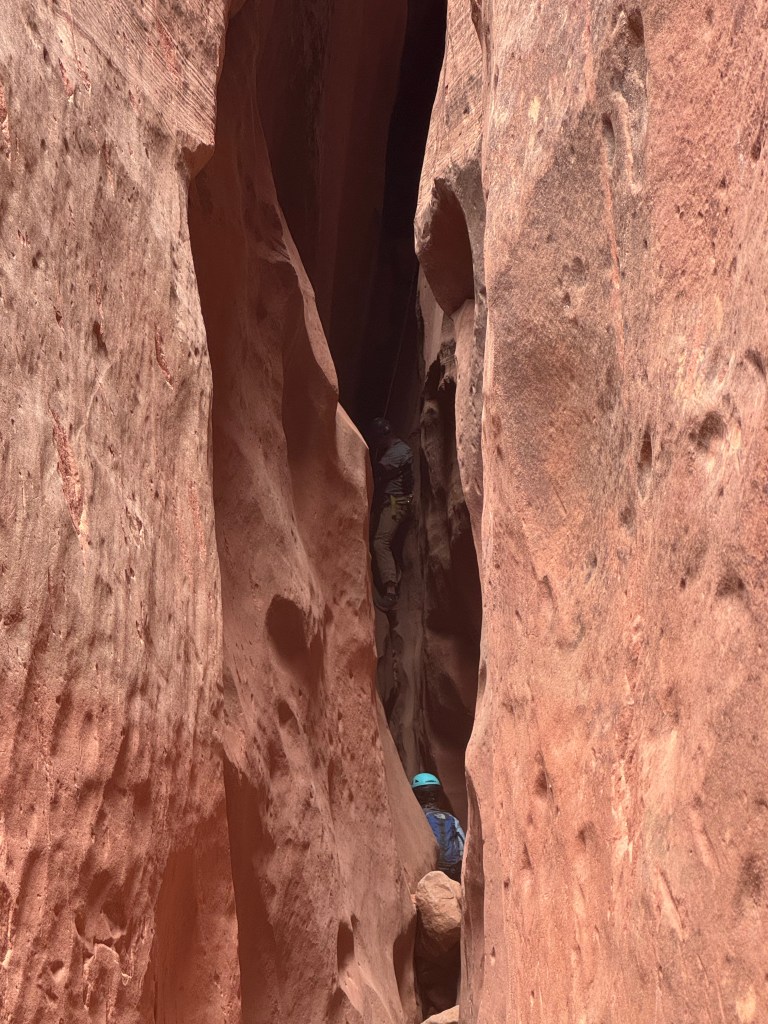
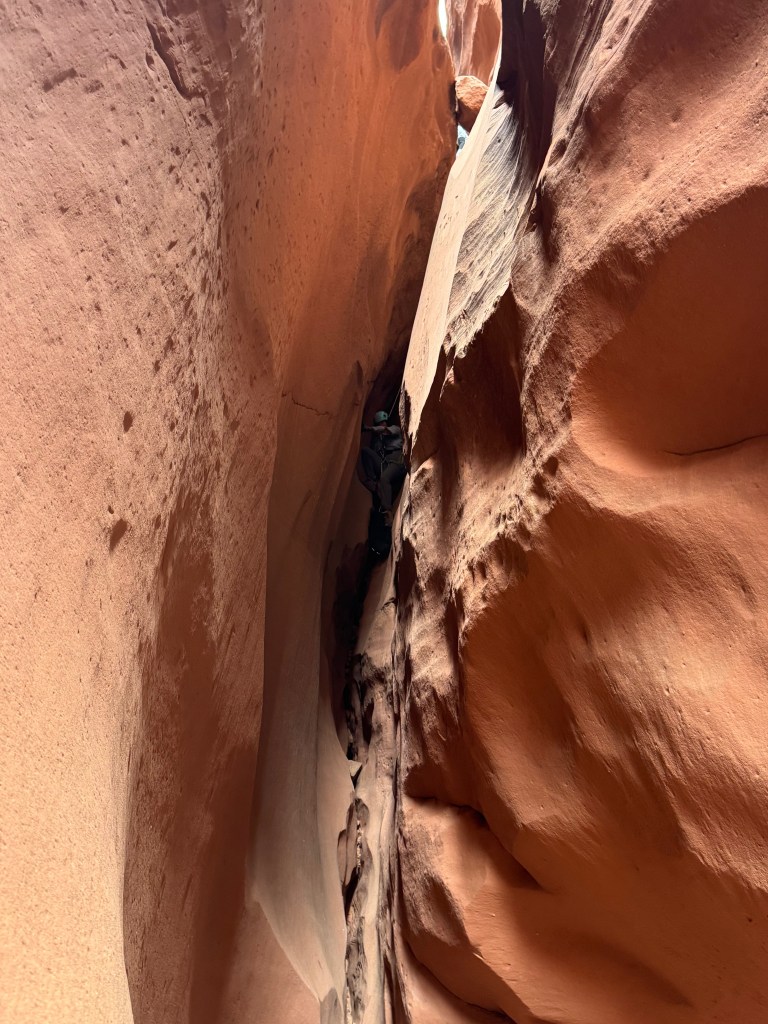
We continued through the corridor, stemming across narrow walls and carefully maneuvering over obstacles. The canyon felt tighter, quieter, more alive.

The Third Rappel – Into the Canyon’s Heart
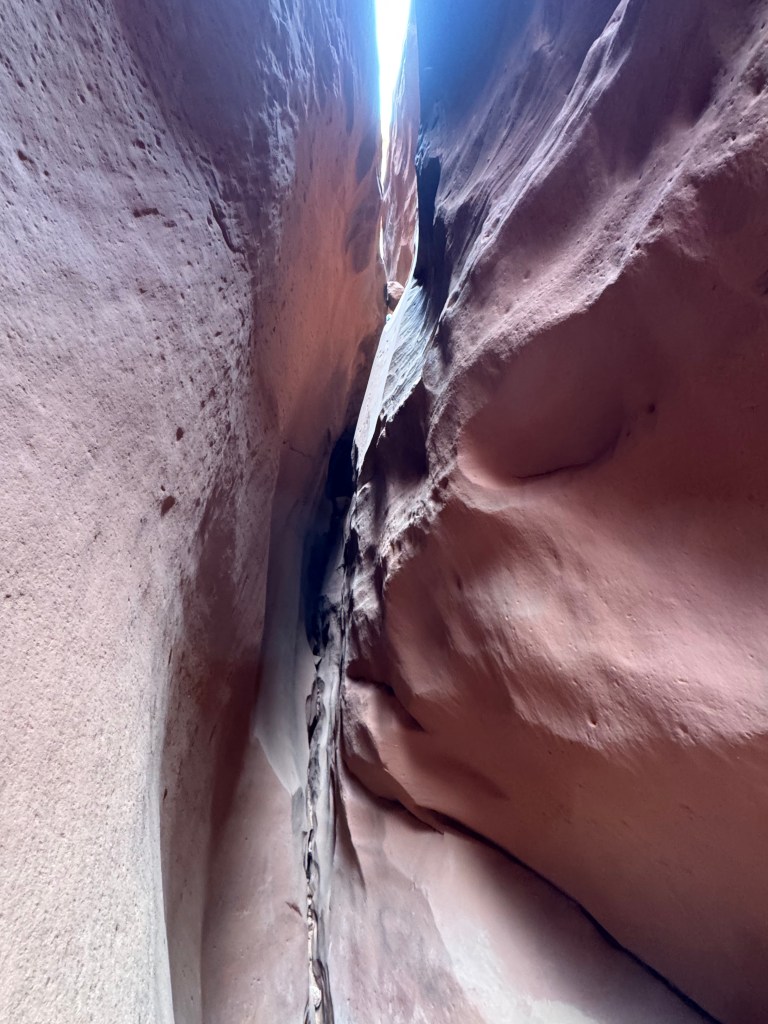
We paused to rebuild the anchor—taking our time to ensure everything was secure—before descending the third rappel, an 80-foot drop into one of the canyon’s most breathtaking sections. The walls here were smooth and dark, curving inward to form a shadowed chamber where sound softened and time seemed to disappear. We rested at the bottom, soaking it all in. This place felt sacred—still, quiet, alive in its silence. The kind of place where voices instinctively drop and the canyon itself seems to breathe.


Final Rappel and the Swirled Walls of Water Worn Rock
At the last major drop, we found a deadman anchor set above a possible downclimb. The rappel itself wasn’t long, but a pool of milk-chocolate water waited below, threatening a chilly surprise to anyone who slipped. Most of us chose the rope, which offered more control and a dry landing. The wall beside us was mesmerizing—etched with wave-like patterns and dark streaks, as if frozen mid-flow. I took my time here, soaking in every curve and hue.
Exiting the Labyrinth
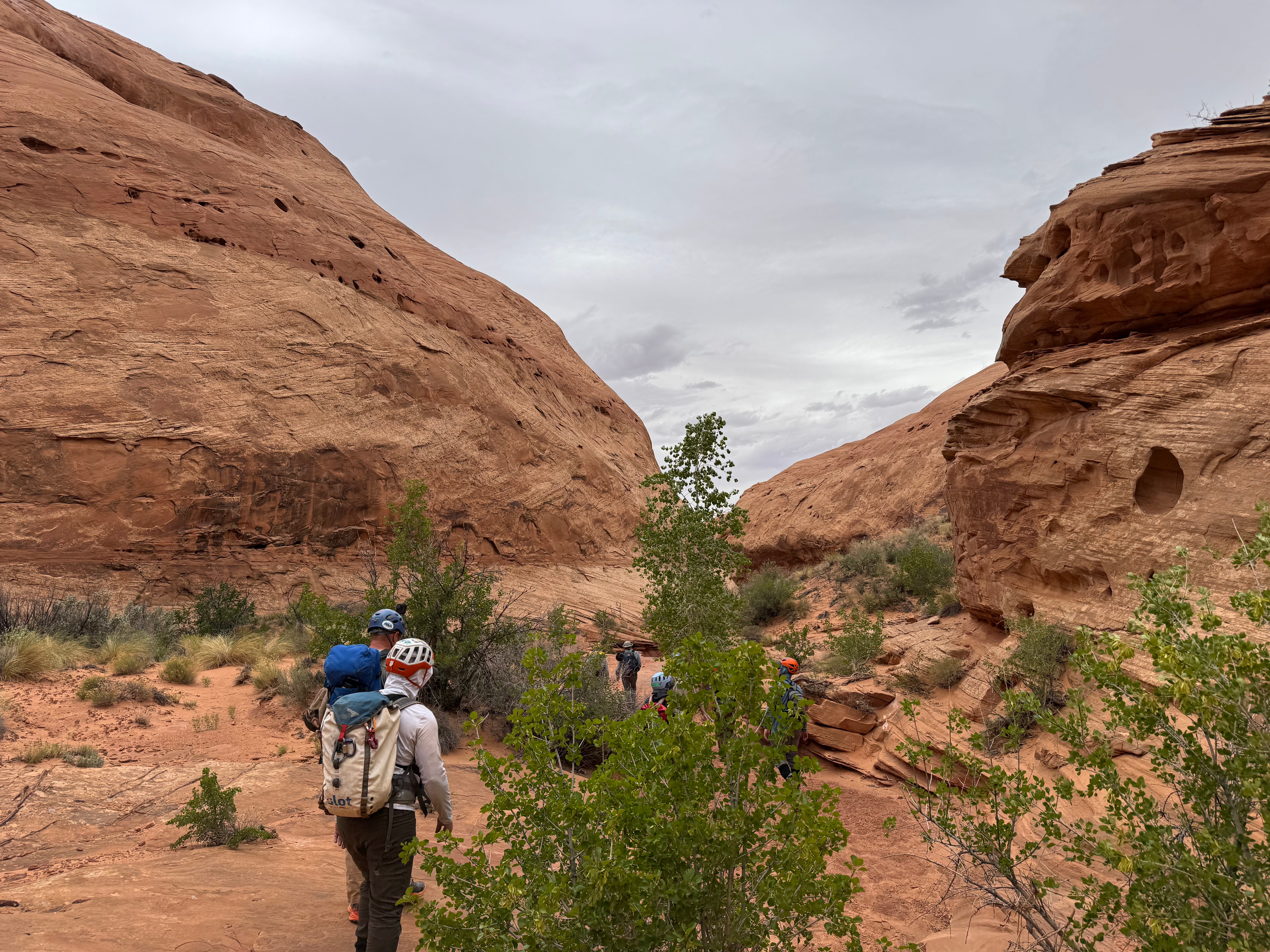
The canyon widened as we neared the end, and I suddenly recognized the terrain—the confluence with Slideanide, where Bill and I had descended the day before. But instead of taking the steep climber’s route out, we continued down a little farther until the gorge released us, revealing a walkable route over open slickrock.
A cool breeze rolled in beneath a blanket of clouds—an unexpected gift for such an exposed stretch. Without it, the heat would have made that exit far more punishing.



Reflections From the Veins of Stone
Constrychnine Canyon offered a stunning interplay of opposites: wide-open space above and claustrophobic passageways below; adrenaline-spiking rappels followed by quiet moments of awe. It pushed our group to work together—anchoring, belaying, route-finding—but also gave us space to grow individually, whether choosing to down climb, rappel, or navigate a tricky feature in our own way.
My favorite parts? The rappels—long, beautiful, and dramatic. Each one felt like a vertical invitation into the sandstone heart of Utah’s backcountry. But the truth is, the entire journey felt sacred. It was a day of movement and mindfulness, of rope and rhythm, of shared strength and personal decisions.
The Poison Spring Canyons aren’t just routes on a map—they’re wild, hidden worlds that demand presence, preparation, and respect. And in return, they offer something rare: adventure with depth.

Final Reflections: Two Days, One Deeper Connection
And though Constrychnine left its mark, it was the combination of both days that truly defined the trip.
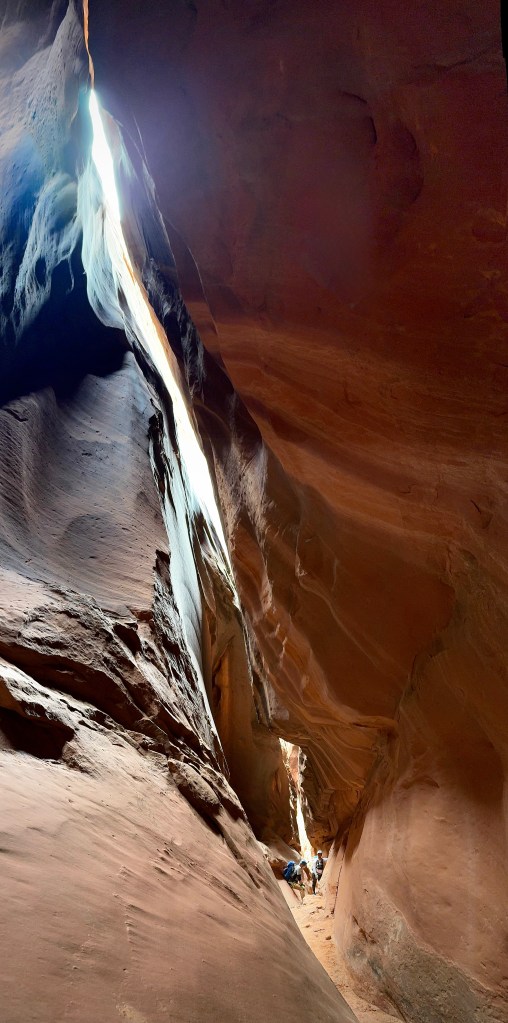
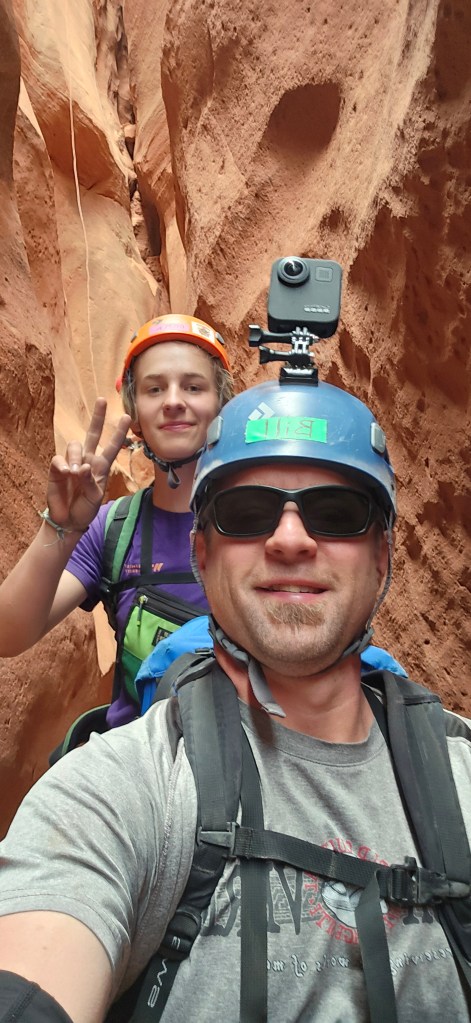
Over two days in Poison Spring, we descended into two very different canyons—each with its own personality, rhythm, and challenge. Slideanide was all about movement: textured downclimbs, twisting slots, and learning by doing. It tested our technique and rewarded us with beauty carved by time. Constrychnine, on the other hand, went deeper—both literally and mentally. It demanded more rope work, more trust, more presence. Where Slideanide moved fast, Constrychnine made us slow down and listen to the canyon’s silence.
Together, they made a perfect pair—one canyon sharpening our edge, the other grounding us in awareness.
What made this trip special wasn’t just the scenery or the drops (though those were unforgettable). It was the shared rope systems, the teamwork, the problem-solving in the narrows, the lessons in grit and grace. And maybe most of all, it was the reminder that even in the most remote corners of the desert, you can feel completely connected— to the land, to your partners, and to yourself.
We came back dusty, tired, and scraped—but deeply grateful. For the challenges we faced. For the people we shared them with. And for the chance to return to a place we once passed through, now experienced in a far more meaningful way.



 Western Wanderlust Chronicles
Leave a comment