


The Road Carved by Ice and Time
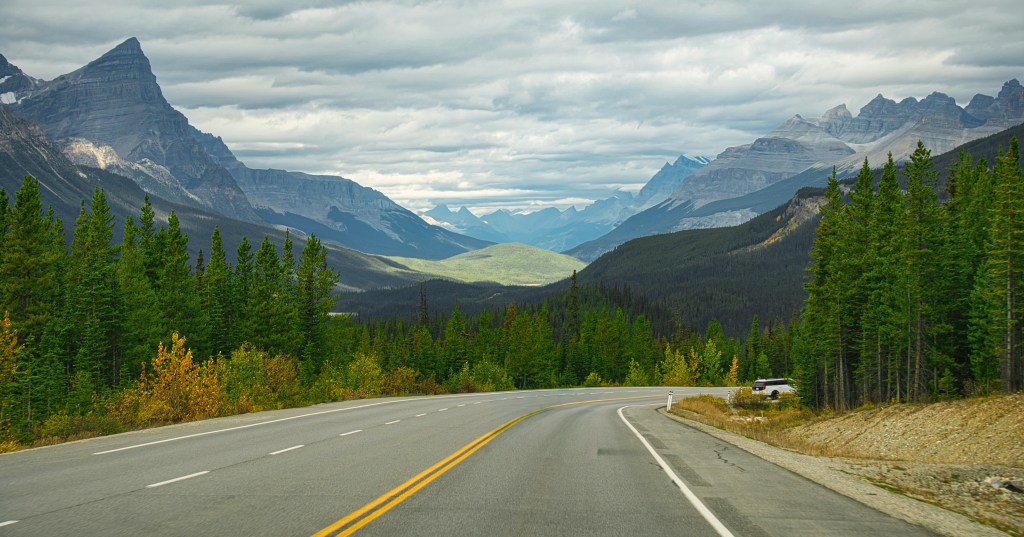
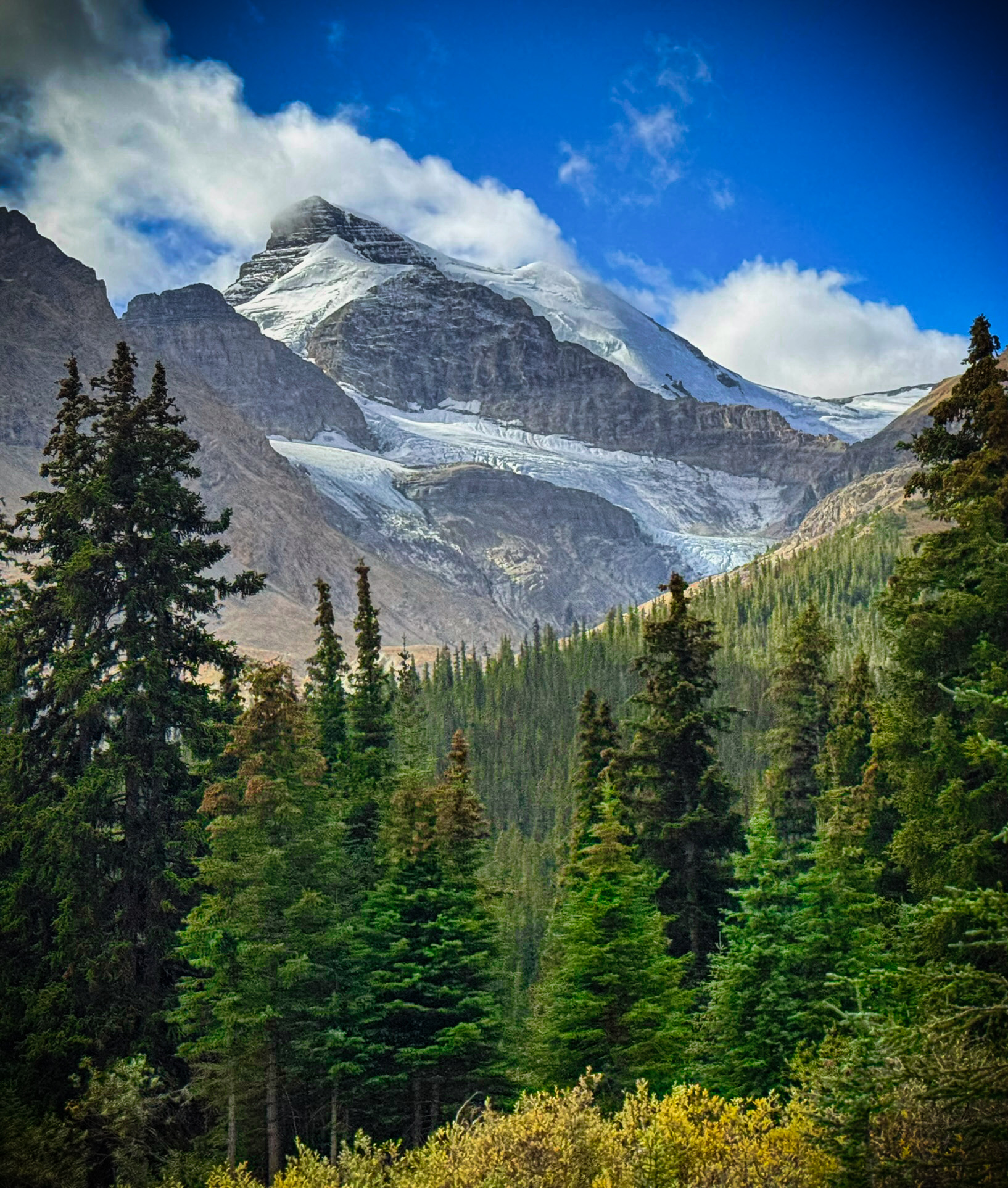
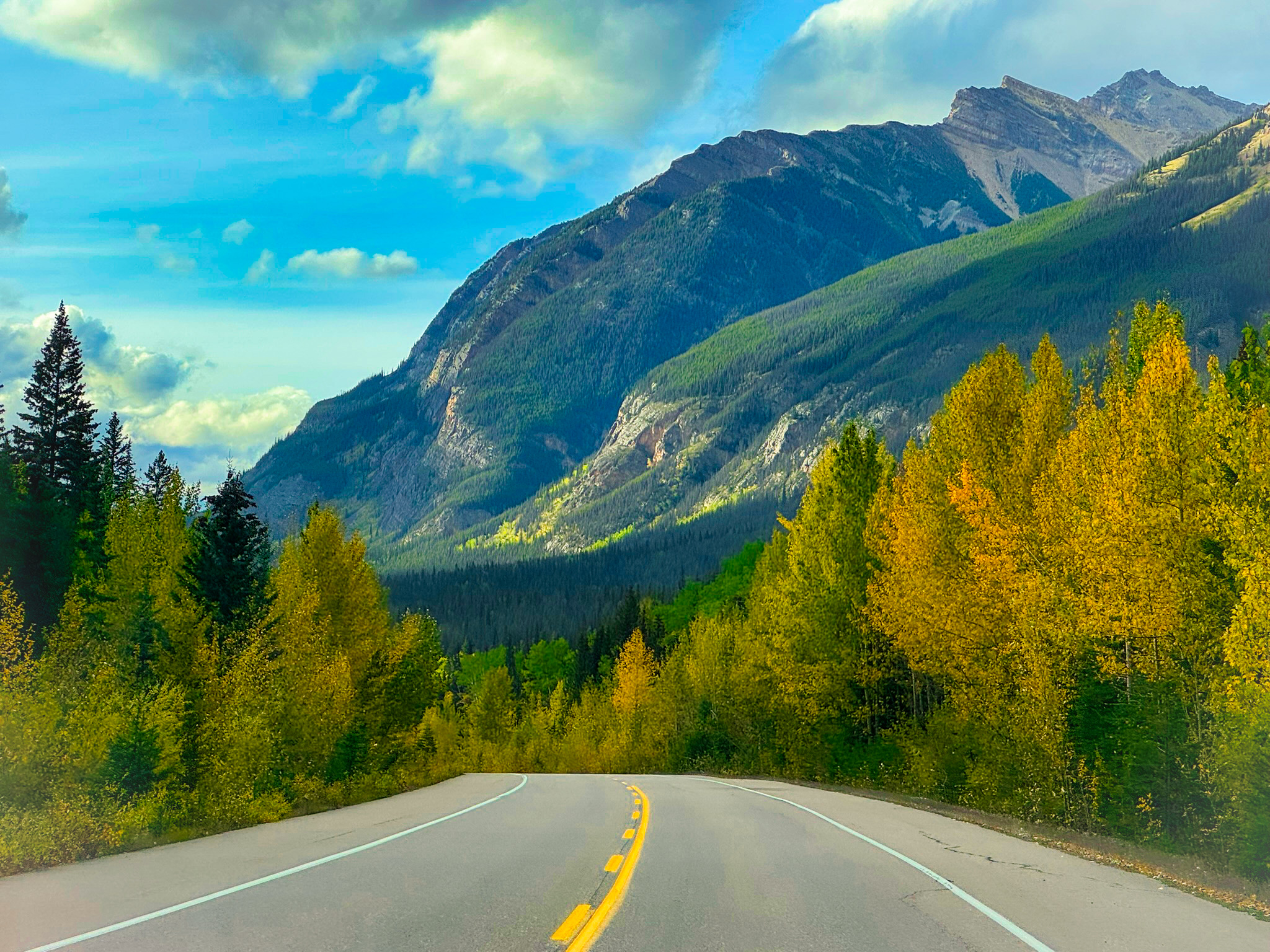
This was the day I had been dreaming about for months, the legendary Icefields Parkway, often called one of the most beautiful drives in the world. Stretching roughly 145 miles between Lake Louise and Jasper, this ribbon of road winds through a realm sculpted by ice and time. Here, the Rockies feel ancient and alive— jagged peaks crowned with snow, turquoise lakes resting like jewels, and glaciers spilling down from unseen heights.
They call it the Road of 100 Glaciers, and as we would soon learn, every curve revealed a new marvel waiting quietly in the distance.
Bow Lake & Crowfoot Glacier
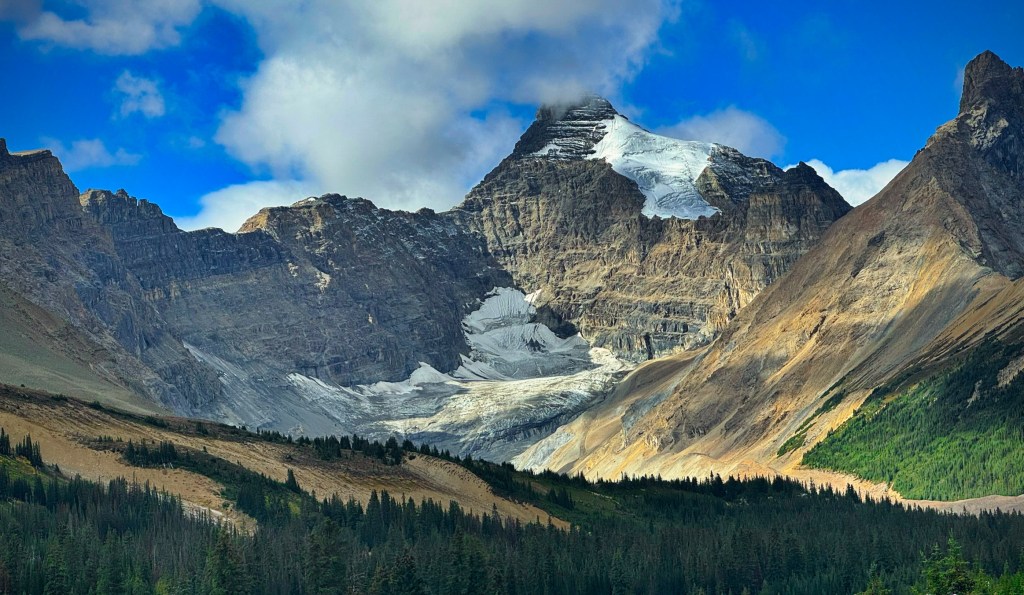
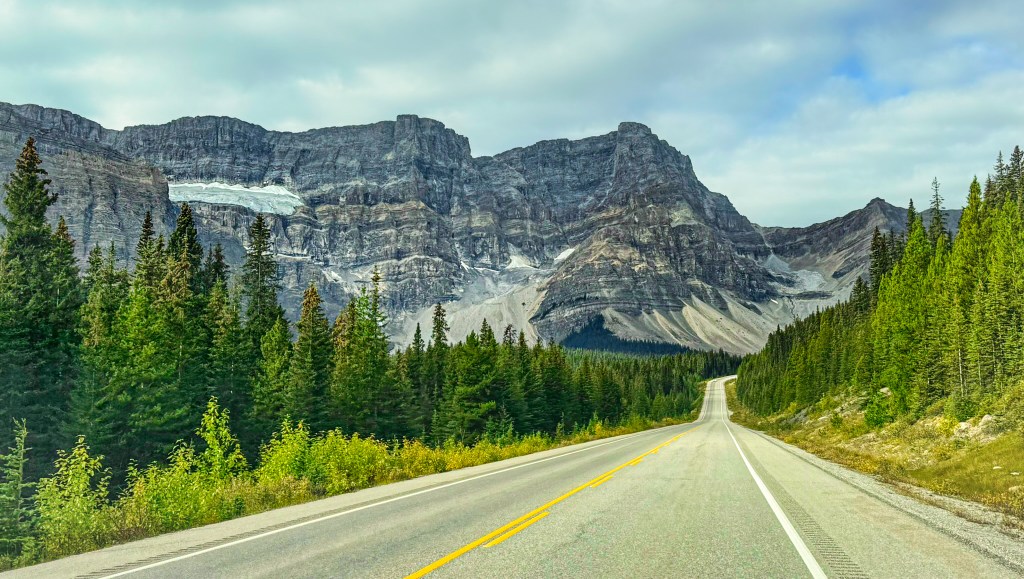
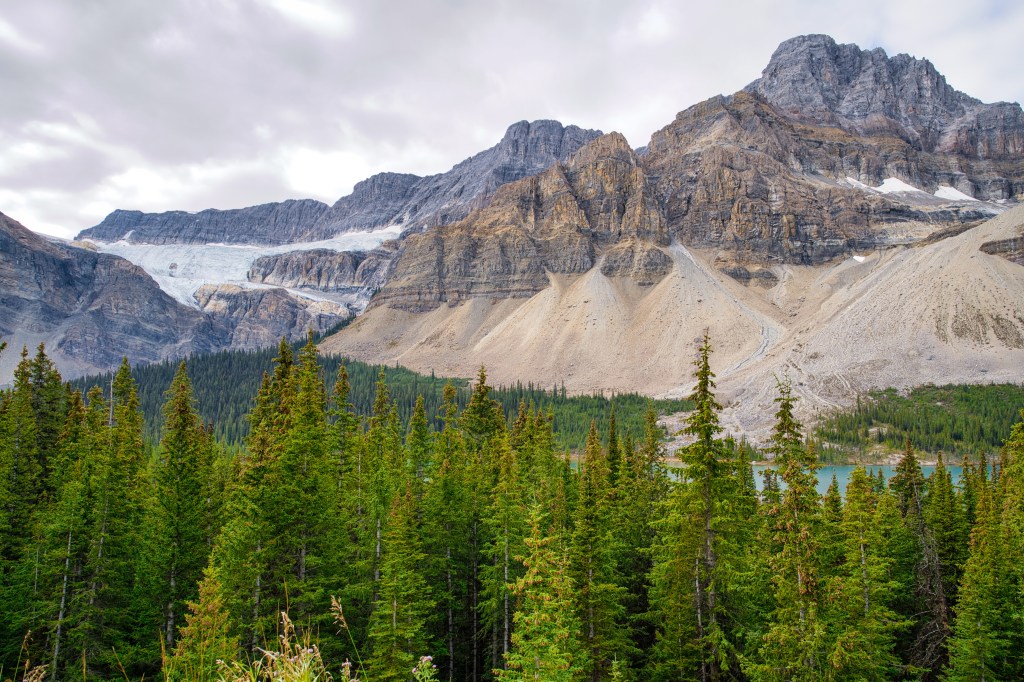
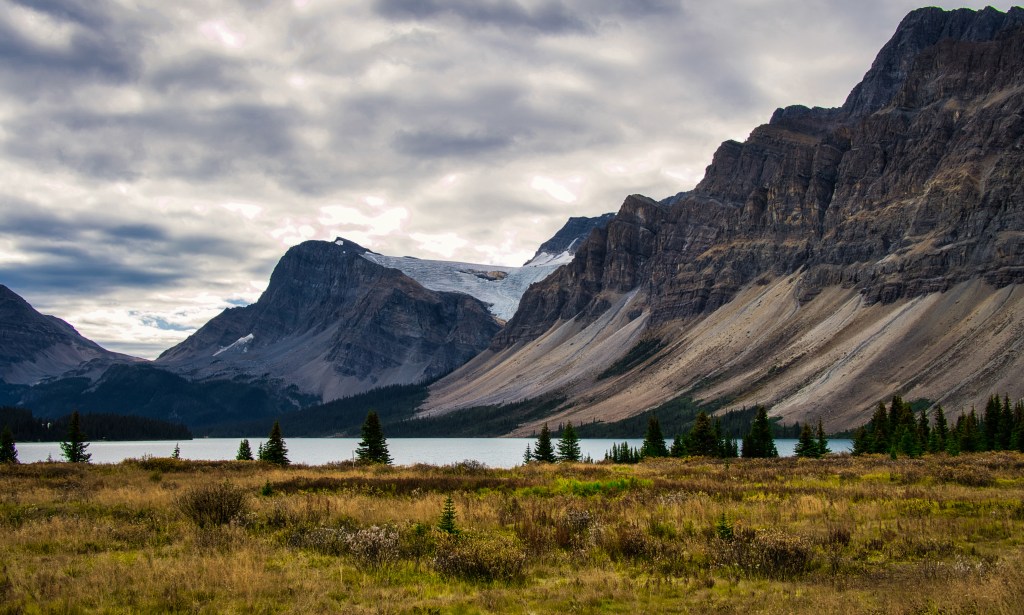
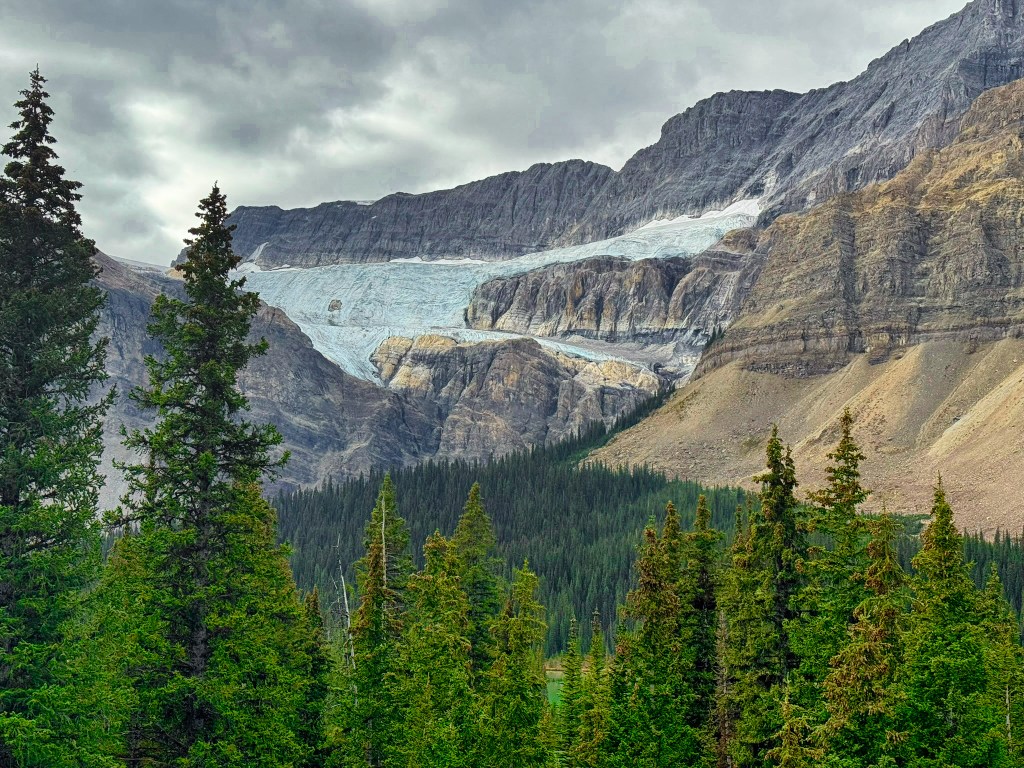
Our first stop was Bow Lake, quiet and subdued beneath a blanket of gray clouds. The usual turquoise brilliance had softened to a cool slate blue, mirroring the muted light of the morning sky. The air carried the crisp edge of glacier melt, and the stillness of the valley felt almost reverent. Across the water, the rugged walls of Crowfoot Mountain rose sharply, with Crowfoot Glacier draped along its slopes—a frozen remnant of an earlier age. Once shaped like a three-pronged crow’s foot, only two “toes” remain today, a striking reminder of how even ice and stone slowly yield to time. Yet even in its changed form, it stood as a monument to endurance, a frozen echo of the past.
Rivers & Wildlife
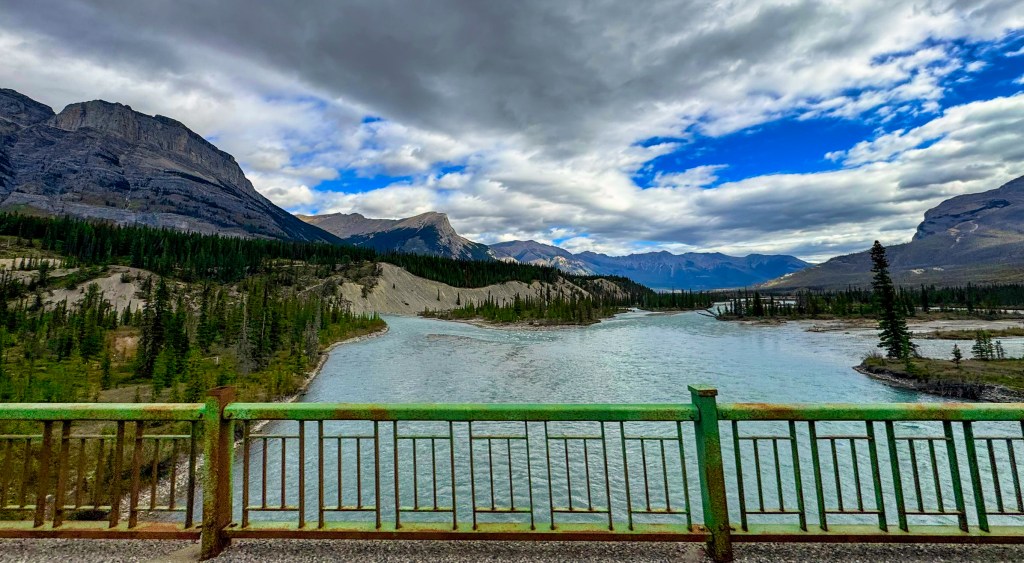
Farther north, the landscape opened once more as we crossed the wide braid of the Saskatchewan River, its shimmering channels threading through gravel bars and golden willows. The subdued light made the river appear metallic, silver-blue beneath the clouded sky. This ancient waterway begins here in the mountains and winds its way across Canada’s vast prairies, eventually joining the Nelson River system and emptying into Hudson Bay. Standing on its banks, it was humbling to think how these alpine streams connect distant worlds—mountain, forest, prairie, and sea—all linked by the rhythm of melt and flow.
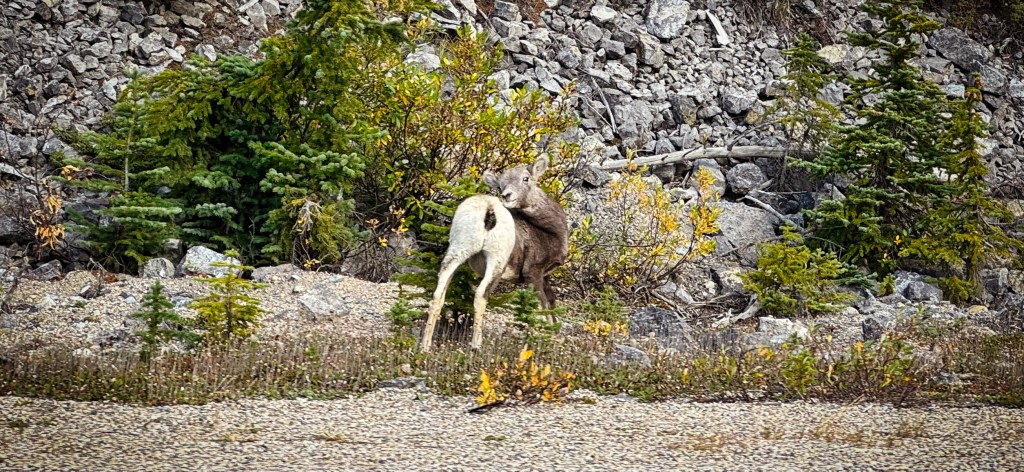
Just beyond a bend, the calm was broken by movement—a mother bighorn sheep and her young lamb trotting confidently along the roadside. They moved with such ease, sure-footed even on the uneven shoulder, their coats blending perfectly with the muted tones of rock and brush. The lamb paused to nibble on low shrubs while the ewe stood watch, unbothered by the few cars that had slowed to admire them. It was one of those moments that reminded us: the Icefields Parkway isn’t just a road through mountains—it’s a road through their living, breathing story.
The encounter stayed with us as we drove on, the landscape opening wider with each mile—peaks layered against the horizon, forests stretching endlessly, and the soft rhythm of the river never far from view.

The Athabasca Glacier
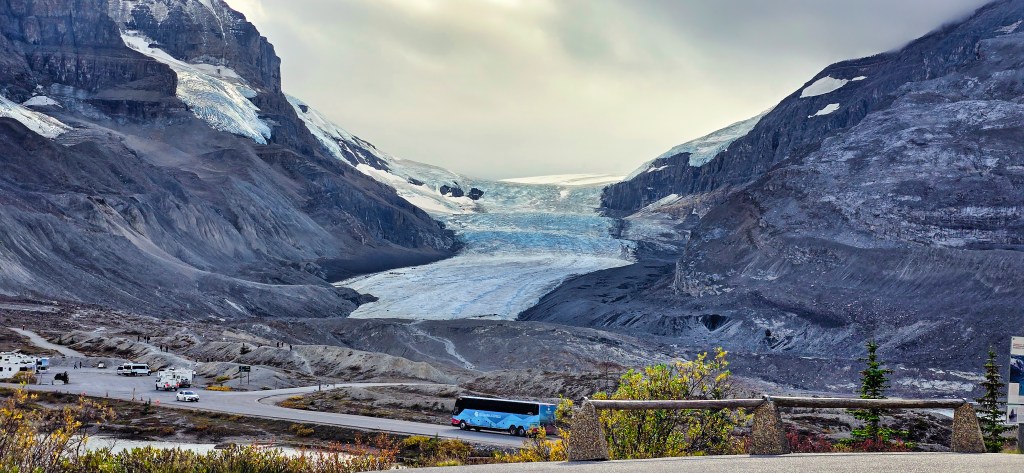
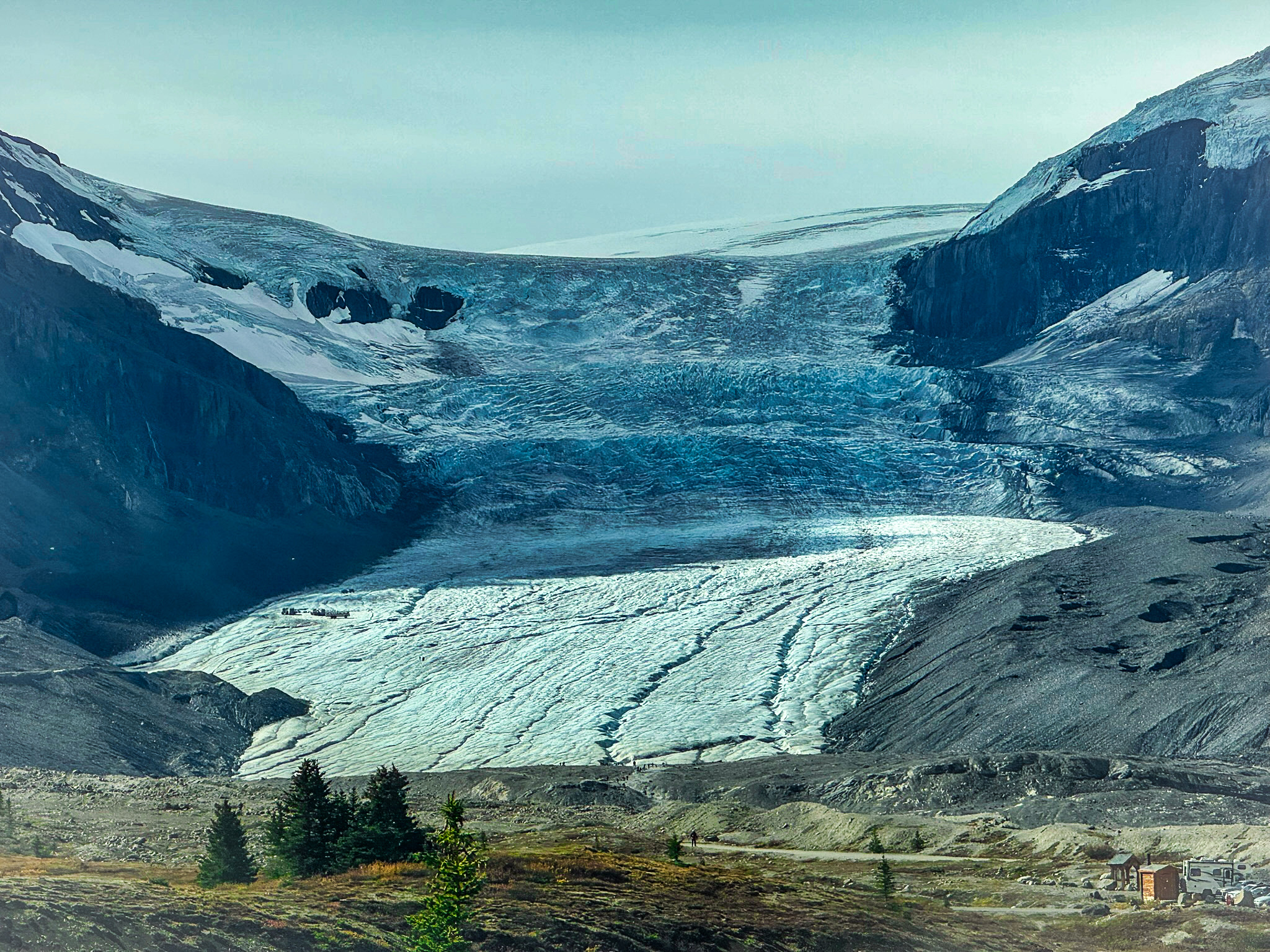
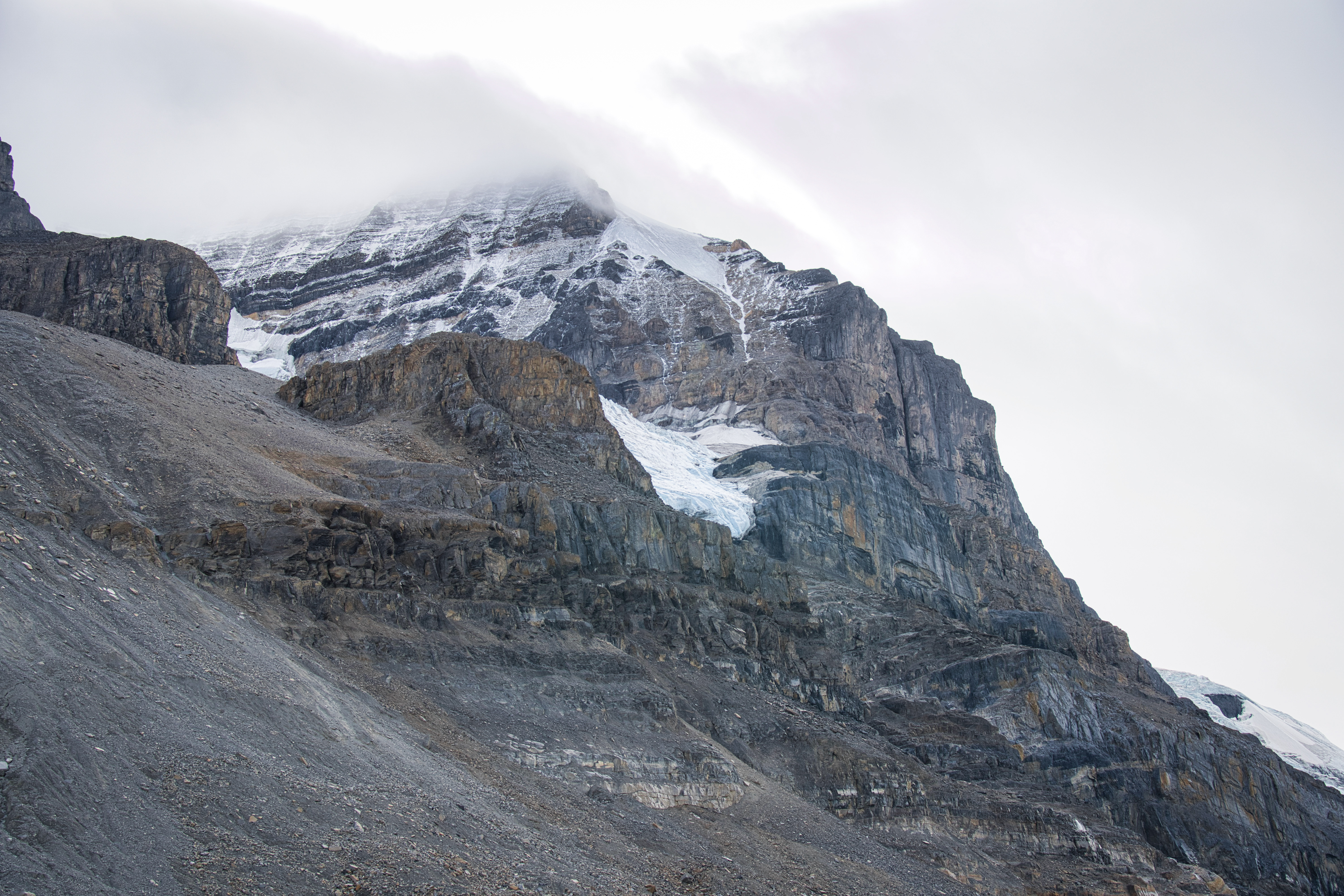
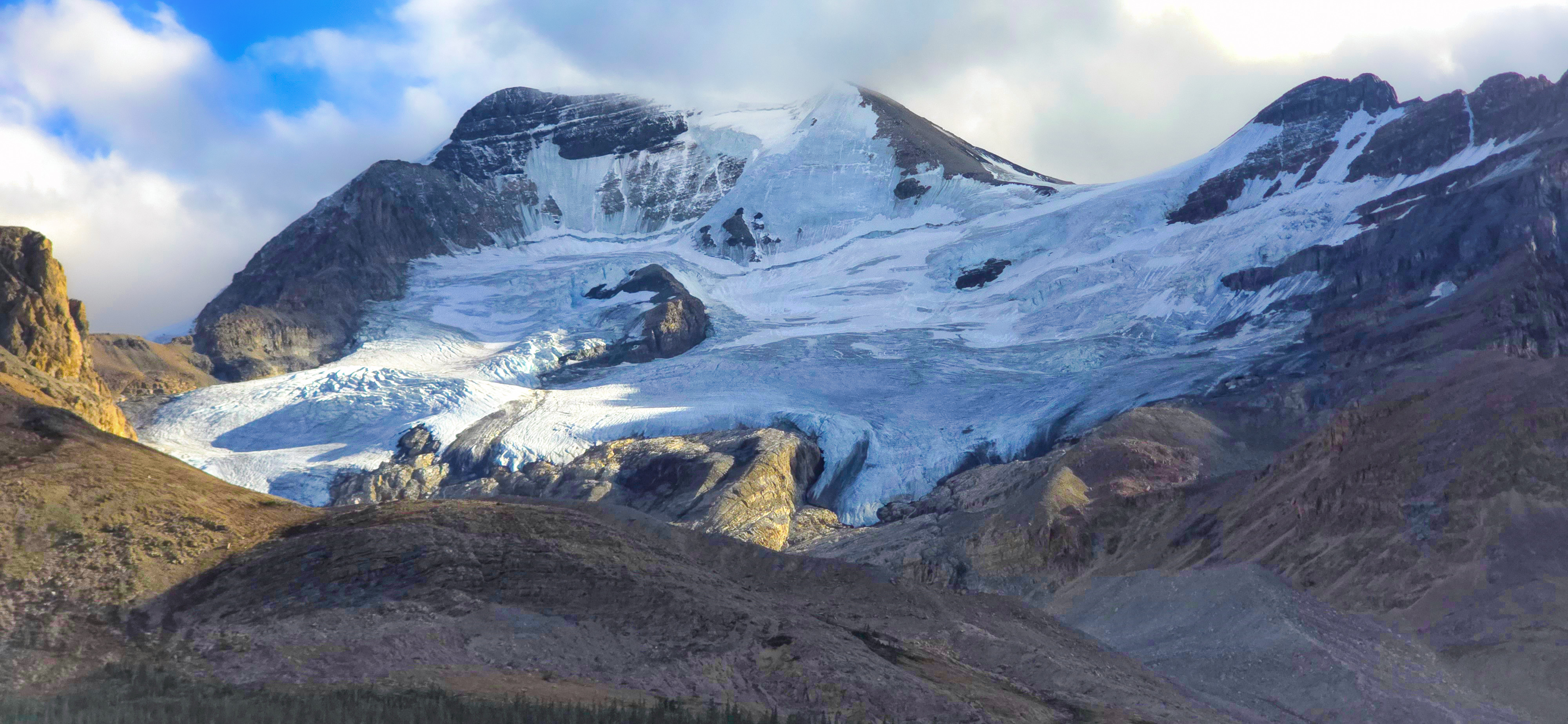
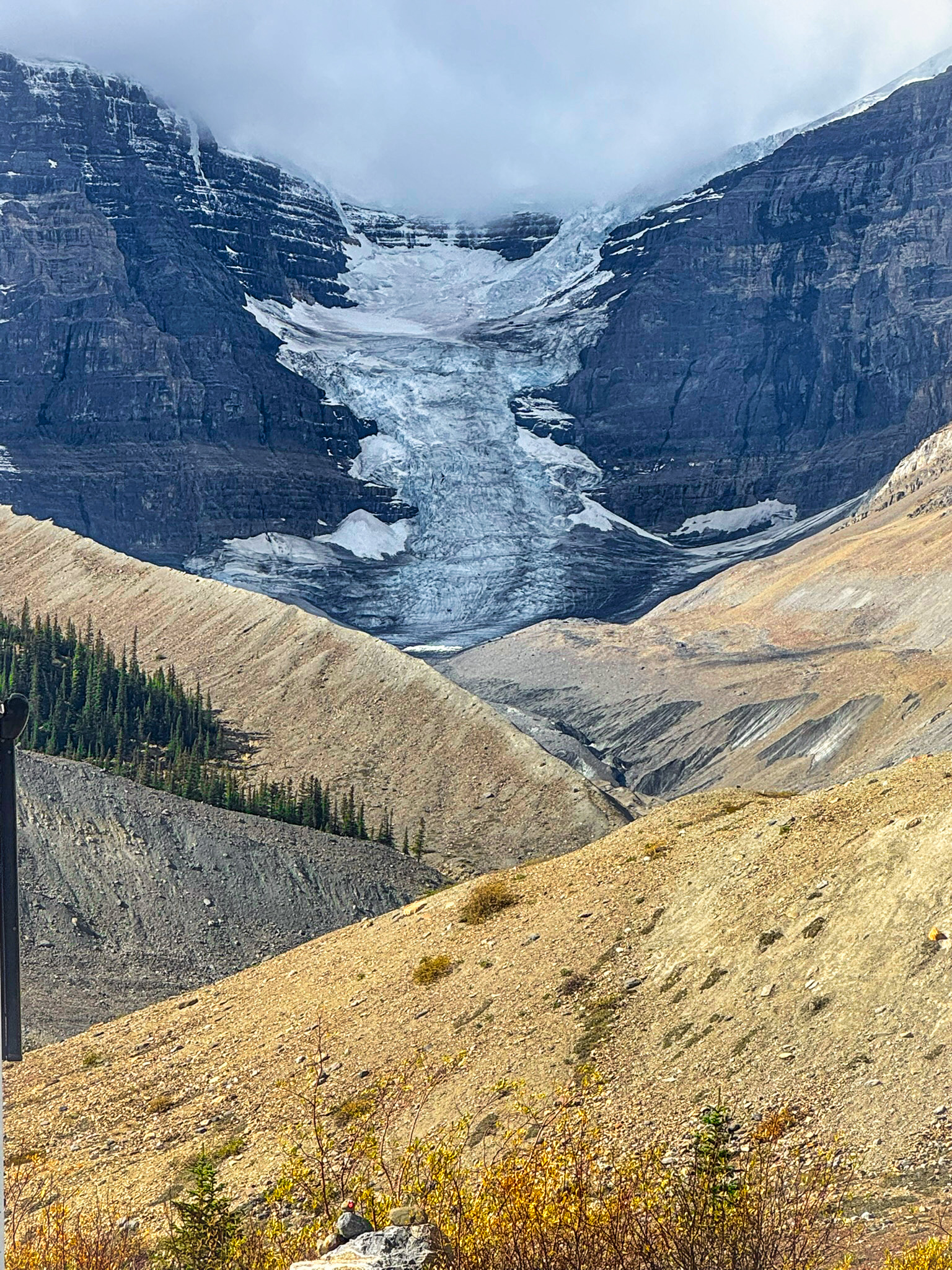
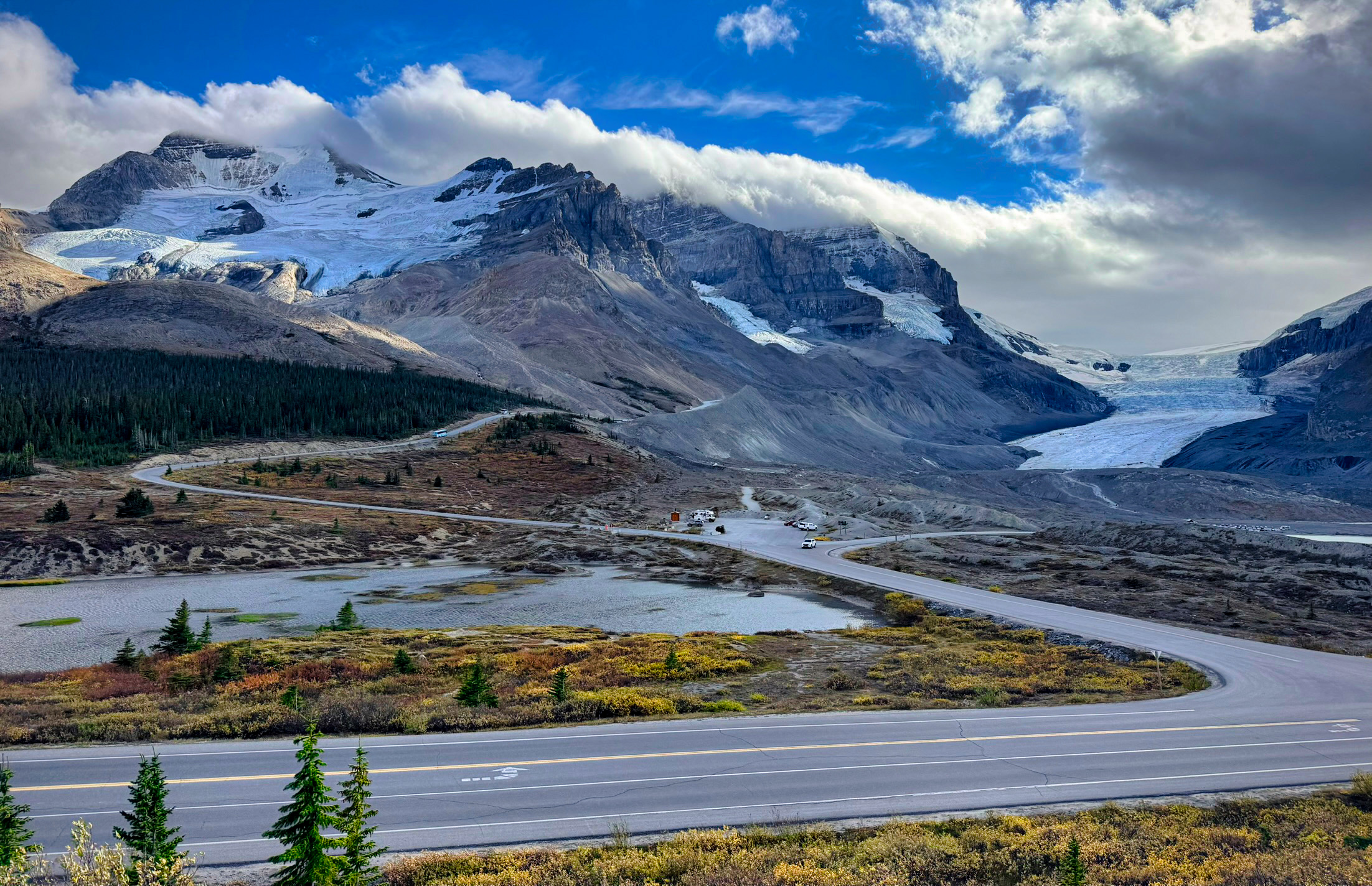
Ahead, the horizon shimmered—an immense world of glaciers and peaks that seemed to breathe cold light. The highlight of the day was exploring the Columbia Icefield, a frozen giant spanning nearly 125 square miles—the largest in the Canadian Rockies and the source of six major glaciers. At its heart rises Snow Dome Peak, a geological wonder where meltwater flows toward three different oceans: the Arctic, Atlantic, and Pacific. Few places on Earth hold such a rare and remarkable distinction.
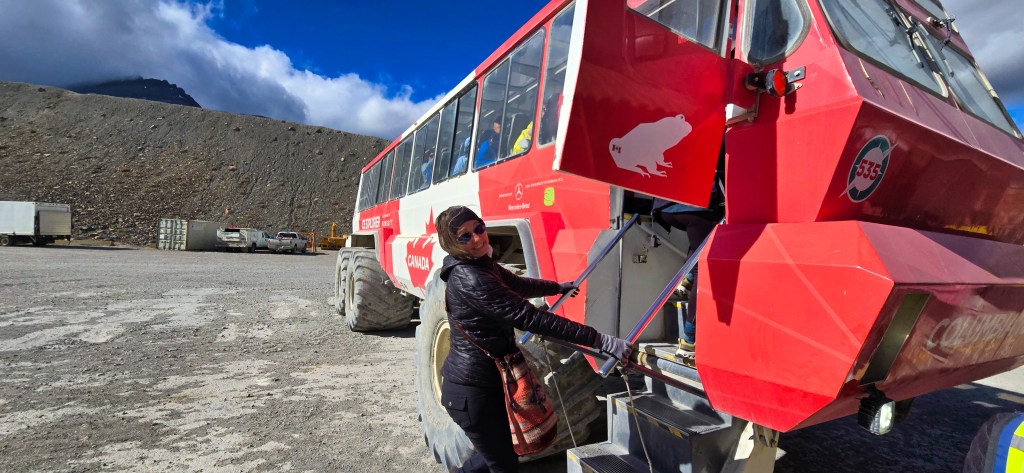
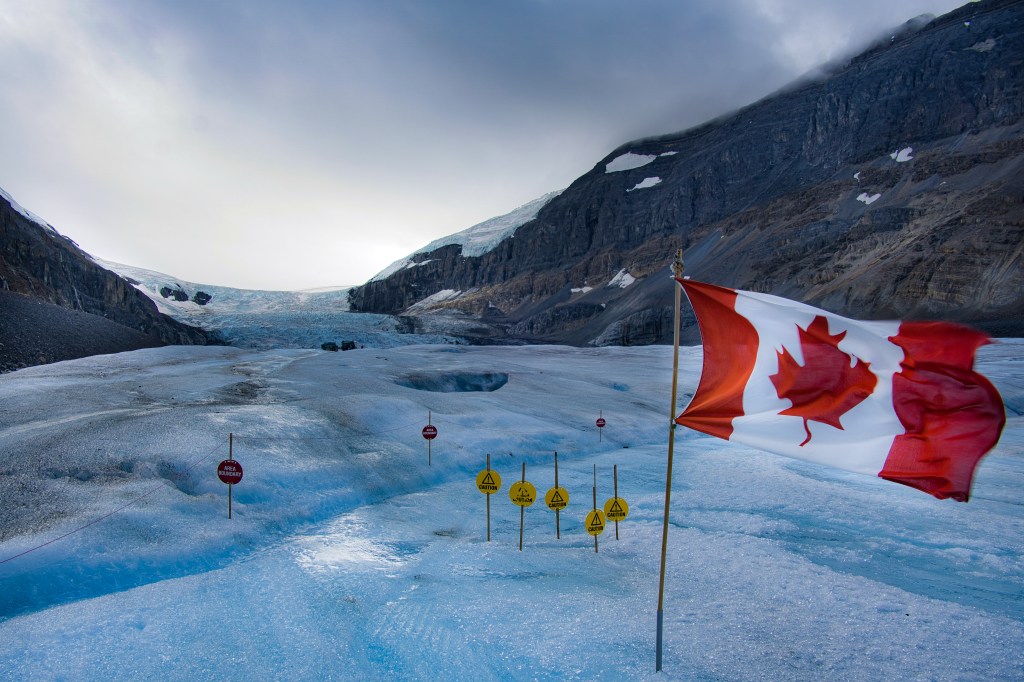
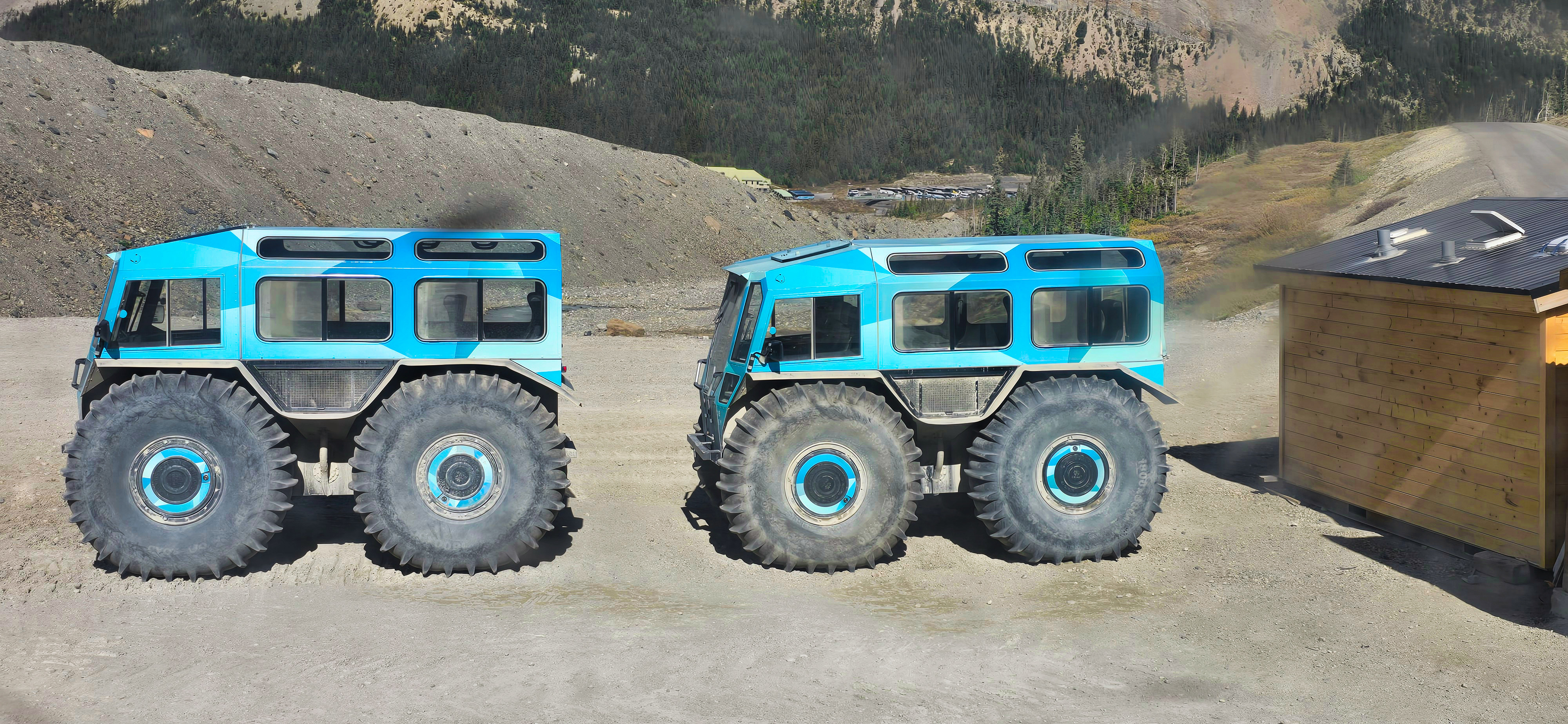
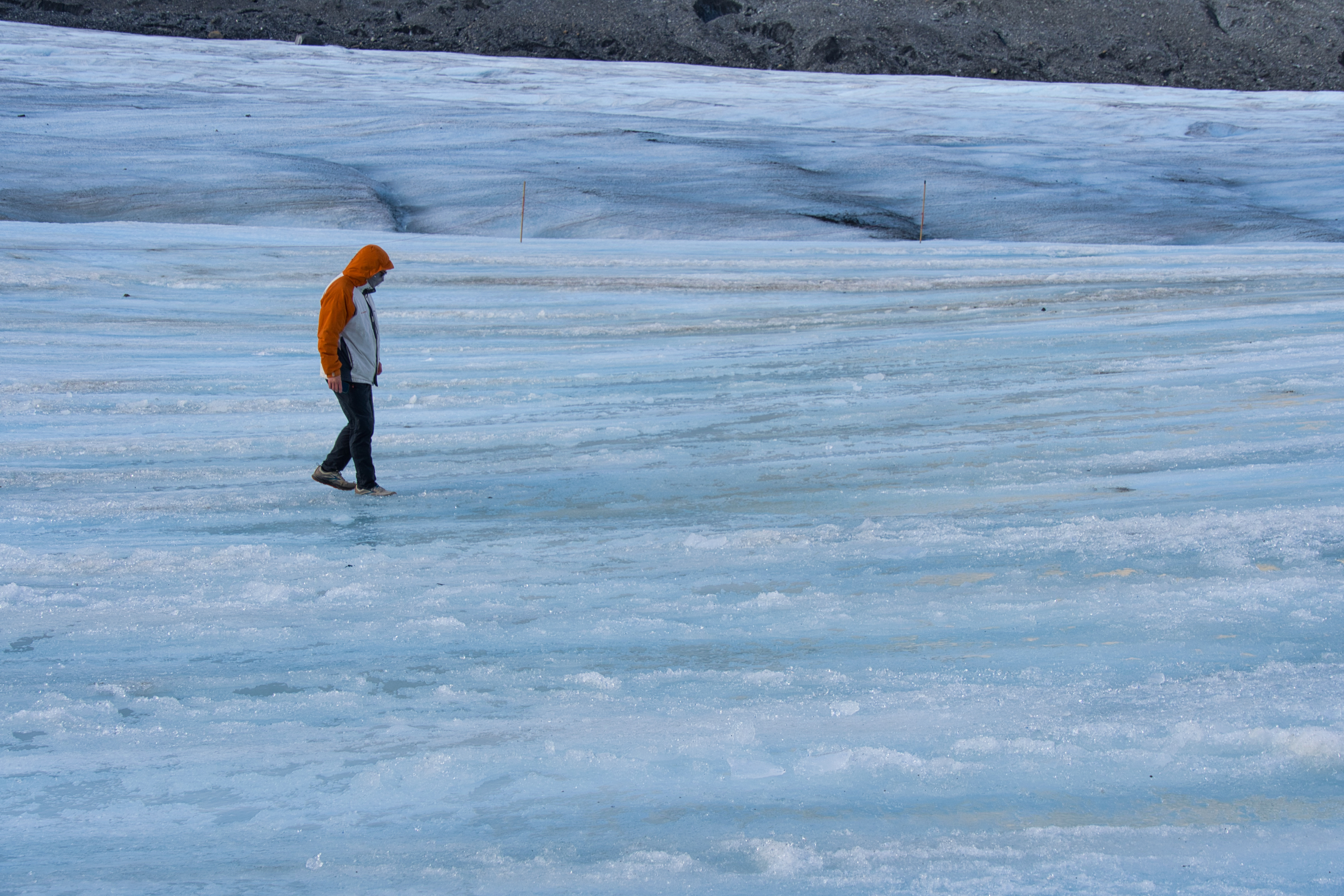
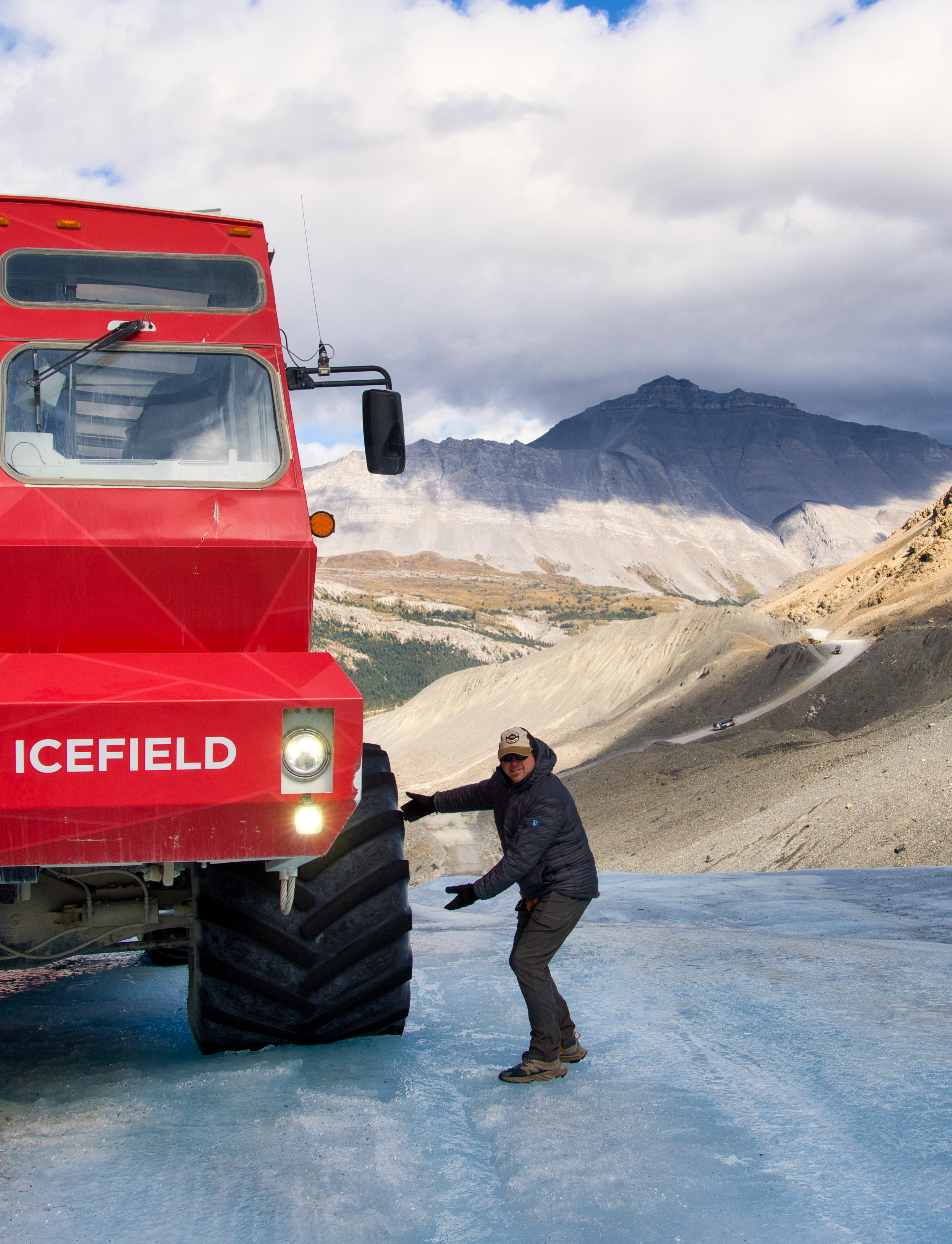
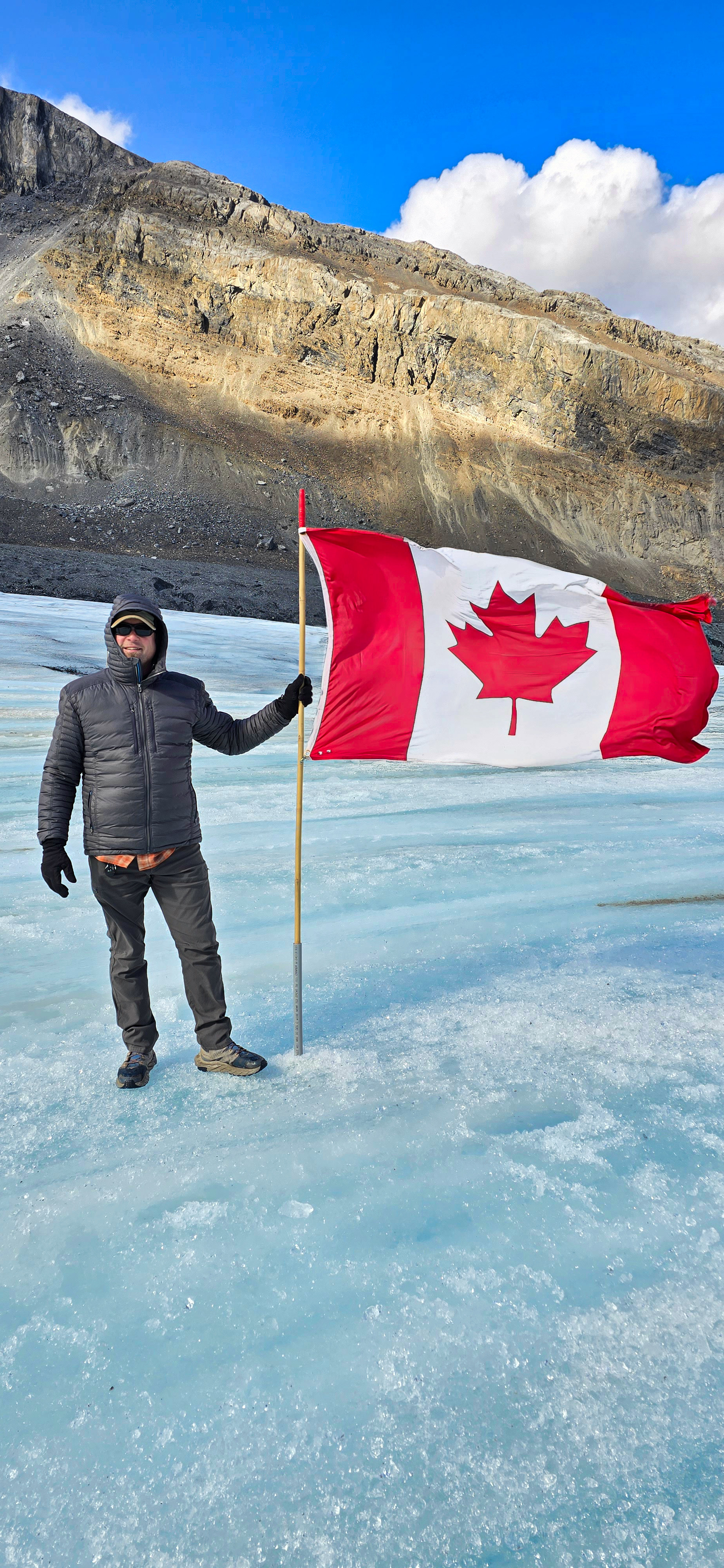
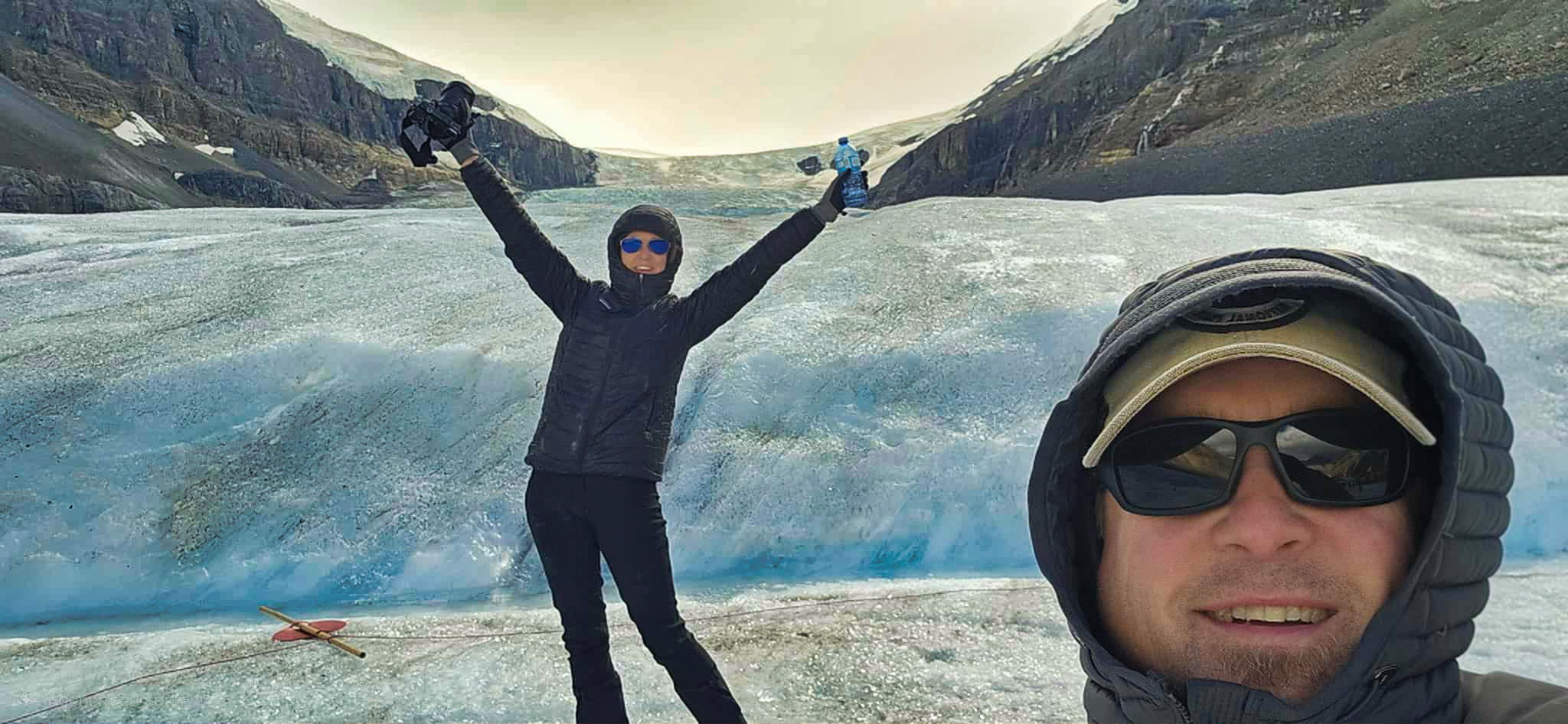
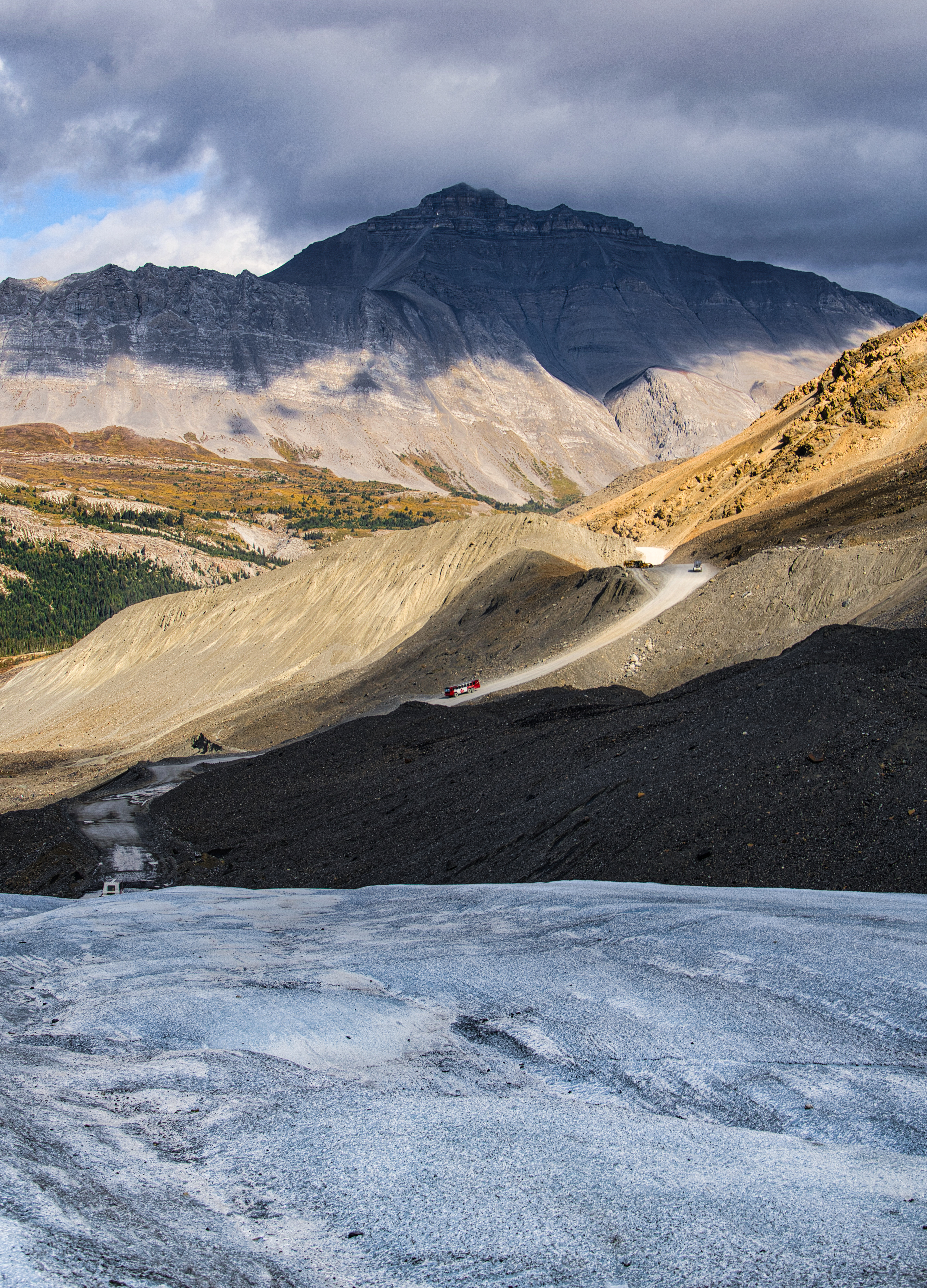
At the Icefield Discovery Centre, we boarded one of the massive red-and-white Ice Explorer buses—its tires taller than we were, custom-built for the steep, rugged road leading onto the Athabasca Glacier. The descent to the ice was astonishingly steep, with grades reaching up to 36%, so sharp that the driver joked it was one of the steepest commercial roads in North America. When we finally rolled onto the glacier, the cold struck like a wall. I was grateful for my microspikes as we stepped out into the wind—wild, relentless gusts that whipped across the ice, rattling jacket zippers and numbing fingers. Some people struggled to stay upright as the gusts swept over the slick surface, but I stood steady, transfixed by the view. Before us stretched a world of shimmering white and glacial blue—ancient, immense, and alive beneath a restless sky.
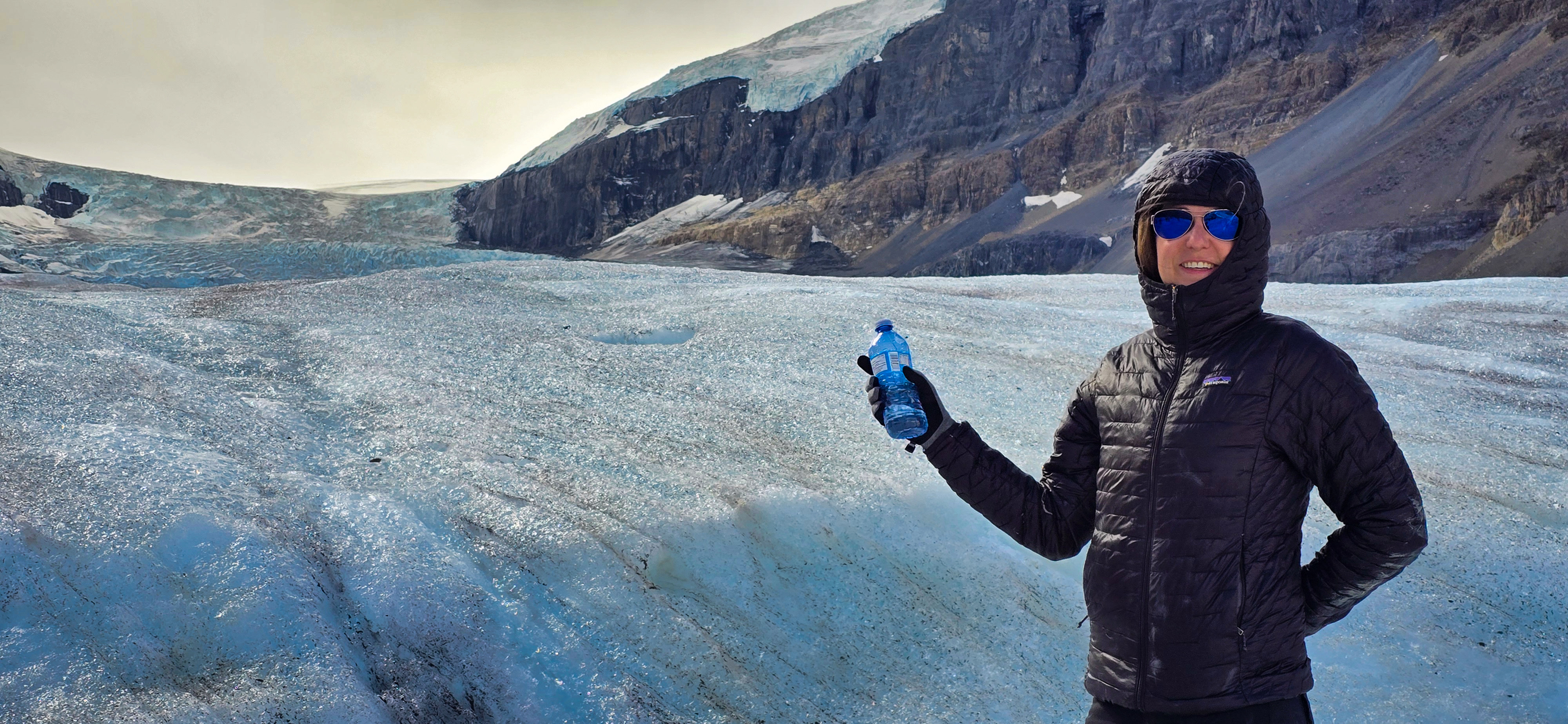
The glacier itself was mesmerizing—its surface a tapestry of crystal blue and streaked white, carved and reshaped by centuries of ice and time. Meltwater trickled across the ridges in clear, glassy rivulets, pooling in pockets that caught the pale sunlight and shimmered like glass. I knelt to scoop a handful into my bottle, the chill biting instantly at my fingertips. The water was shockingly pure and crisp—tasteless, yet somehow the best I’d ever had. Standing there, surrounded by silence broken only by the whisper of wind over ice, I felt profoundly connected to something timeless.
The Glacier Skywalk
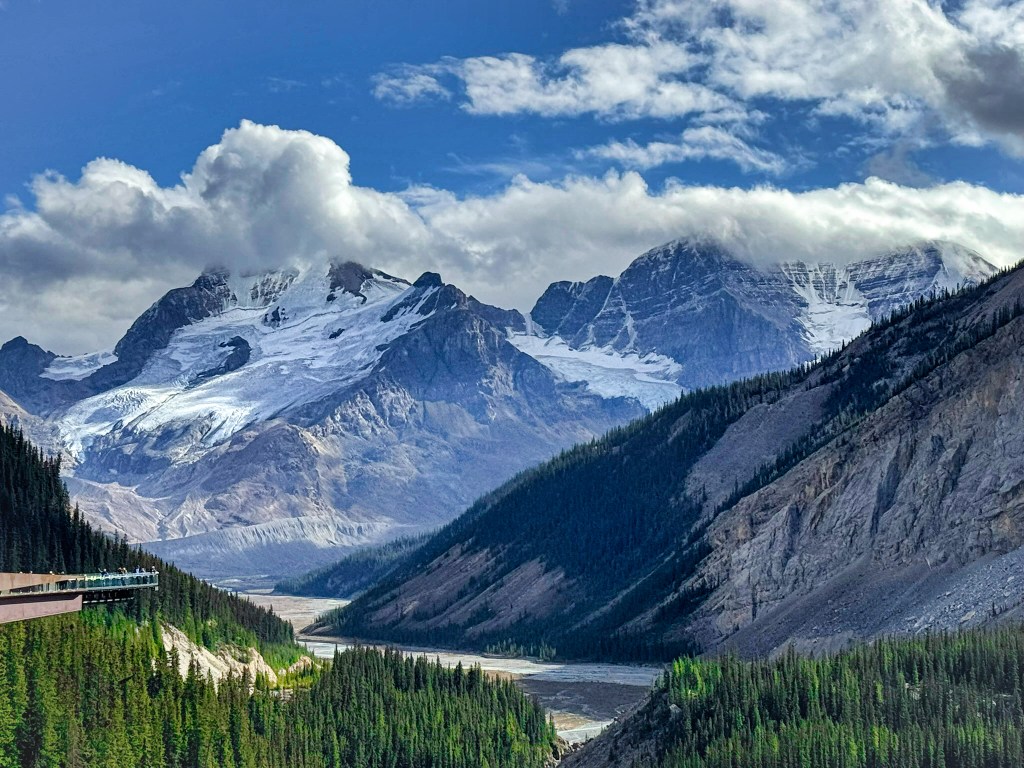
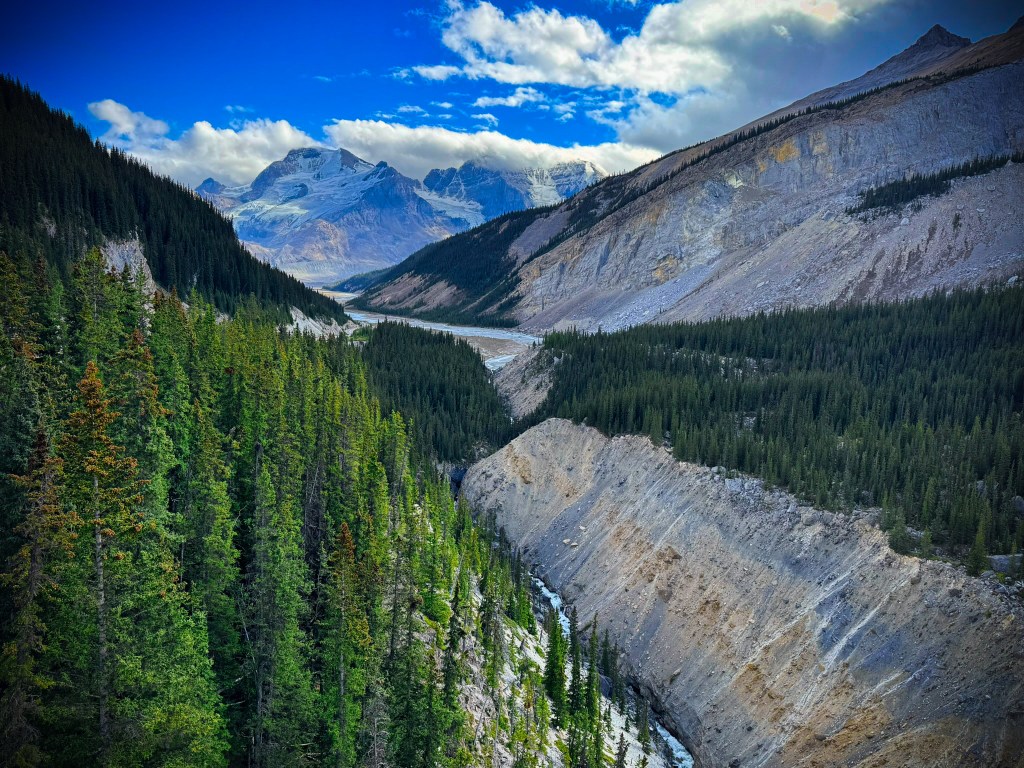
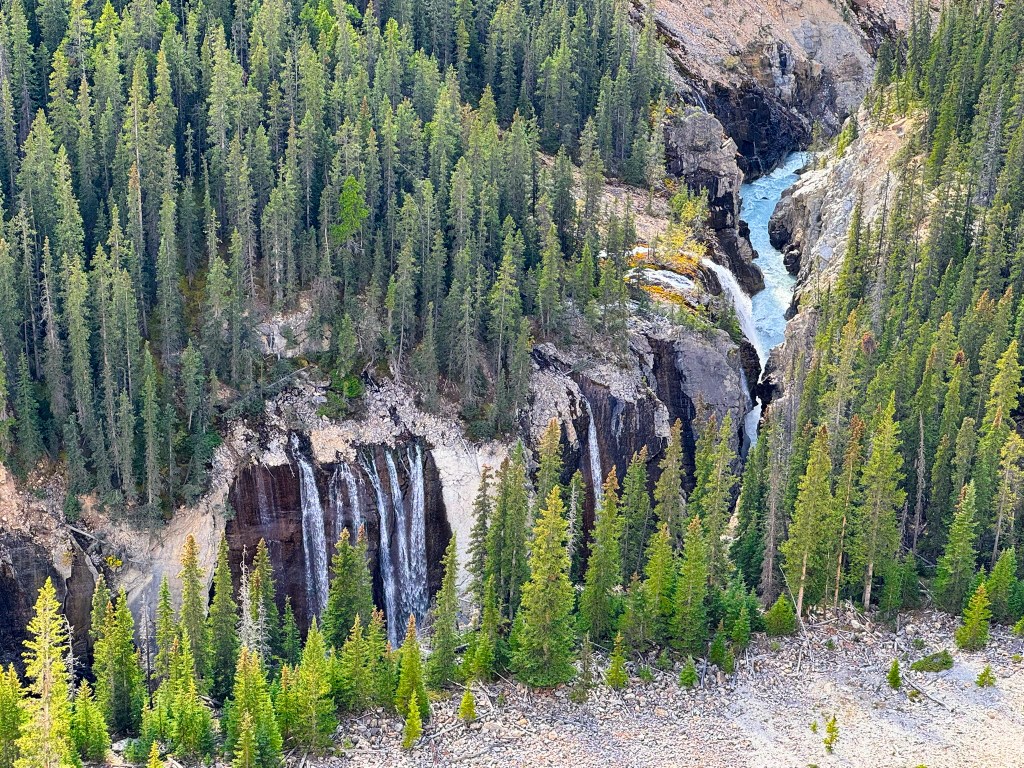
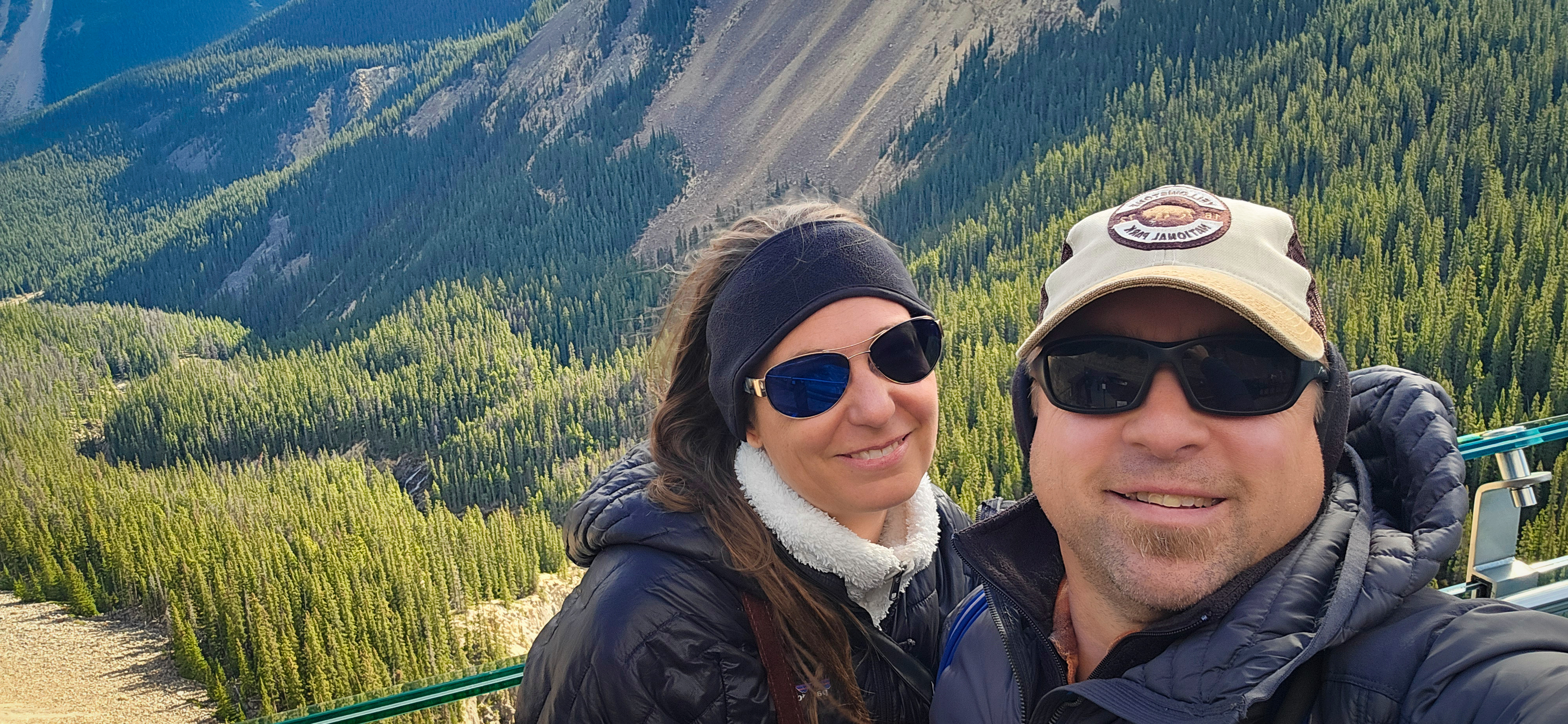
After leaving the ice, we continued to the Glacier Skywalk—a graceful arc of glass and steel suspended 918 feet above the Sunwapta Valley. The contrast from the glacier was striking: where the icefield felt grounded and ancient, the Skywalk felt light and infinite, a bridge between earth and sky.
Stepping onto the transparent platform, our hearts quickened as the world opened beneath us. The valley dropped away into a dizzying expanse of cliffs and waterfalls, ribbons of white tumbling through the dark canyon walls. In the distance, glaciers gleamed under shifting clouds, their edges catching the sun like fractured crystal. The air felt alive here—cool, thin, and full of possibility. It was humbling and exhilarating all at once, to be suspended between so much space and silence, surrounded by the sheer immensity of the Rockies.
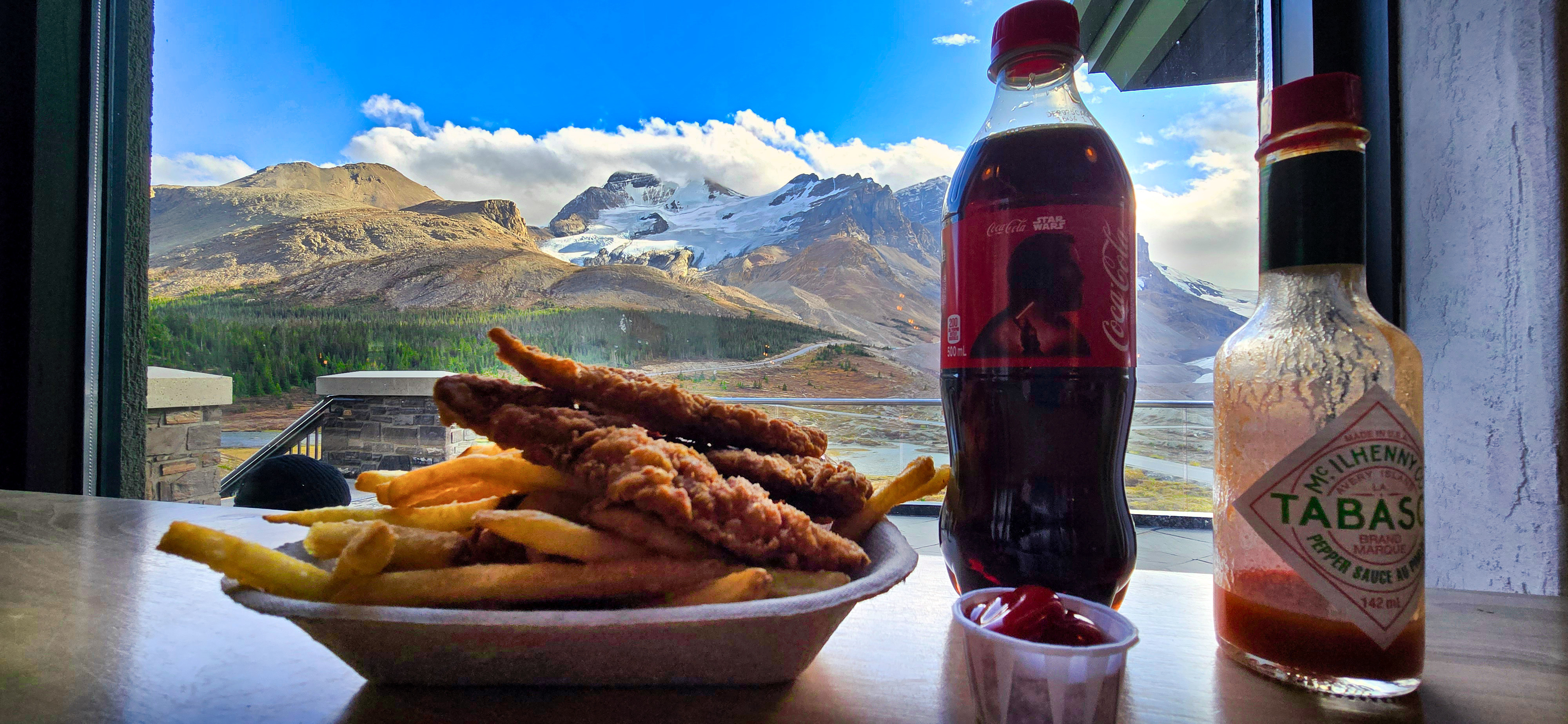
Back at the Discovery Centre, we thawed out over a late lunch—comfort food with one of the best dining views imaginable. Through the wide windows, we watched clouds drift lazily over ice-capped peaks, their shadows gliding across the slopes like passing thoughts. It was the kind of view that made even a simple meal feel extraordinary.

Evening Along the Athabasca River
By late afternoon, we began the drive north toward Jasper, the road winding through valleys brushed in gold and green. Along the way, the landscape shifted—forests giving way to open slopes marked by the scars of last year’s wildfire. Charred trunks stood like sentinels among the new growth, the first signs of life pushing up through the ash. It was haunting and hopeful all at once—a quiet reminder that even in the wake of destruction, renewal finds a way.
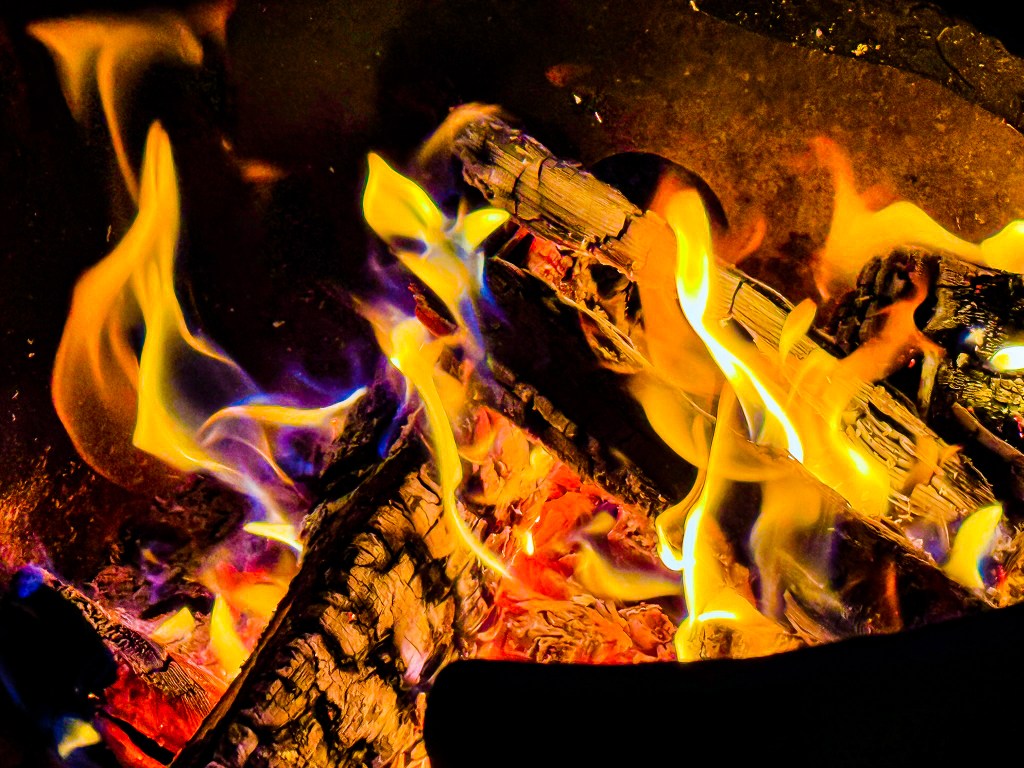
When we reached Wapiti Campground, the rhythm of the day softened. Our site backed up to the Athabasca River, its glacial waters rushing steady and cold behind the trees. As we set up camp, the air filled with the scent of pine and woodsmoke, and the sound of the river blended with the low crackle of our fire. Surprisingly, the evening was warm, and I cozied up in a blanket more for comfort than for the cold—content to simply sit and listen as the water whispered through the dark.
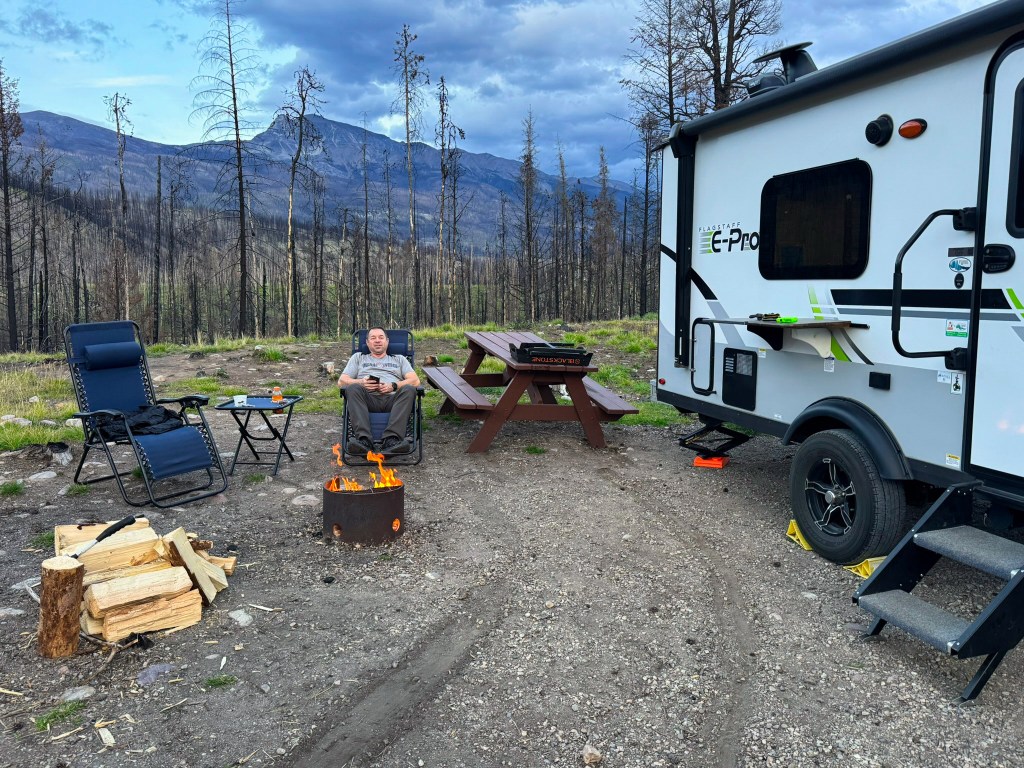
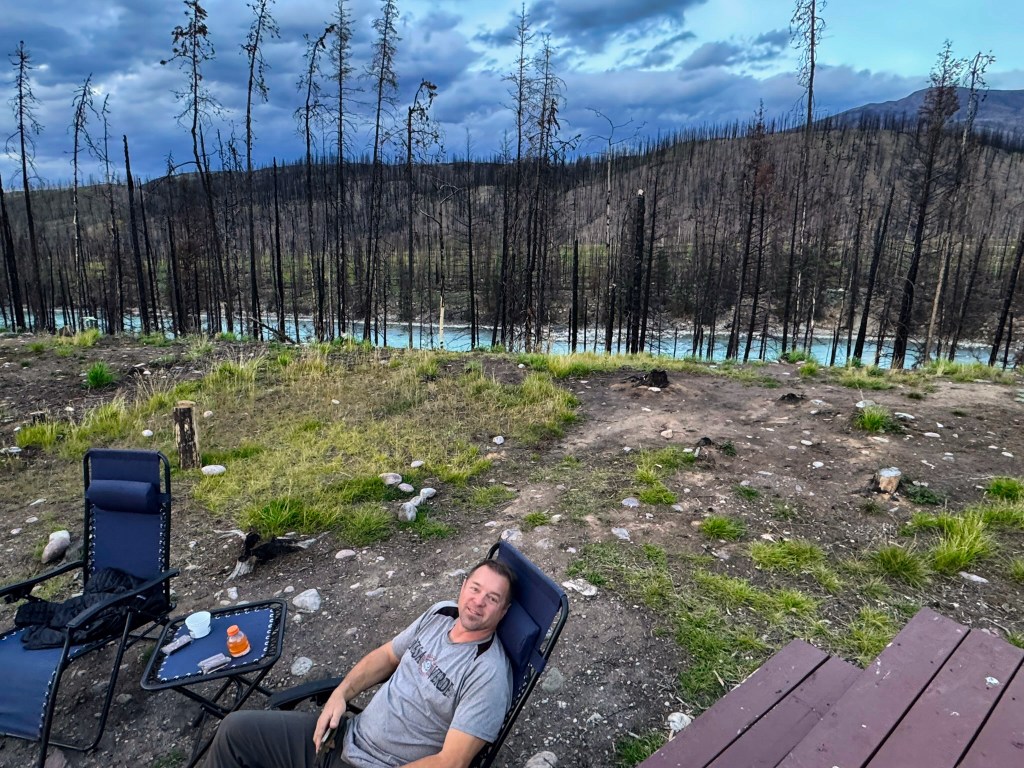
The light faded slowly, painting the peaks in dusky rose and then indigo. A calm peace settled in, the kind that only comes after a day spent completely in awe of the world. The river carried on beside us—endless, untamed, and steady—a quiet pulse beneath the vast Canadian sky.
Next: Jasper lay ahead—the largest park in the Canadian Rockies, wild and untamed, its peaks freshly dusted in snow and ready to unveil another chapter of mountain magic.




 Western Wanderlust Chronicles
Leave a comment