
Slot-like Passages, Sandstone Steps & A Slow Evening at Horsehoof Camp
Needles & Beyond: Backcountry Series — Post 3
Some days in the backcountry are about distance. Others are about depth.
In the first two posts of this series, Bill and I made our way into the Needles gradually — first through Bears Ears, Davis Canyon, Colorado River Overlook, and Lockhart Basin, then across Elephant Hill, through Devil’s Lane, out to Confluence Overlook, and finally into Horsehoof Camp.
By Day 4, the Jeep had carried us deep into the district. Now it was time to let our feet take over.
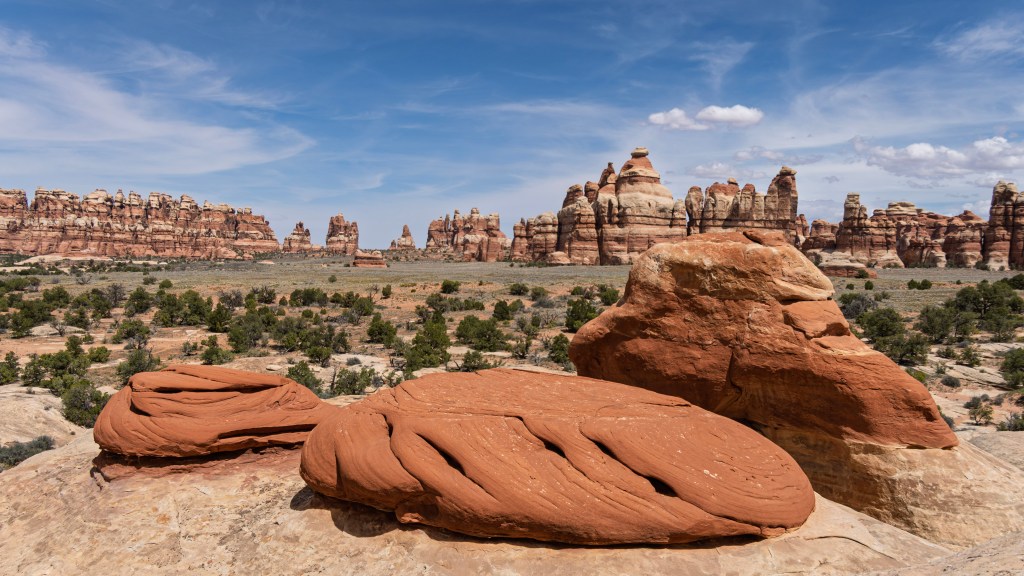
This day would take us into one of the most unique corners of Canyonlands: the Joint Trail, where fractures in sandstone create shadowed corridors hidden beneath the wide-open desert, and Chesler Park, a broad basin ringed by the fins and spires that make the Needles unforgettable.
Tuesday, April 21
Morning at Horsehoof Camp
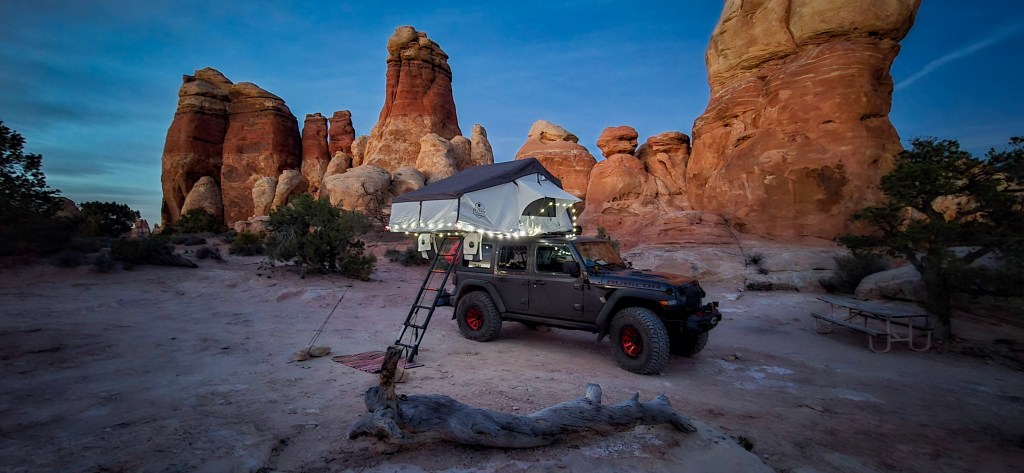
Morning at Horsehoof Camp began with movement all around us.
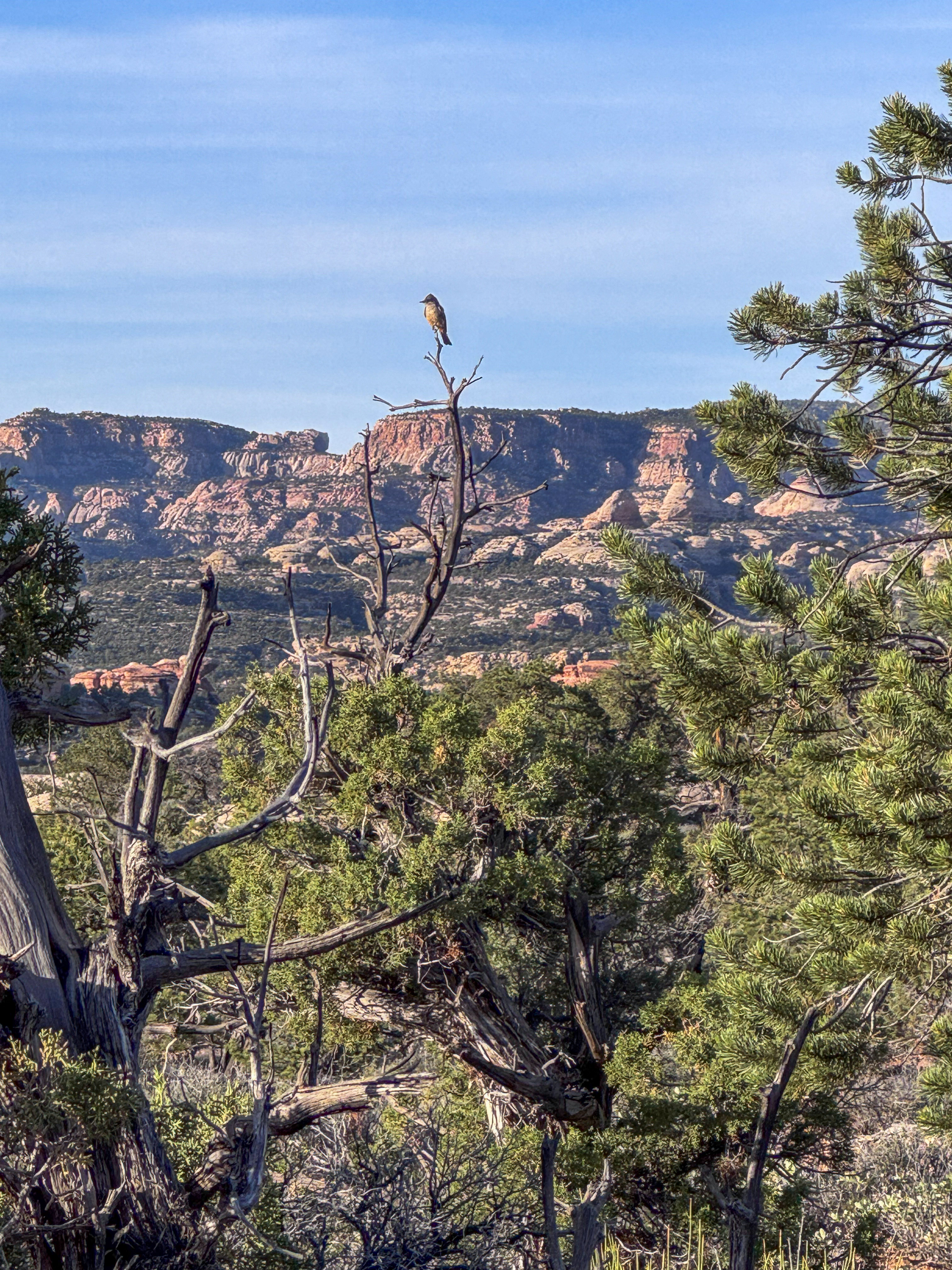
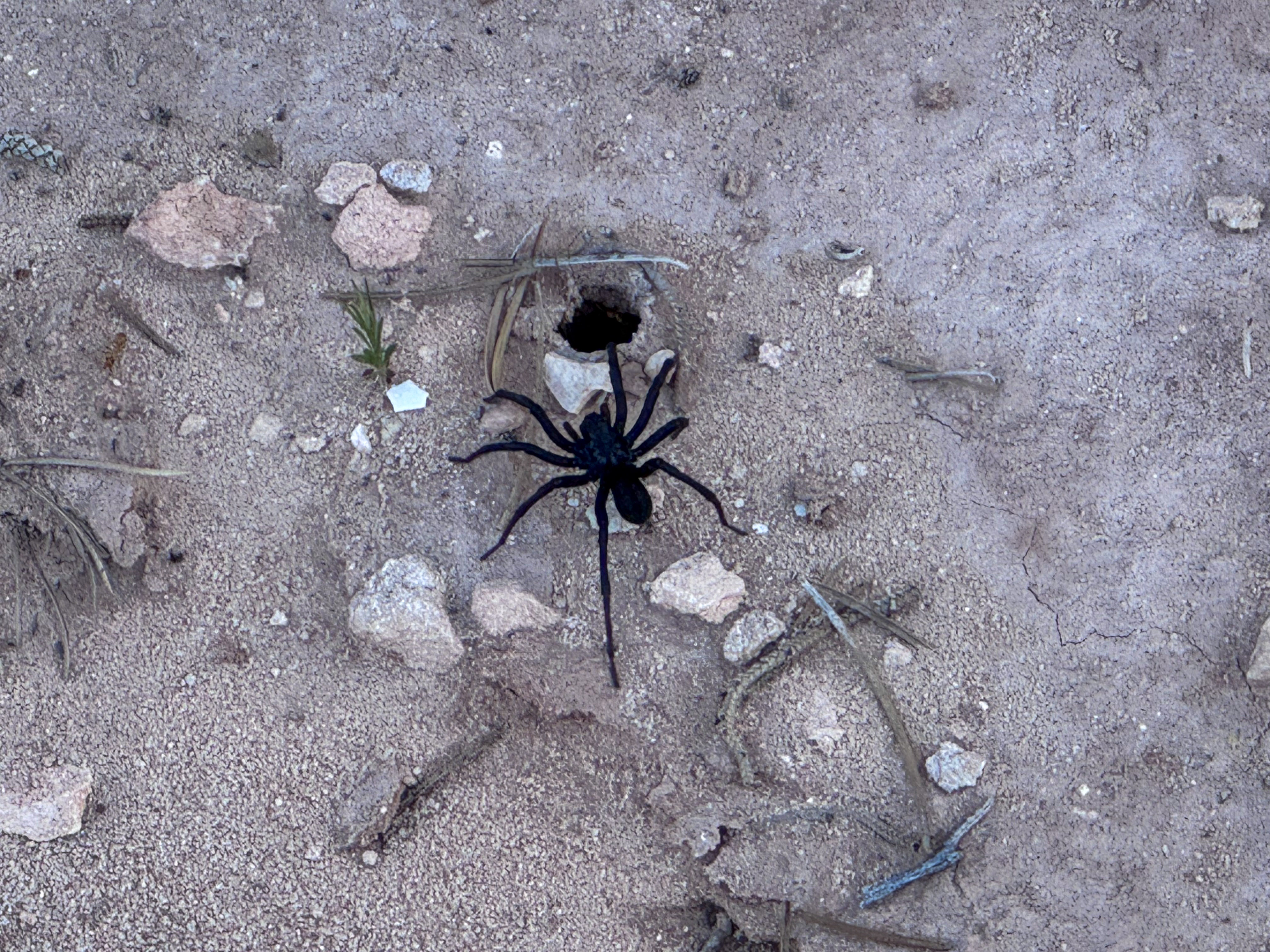
Not the busy kind — just the small routines of the desert waking up. A squirrel moved through camp with purpose, birds flicked from branch to branch, and their calls carried through the cool morning air. Even a spider made its way across the sand near its burrow, part of the tiny world already in motion before the day had fully warmed.
After brewing a cup of coffee, I grabbed a chair and found a sunny spot on the rock where I could sit for a while and watch the morning unfold. The first warmth of the day felt good after the cool night, and from that perch I could see birds moving through the juniper while the sandstone slowly brightened around camp.
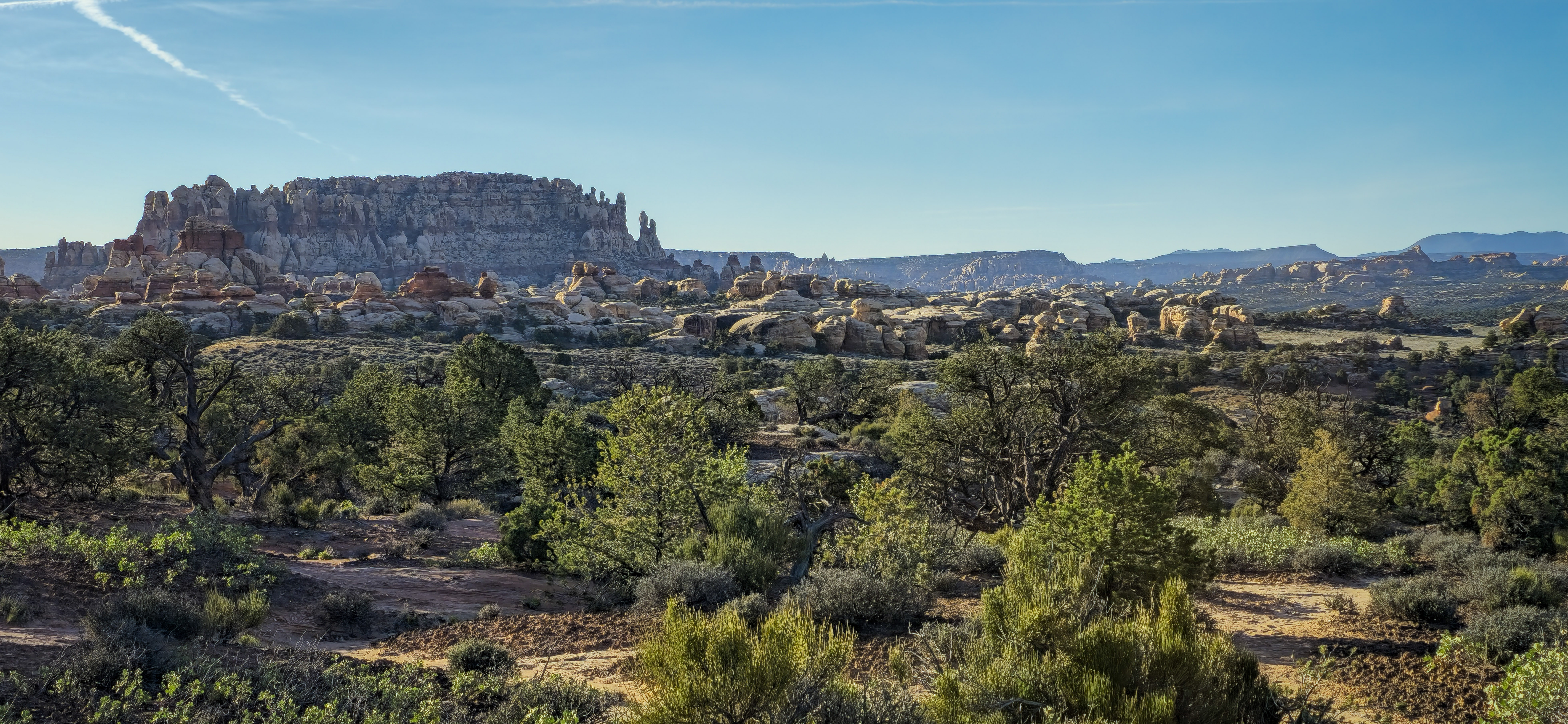
The Needles looked softer in the morning light, with shadows still tucked into the lower places and the tops of the formations catching the early glow. After the technical intensity of the day before, it felt good to begin this one slowly — with coffee, birdsong, warm sun on stone, and nowhere to rush.
Heading for the Joint Trail
Today, our plan was to explore the Joint Trail.
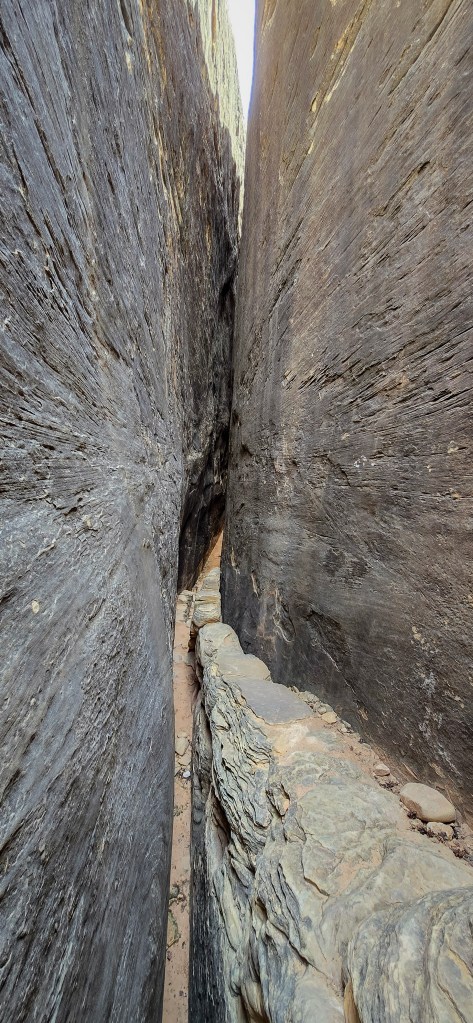
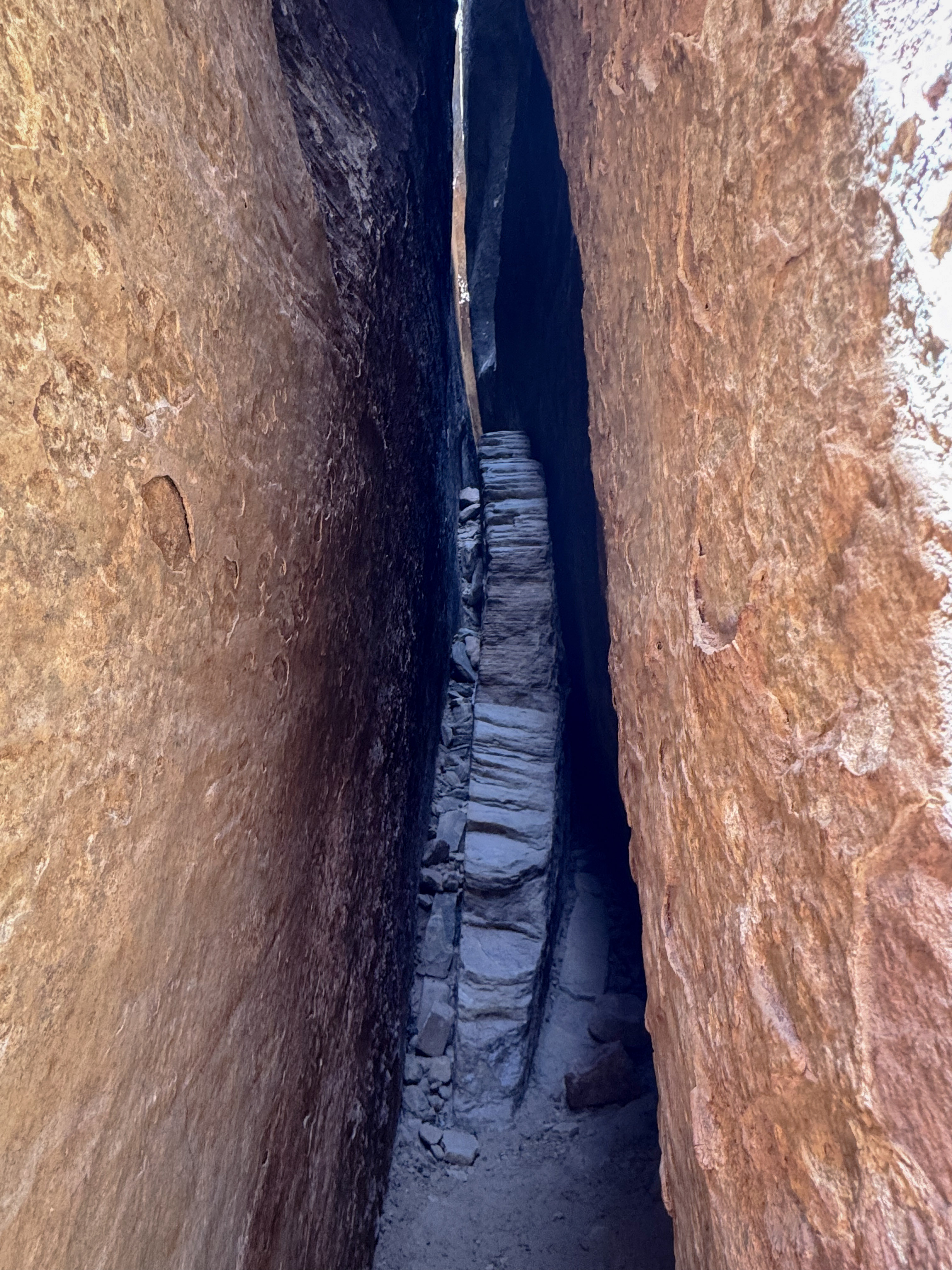
The Joint Trail is one of the most memorable routes in the Needles District, known for a unique section on the south side of Chesler Park where the trail passes through deep fractures in the sandstone. These fractures, called joints, create narrow passageways with smooth, straight walls — almost slot-like, but shaped by cracks in the rock rather than flowing water.
With temperatures climbing into the high 70s, it felt like the perfect day to seek out shade. The open desert would be warm, but the joints promised cooler air, shadowed corridors, and the kind of hidden spaces that make the Needles feel like a maze built from stone.
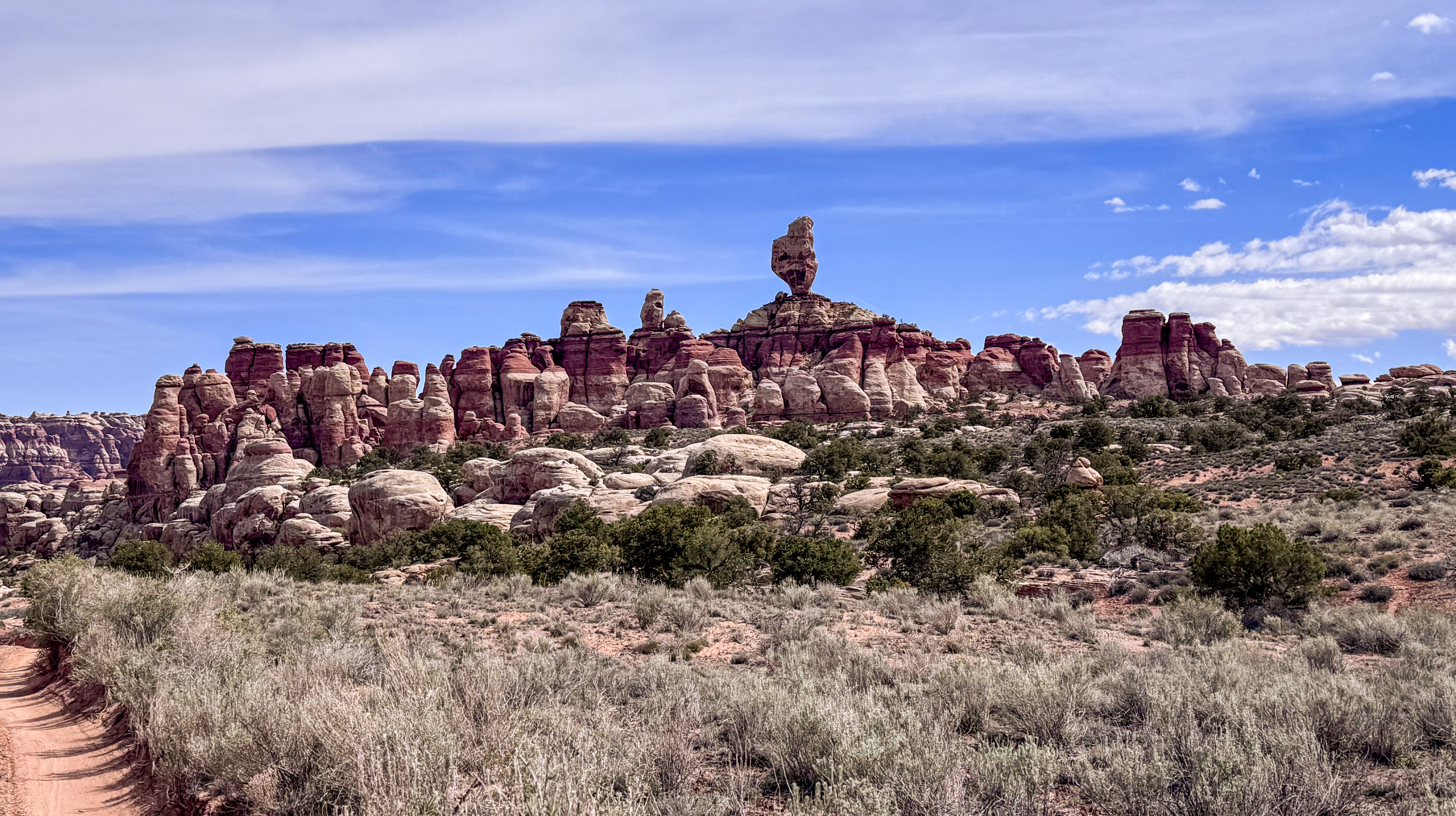
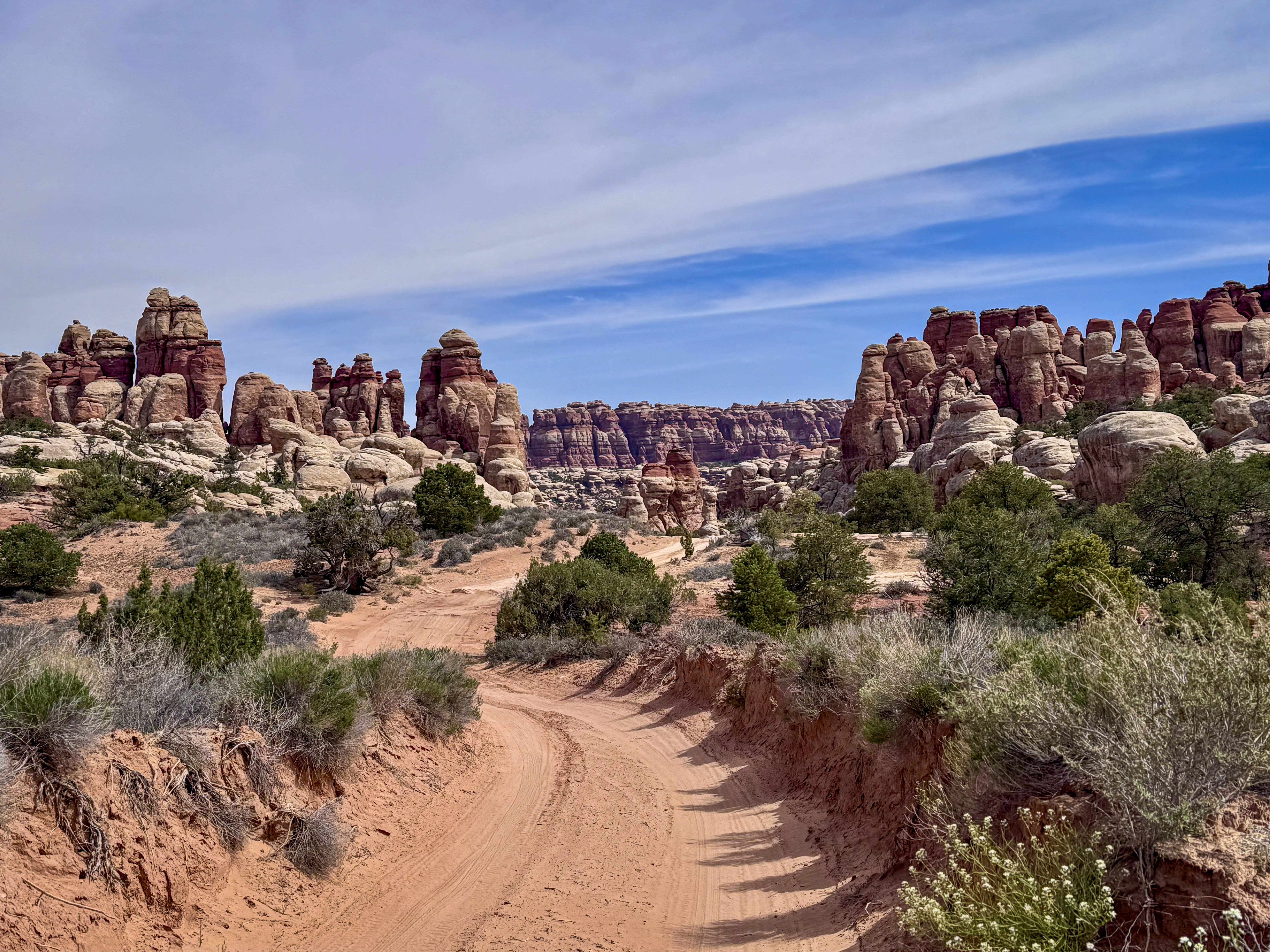
Even getting to the trailhead felt like part of the experience. The sandy road wound through a landscape crowded with sandstone towers, rounded domes, and balancing rocks, each turn revealing another formation that seemed more sculptural than the last. And the hike hadn’t even begun yet.
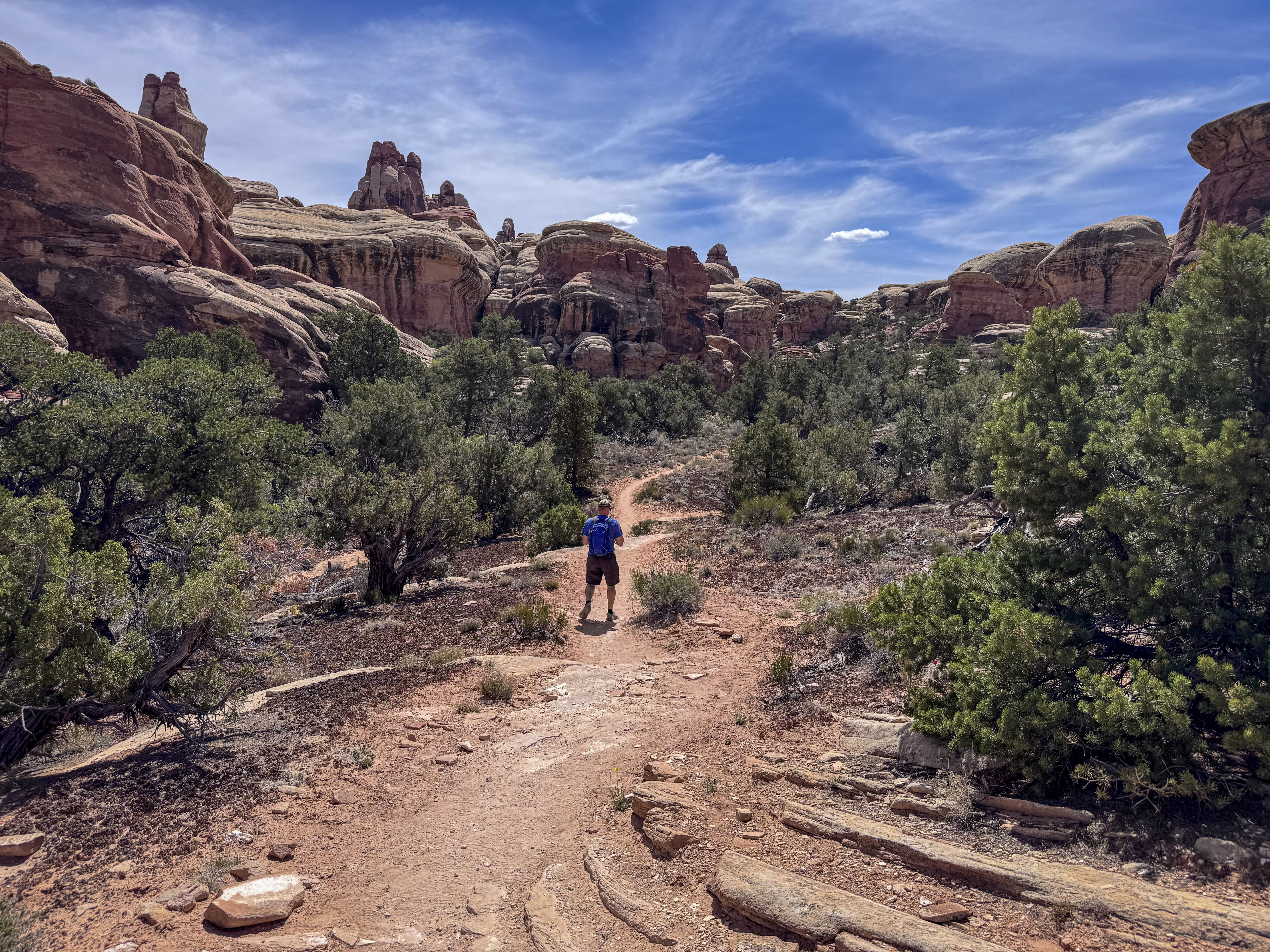
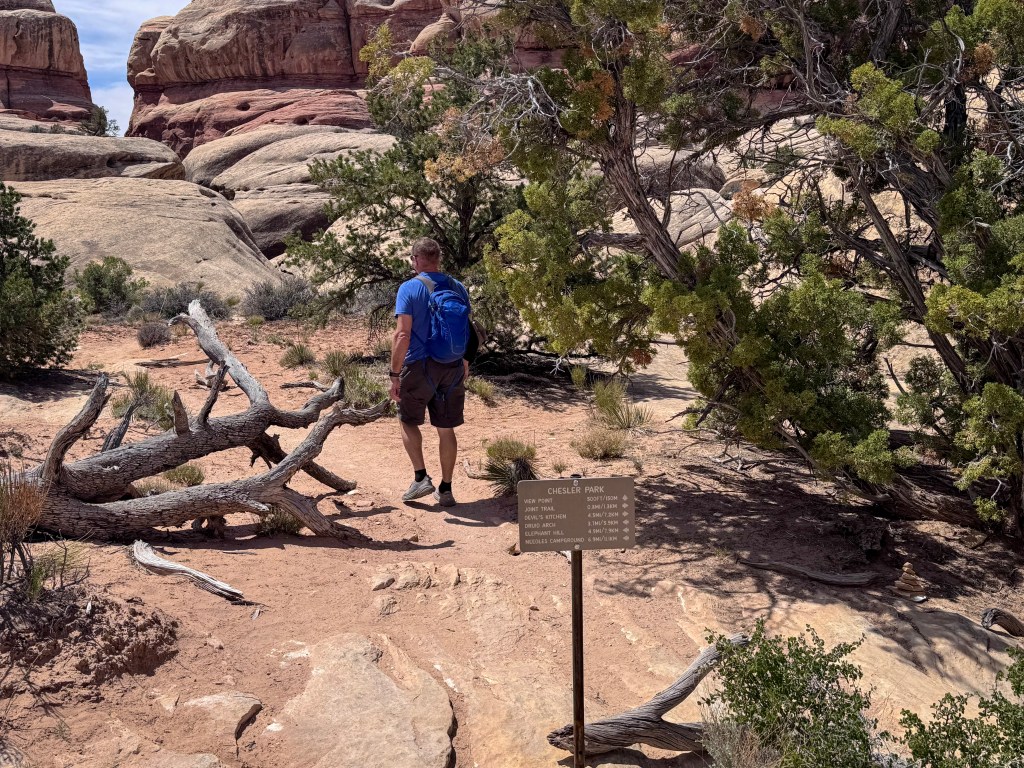
From the trailhead, the route started out in open desert. The path crossed sandy tread and low brush, with juniper, pinyon, and the familiar shapes of the Needles rising around us. At first, it felt open and sunlit, but little by little the landscape began to shift. The walls gathered closer. The desert narrowed. The shadows deepened.
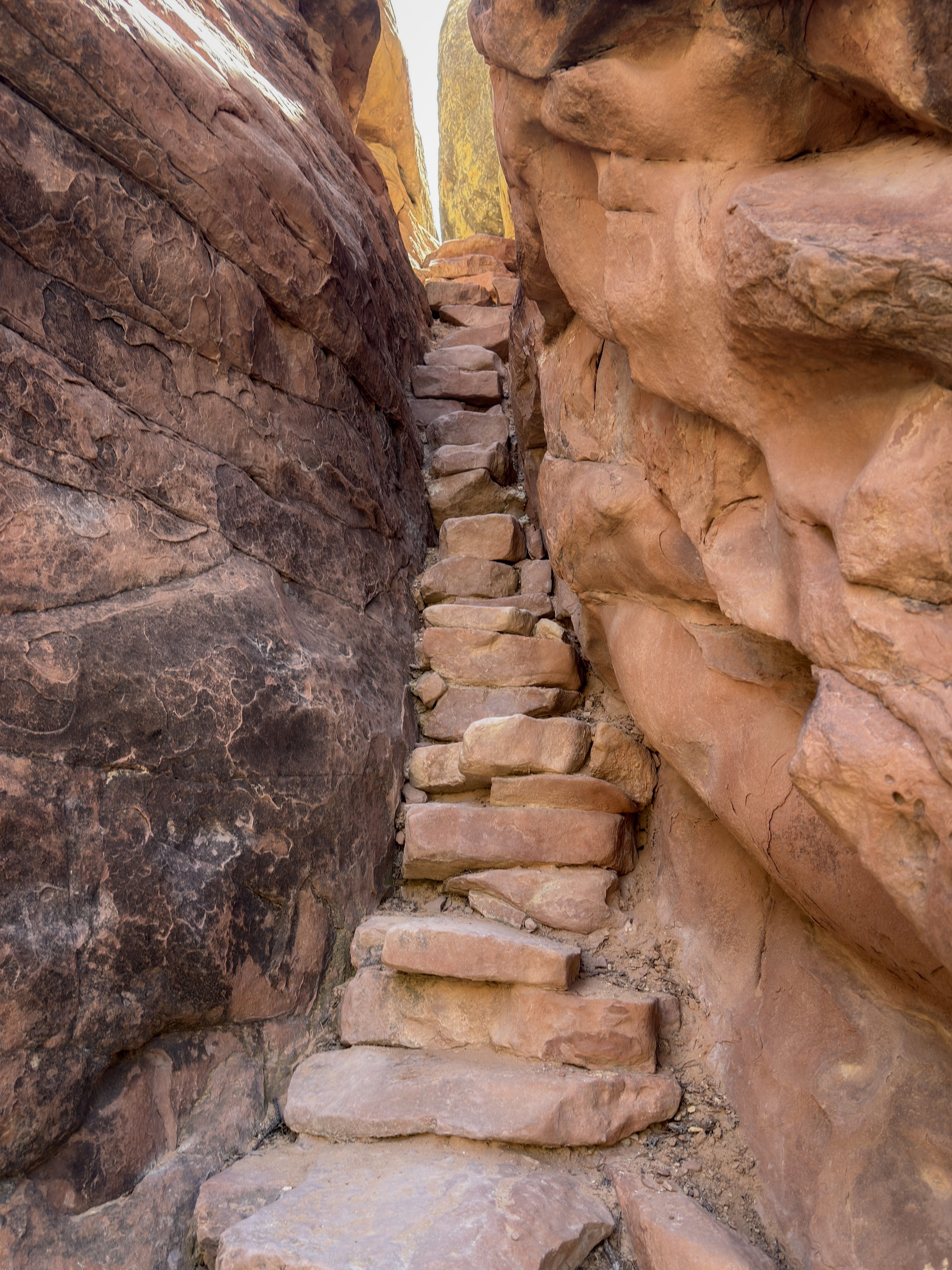
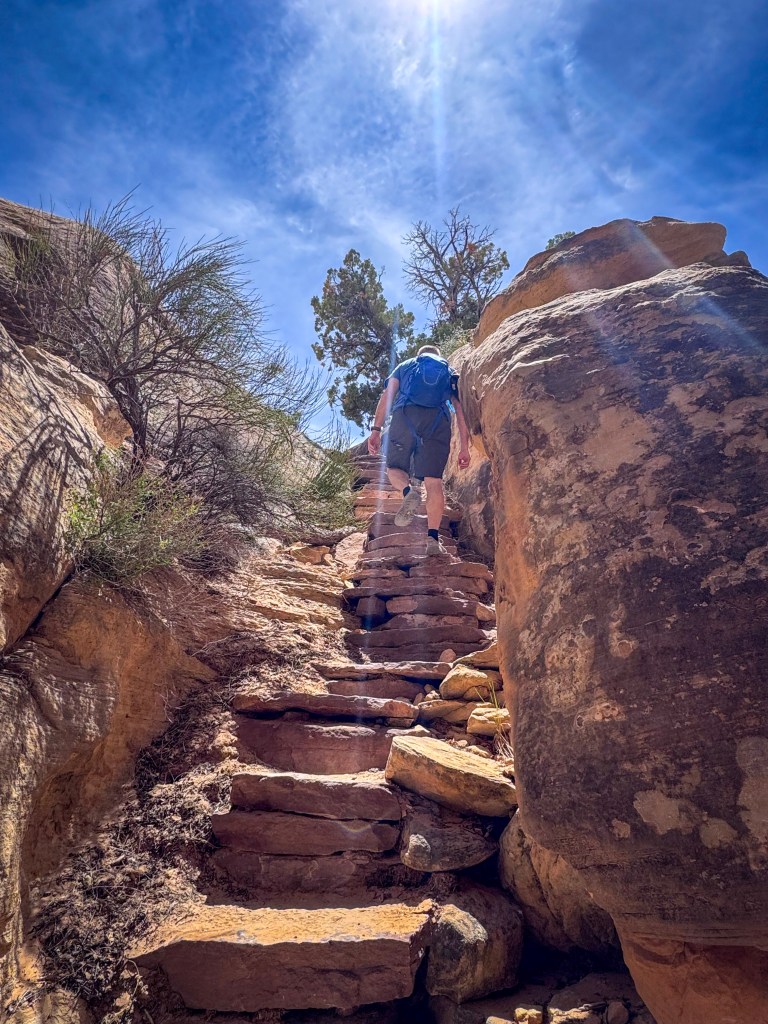
Then a set of stone steps appeared ahead, leading up into what felt like a secret world.
Into the Joint
The stone steps dropped us into a place that felt unlike anything else we had seen so far in the Needles.
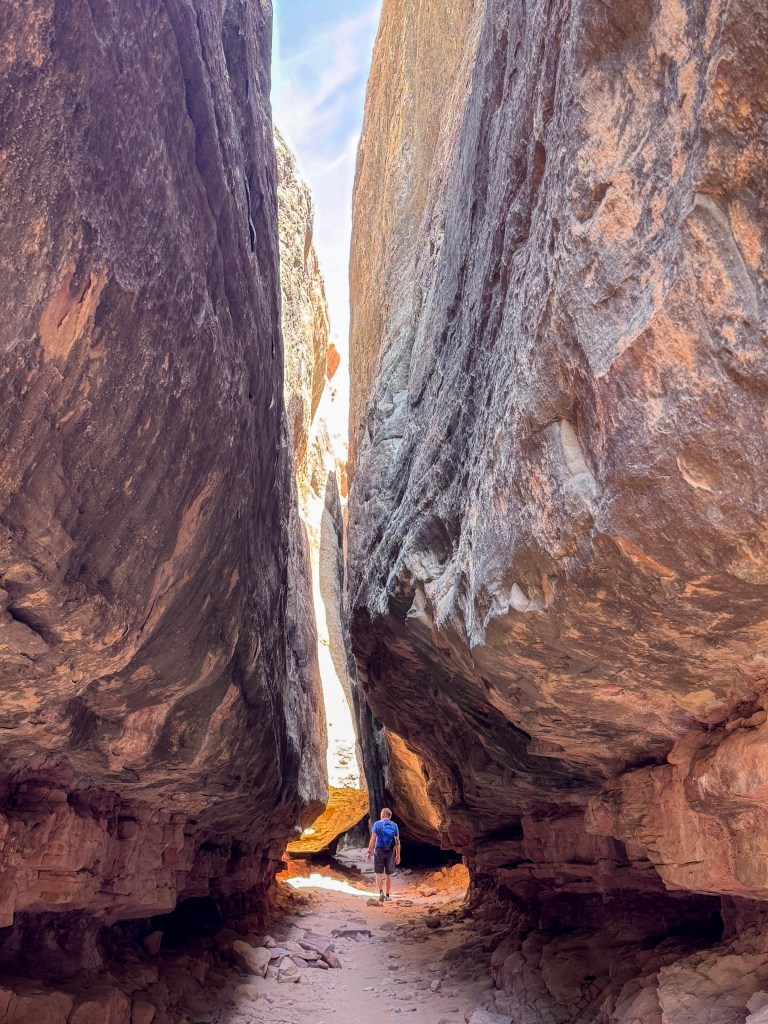
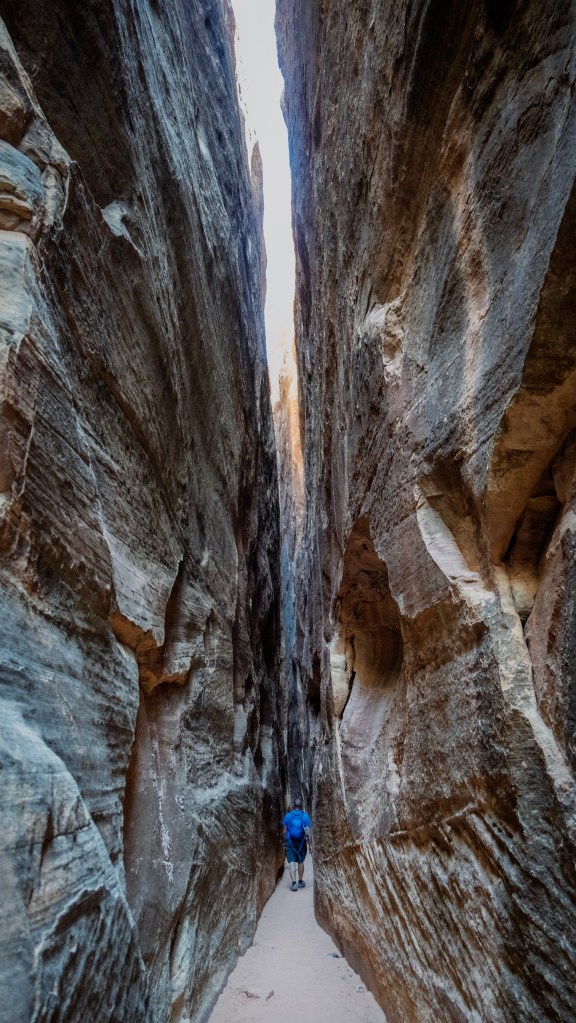
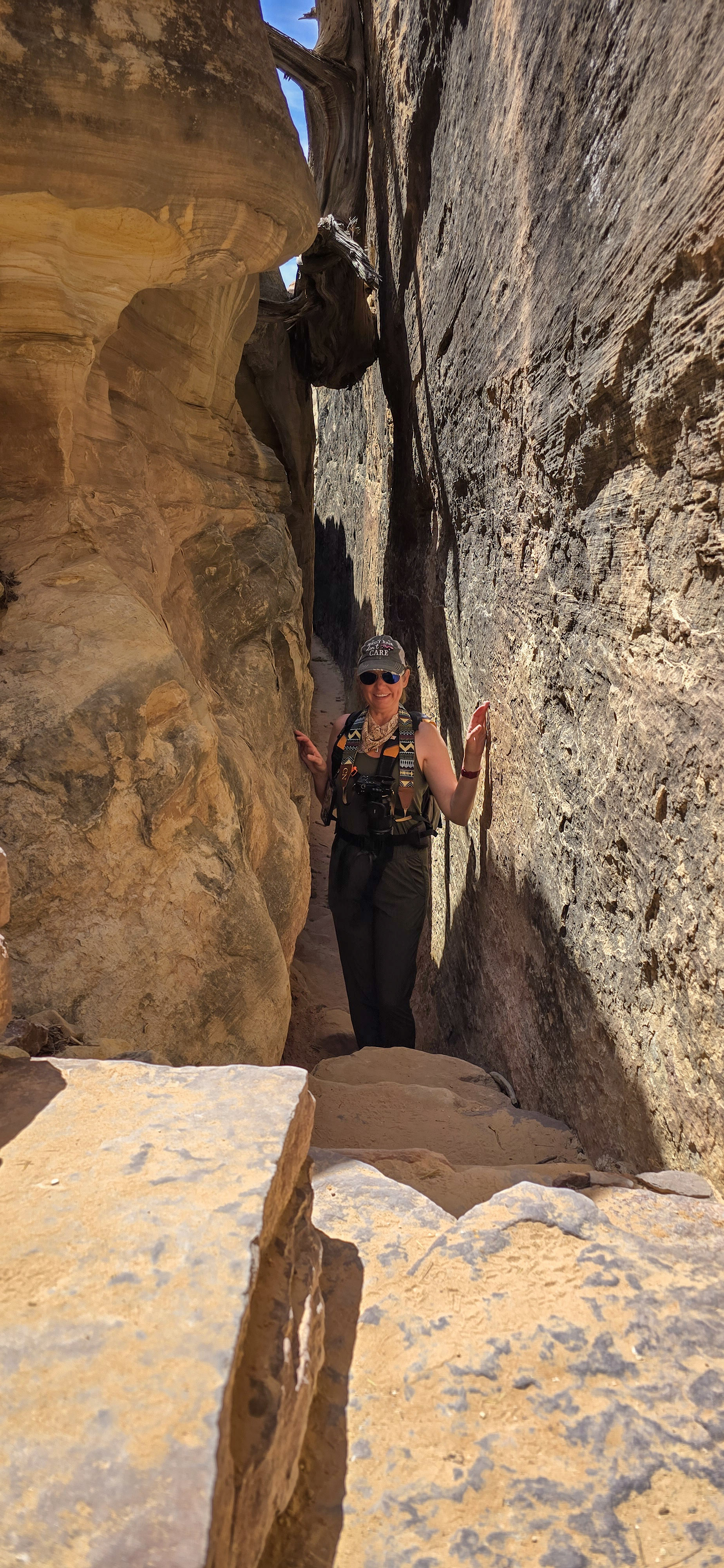
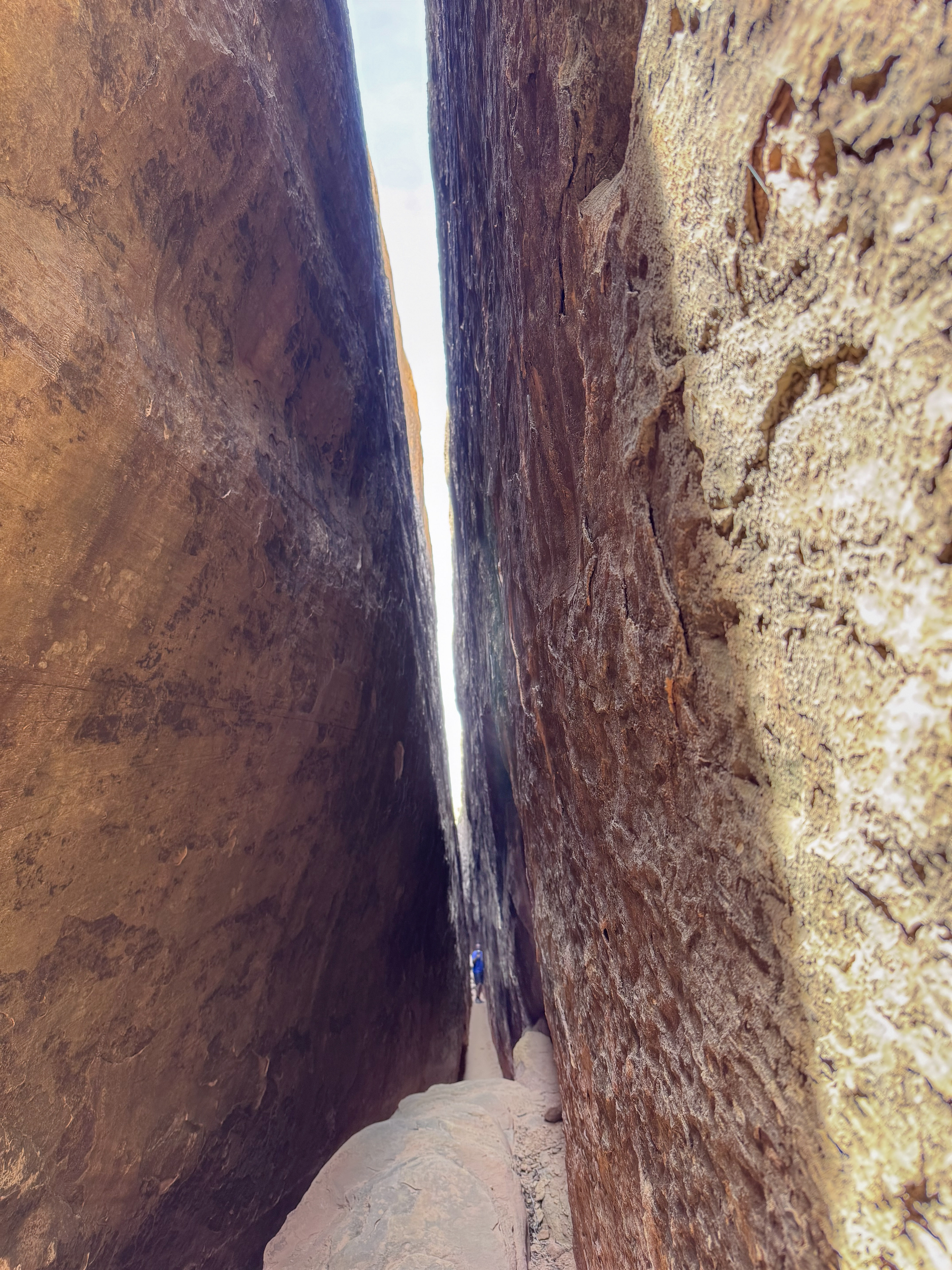
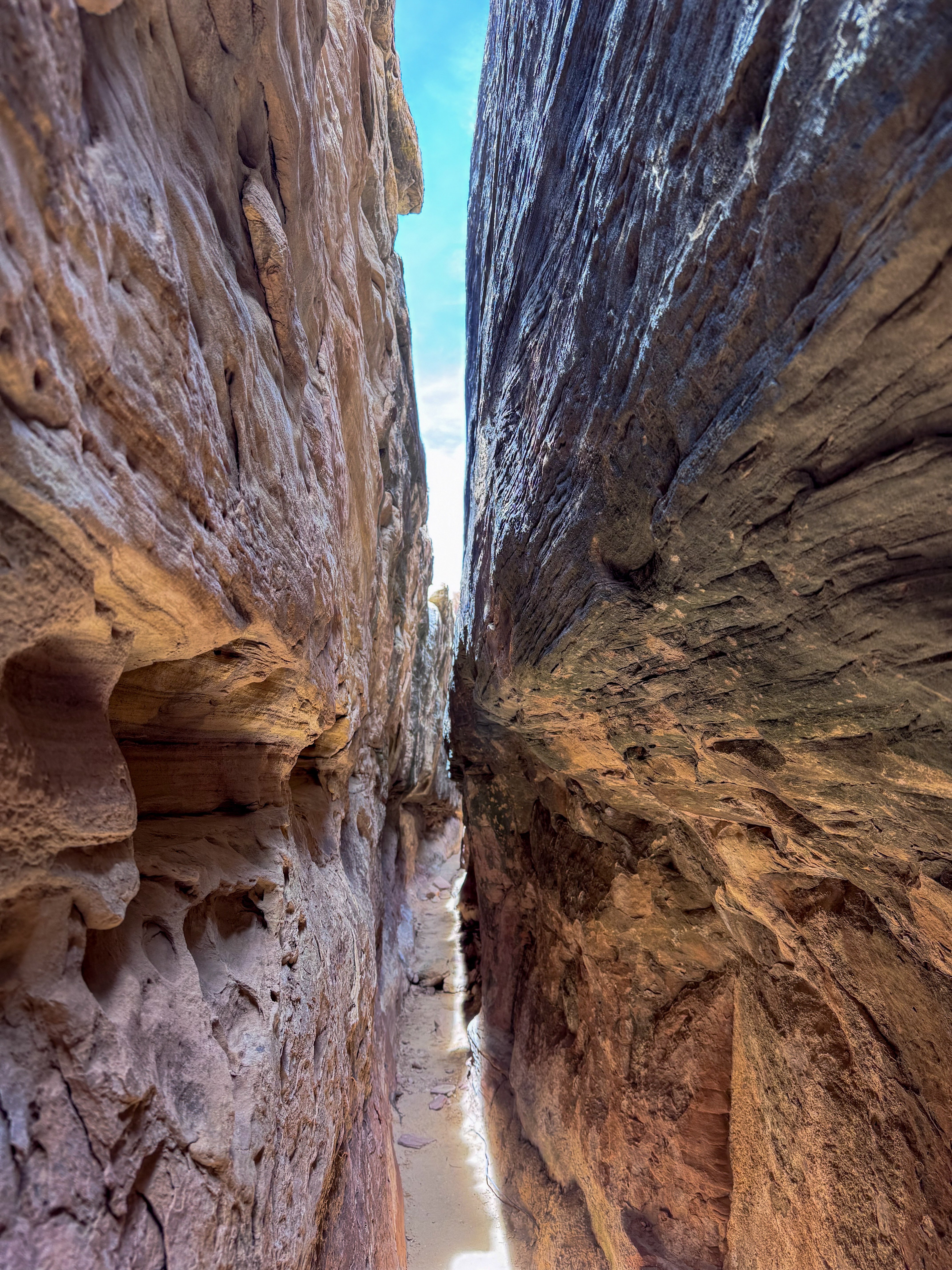
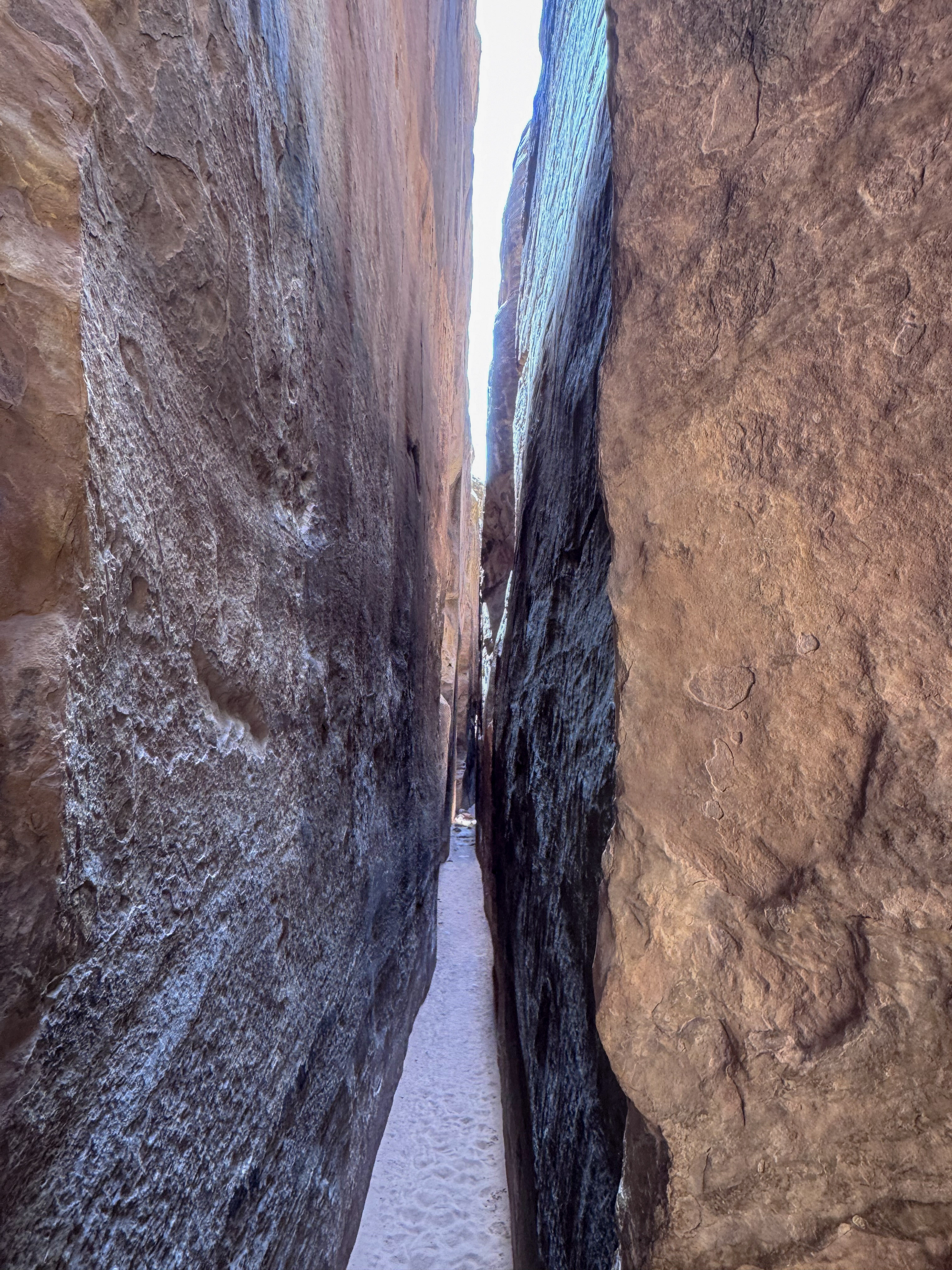
One moment we had been walking through open desert beneath a wide blue sky. The next, we were enclosed by stone — deep inside narrow fractures where the walls rose high above us and the light narrowed to a thin ribbon overhead. The temperature dropped almost immediately. The air felt cooler and quieter, and every sound seemed softer, held inside the rock.
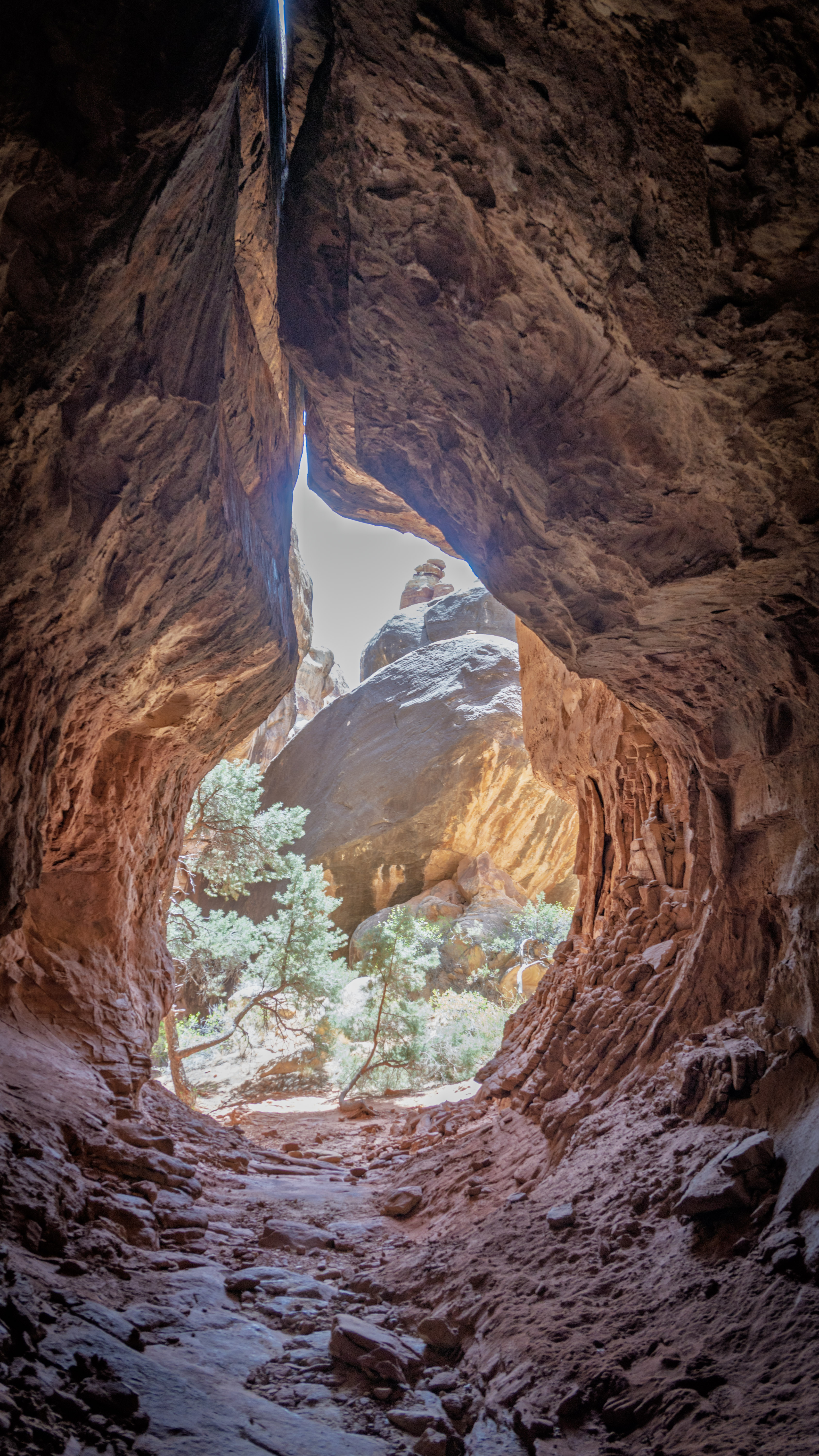
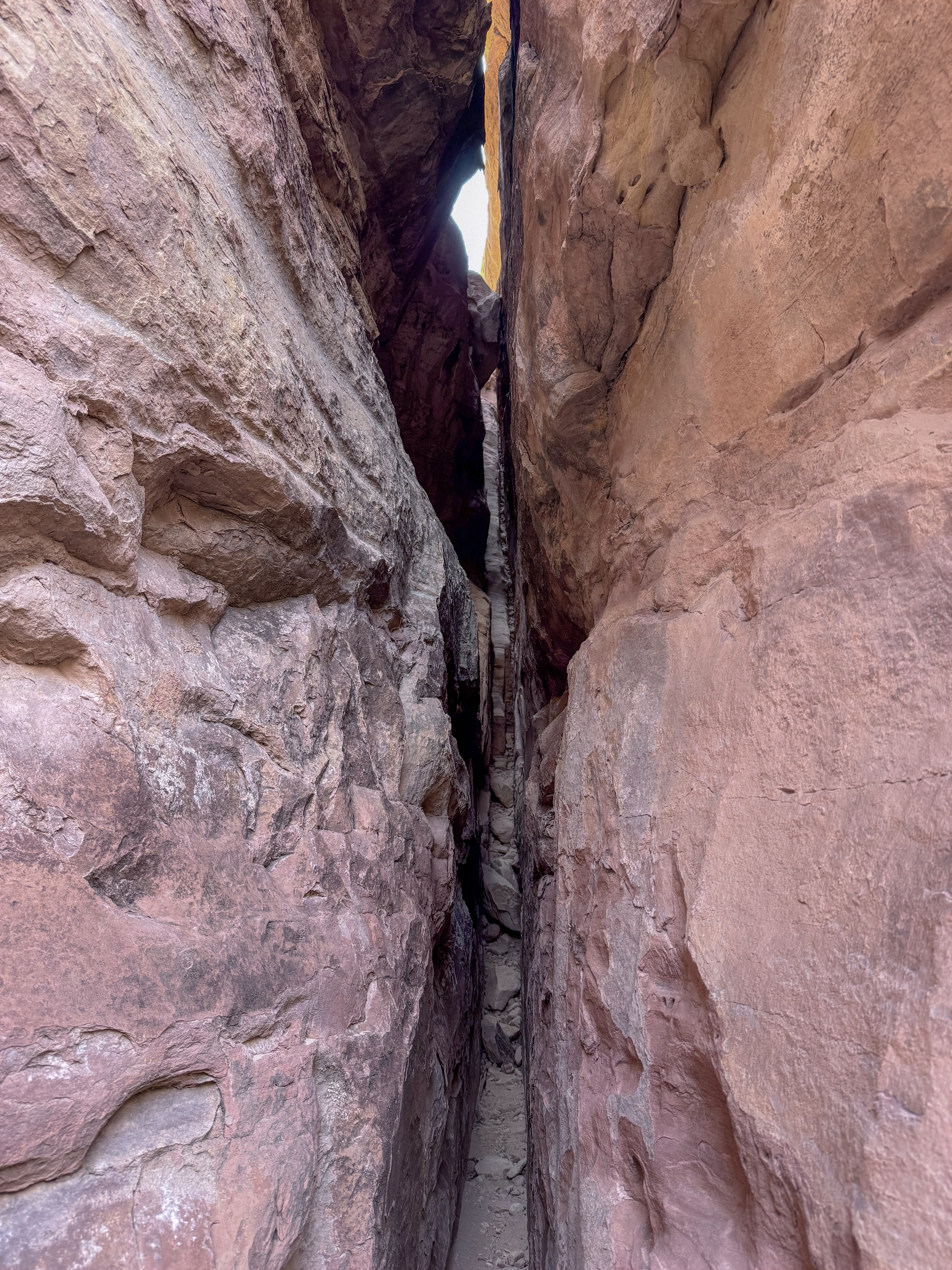
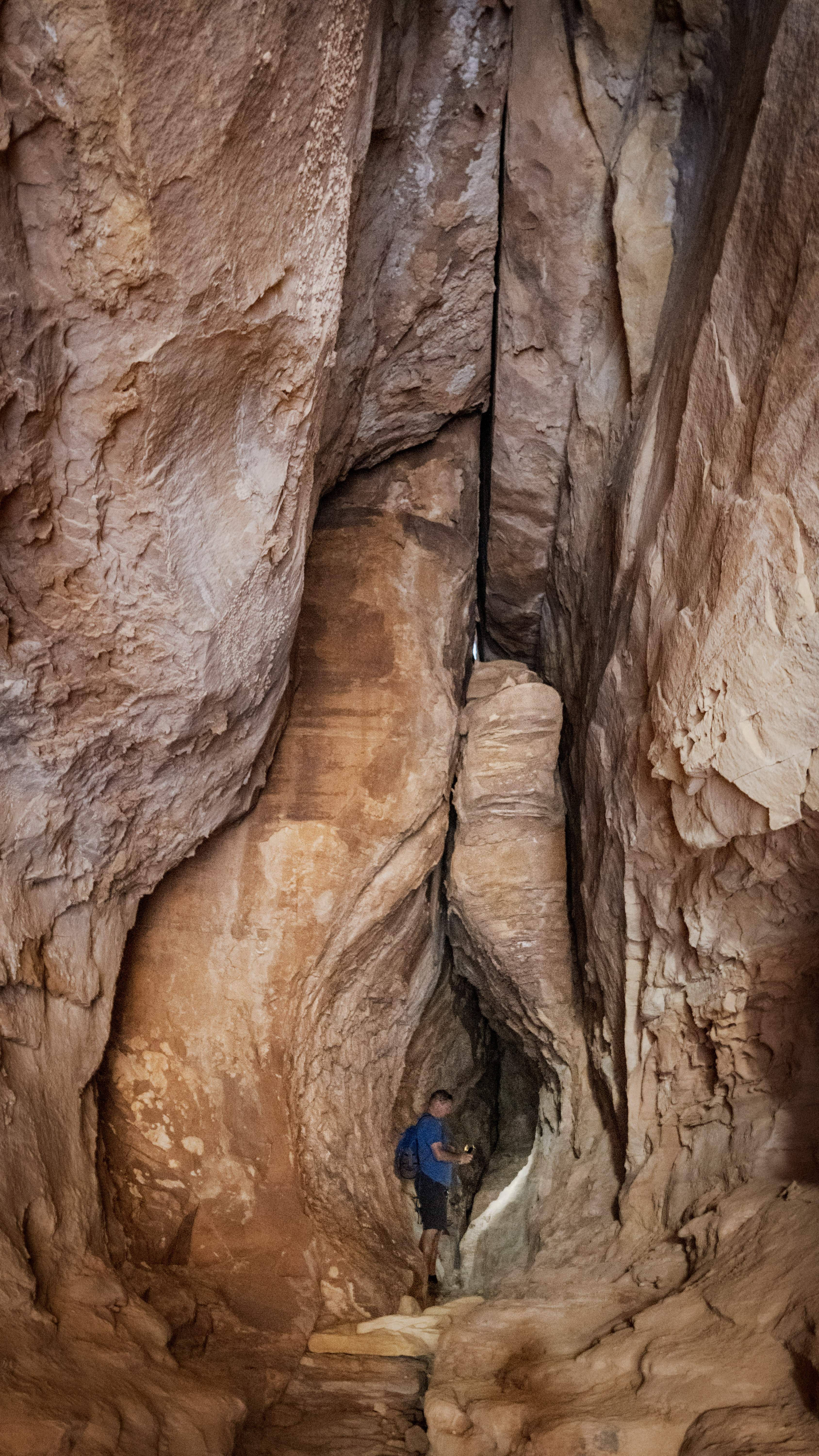
The joints were not quite caves and not quite slot canyons, but something in between — long cracks in the sandstone, worn smooth in places, dark and shadowed in others, with just enough light filtering down from above to make the whole space feel mysterious. Some sections were so narrow they felt like hallways carved into the earth, with walls stretching upward in clean, vertical lines.
Others felt like hidden rooms.
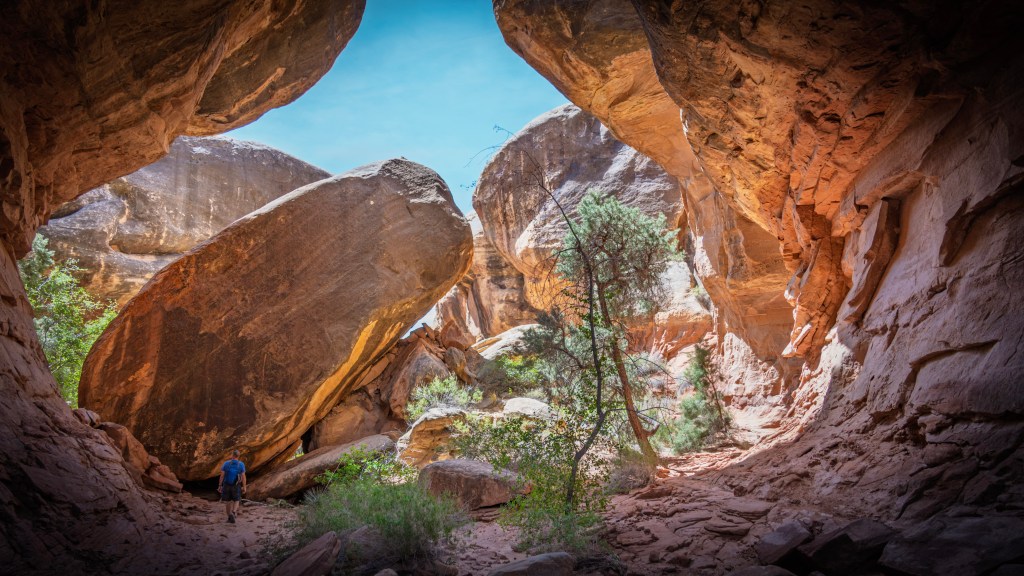
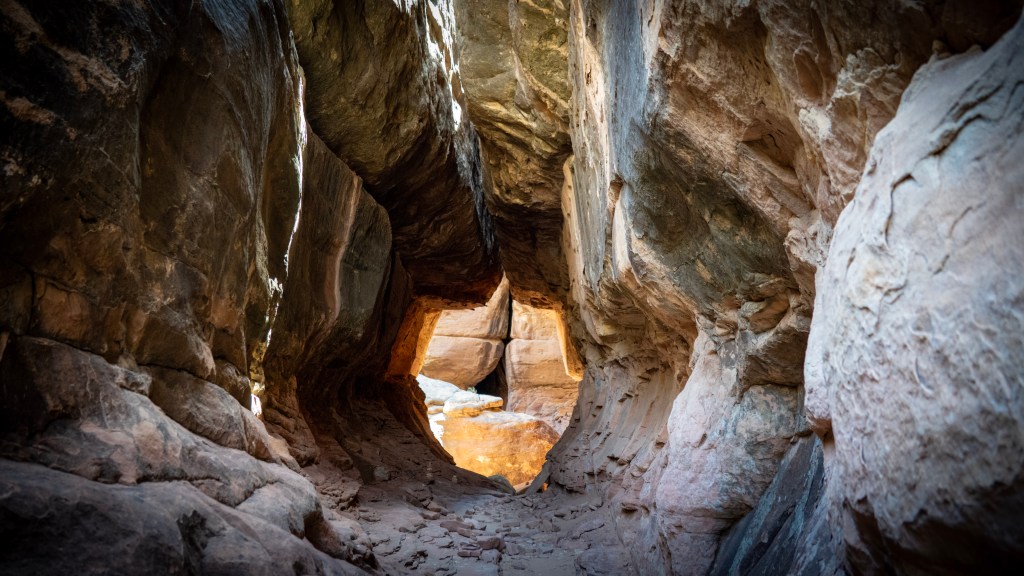
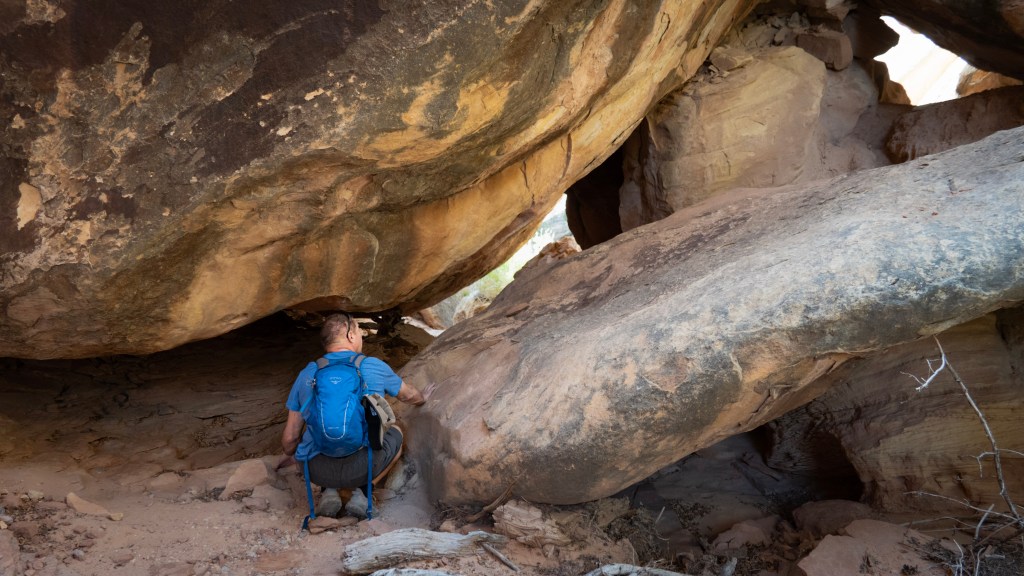
We took our time moving through them, stopping often to look up, look back, and take it all in. Around nearly every turn, the scene changed. Sometimes the passage pinched tight, forcing us into a narrow corridor with towering walls on either side. Other times it widened into open, cave-like spaces with giant slabs leaning overhead and shafts of light spilling onto the sandy floor. It felt like wandering through a maze tucked inside the rock.
There were little obstacles too — small scrambles, uneven footing, and one spot where a log helped with the climb. That only made the route more fun. It felt less like following a simple trail and more like exploring a natural maze, one shaped by fracture, time, and stone.
Eventually, the passage led us north through the sandstone and toward another set of primitive stone steps. We climbed upward, leaving the cool shadows behind, and emerged at the southern edge of Chesler Park.
Chesler Park
After the tight passageways of the Joint Trail, Chesler Park felt enormous.
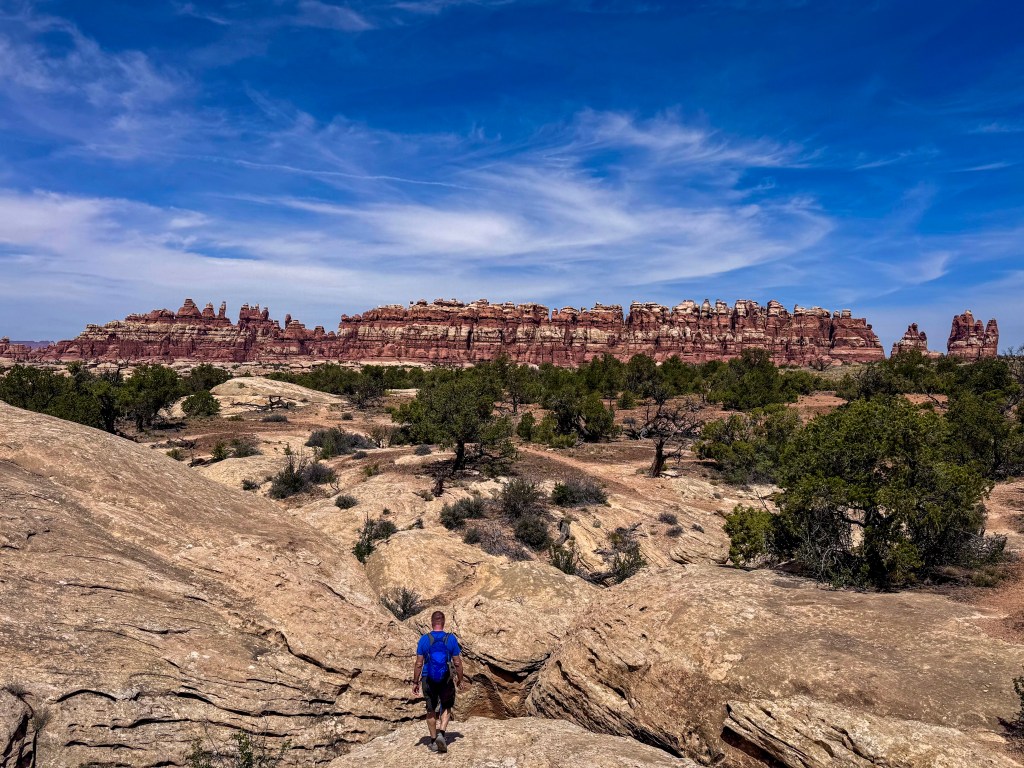
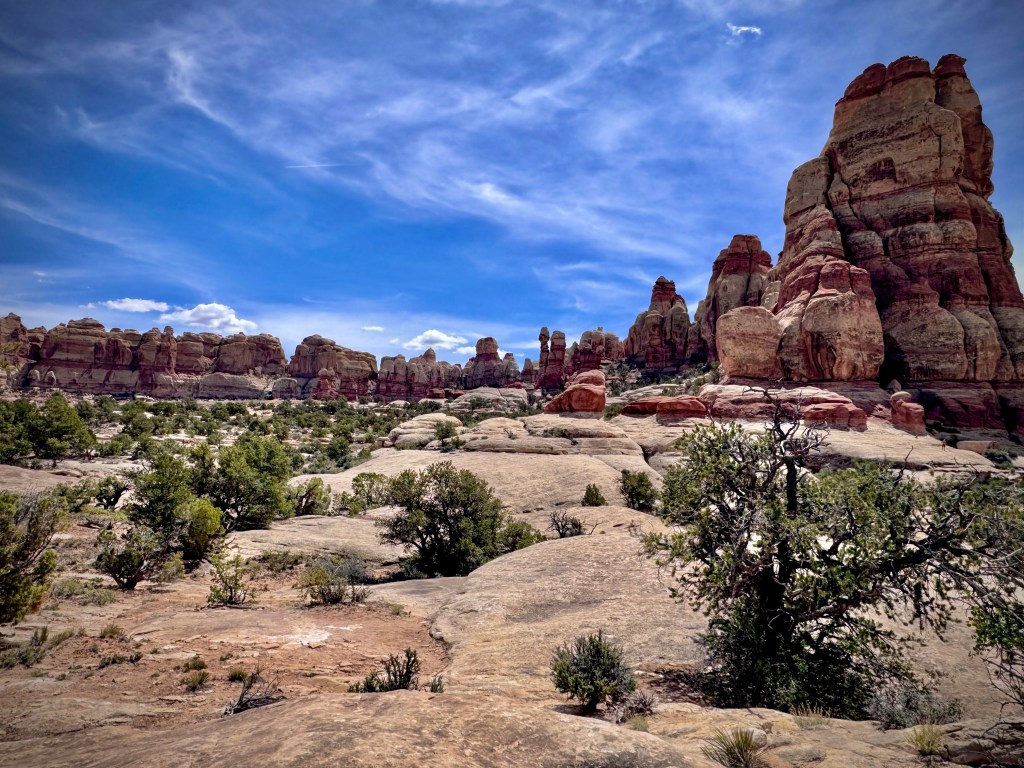
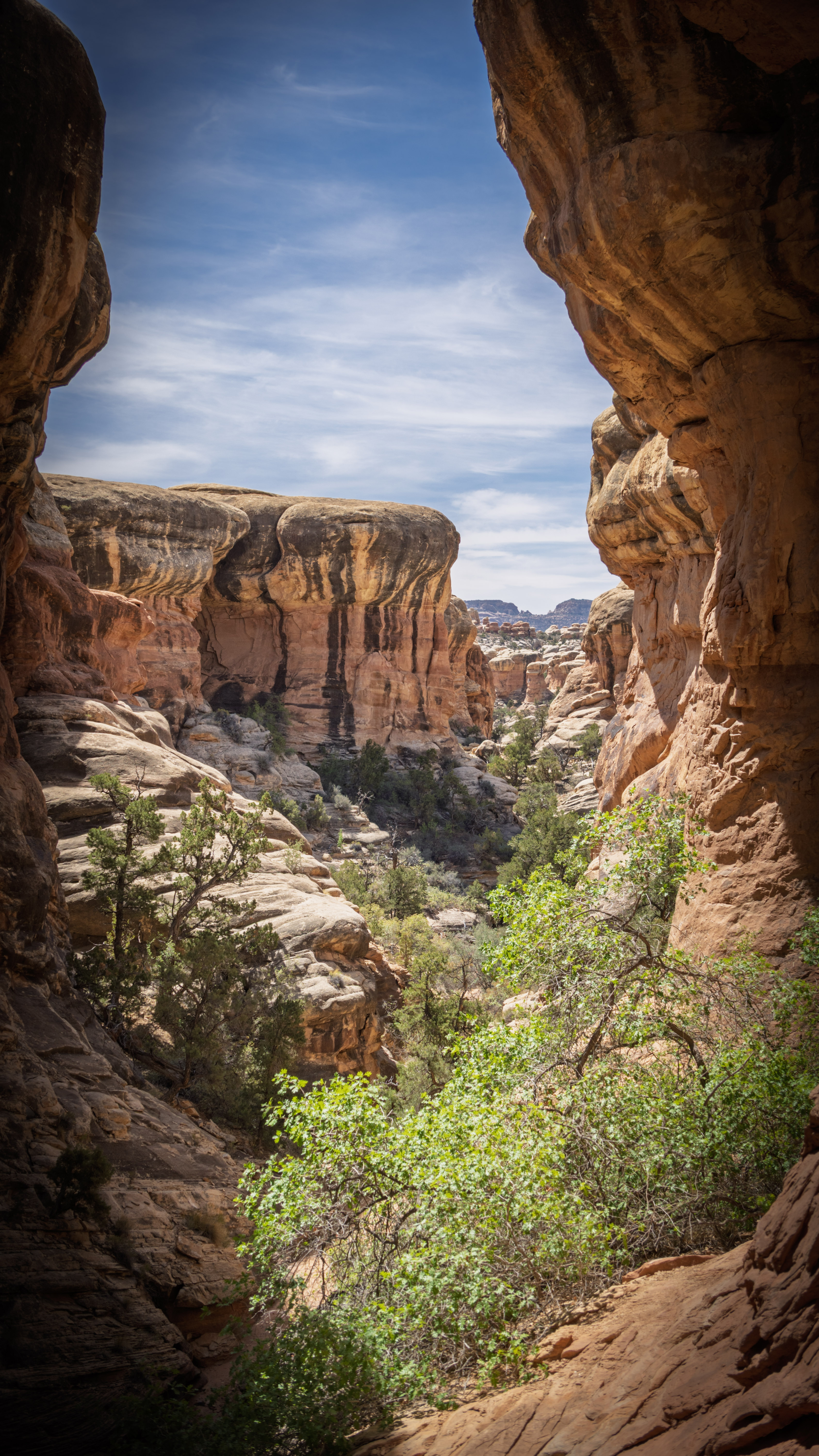
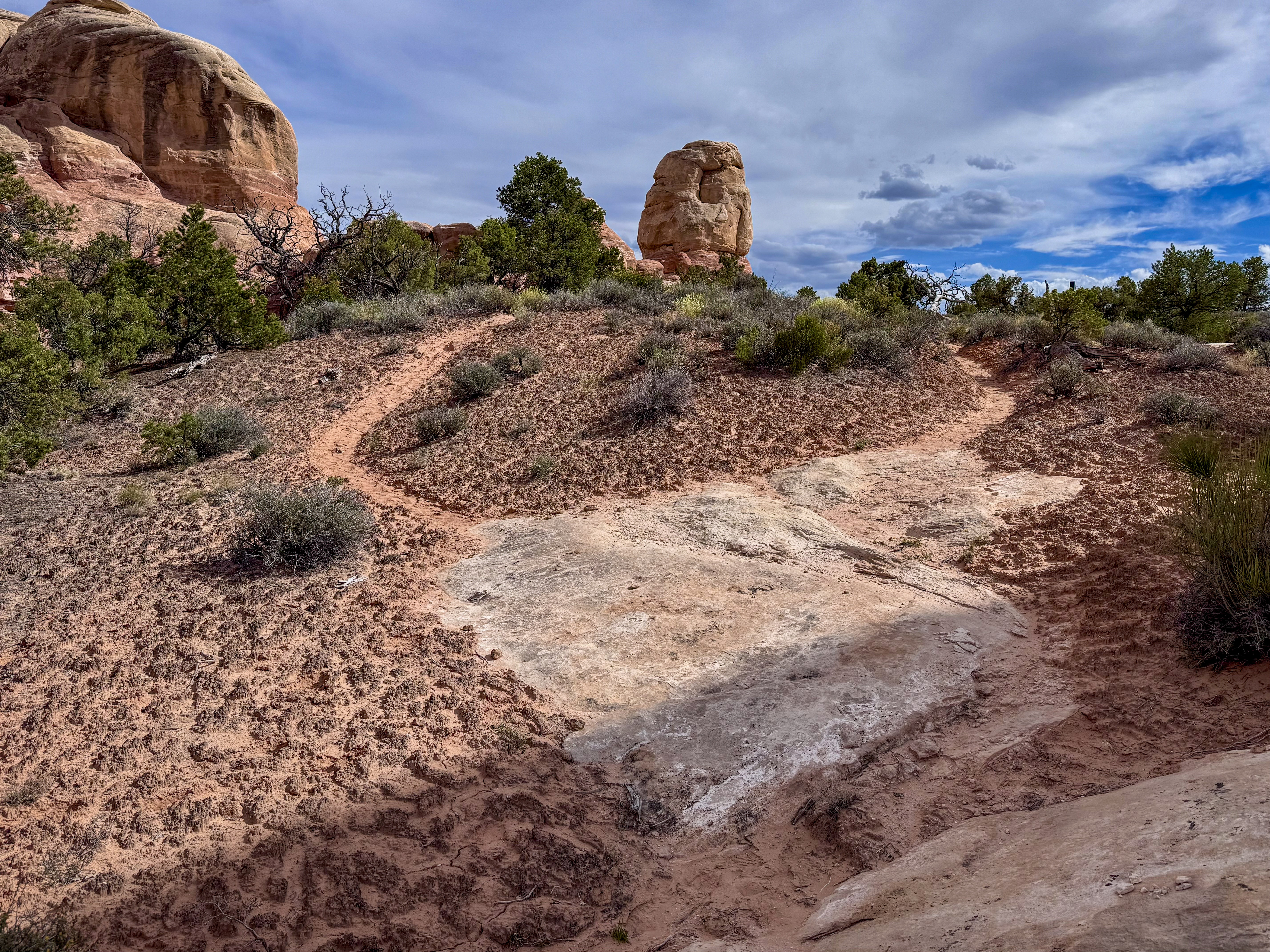
We stepped out of the cool sandstone cracks and into a wide basin of pale slickrock, sandy patches, low brush, and scattered junipers, all surrounded by striped sandstone walls. It felt like emerging from a hidden hallway into a natural amphitheater — broad, quiet, and almost impossibly beautiful.
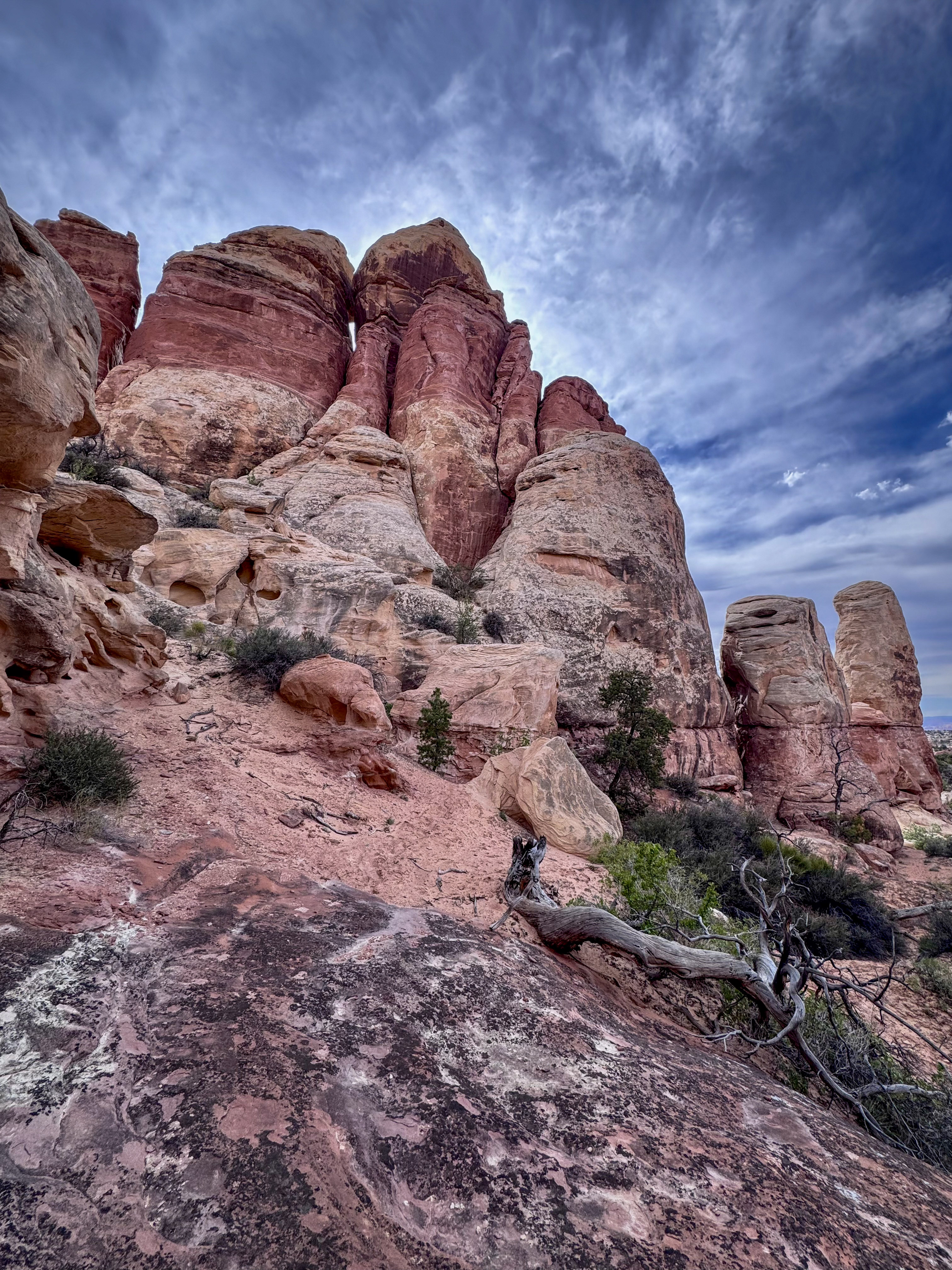
The formations rose in every direction, shifting from cream to rose to deep red, with fins, spires, and rounded towers crowding the horizon. Some stood in tight clusters, while others rose alone from the basin like sentinels. Above it all, wisps of cloud curled across the blue sky, making the whole scene feel even bigger and more dramatic.
We wandered with cameras and daypacks, following faint paths across open rock and stopping often just to look around. Everywhere we turned, there was something new to notice — textured sandstone underfoot, desert greenery tucked into sandy pockets, and the way the rock seemed to hold the whole park in a sweeping circle.
Only minutes earlier, we had been enclosed in narrow joints, moving through cool shadow with stone walls close enough to touch. Now the sky felt wide again, the air felt open, and the Needles stood all around us like guardians of a hidden world.
Southern Viewpoint
From Chesler Park, we made our way toward the southern viewpoint.
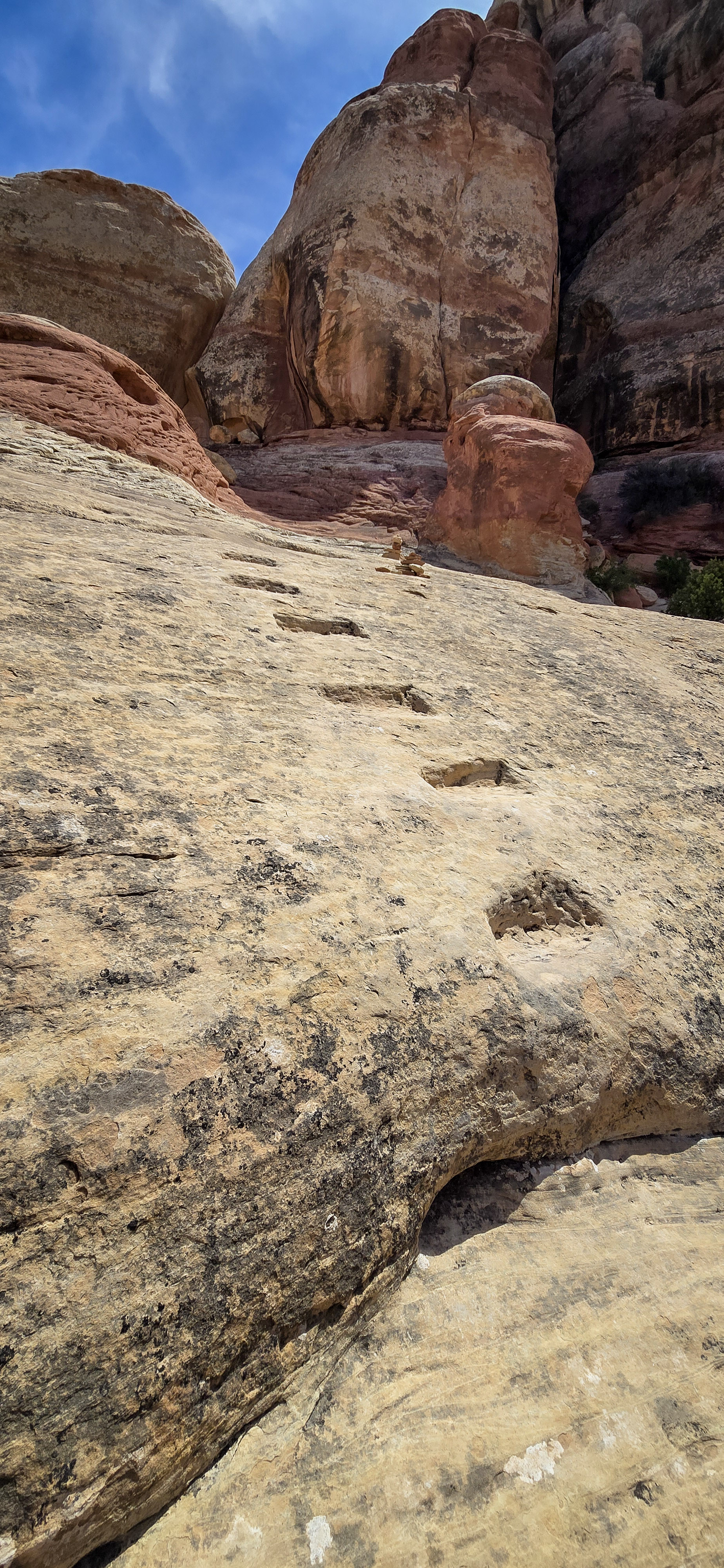
The route crossed open slickrock and sloping sandstone, with sections of moki steps — hand- and toe-holds carved into the rock — helping us move across the tilted stone. They added just enough adventure to the hike without pulling attention away from the landscape opening around us.
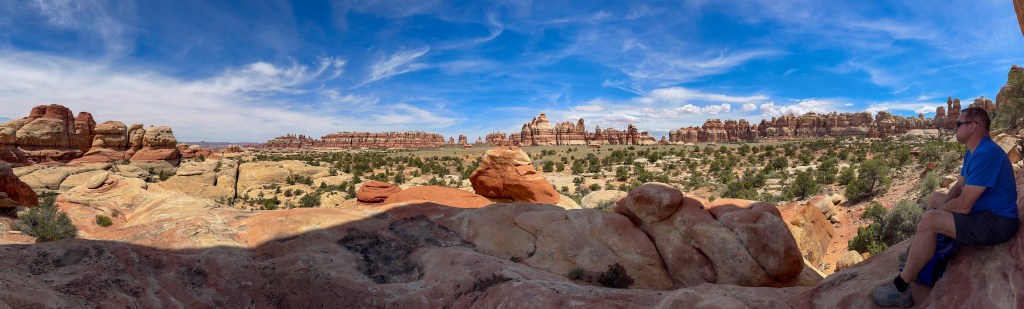
At the viewpoint, we stopped for a snack and a long look across the park.
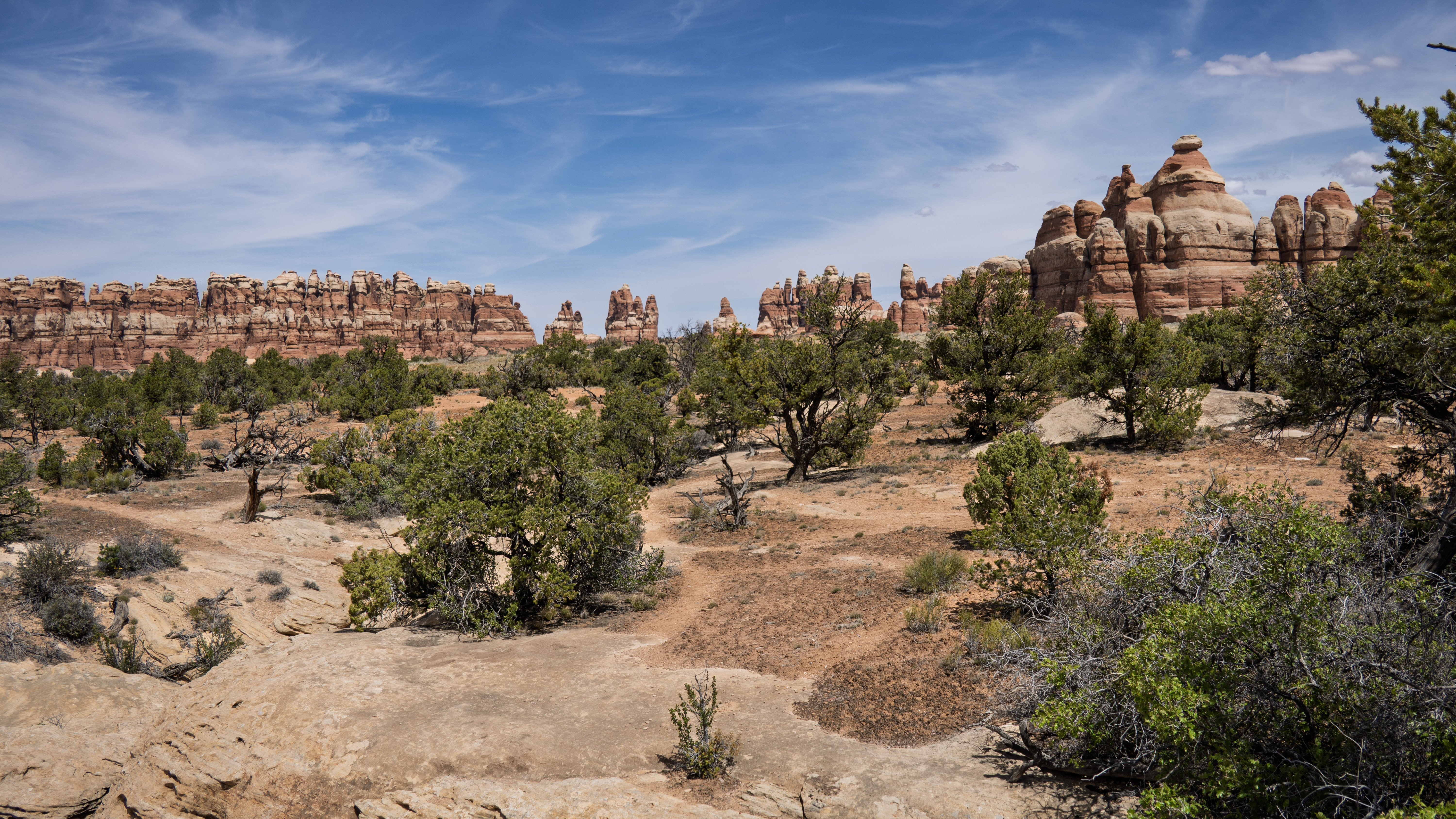
From there, Chesler Park stretched wide beneath a sky streaked with thin, wind-brushed clouds. Pale slickrock rolled through the basin like waves, broken by sandy pockets, juniper, and low desert brush. Beyond it all, the Needles rose in layers — fins, towers, domes, and banded walls stacked across the horizon in cream, rust, and deep red.
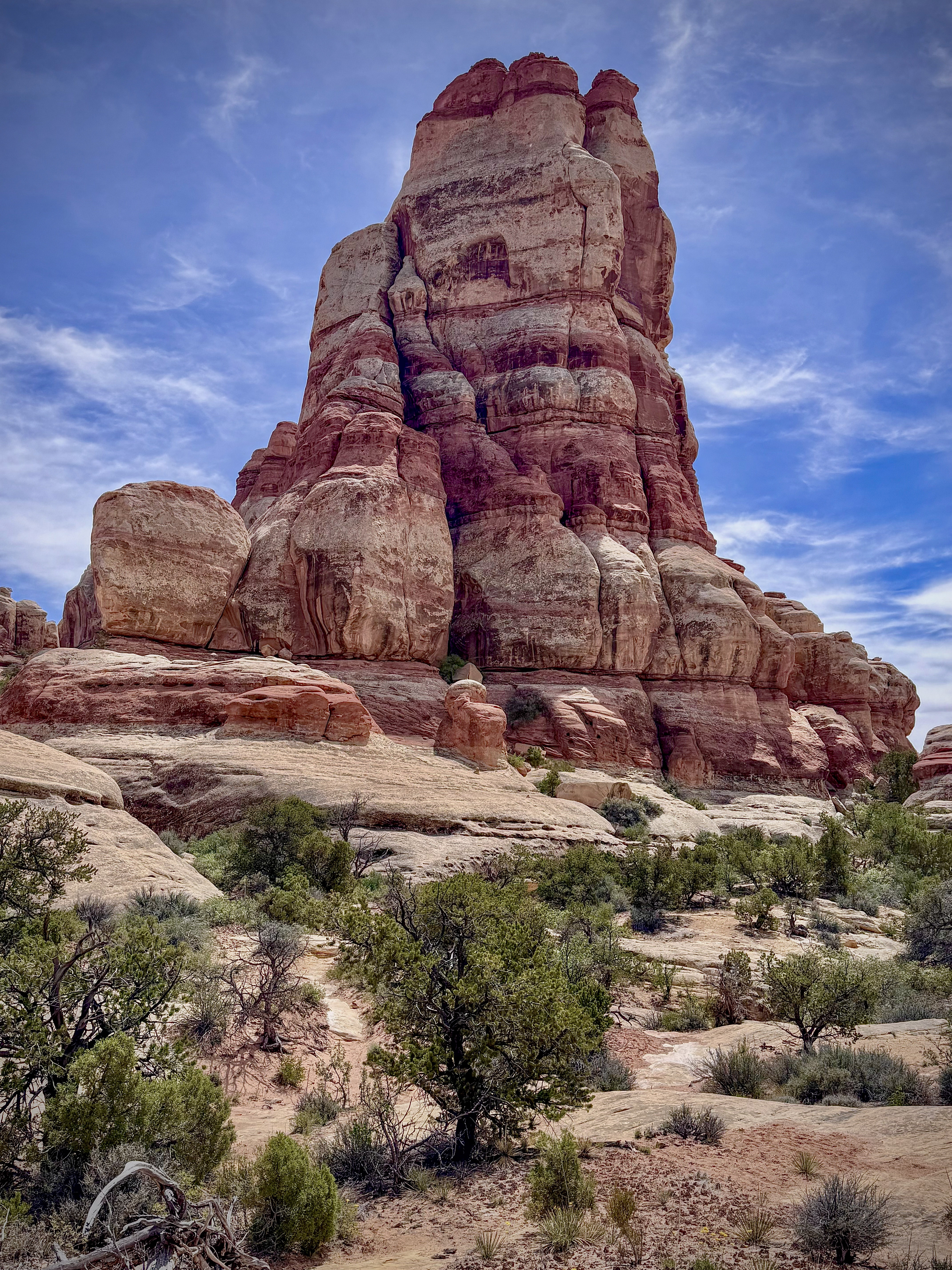
It was easy to see why people make the effort to reach this place.
The longer we sat, the more details appeared — the curves in the sandstone, the dark seams in the rock, the winding traces of trail below, and the way the formations seemed to surround the basin from every direction.
We talked with a couple of hikers who had come in from the Elephant Hill trailhead, trading trail notes and admiring the view together before eventually turning back.
It was one of those simple backcountry moments — strangers meeting at a viewpoint, connected for a few minutes by the same trail, the same effort, and the same wide-open scene.
Exploring Around Horsehoof Camp
Back at Horsehoof Camp, we still had plenty of daylight left, so we spent the afternoon exploring closer to home.
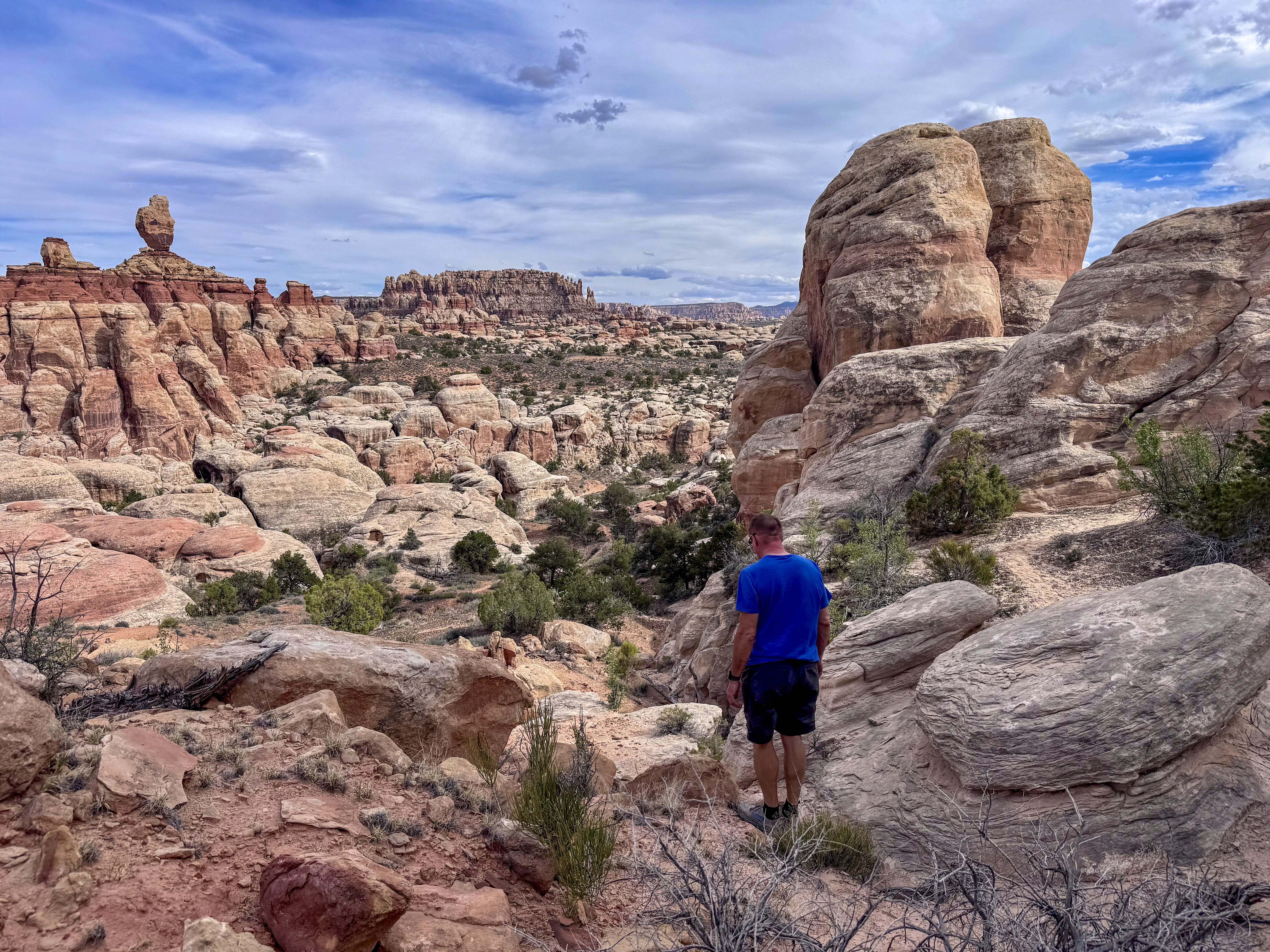
That was one of the best things about this campsite: it felt like its own small world. Slickrock ledges, desert brush, sandstone walls, and quiet pockets of terrain kept pulling us from one feature to the next. There were ledges to climb, views to peek around, and quiet corners where the rock seemed to change shape depending on where we stood.
The entire area felt like a natural playground — not in a careless way, but in the sense that curiosity kept leading us from one feature to the next.
We also went looking for the old Horsehoof Arch site. At one time, a natural arch stood near camp, but it collapsed sometime around 1999. Now, all that remains is a massive pile of broken sandstone, slabs scattered beneath the towering rock like the desert had simply let go of something it had been holding for a very long time.
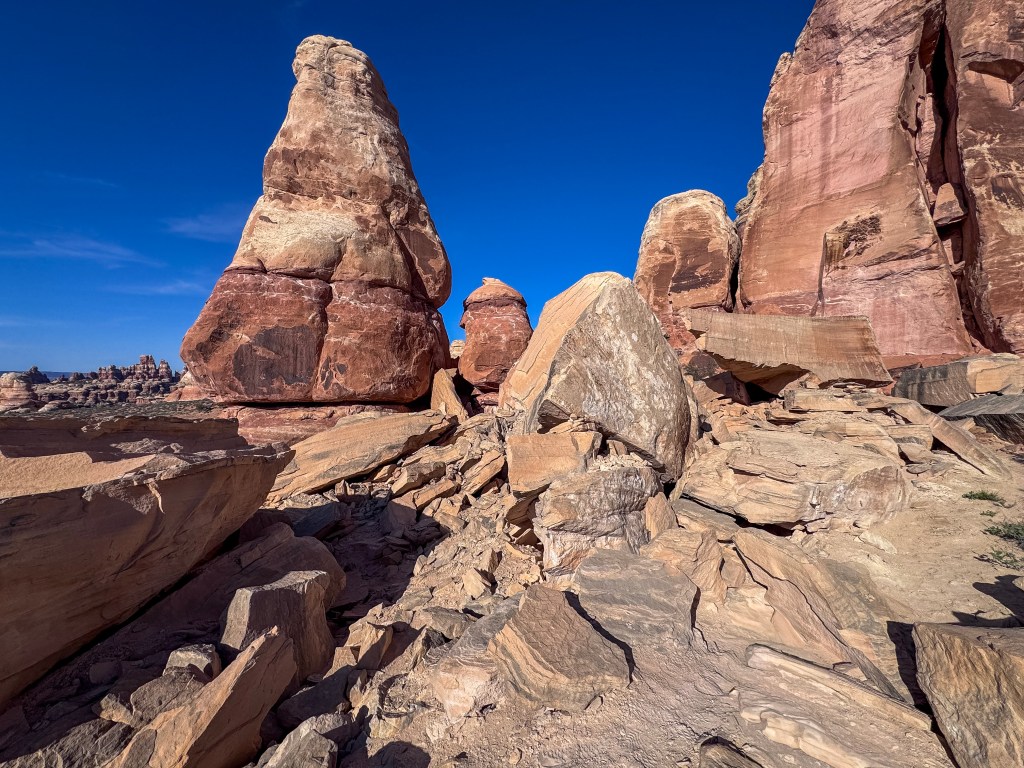
It was a striking reminder that even stone is temporary out here. The landscape can feel ancient and unchanging, but it is always moving — cracking, falling, weathering, and reshaping itself one season at a time.
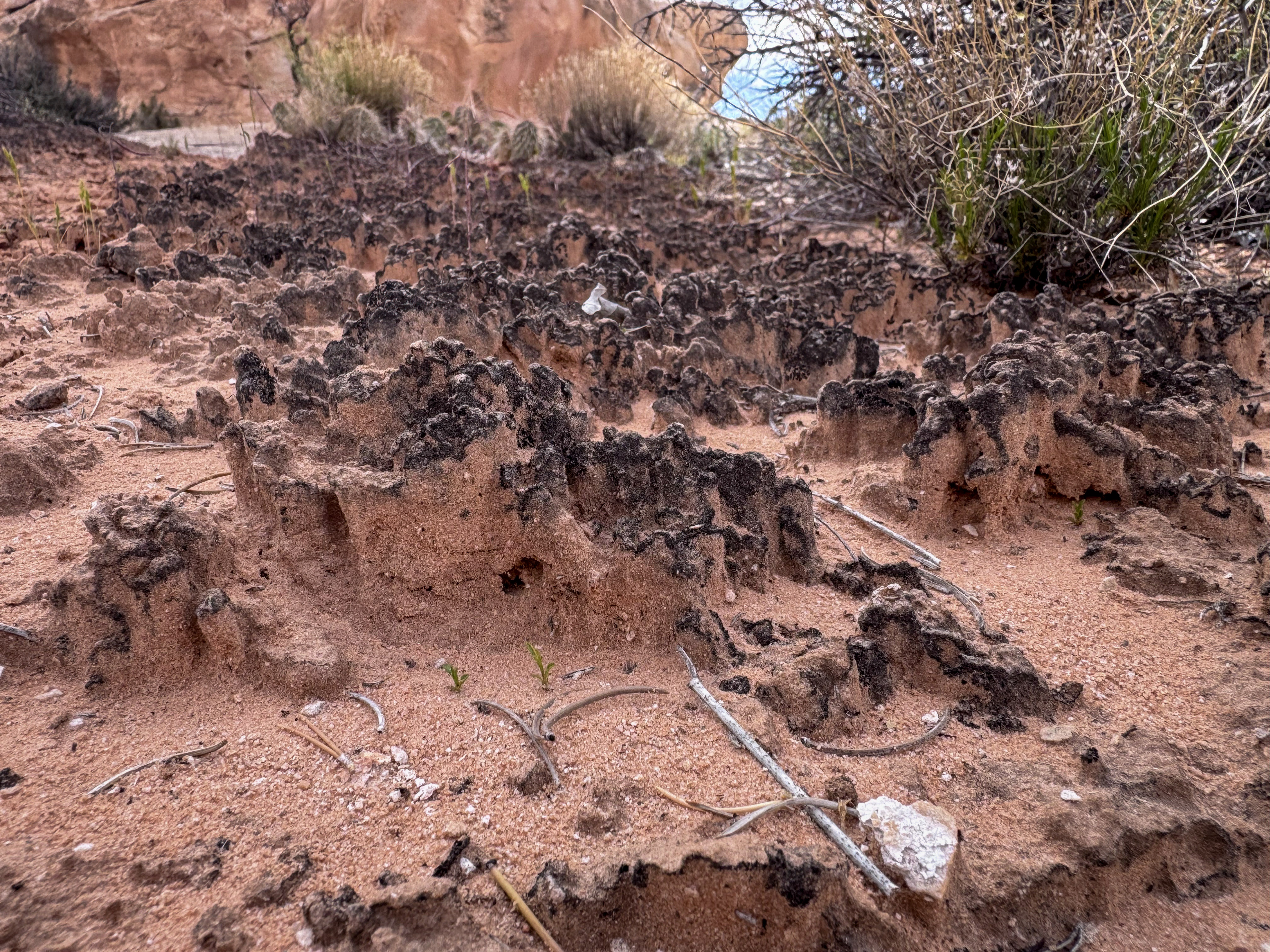
As we wandered, we also noticed patches of cryptobiotic soil crust, those dark, knobby textures that look almost like miniature desert cities rising from the sand. They are easy to miss if you are only looking up at the towers, but they are part of what makes the desert feel so alive at ground level too.
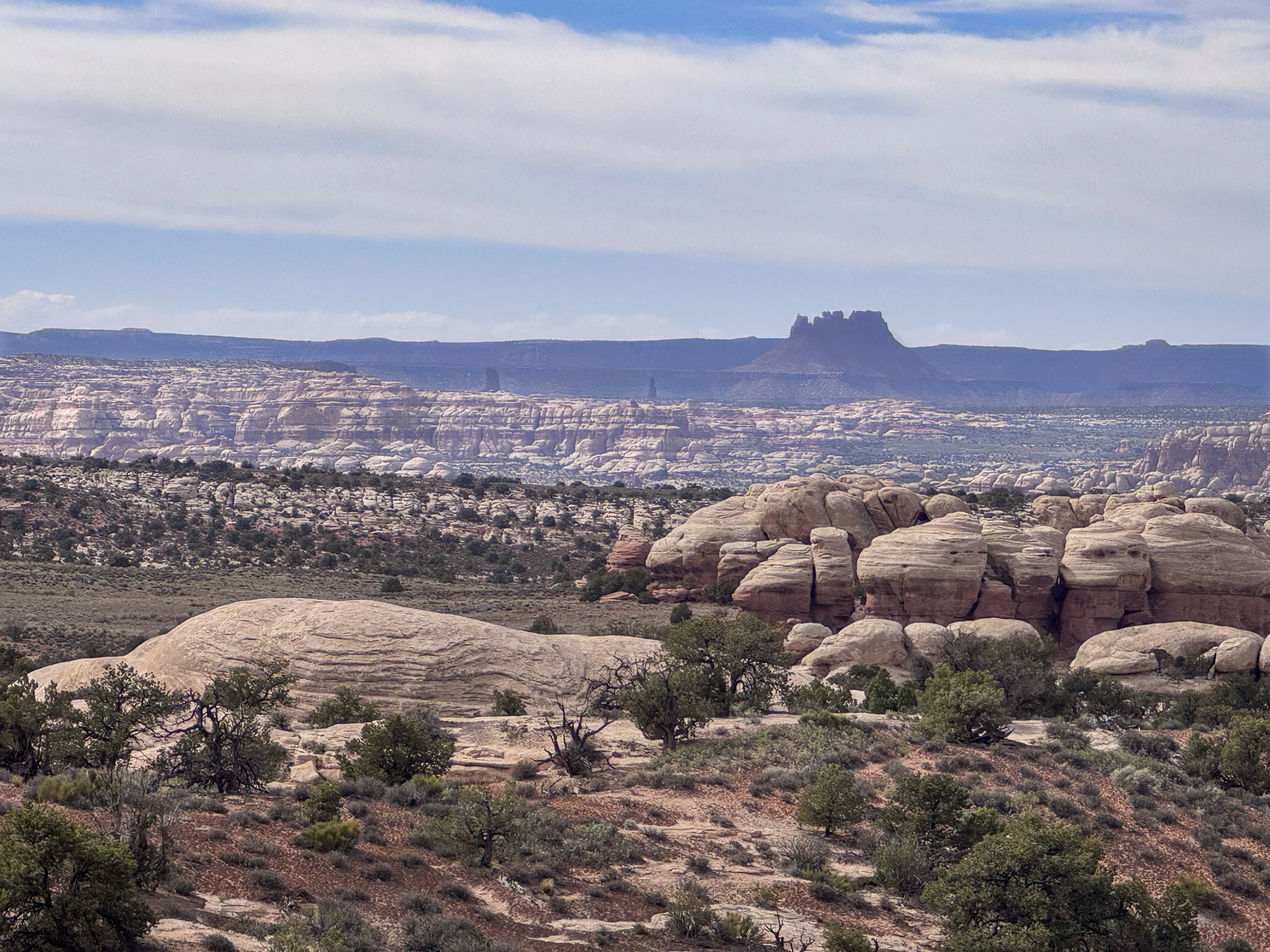
From camp, we could even see across toward the Maze District, with Standing Rock and Chimney Rock faint in the distance. Years ago, Bill and I had camped near Chimney Rock, and seeing it from Horsehoof made Canyonlands feel connected again — one trip, one district, one memory linking quietly to another across the wide desert.
Cotton Candy Skies
That evening, we grilled burgers at camp and watched the light begin to change.
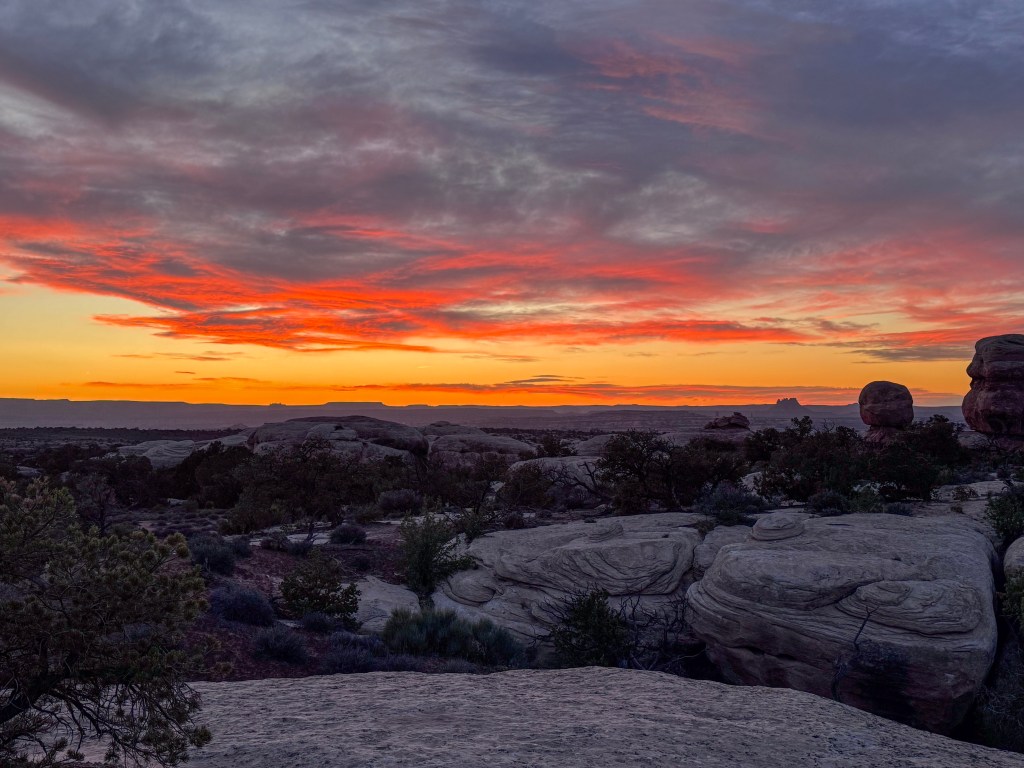
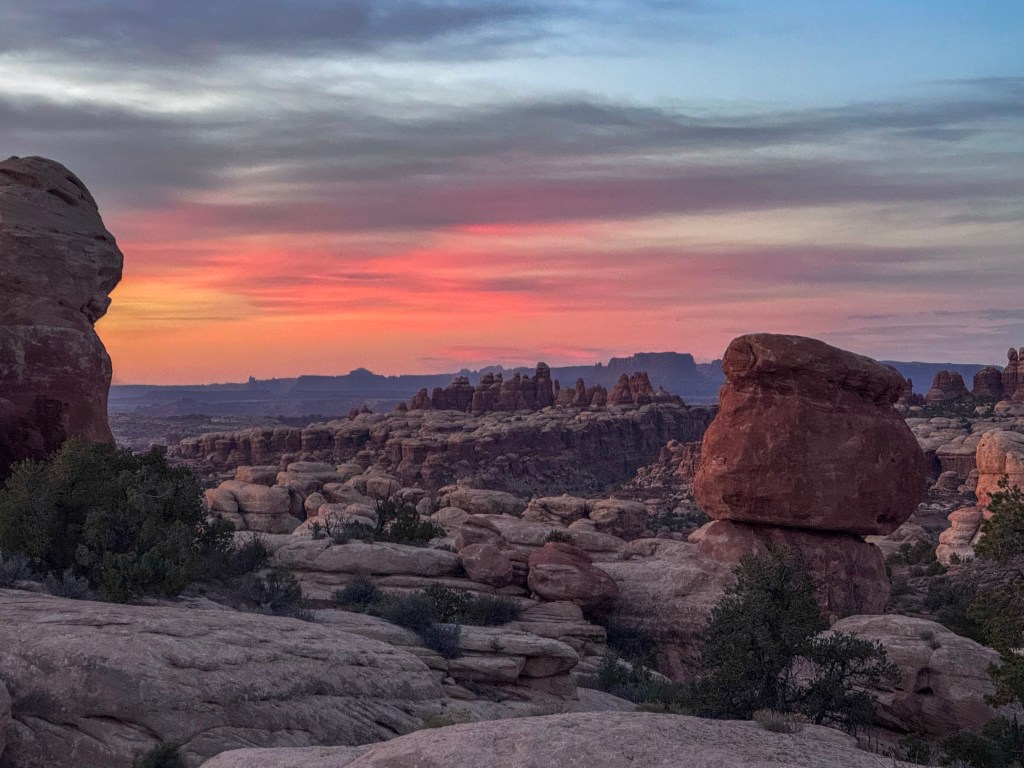
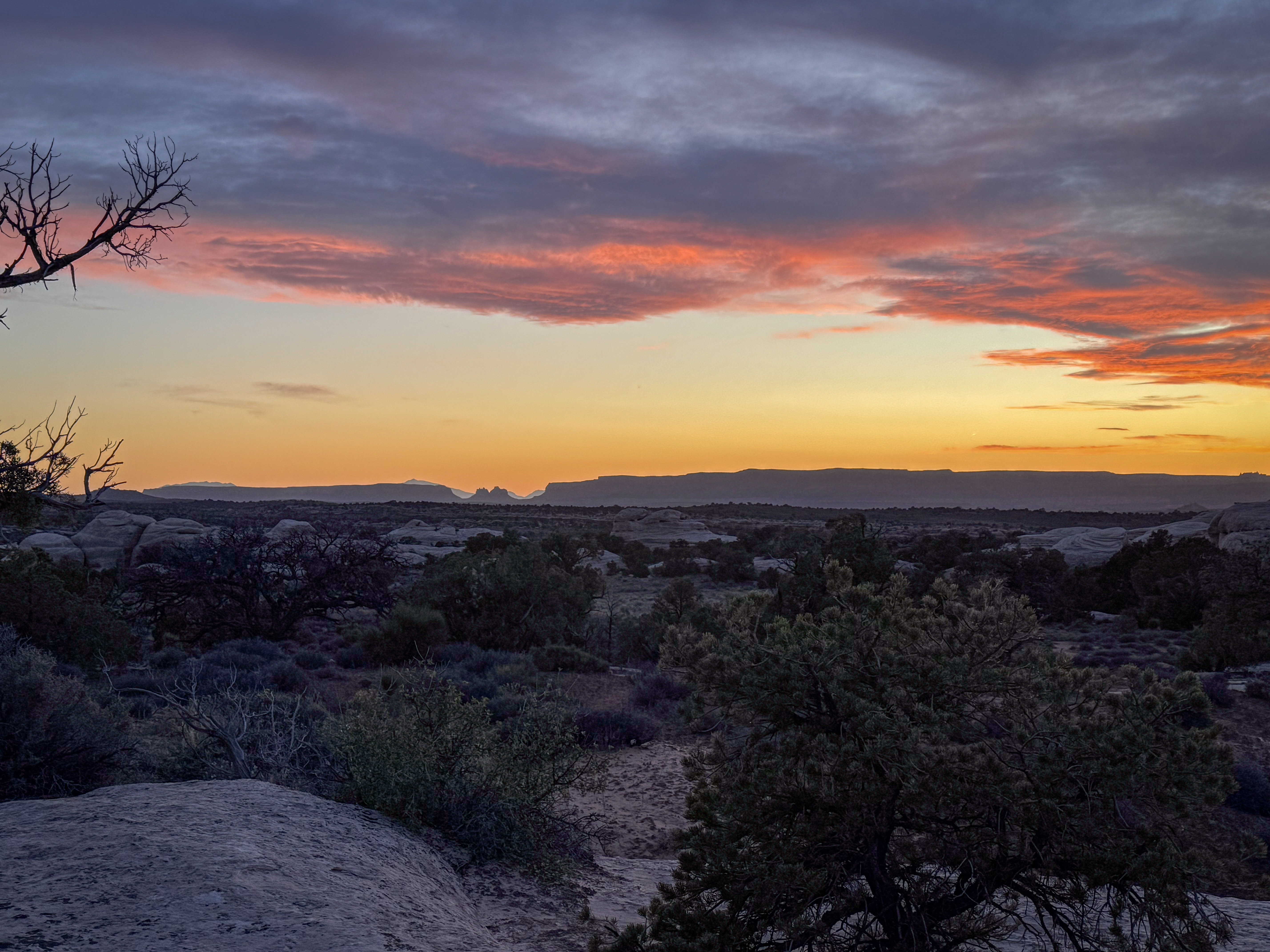
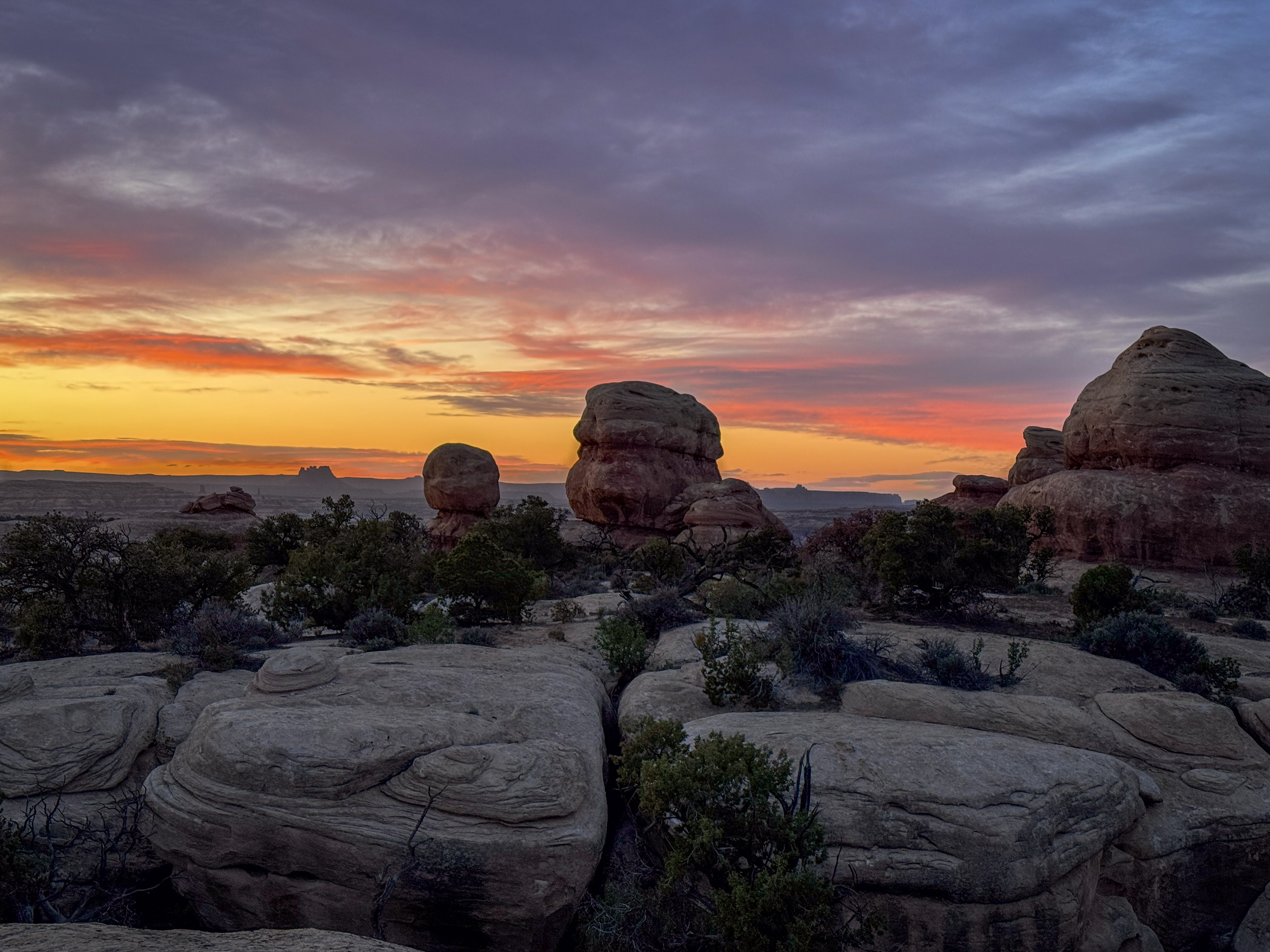
After a full day of exploring, it felt good to settle into the quieter rhythm of evening. The heat softened and the desert slowly traded its bright afternoon colors for something gentler. Pink, peach, lavender, and pale blue spread across the sky in long feathered bands, turning the whole horizon into a wash of cotton-candy color.
Around us, the rock towers darkened into silhouettes while the last light caught the rounded slickrock and distant mesas. Out beyond camp, the landscape opened toward the Maze as it faded into the pastel glow. Even the familiar shapes near camp — balanced boulders, domes, and sandstone walls — looked softer in the evening light, as if the whole desert had exhaled.
We lingered outside, watching the colors deepen and then begin to fade, not quite ready for the day to end. The stars would come soon, but for a little while it was enough to sit with the afterglow, the quiet, and the simple satisfaction of being exactly where we were.
At the time, I was already looking forward to whatever the next day might bring.
I just didn’t know the weather had other plans.
Reflections
Day 4 reminded me that the Needles are just as powerful on foot as they are from the driver’s seat.
The day before had been about technical roads, steep ledges, and the slow work of reaching the backcountry. This day was about exploring the world those roads had carried us into — slipping through the cool shadows of the Joint Trail, climbing into Chesler Park, and wandering through a landscape that felt both hidden and immense.
What stands out most is the contrast: narrow sandstone corridors opening into wide basins, cool shadow giving way to warm sun, and the ancient weight of the rock balanced by the tiny rhythms of life at camp.
By evening, I felt even more grateful that we had reached Horsehoof Camp. Being tucked inside the Needles gave us time not just to see the district, but to settle into it.
The next day, we had plans to explore more of the area. But canyon country has a way of reminding you that plans are never fully in charge.
Gusty winds were on the way, and with them came a decision we hadn’t expected to make. But that part of the story comes next.




Leave a Reply