Ancient forests, one last waterfall, and the final miles of an unforgettable journey
July 23, 2026
Leaving Prince George
Morning found us back on the road, and neither of us was particularly sad to leave Prince George behind. After so many days spent in small northern communities, mountain valleys, and remote campgrounds, the city had felt more like a practical overnight stop than a destination.
Ahead was one final stretch of country we were genuinely excited to revisit. The road would carry us east toward the Canadian Rockies, through Jasper and down the Icefields Parkway before eventually turning south toward the U.S. border.
We knew the expedition was almost over, but there were still a few places waiting along the way.
Where Giants Still Stand
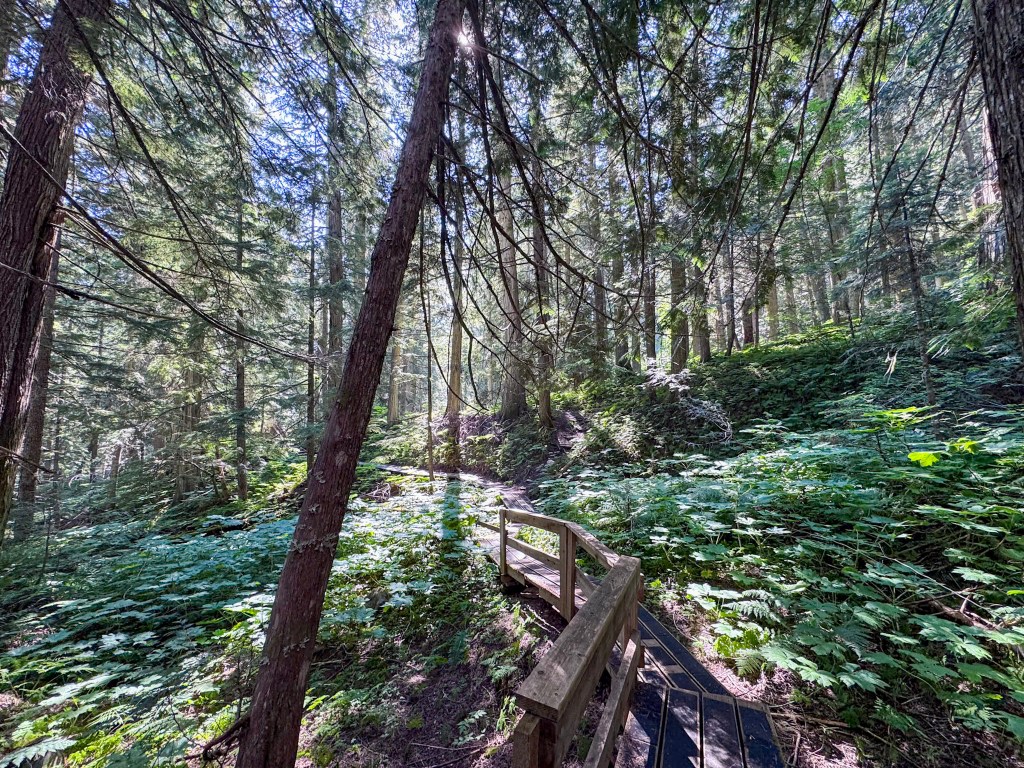
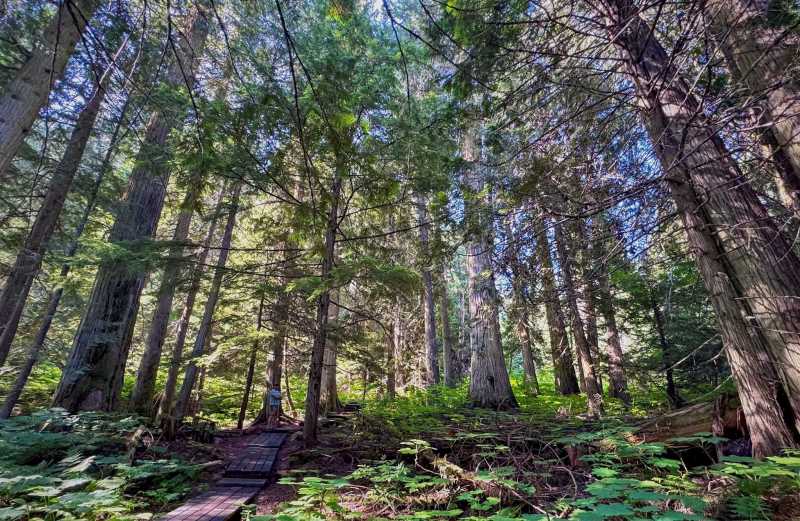
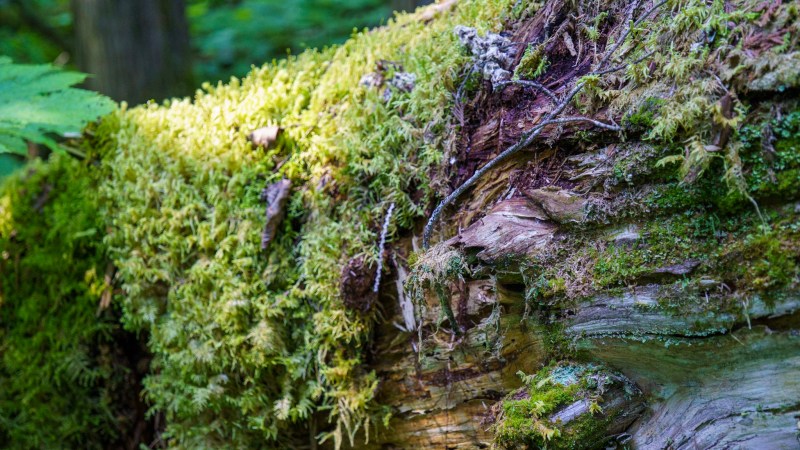
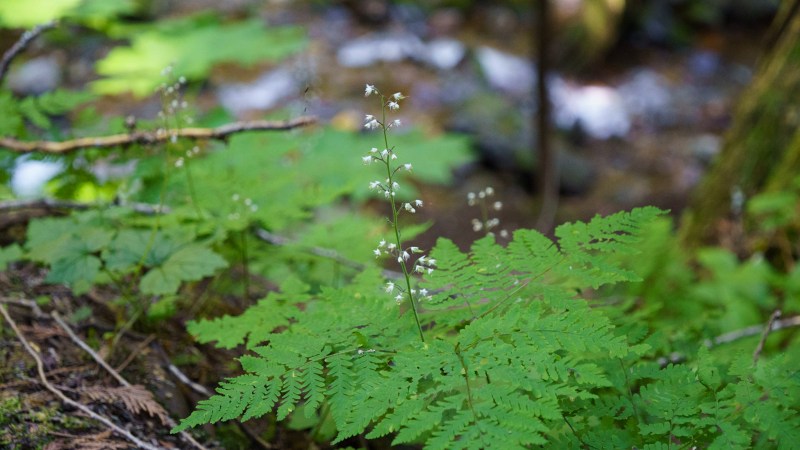
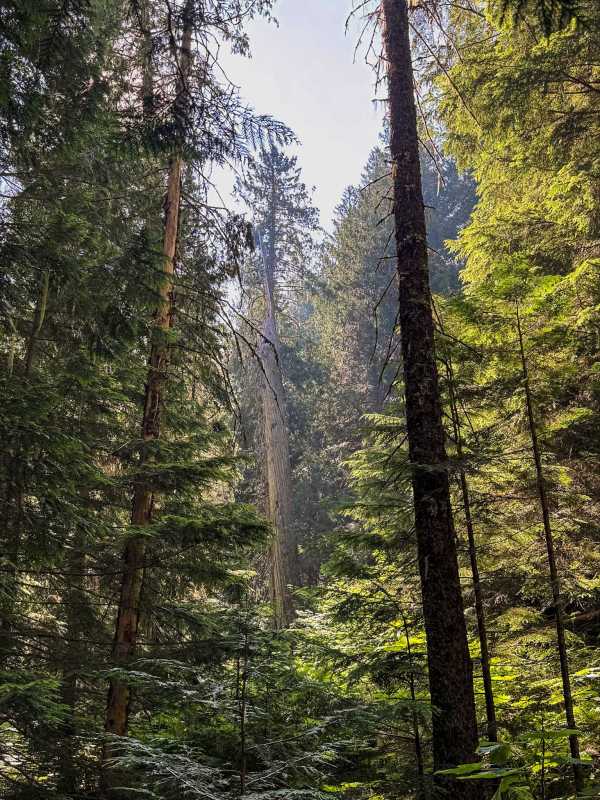
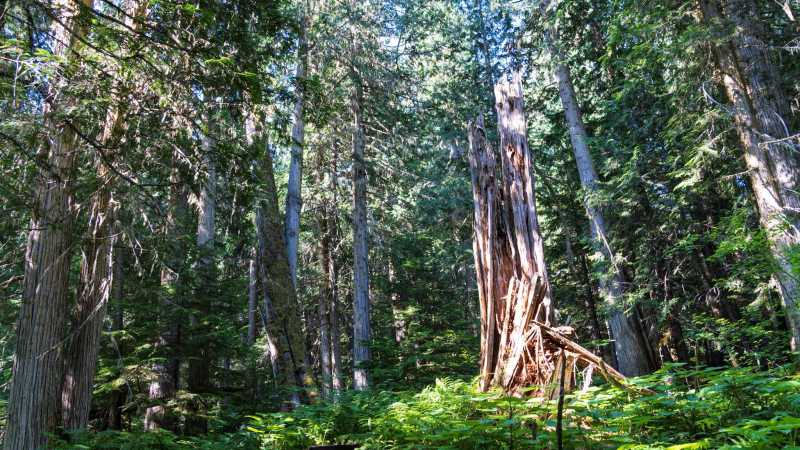
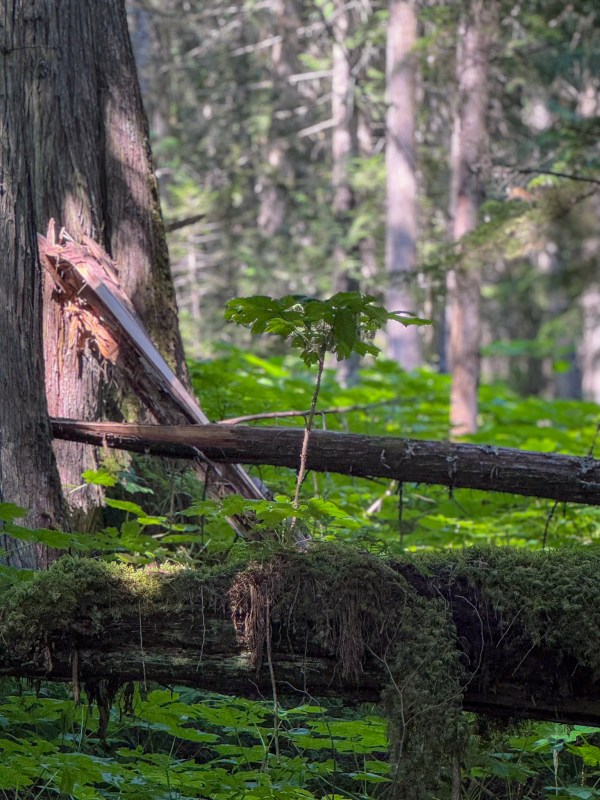
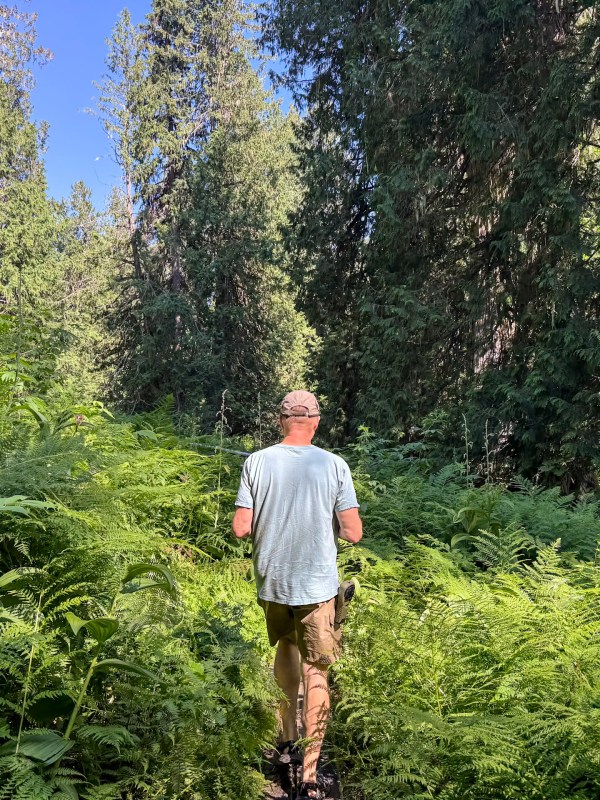
Our first stop was Chun T’oh Whudujut / Ancient Forest Provincial Park, one of the most unusual places we visited on the entire journey. A boardwalk led us into one of the few inland temperate rainforests in the world, where towering western red cedars rose above a forest floor thick with ferns, moss, fungi, and filtered green light.
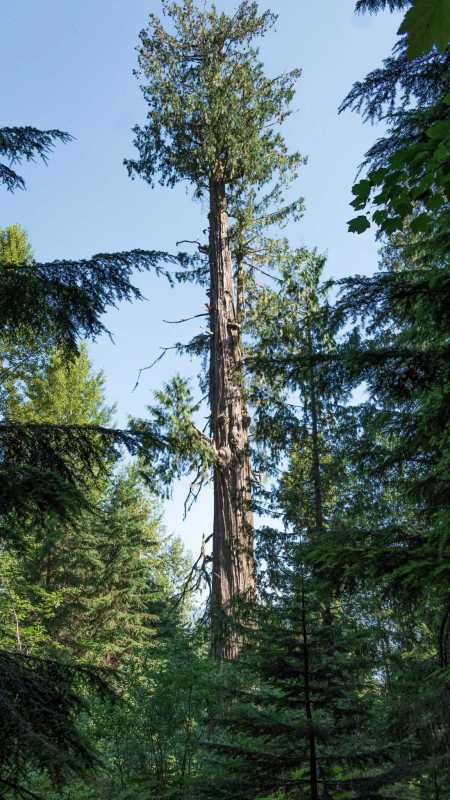
The setting felt almost improbable this far from the ocean. Yet deep winter snowpack and constant groundwater create the cool, damp conditions these ancient cedars need to survive. Some of the trees along the trail are estimated to be 1,000 years old or more, having endured storms, drought, insects, and fire across the centuries.
The stillness was what struck me most. After so many days of highways, wildlife sightings, and changing landscapes, the forest seemed to ask for something slower. We followed the boardwalk beneath hanging lichens and enormous trunks, mindful of the delicate root systems and fungal networks hidden beneath the forest floor.
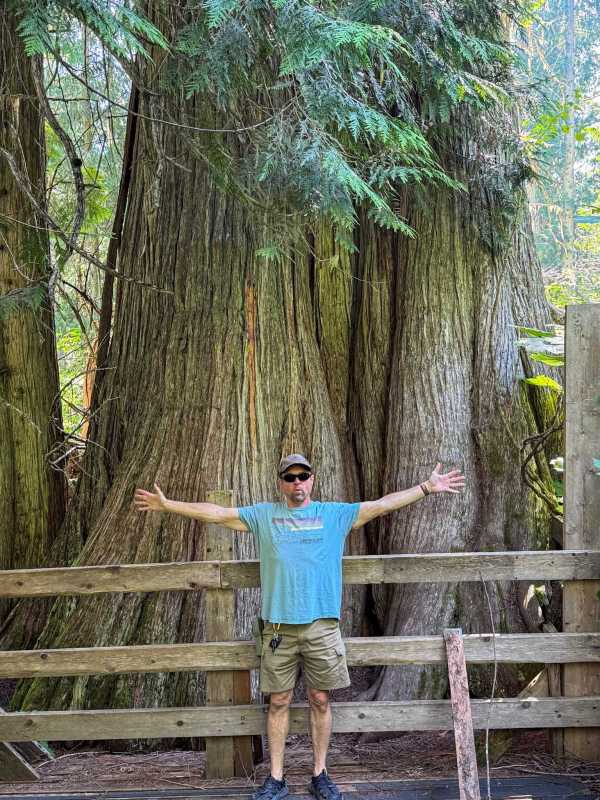
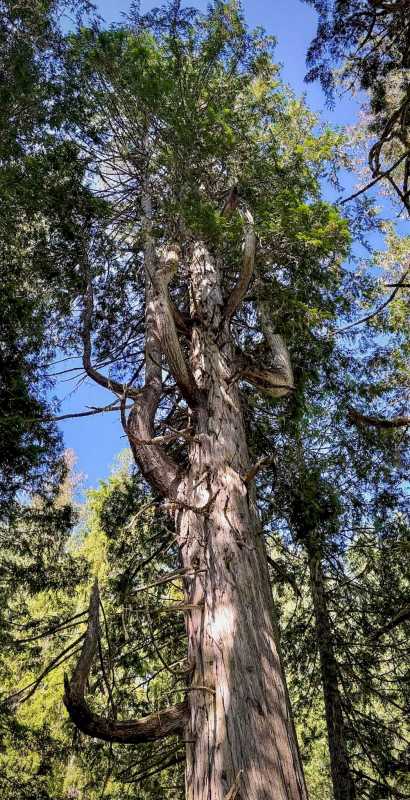
Some of the trees had names, which somehow made them even more memorable. Treebeard stretched upward in such an unusual shape that it really did resemble a giant figure reaching its arms toward the sky. Farther along, Big Tree lived up to its name in every possible way, its massive trunk making Bill look tiny by comparison. Around them, lichens clung to bark, fungi emerged from the understory, and every layer of the forest seemed connected to another.
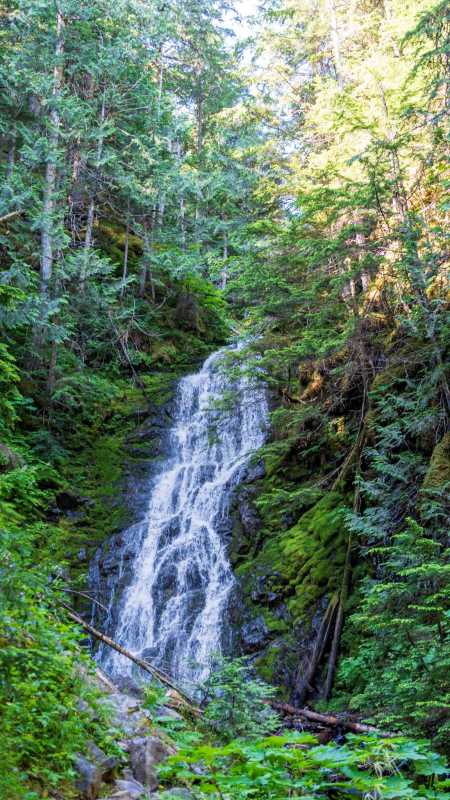
Tucked into all that greenery was a beautiful cascading waterfall, spilling over moss-covered rock beneath the trees. It fit the setting perfectly—lush, cool, and quiet, as though the rainforest had created its own soundtrack.
It felt less like visiting a roadside stop and more like stepping into a living cathedral, shaped not by people but by water, cedar, moss, and time.
The Water Keeps Moving
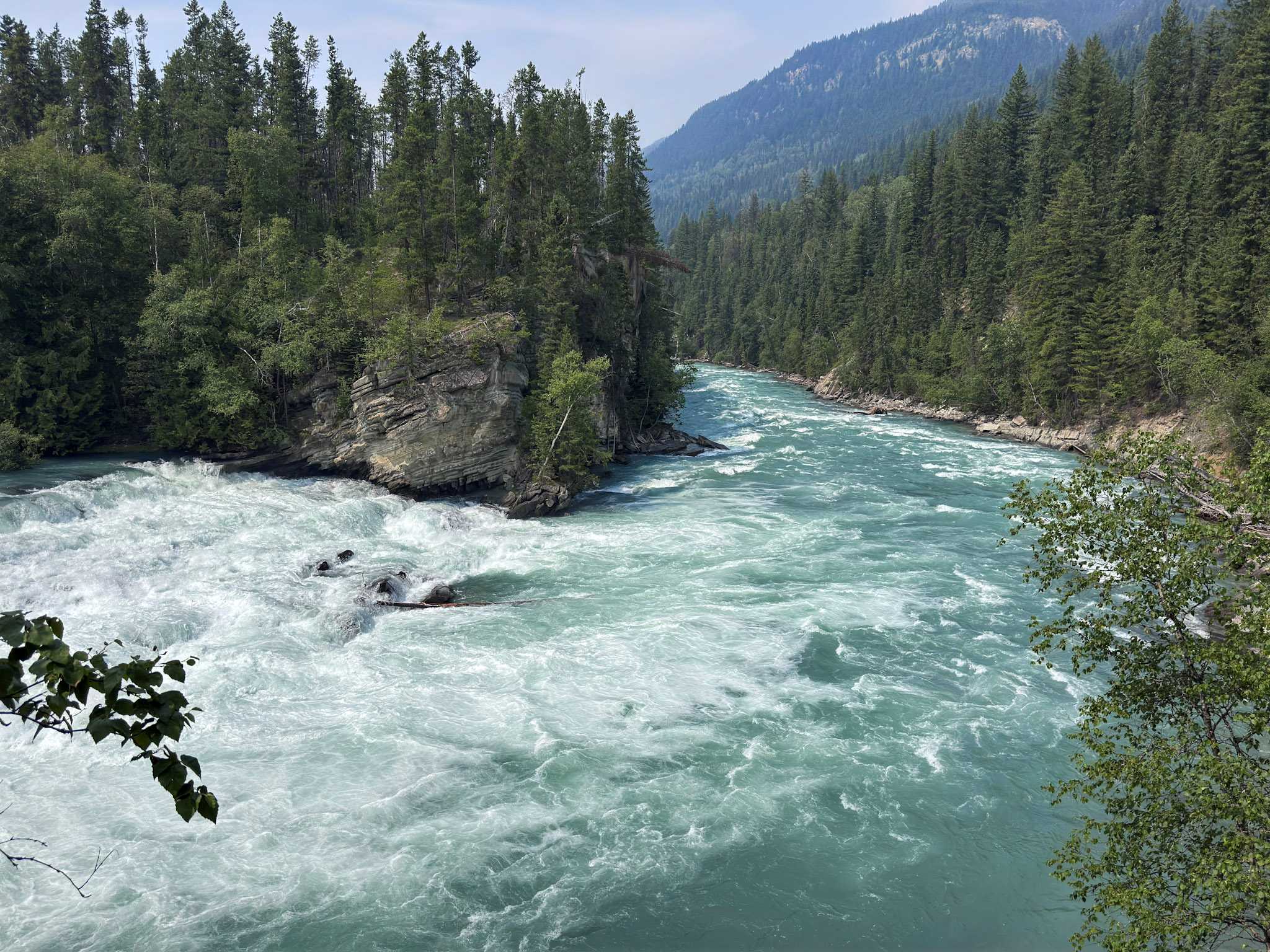
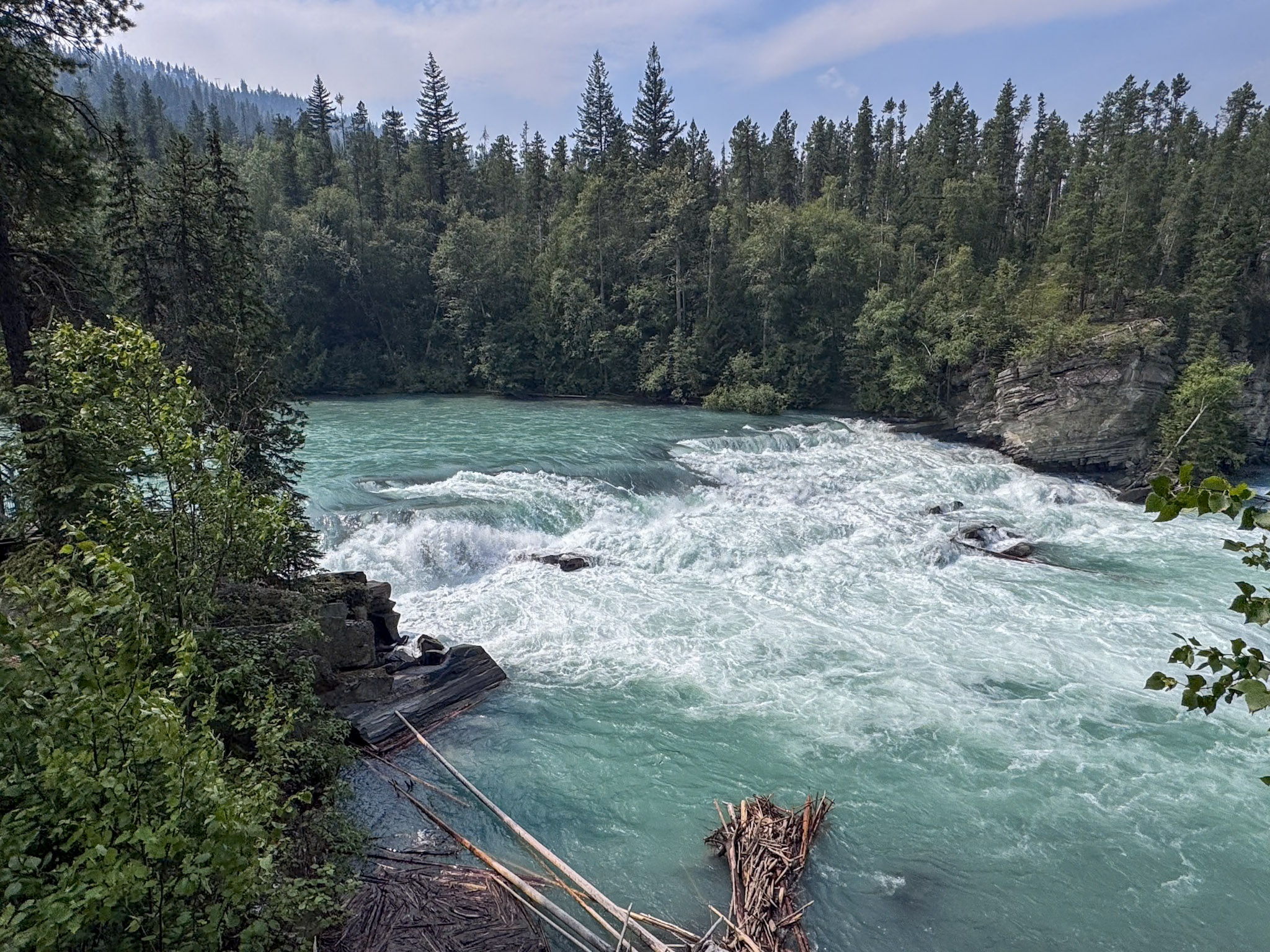
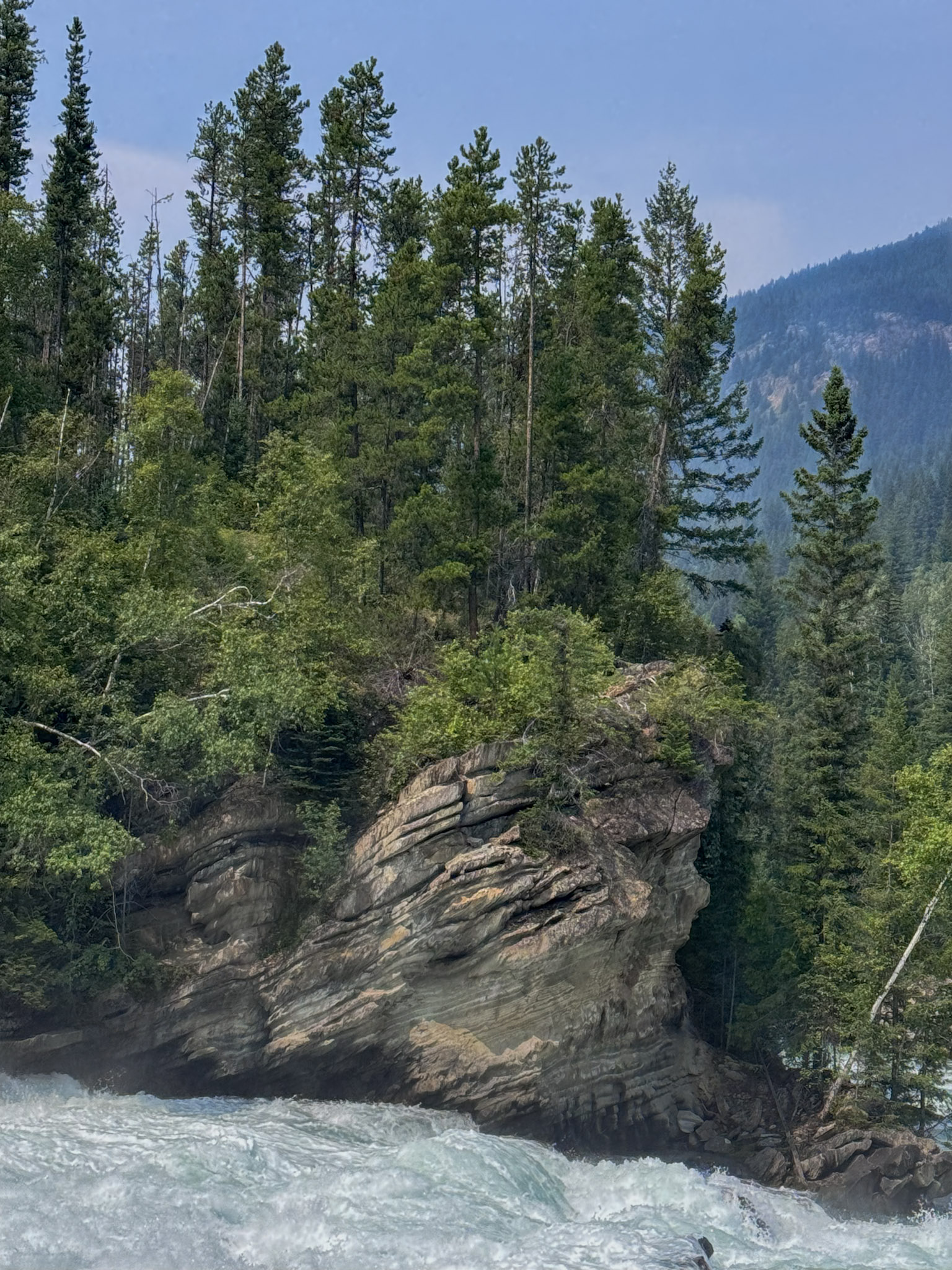
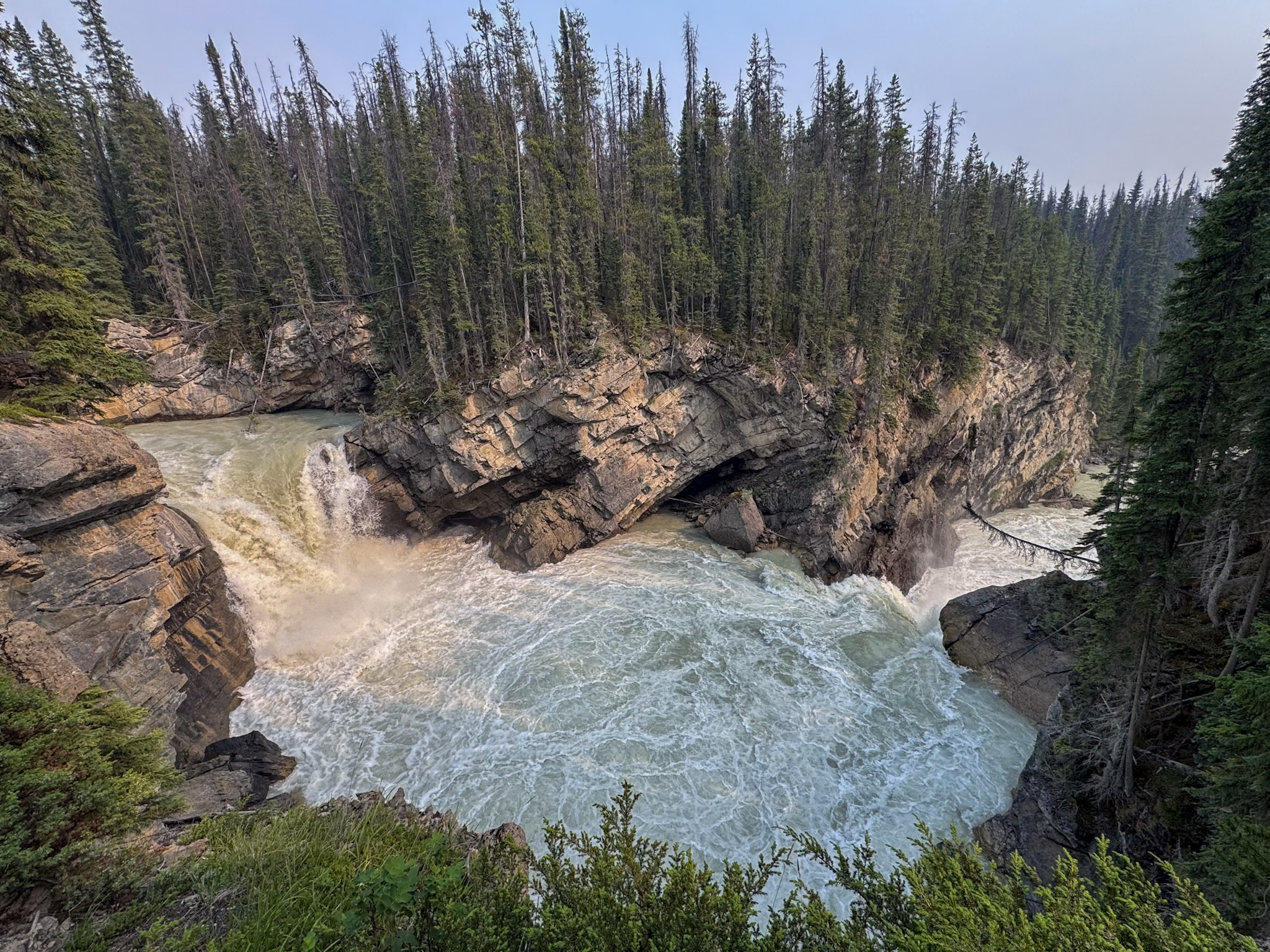
Leaving the Ancient Forest behind, we continued east toward the Rockies as the landscape gradually began to change again. Our next stop was Rearguard Falls, where the upper Fraser River narrowed into a powerful rush of turquoise water and whitewater before continuing its long journey west toward the Pacific.
Rearguard Falls marks the upper limit of an extraordinary Chinook salmon migration. The fish travel roughly 800 miles from the Pacific Ocean to reach this point, with only some managing to continue beyond the falls. We were still too early in the season to see them. In late July, the upper Fraser was carrying the force of seasonal snowmelt, and the river thundered past us in a rush of whitewater. By the time the Chinook arrive later in summer and early fall, flows generally ease from their spring and early-summer highs—although looking at the falls that day, it was still remarkable to imagine any fish making its way upstream.
When sunlight caught the water, the Fraser shifted into that beautiful blue-green turquoise we had seen so often throughout the North. It was a short stop, but a good place to stretch our legs before continuing toward Mount Robson and the Canadian Rockies.
Beneath Mount Robson
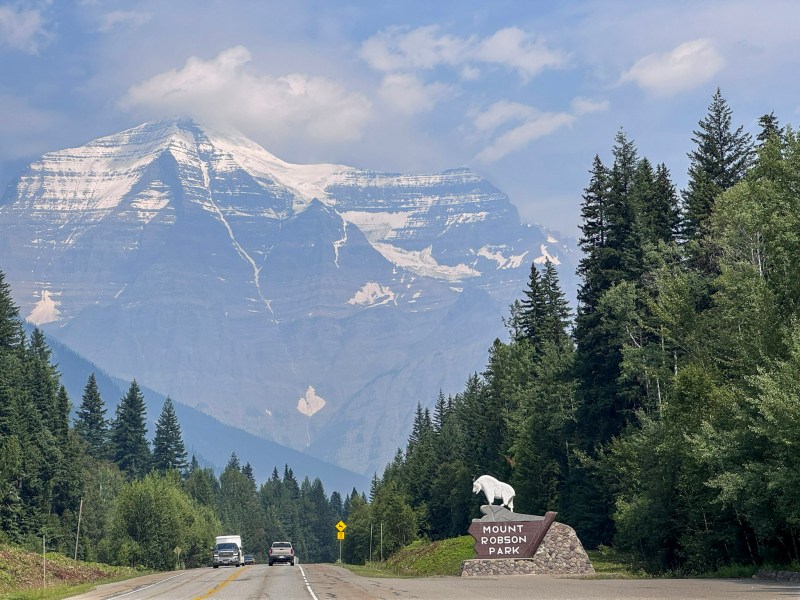
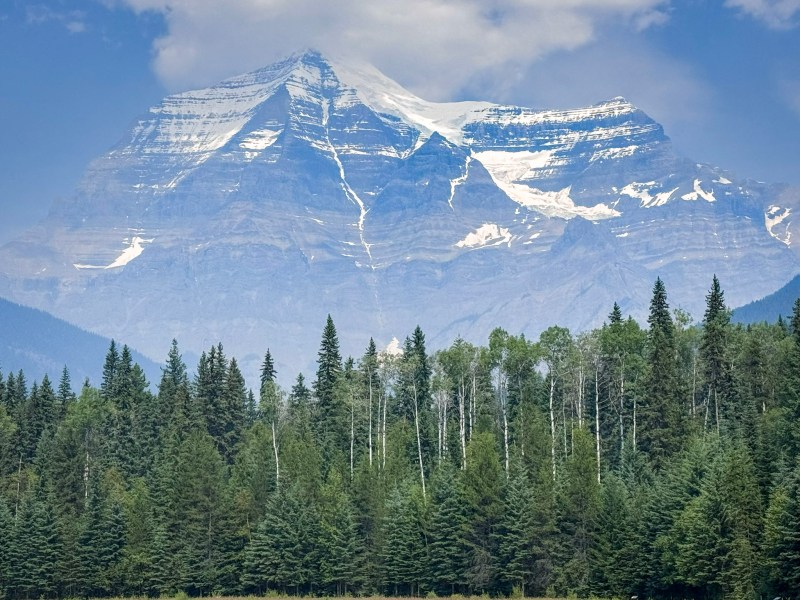
From Rearguard Falls, we continued east toward Mount Robson Provincial Park, where the Canadian Rockies began to feel unmistakably close. As we drove into the park, Mount Robson rose ahead of us above the highway, its broad, layered face streaked with lingering snow and framed by dense forest.
At 12,972 feet, Mount Robson is the highest peak in the Canadian Rockies, and even after so many mountain views throughout the trip, it still had a presence that made us slow down and look. Clouds brushed the summit while the lower slopes remained visible, giving the mountain that dramatic, constantly changing appearance it is known for.
We stopped at the Mount Robson Visitor Centre and grabbed lunch from Café Mount Robson, taking the opportunity to sit for a while and enjoy the view. After days of long drives and quick roadside stops, having lunch with one of the most recognizable peaks in the Rockies towering in front of us felt like a pretty good way to spend part of the afternoon.
From there, we continued toward Jasper. The mountains were becoming larger, steeper, and more familiar, and before long we would be back on one of our favorite roads of the journey—the Icefields Parkway.
Back on the Icefields Parkway
From Mount Robson, we crossed into Alberta and made our way through Jasper before turning south onto the Icefields Parkway. This was familiar territory. We had traveled this stretch of the Canadian Rockies the previous year, exploring many of its glaciers, lakes, waterfalls, and mountain viewpoints along the way. Those adventures became part of our From Geysers to Glaciers journey, which you can read more about here: From Geysers to Glaciers – Western Wanderlust Chronicles
Returning felt different this time. We were no longer trying to see everything the parkway had to offer; we could simply enjoy being back on one of our favorite roads and see what the day brought. The mountains rose around us in familiar layers of rock and forest.
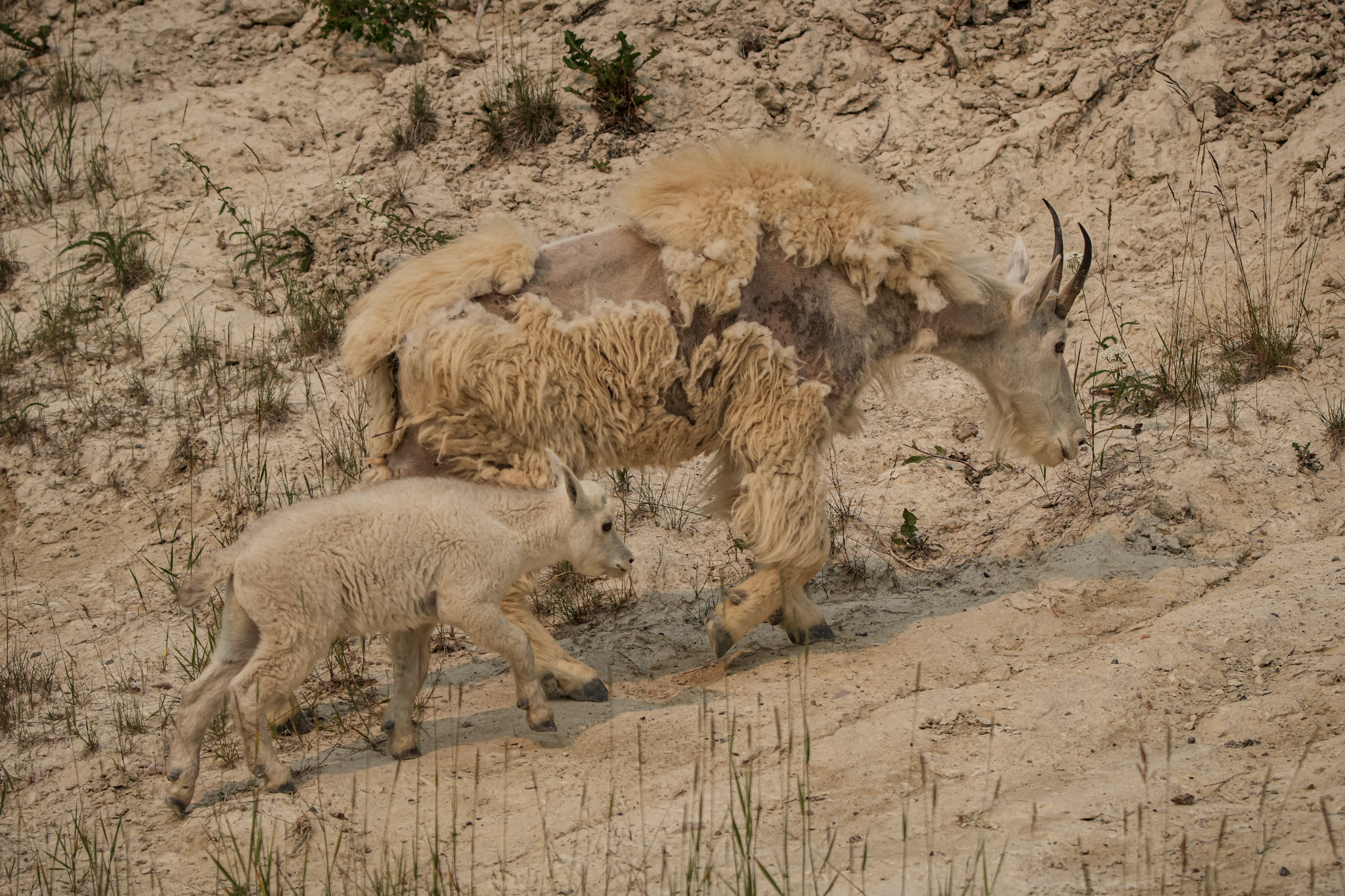
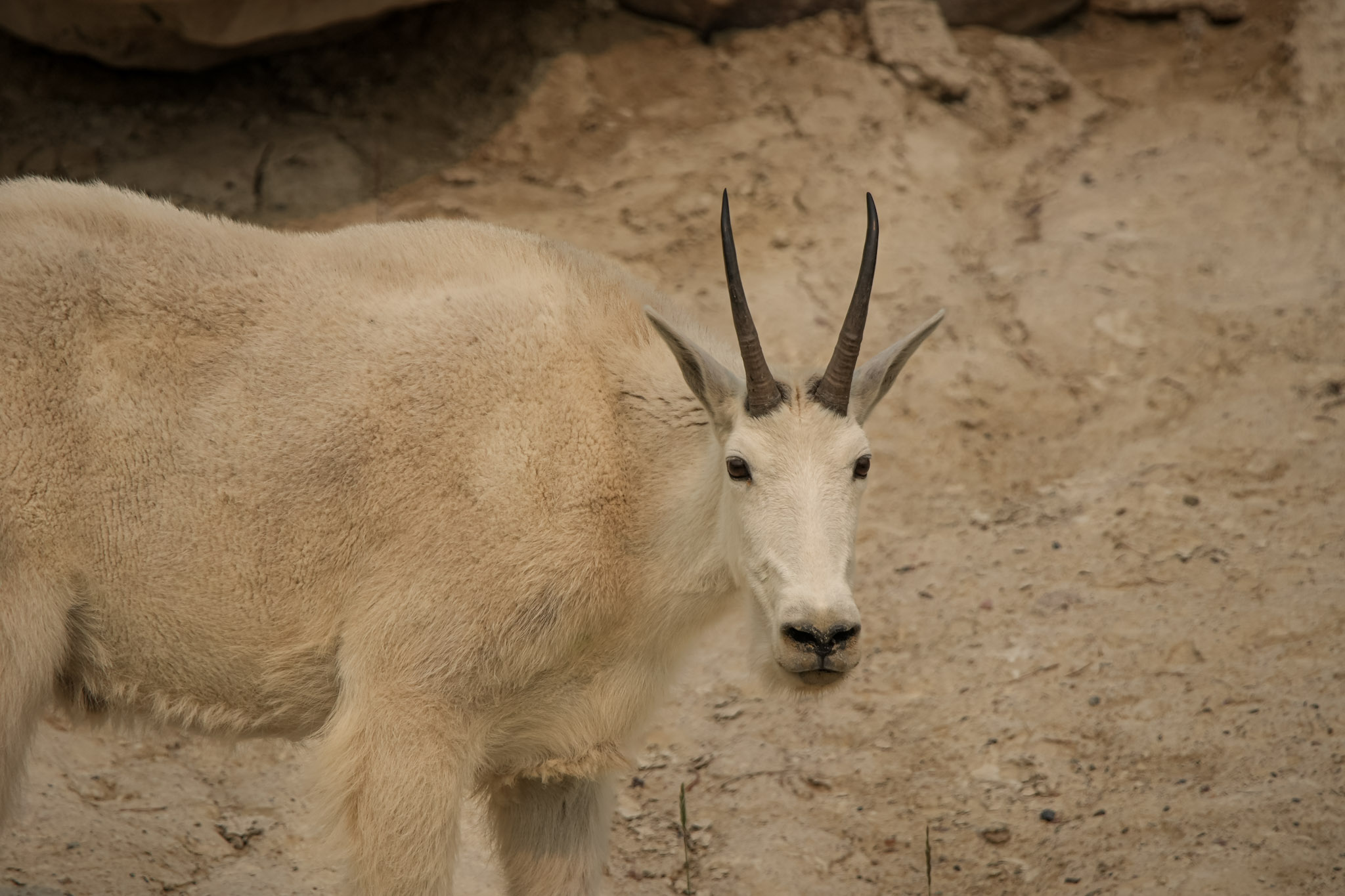
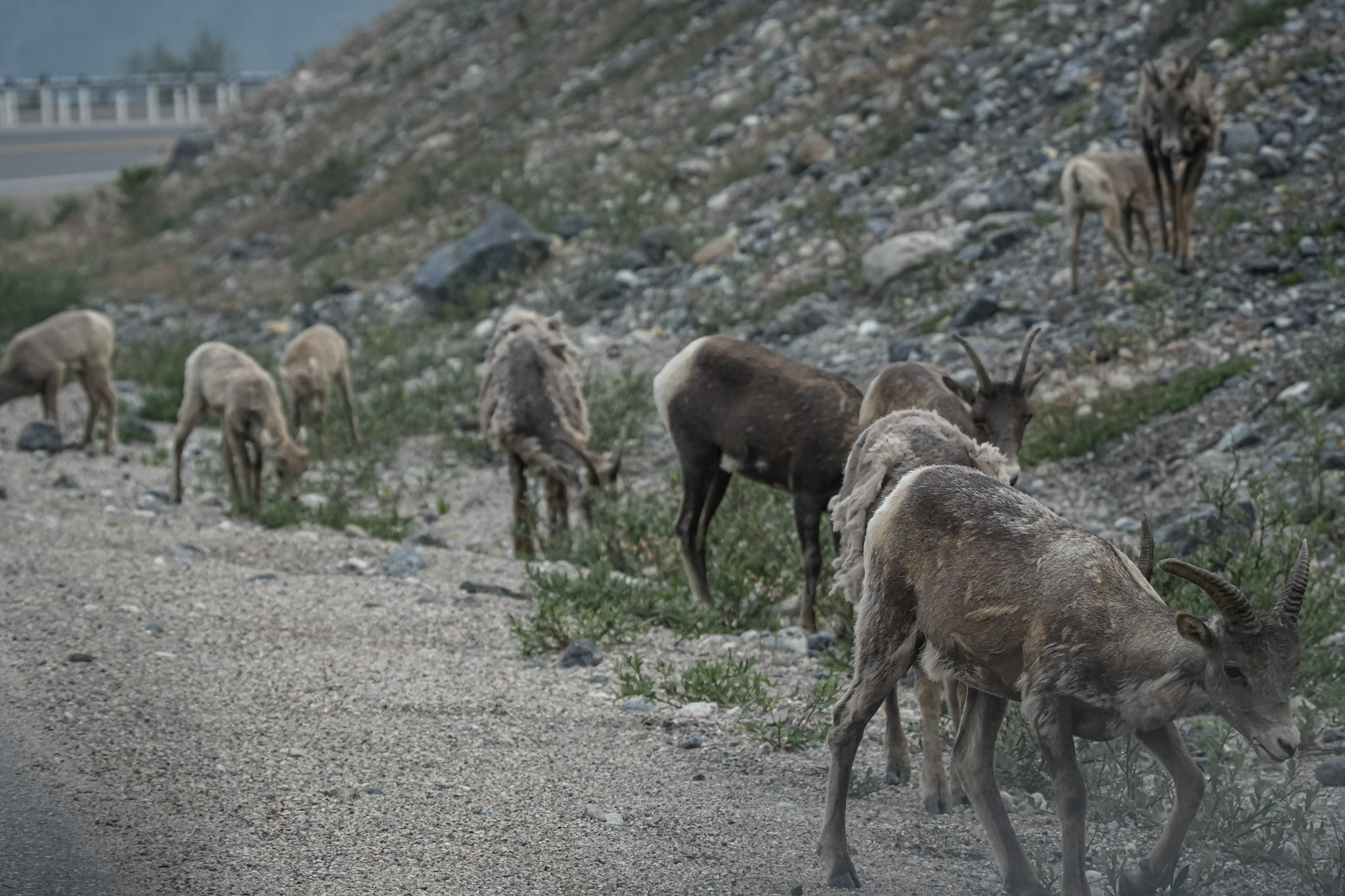
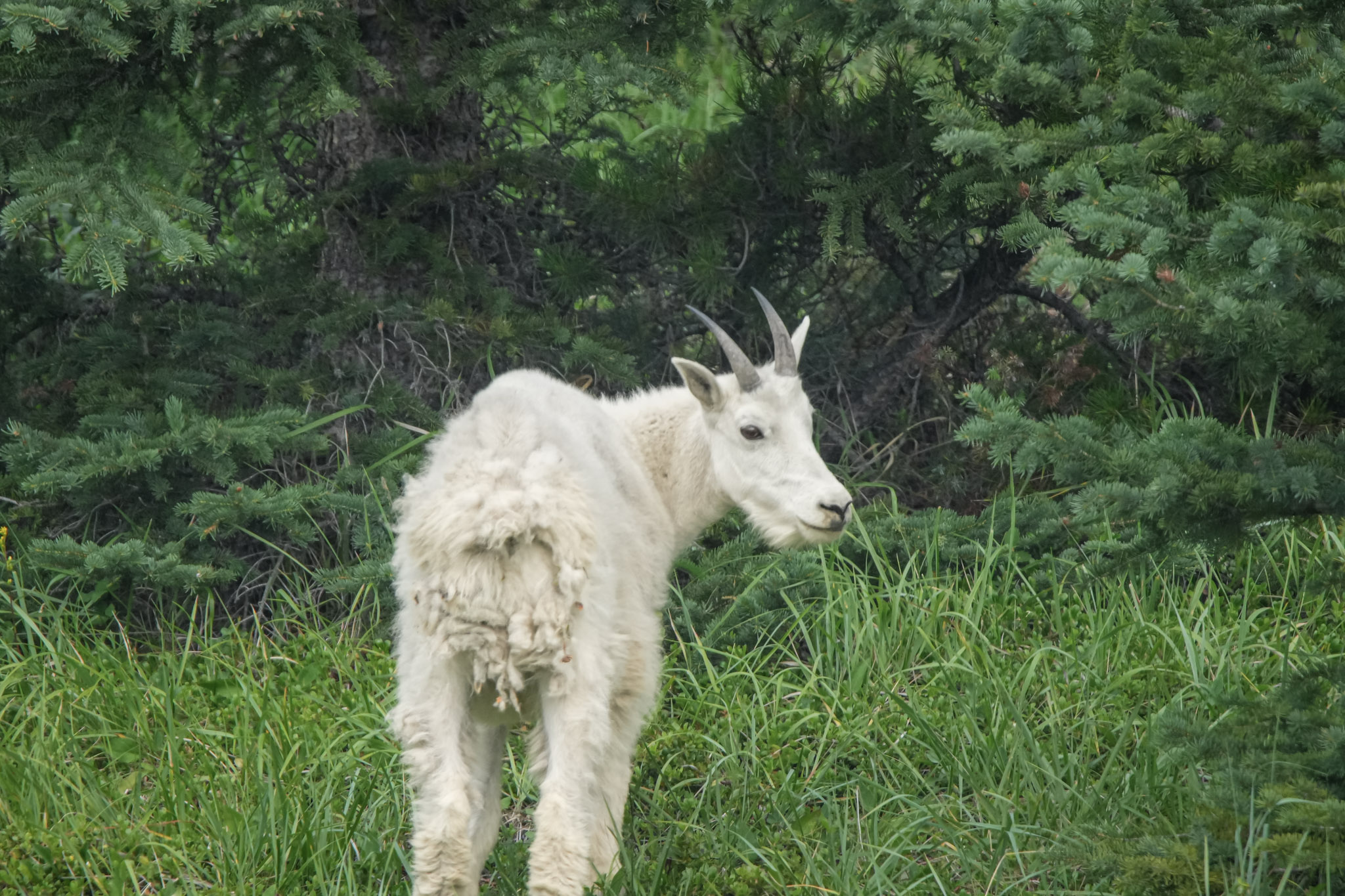
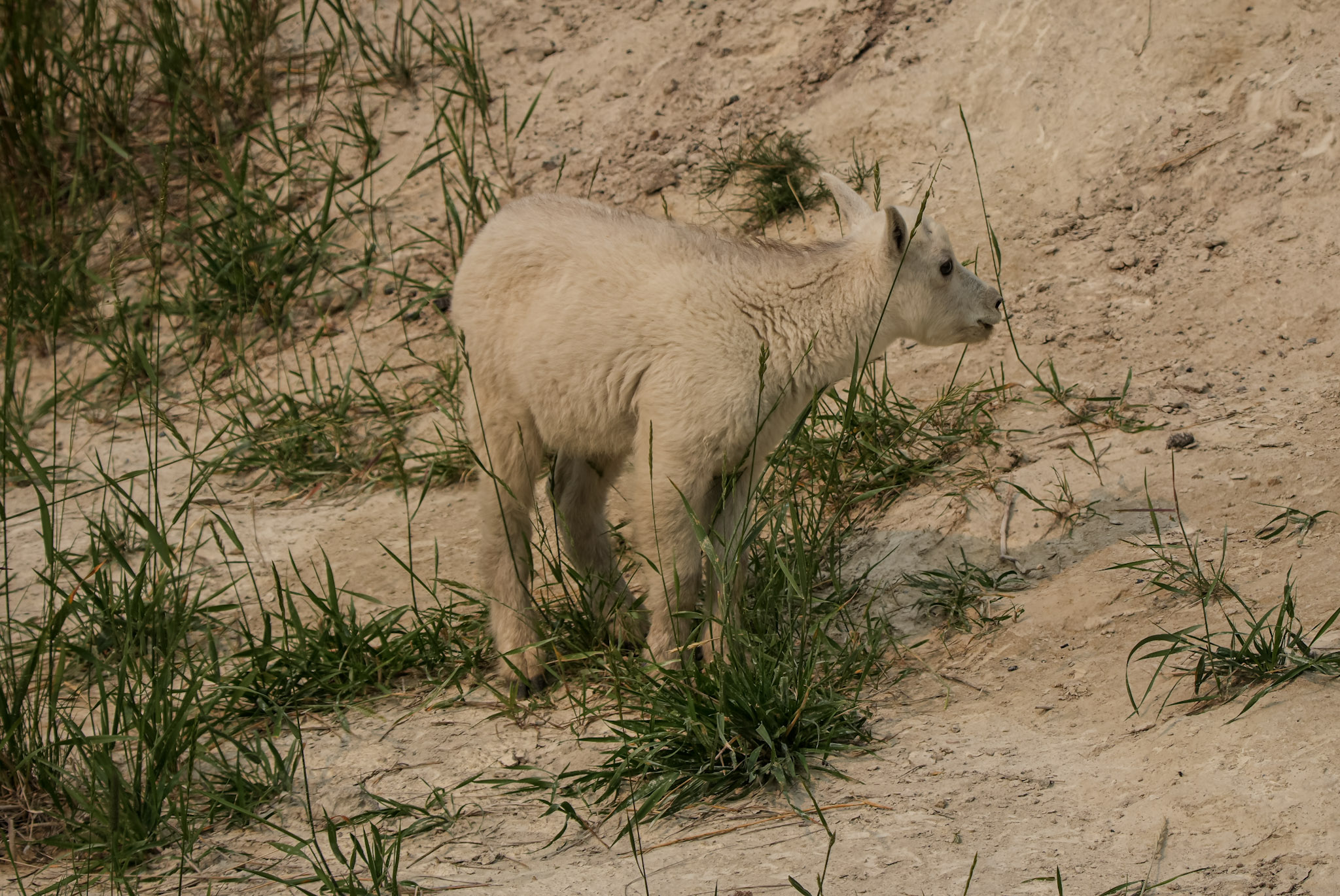
Wildlife quickly became the surprise of the drive. Along one rocky roadside slope, several mountain goats appeared. Some still wore shaggy remnants of their winter coats, hanging in loose patches from their sides, while a much smaller kid stood nearby in bright white fur. Adults and youngsters picked their way across the gravel and sparse vegetation as though the busy highway beside them barely existed.
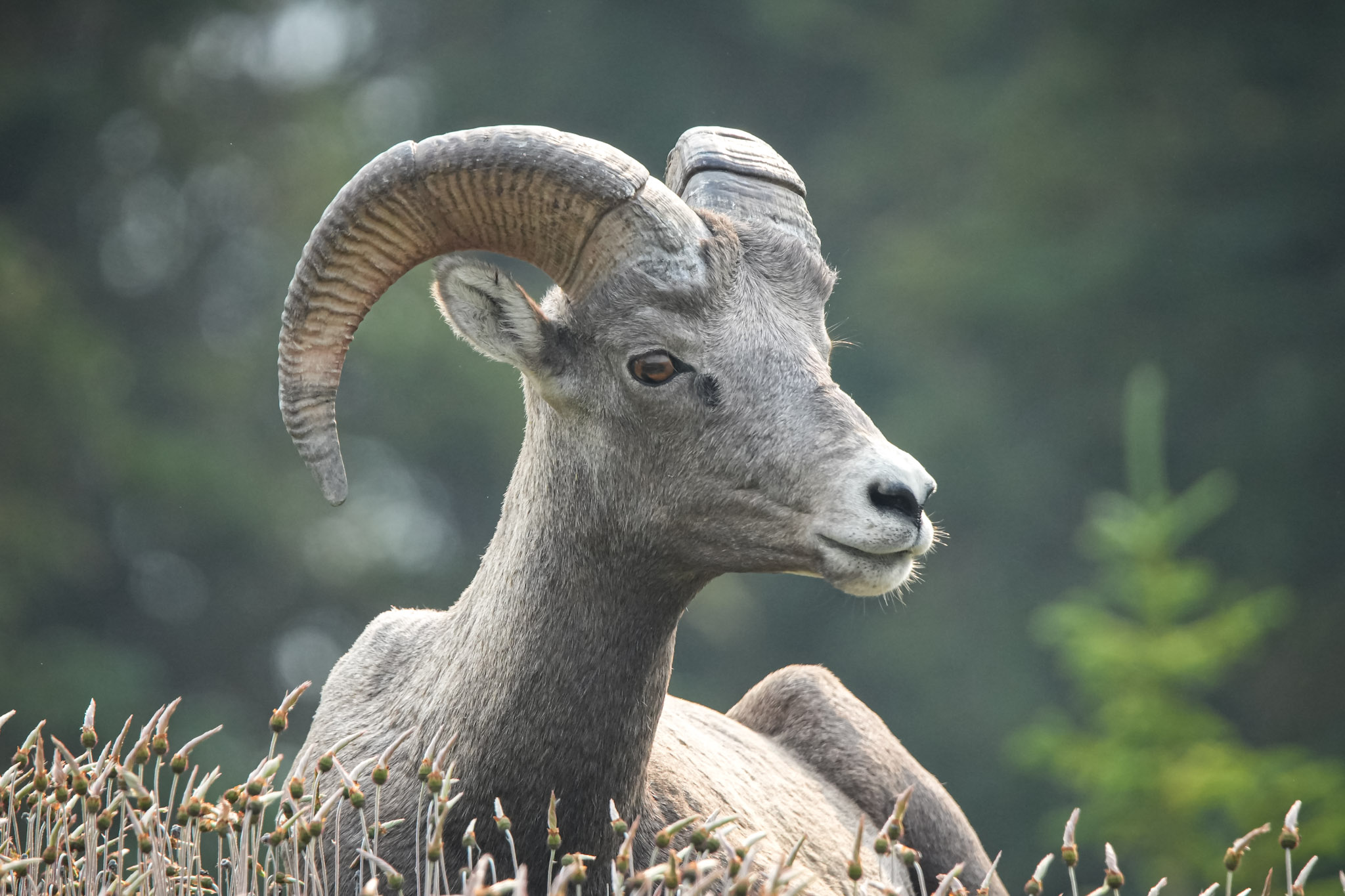
Farther along, the roadside became crowded again—this time with bighorn sheep. Adults grazed among the rocks while several lambs stayed close, their smaller bodies easy to pick out among the group. One ram gave us a particularly good look at the heavy curve of his horns. After thousands of miles of wildlife sightings across Alaska and Canada, it was remarkable that the final day was still adding new moments to the list.
There was something fitting about returning to a road we already knew and finding that it could still surprise us. This time, we simply slowed for mountain goats and bighorn sheep and let the familiar mountains accompany us south.
One Last Waterfall
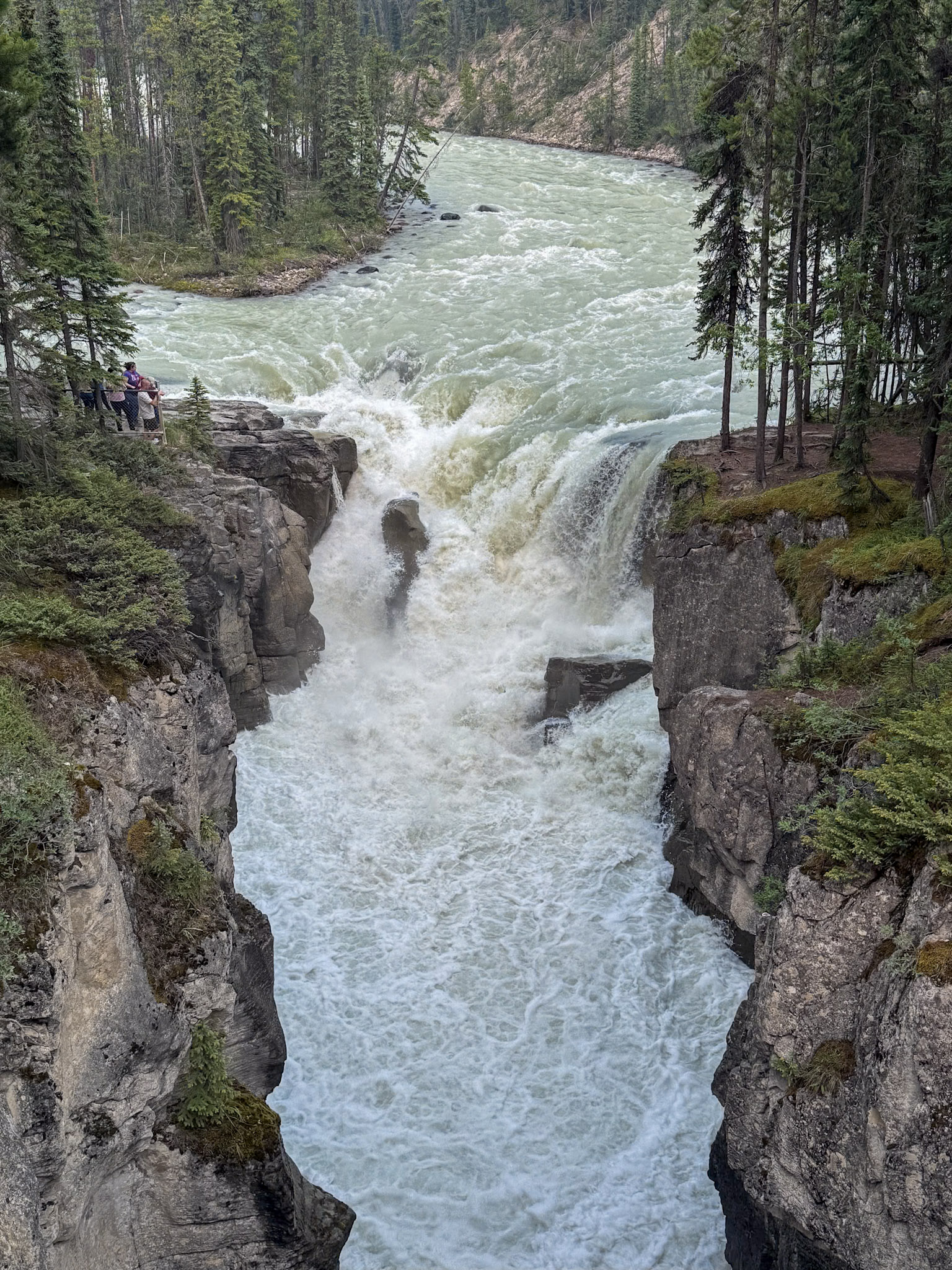
Farther south along the Icefields Parkway, we made our final sightseeing stop at Sunwapta Falls. We had driven past it on our previous trip through Jasper, so this time we decided not only to see the upper falls but to follow the trail down toward the lower cascades as well.
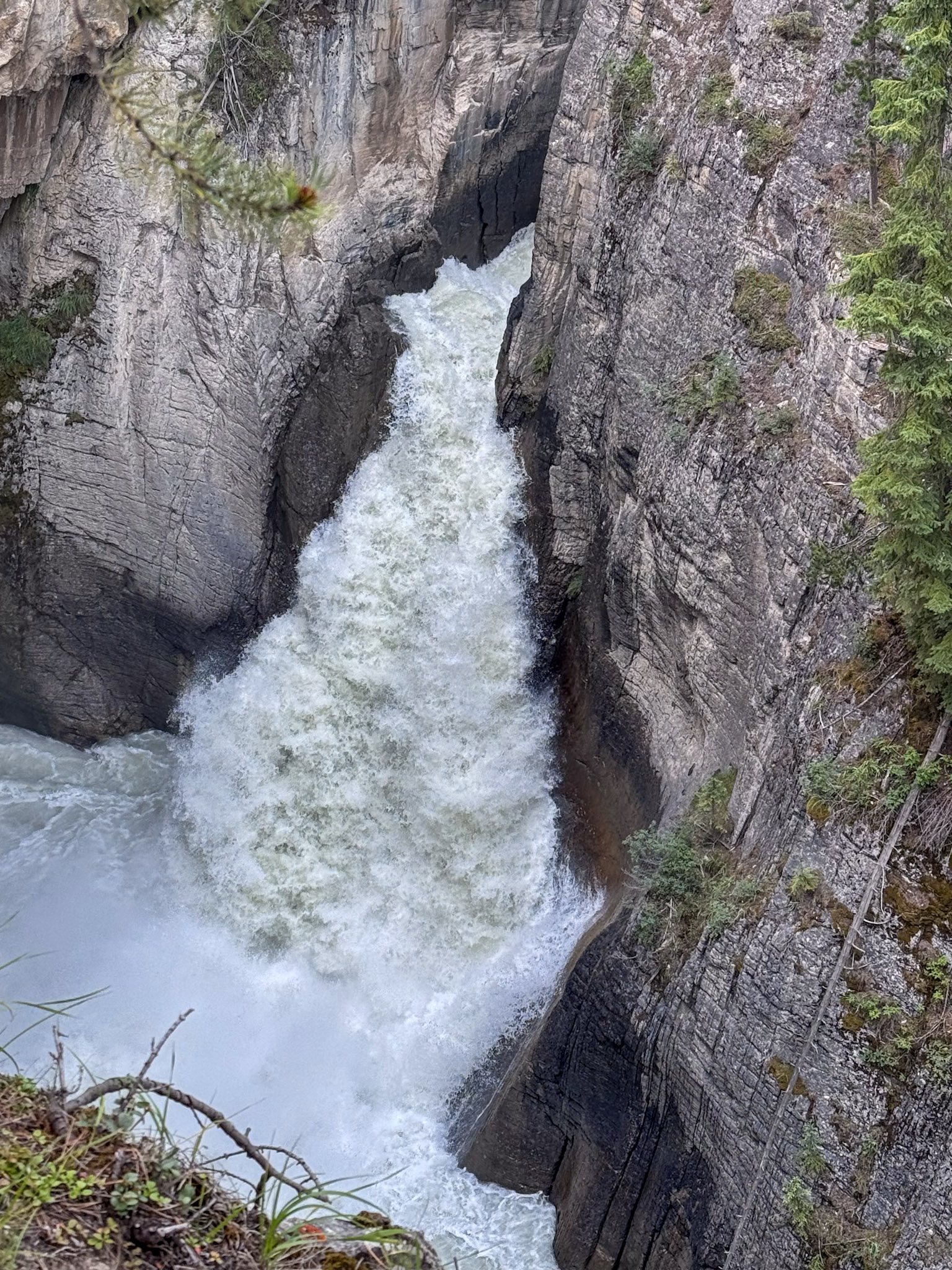
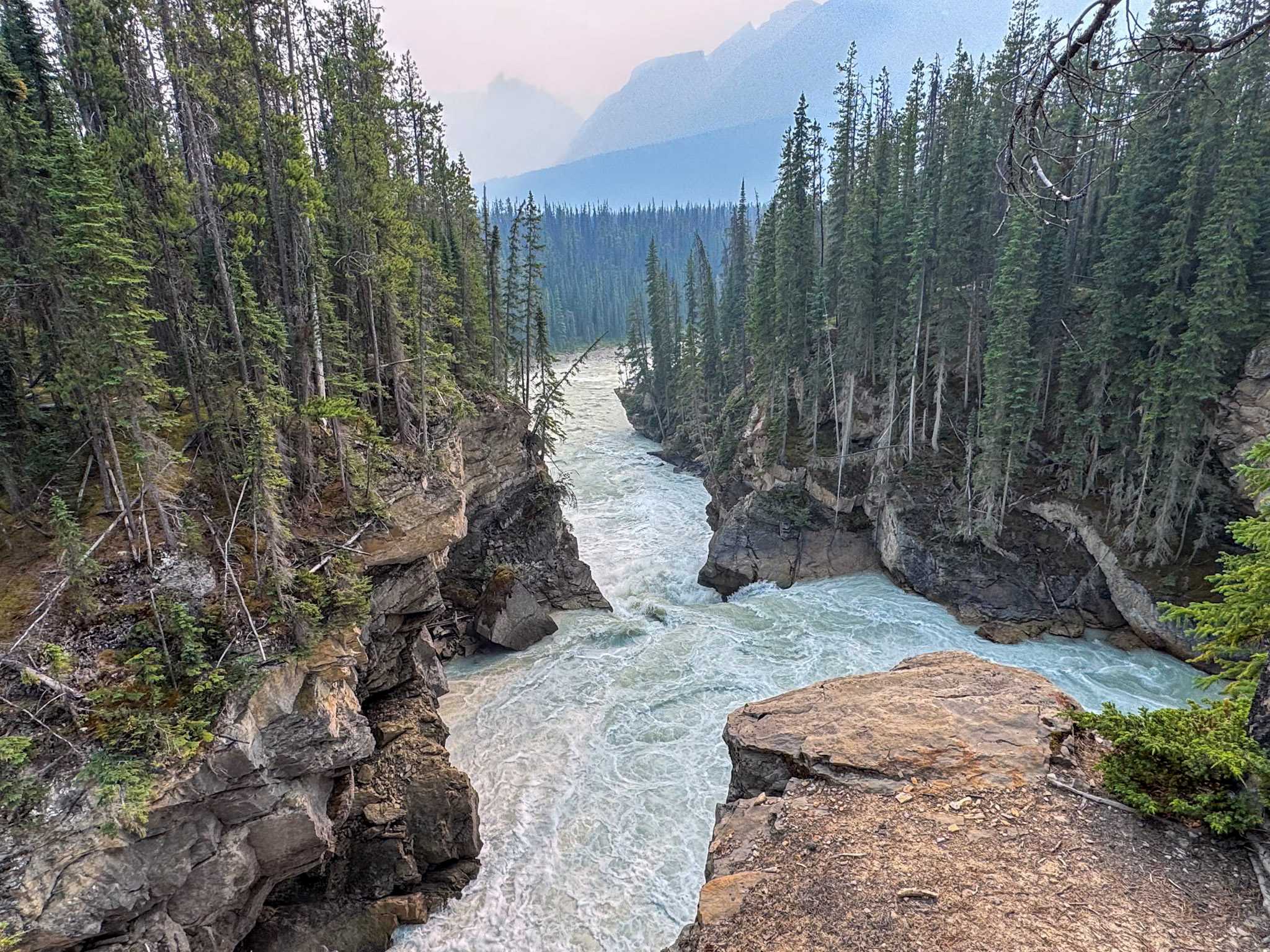
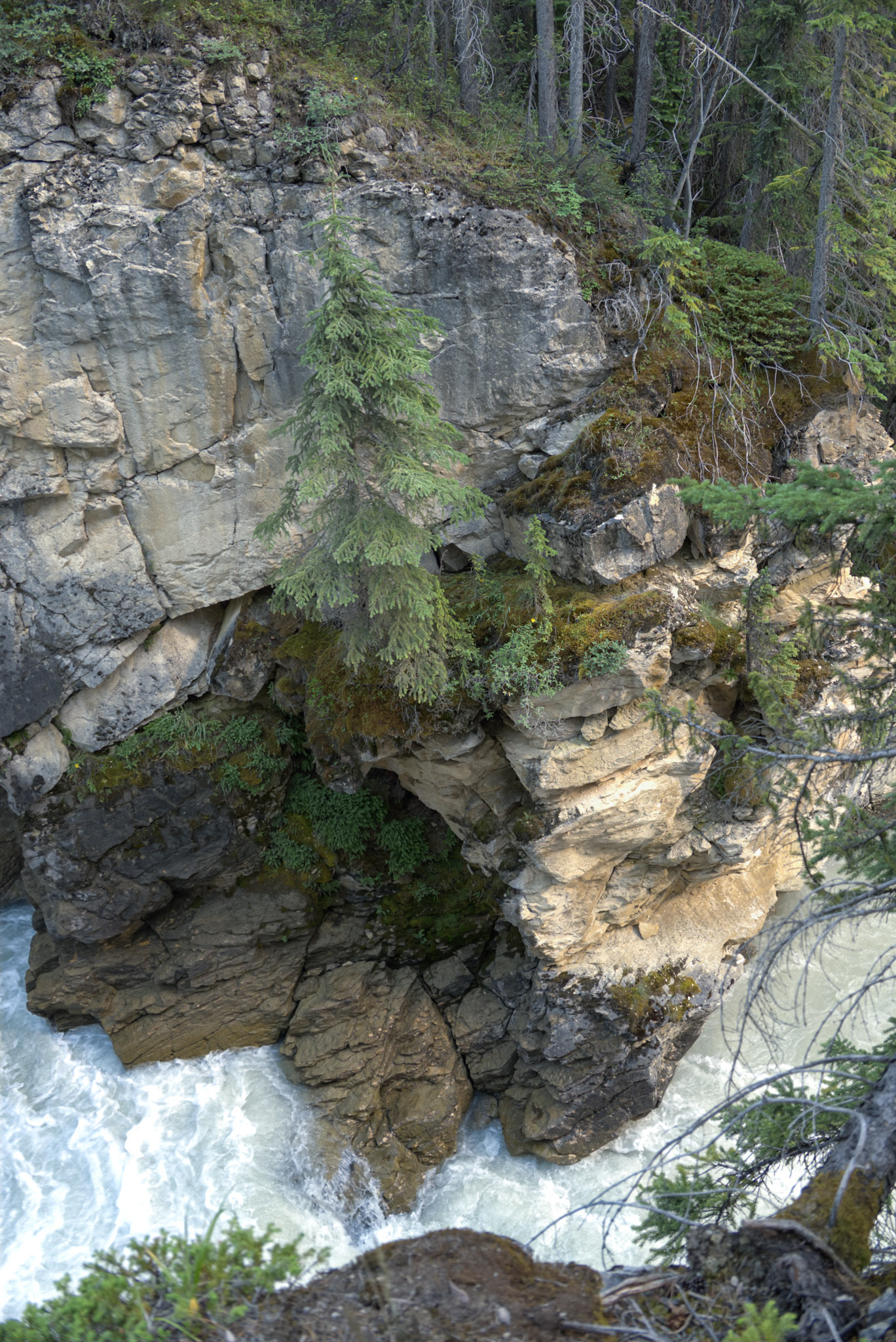
The upper falls were anything but subtle. The Sunwapta River rushed toward the brink before plunging into a narrow limestone gorge, filling the canyon with whitewater and spray. From the viewpoints above, we could watch the river split around rock and then funnel into the constricted gorge below, where the sound of the water echoed between the cliffs.
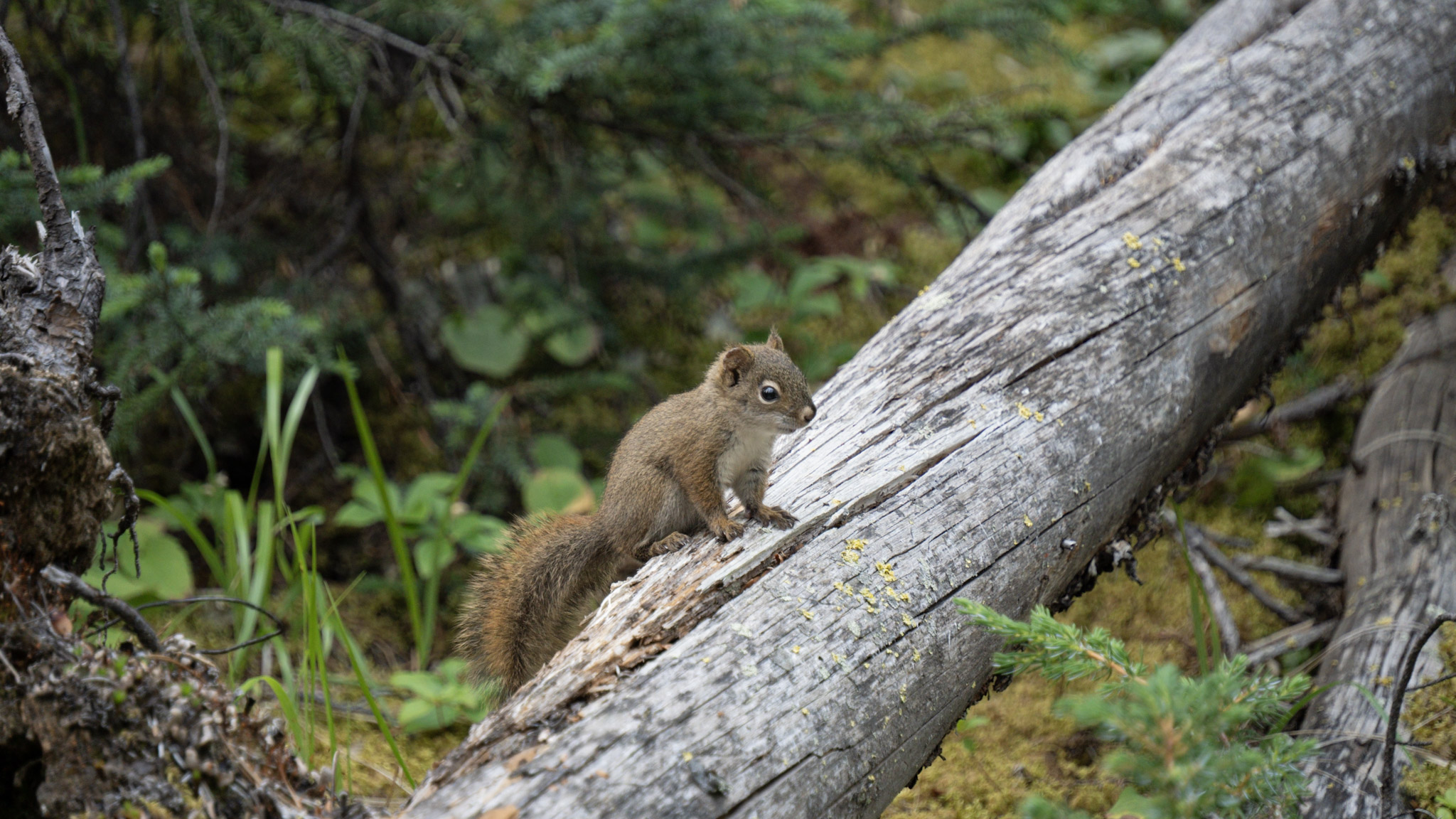
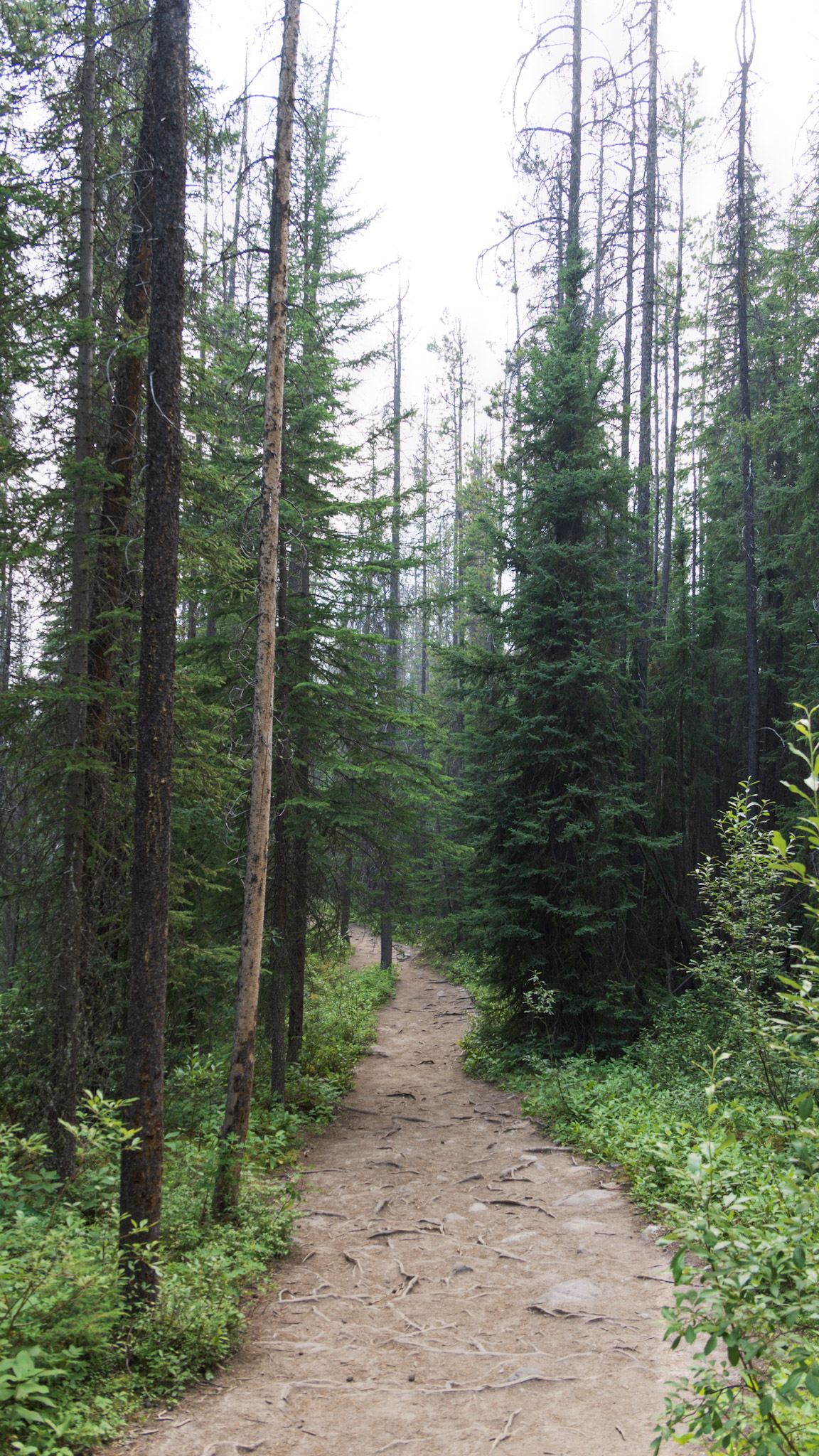
From there, we continued down the forested trail toward the Lower Sunwapta Falls. The farther we walked, the quieter the surroundings became. Spruce and fir closed around the path, berries grew along the forest floor, and a curious little squirrel paused on a fallen log before disappearing back into the trees.
The lower falls felt different from the dramatic drop above. Here, the river twisted through the gorge in a succession of powerful chutes and pools, disappearing behind rock walls before reappearing farther downstream. We stopped at several viewpoints along the way, taking in one last stretch of rushing mountain water before climbing back toward the Jeep.
After thousands of miles filled with glaciers, rivers, waterfalls, wildlife, and mountain roads, it felt fitting that our final planned stop was something so simple: a walk through the forest beside moving water. From Sunwapta Falls onward, the journey had officially begun to turn toward home.
The Final Miles
From Sunwapta Falls, the sightseeing portion of the expedition quietly came to an end. Farther south along the Icefields Parkway, wildfire smoke thickened noticeably, softening the mountains and hanging heavily over the road. I was especially grateful we had explored this part of the Rockies the year before under clearer skies; these were not conditions that made hiking or lingering outdoors particularly appealing.
We continued south through the Canadian Rockies, eventually leaving the Icefields Parkway behind as the rhythm of the trip shifted from exploring to covering the remaining miles. The mountains gradually receded, the roads grew more familiar, and the stops became fewer.
One Last Wildlife Surprise
By the time we were making our way toward the Sweet Grass border crossing, it was around 1 a.m. The landscape beyond the headlights had disappeared into darkness, and the road had settled into that quiet late-night rhythm of simply watching the miles pass.
Then something large and white swept across the road in front of us, illuminated for only a few seconds before disappearing back into the night. For a moment, neither of us said anything before one of us finally asked the obvious question: “Was that an owl?”
It was. A huge white owl had flown directly across our path—there and gone.
After nearly two weeks filled with bears, whales, musk oxen, caribou, mountain goats, ptarmigans, puffins, and so many other wildlife encounters, the expedition somehow managed to give us one final surprise. There was no photograph to bring home, only the memory of two tired travelers staring into the dark, a little stunned by what had just crossed the road in front of us.
Somehow, that felt like exactly the right wildlife encounter to end on.
The Long Road Home
Eventually, every expedition reaches the point when the road stops leading farther away and begins leading home.
Over sixteen days, we had traveled from the Arctic Ocean to coastal fjords, crossed mountain ranges and international borders, followed gravel roads deep into remote country, walked beneath thousand-year-old cedars, watched glaciers spill through mountain valleys, and experienced landscapes that shifted from boreal forest to Arctic tundra to temperate rainforest.
But when I think back on this journey, the mileage will not be what I remember most.
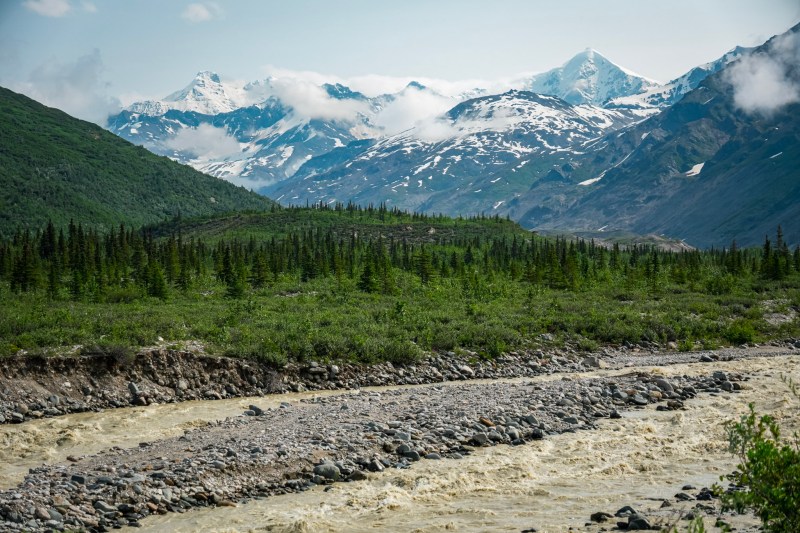
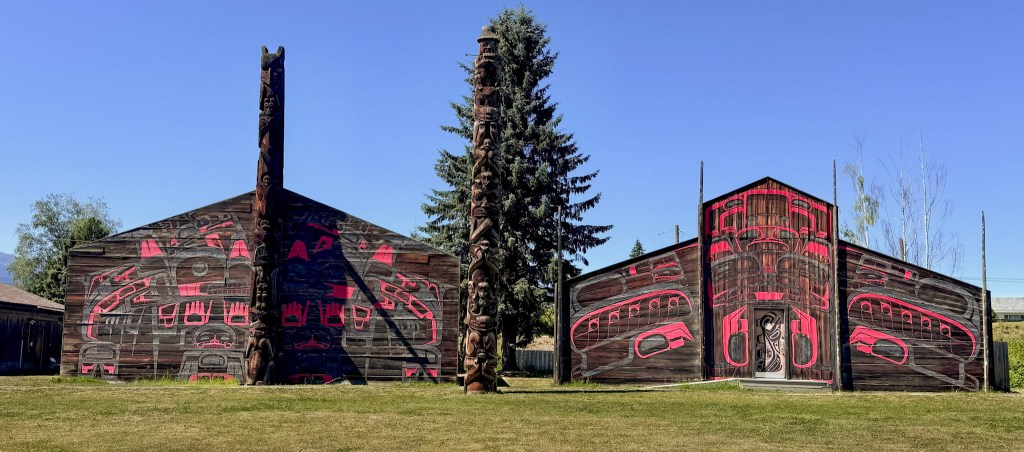
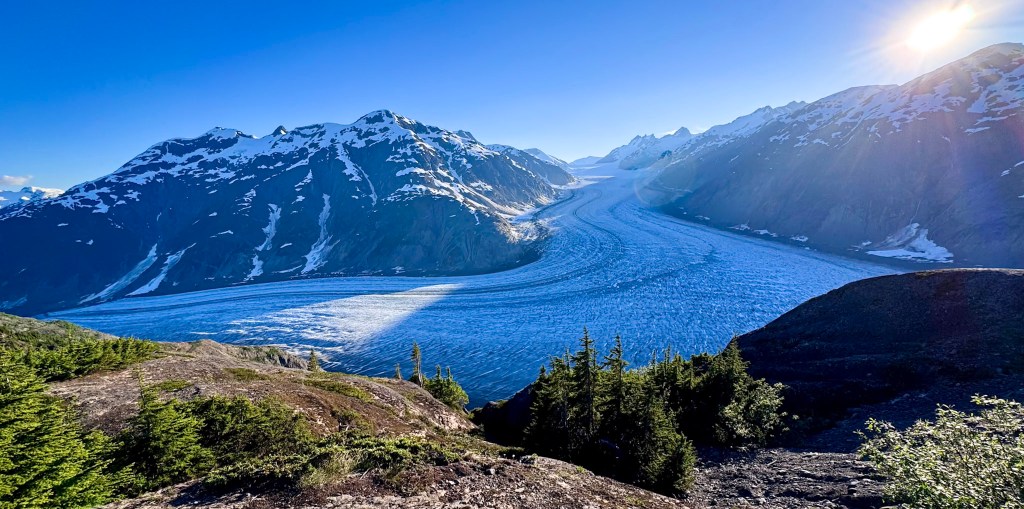
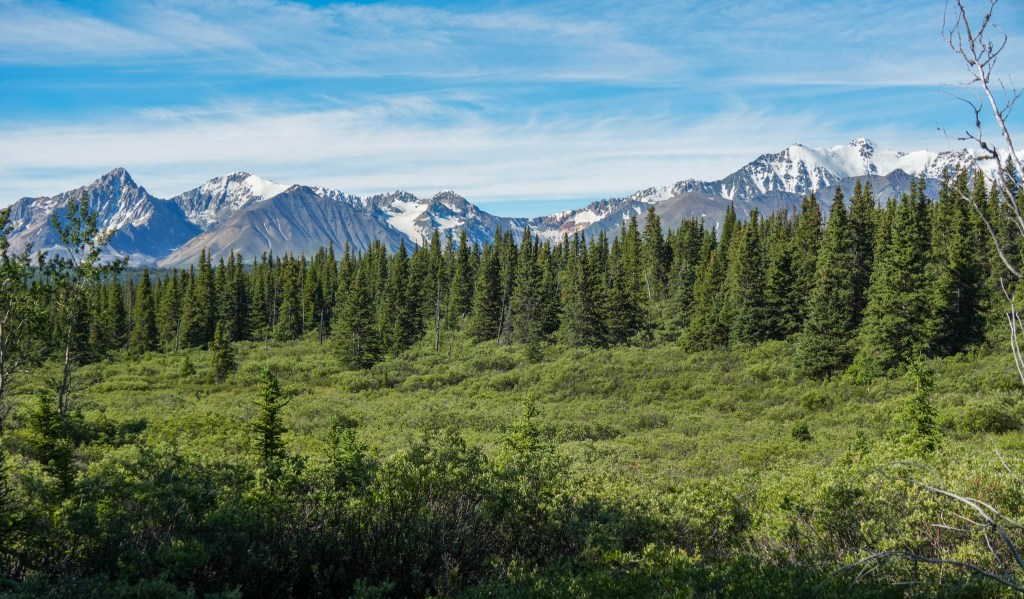
I will remember coffee beside Kluane Lake while waves rolled onto the shore. The strange glow of the midnight sun. A black bear scratching its ear in a field of fireweed. The first clear glimpse of Denali from the highway after our flight had been canceled again. Standing in the Arctic Ocean. Humpback whales feeding beside the boat. The silence above Salmon Glacier. Cedar longhouses beside the Skeena. A road that ended at a collapsed bridge. And somehow, one final white owl sweeping through our headlights in the middle of the night.
The expedition reminded me that adventure is rarely only about reaching the places marked on a map. It is also about staying curious enough to follow an interesting road, flexible enough to change plans when weather or circumstance intervenes, and patient enough to slow down when a place deserves more than a passing glance.
We were coming home with a dirty Jeep, overflowing camera cards, and more stories than we could possibly fit into a single post. More importantly, we were coming home grateful—for the landscapes that welcomed us, the wildlife that offered brief glimpses into their world, the histories and cultures that gave those places deeper meaning, and the simple privilege of experiencing it all together.
For sixteen days, the road kept asking the same question:
What might be waiting around the next bend?
We kept following it. And in the end, that may have been the best part of all.
From My Field Journal
July 23, 2026 · Late Night · On the Road Home
It feels strange to know we are finally heading home.
For so long, each day has been about what comes next—another road, another border, another place we have never seen before. Tonight, for the first time, there really isn’t another destination waiting ahead. Just home.
I don’t think I have fully processed this trip yet. There is too much of it still swirling around in my head—the places, the wildlife, the people we met, the things that didn’t go as planned, and all those quiet little moments that somehow became just as important as the big ones.
I am tired, grateful, and a little sad that it is ending.
Mostly, I just feel incredibly lucky that Bill and I got to experience all of this together.
EXPEDITION SNAPSHOT
THE ROUTE Prince George, British Columbia → Ancient Forest → Rearguard Falls → Mount Robson → Jasper → Icefields Parkway → Sweet Grass Border Crossing



 Western Wanderlust Chronicles
Leave a comment