For years, Alaska held a special place on our travel wish list. It was not simply another destination we wanted to visit, but a landscape we hoped to experience slowly, one mile at a time.
That vision became a 16-day expedition beginning in Fairbanks and ending in Calgary. Along the way, we traveled through Alaska, the Yukon, British Columbia, and Alberta, following some of North America’s most legendary roads. We crossed vast stretches of wilderness, stood at the edge of the Arctic Ocean, cruised among tidewater glaciers, explored Indigenous cultural sites, and discovered that some of the most memorable moments happened between the destinations.
This series follows that journey from beginning to end, sharing not only where we went but what it felt like to connect these landscapes by road. The highways became part of the story, each revealing a different side of the North—from the remote tundra of the Dalton Highway to the glacier-lined peaks of the Icefields Parkway.
Over the next several chapters, I’ll share not just the places we visited, but the roads that connected them, the wildlife that surprised us, the quiet moments that never made the itinerary, and the lessons we learned along the way. So grab a cup of coffee, settle into the passenger seat, and join us as we head north into one of the last great wildernesses on Earth.
EXPEDITION AT A GLANCE
From Alaska’s Interior to the Arctic Ocean—and south through the Canadian Rockies.
16 Days
On the Road
One continuous journey through Alaska and western Canada
5,220 Miles
Traveled
Approximately 3,080 miles in Alaska and 2,140 in Canada
4 Regions
Explored
Alaska, Yukon, British Columbia, and Alberta
4 National Parks
Visited
Denali, Kenai Fjords, Wrangell–St. Elias, and Jasper
8 Legendary Roads
Driven
Richardson, Denali, Dalton, Parks, Seward, Alaska, Cassiar, and Icefields Parkway
2 Countries
Connected by Road
From the Arctic Ocean to the Canadian Rockies
The Route: Fairbanks → Arctic Ocean → Seward → Wrangell–St. Elias → Yukon → Stewart and Hyder → Jasper → Calgary
The Expedition Begins
July 9–10, 2026
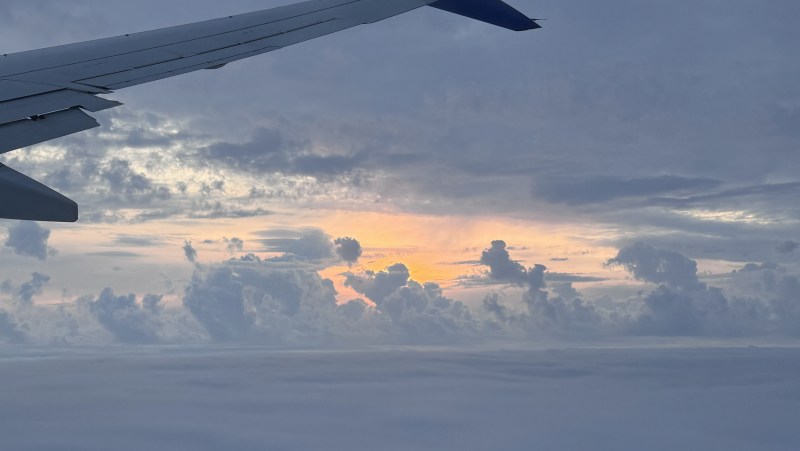
At 11:30 that evening, the plane began its descent into Fairbanks. I glanced out the window expecting darkness, but instead warm light reflected across a sea of clouds below. When we slipped beneath the cloud layer, Alaska appeared for the first time—a patchwork of forests, lakes, and winding rivers stretching toward the horizon. It looked more like an early summer morning than the middle of the night, my first glimpse of a place where daylight seemed to follow its own rules.
When the airplane door opened, the first thing that struck me was the air. Cool and damp, it carried the scent of spruce, fresh vegetation, and rain, a welcome contrast to the dry Colorado summer I had left only hours earlier. After months of planning routes and counting down the days, I had finally arrived in Alaska.
A few minutes later, a familiar Jeep rolled into the airport pickup lane. Five days earlier, Bill had left Colorado to begin the long drive north while I counted down the days until I could join him. Seeing him pull up in Fairbanks meant the waiting was finally over. We were together again, standing at the beginning of an expedition we had dreamed about for months.
The drive to our hotel was short, and by the time we checked in, excitement had begun to give way to exhaustion. The next morning would mark the true beginning of the journey, but for that moment it was enough to breathe in the cool northern air and realize that the Last Frontier was no longer a place on a map. It had become our reality.
The Road South
The next morning began at a small local coffee stand, where I traded my usual coffee for a warm chai tea before we pointed the Jeep south. Our cameras were packed, the memory cards were ready, and the expedition was officially underway. Fairbanks gradually disappeared behind us as the Richardson Highway carried us deeper into Alaska’s interior, and before long we were pulling over because there was already so much we did not want to miss.
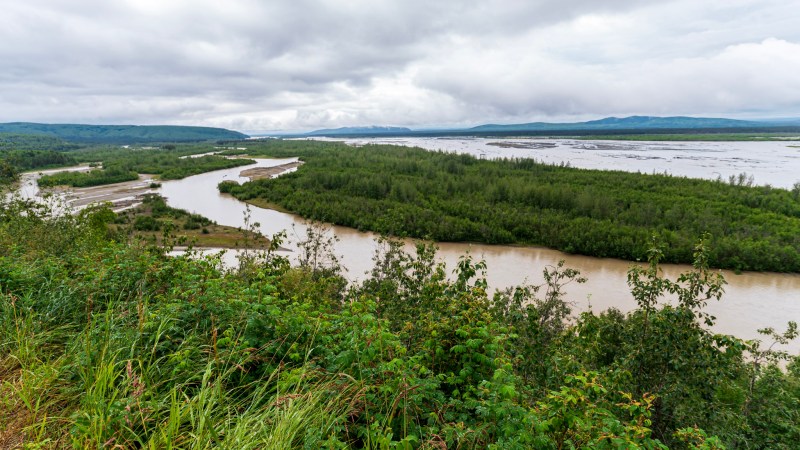
Our first overlook revealed the braided channels of the Tanana River spreading across a broad floodplain. I had seen photographs of Alaska’s braided rivers, but standing above that maze of waterways was different. Channels separated and rejoined as they crossed the valley floor, offering an early glimpse of the immense scale that would define much of the trip. The landscape seemed to extend far beyond what we could see, with more forests, rivers, and mountains layered into the distance.
As we crossed the historic Big Delta Bridge, I caught my first glimpse of the Trans-Alaska Pipeline stretching through the river corridor. I had seen countless photographs of the pipeline carrying oil nearly 800 miles from Prudhoe Bay to Valdez, but seeing it in person made the far north feel tangible. In only a few days, we would follow much of that same corridor toward the Arctic Ocean.
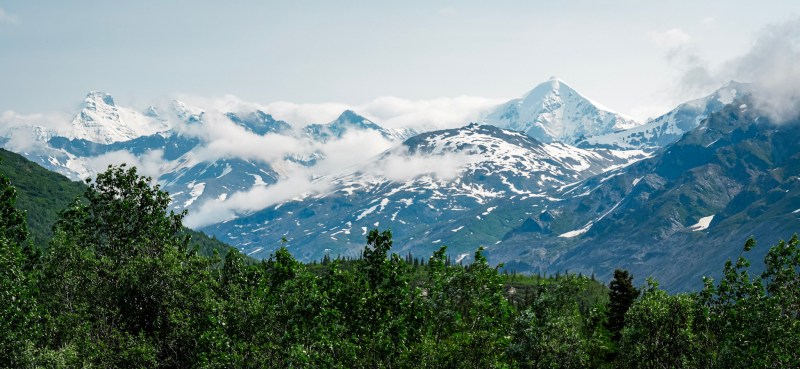
The mountains grew larger as we continued south until White Princess Mountain rose above the surrounding landscape, its rugged slopes still streaked with snow in mid-July. We pulled over to take in our first expansive mountain vista of the expedition. Bill and I have admired countless mountain landscapes across Colorado and the West, yet this felt distinctly different. The valleys seemed wider, the wilderness deeper, and the ranges more distant and dramatic.
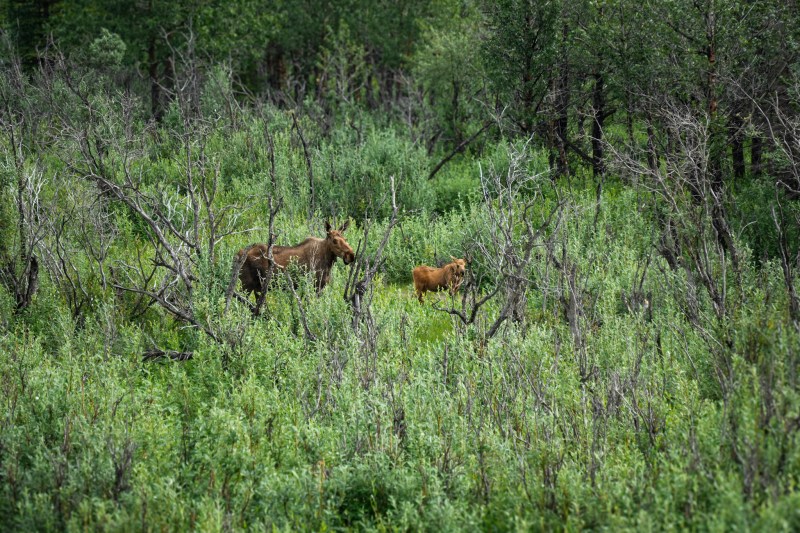
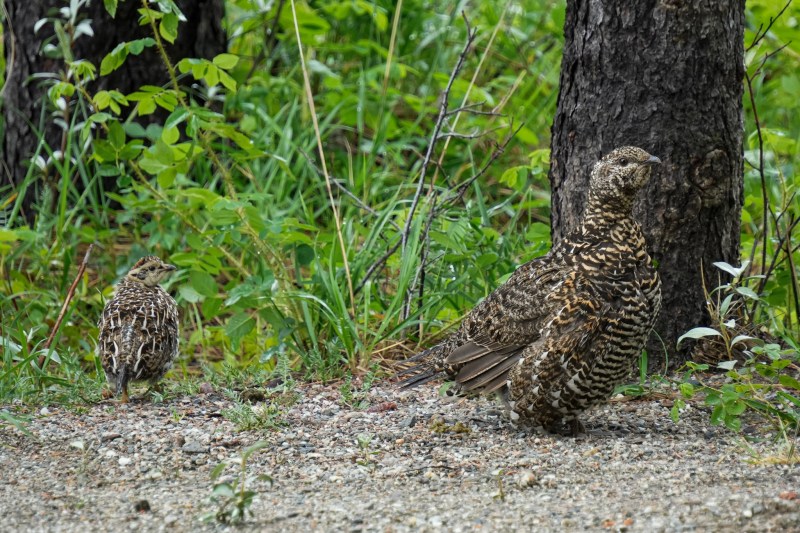
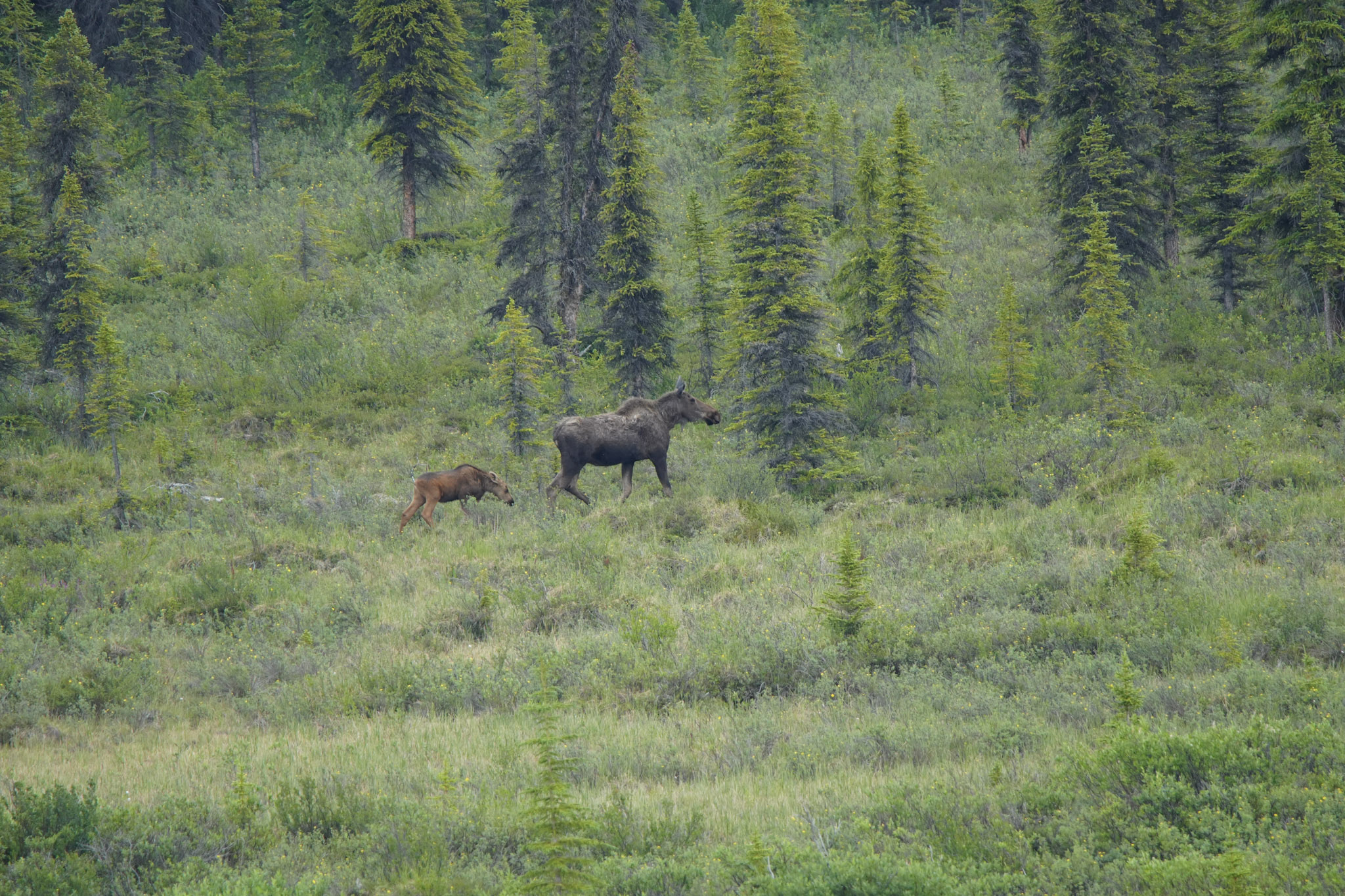
Wildlife soon became part of the morning. A cow moose and her calf fed quietly among the willows, seemingly unbothered by our excitement. Farther down the road, we spotted a female ptarmigan beside what initially appeared to be one chick. Only after watching more carefully did a second tiny chick emerge from the vegetation, so perfectly camouflaged that we had missed it. Back home in Colorado, seeing a ptarmigan usually requires hiking above treeline and a generous amount of luck; here, one greeted us before lunchtime.
Clusters of wild purple irises bloomed along the roadside, adding color among the dense greens of the forest and wetlands. I had not expected wildflowers to become one of my favorite details of the morning, but they seemed to appear everywhere, softening the rugged scenery.
At Richardson Monument, our attention was drawn toward Gulkana Glacier, the first glacier of the expedition. Even from a distance, its blue-white ice stood out against the surrounding mountains, a reminder that Alaska’s glaciers are not confined to national parks or coastal fjords. They are woven throughout the landscape, appearing beyond highways, valleys, and roadside overlooks.
One of the historical displays at the monument highlighted the women of Alaska’s Gold Rush. History often focuses on the prospectors who traveled north in search of fortune, but women also shaped the frontier as entrepreneurs, nurses, teachers, merchants, cooks, and community builders. Their stories added another dimension to the landscape, reminding me that Alaska’s history is told not only through mountains and mining claims, but also through the people who created communities in such a remote place.
By the time we reached Paxson, the morning no longer felt like a drive toward the Denali Highway. Alaska had introduced itself through braided rivers, snow-streaked mountains, wildlife, wildflowers, glacial ice, and stories from its past.
Where the Pavement Ends
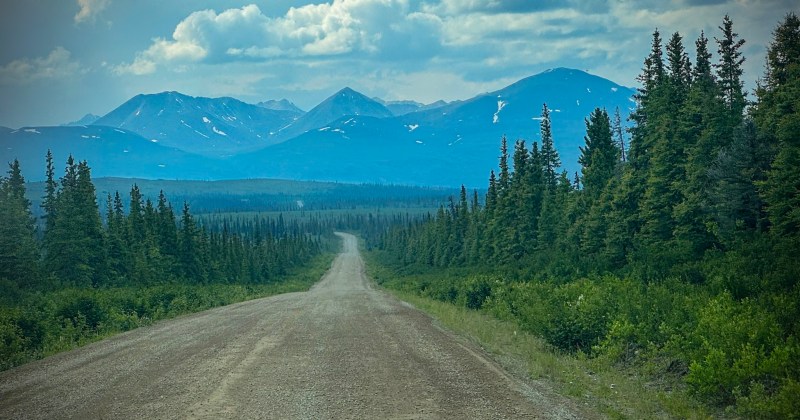
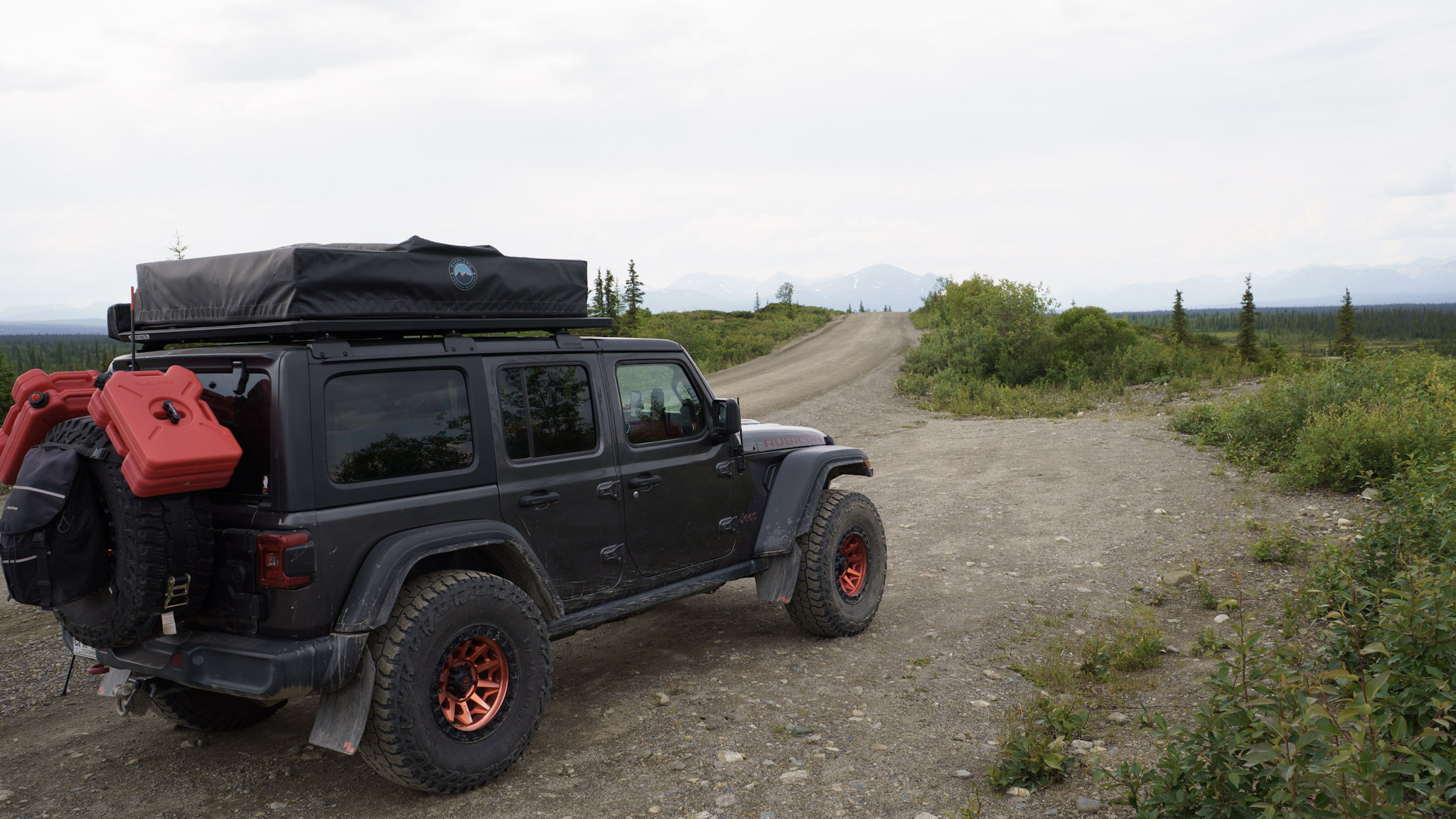
By the time we reached Paxson, the Richardson Highway had begun to feel familiar. The pavement was smooth, occasional vehicles still passed, and signs of civilization kept us connected to the outside world. That changed with a single turn. A green highway sign pointed west toward Cantwell and Denali National Park, while another welcomed travelers to the Denali Highway—135 miles of mostly gravel across one of Alaska’s most remote landscapes.
The Denali Highway mattered to me not because it was the most famous route of the expedition, but because it promised something distinctly Alaskan: proximity to the Alaska Range, long stretches of solitude, and the chance to travel through true backcountry rather than admire it from a distance. For a few miles beyond Paxson, pavement continued almost deceptively before the tires finally crunched onto gravel and the pace of the day began to change.
Traffic thinned, dust drifted behind the Jeep, and roadside pullouts felt less like designated attractions than invitations to stop wherever the landscape caught our attention. The urge to make good time gave way to moving slowly and letting the road shape the day.
Built in the late 1950s as the original road access to Denali National Park, the highway served as the main approach until the George Parks Highway opened in 1971. What remained was a route for travelers willing to trade speed and convenience for tundra, braided rivers, mountain passes, and vast wilderness. Within the first few miles, we understood why people speak of it with such affection.
The Alaska Range Appears
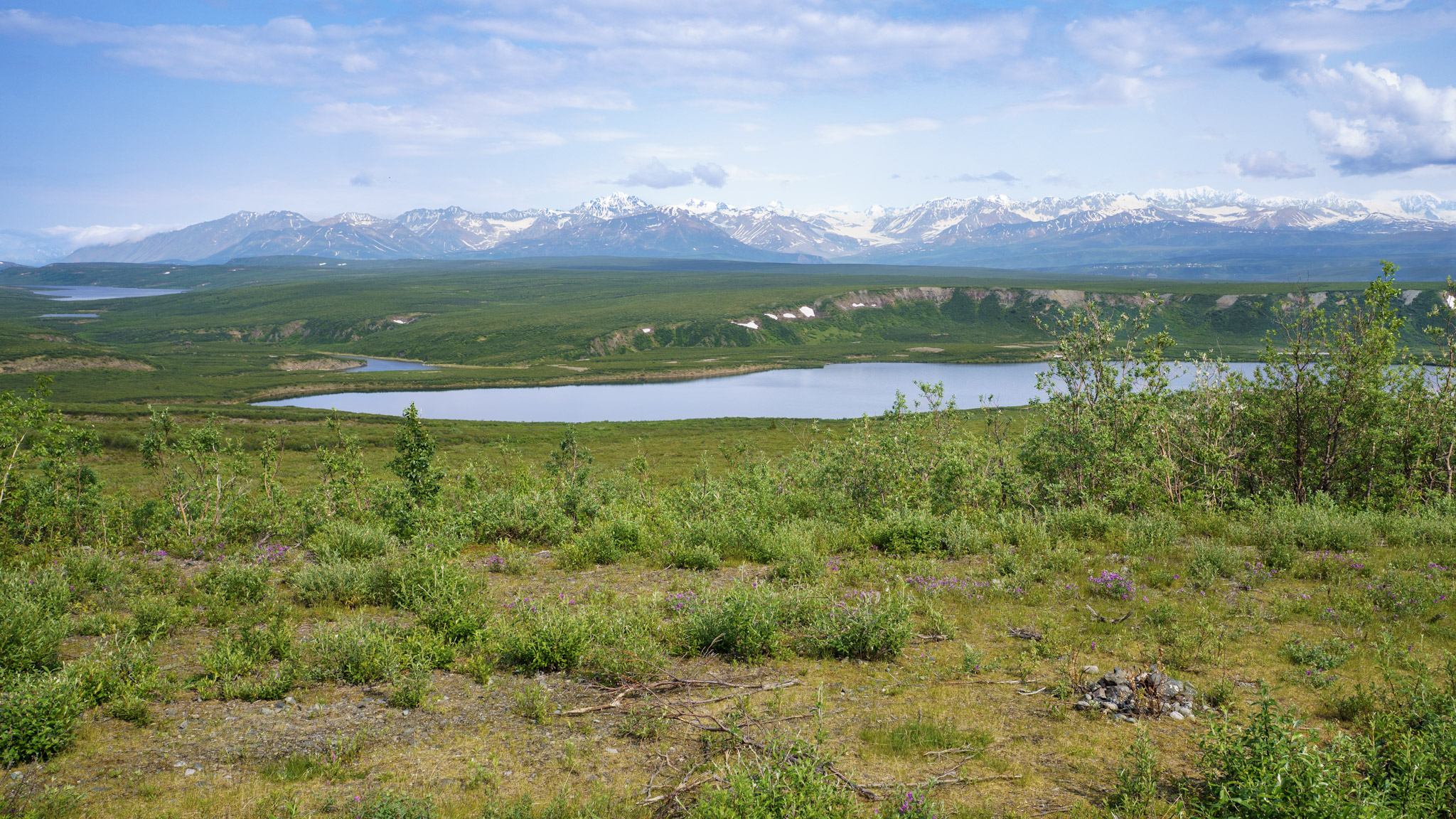
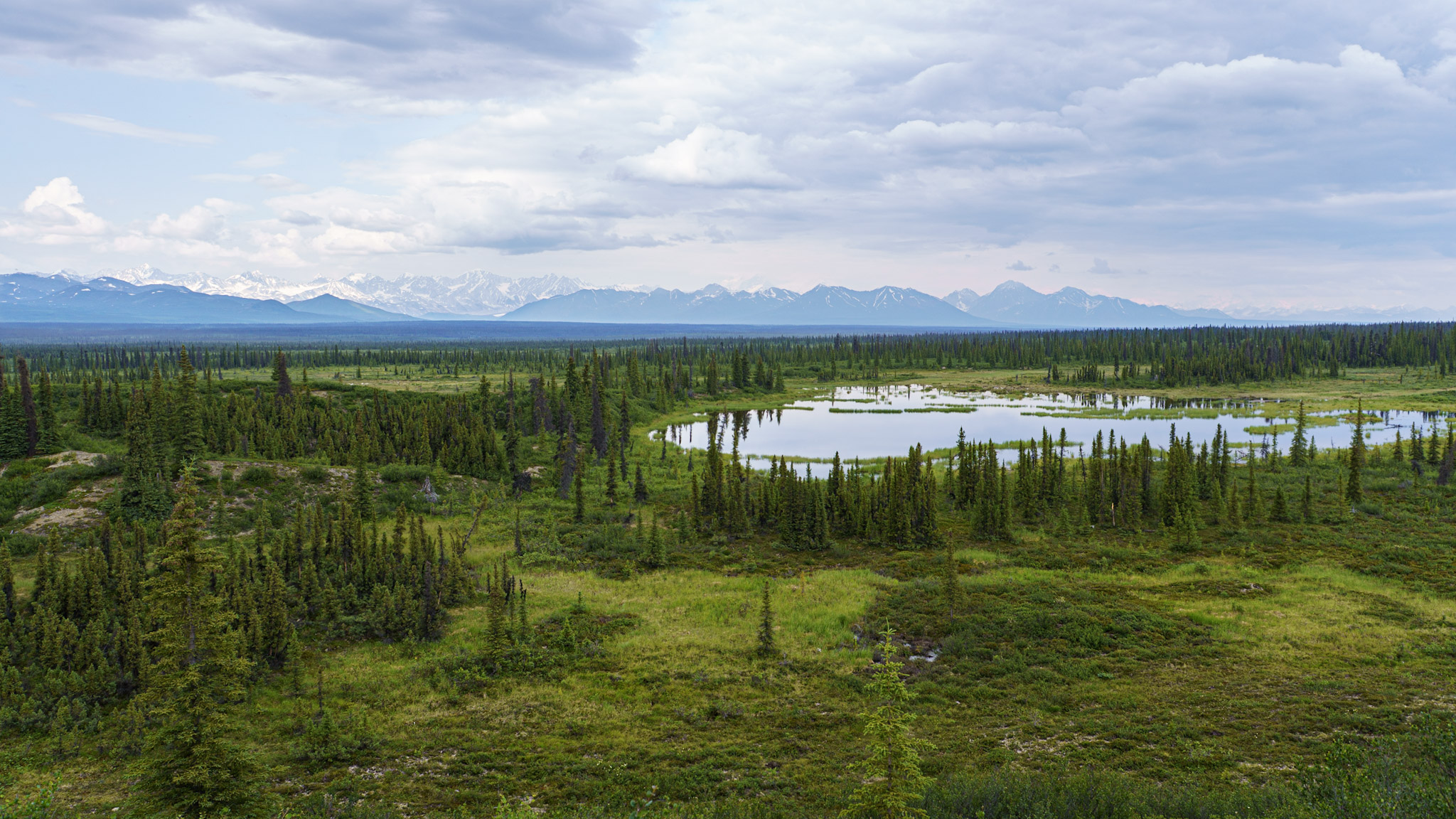
Not far beyond Paxson, the landscape opened with a grandeur that made it impossible to continue without stopping. Mountains rose ahead, lush valleys spread beneath them, and ponds and wetlands reflected the sky. Braided waterways traced pale lines through the distance, adding another layer to a landscape already larger than anything I had imagined.
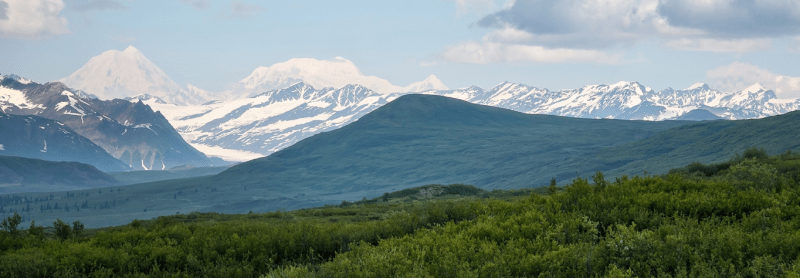
At Sevenmile Lake Overlook, we stepped into a wide, quiet world of tundra, water, and mountain light. Darker ridges of the eastern Alaska Range rose closest to us, while beyond them stood Mount Hayes and Mount Deborah. Mount Hayes formed a broad presence on the horizon, while Mount Deborah’s sharper, pyramidal profile gave the skyline a different character.
What struck me most was not simply the height of the mountains but the openness surrounding them. Colorado’s mountains will always feel like home, yet Alaska offered a different kind of beauty. The valleys were wider, the distance between landmarks greater, and the wilderness seemed continuous, stretching far beyond what we could see.
Standing in that silence, I experienced my first true moment of awe on the expedition. Alaska no longer felt like a destination we had reached, but a landscape beginning to reveal how much larger the journey would become.
Maclaren River Lodge
About a third of the way across the highway, we reached Maclaren River Lodge, the only operating fuel stop along the Denali Highway and a welcome pause amid so much open country. After a morning of driving, photographing mountains, and absorbing one new landscape after another, the smell of food from the café easily persuaded us to stay for lunch.
We filled the Jeep and settled in with burgers and fries. The meal was simple and exactly what we wanted, but the setting made the stop memorable. From the lodge, we could look toward Maclaren Glacier in the distance, with the river flowing through the valley below.
There was something distinctly Alaskan about enjoying a warm meal in a remote lodge while a glacier filled the view beyond the window. Even a practical stop for fuel and lunch remained inseparable from the wilderness around us.
Following the Susitna
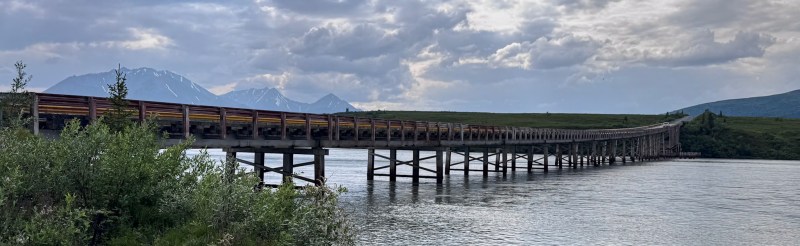
Beyond Maclaren River Lodge, the highway continued west through tundra and broad mountain valleys until a long, narrow bridge appeared almost without warning. At Mile 79, the Susitna River Bridge carries the highway more than a thousand feet across one of Alaska’s great glacial rivers. Built in 1956, it is a steel deck-truss bridge, with much of its framework beneath the roadway. From the Jeep, the timber-lined deck gave it the character of an older backcountry crossing, while the steel supports stretched across the river’s shifting channels.
We slowed as we crossed, taking in the braided water below and the immense valley extending toward the Alaska Range. Near its headwaters, the Susitna was already powerful. Gray with glacial silt, it divided around gravel bars before gradually coming together again downstream.
The bridge offered more than a way across the river. It revealed the forces shaping Alaska’s interior: snowfields and glaciers feeding rivers, rivers carving valleys, and a remote highway finding its way through all of it. Road, river, and mountains seemed inseparable.
We could not yet know that the Susitna would appear again later in the expedition, connecting several different parts of the journey. For now, it was one more piece of Alaska revealing itself mile by mile.
The Rhythm of the Road
As the afternoon unfolded, we settled into the rhythm of the Denali Highway. We drove until a view caught our attention, stopped long enough to notice something unexpected, and continued west until the landscape gave us another reason to pause. The road had become part of the experience rather than simply a way between places.
Open tundra gave way to wetlands and braided drainages, while snow lingered along ridgelines above broad green valleys. Clouds moved through the peaks, sometimes hiding them and other times deepening the light. Around each bend, another mountain basin, river, or lake appeared.
Farther along, we spotted another cow moose and calf near a lake, our second mother-and-calf sighting of the day. Even after hours on the highway, neither the wildlife nor the landscape began to feel ordinary.
Eventually, we reached Cantwell, where gravel gave way to pavement. The Denali Highway was behind us, but the pace it encouraged—the stopping, watching, and allowing the landscape to shape the day—stayed with us.
One Last Stop Before Sunset
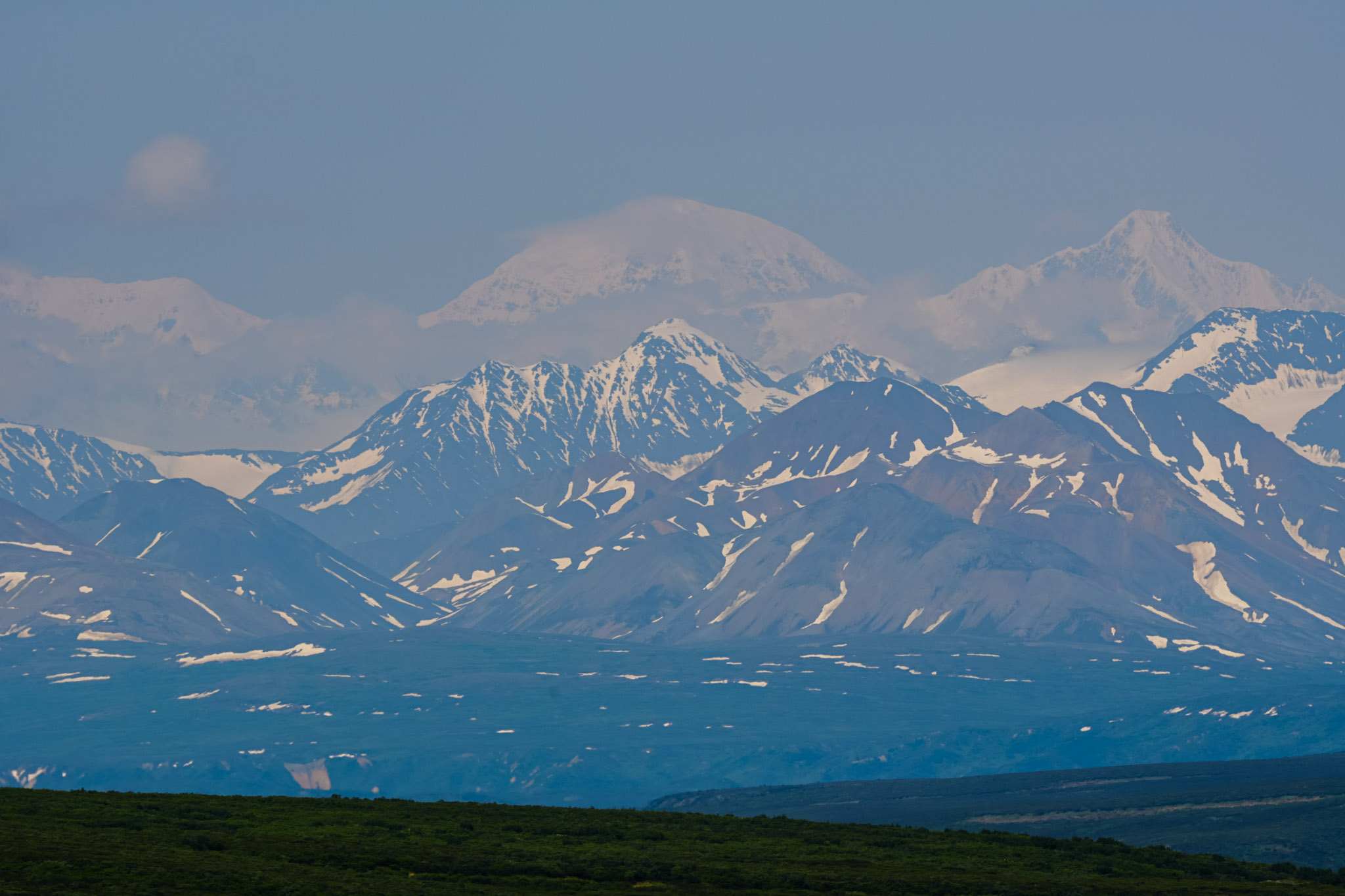
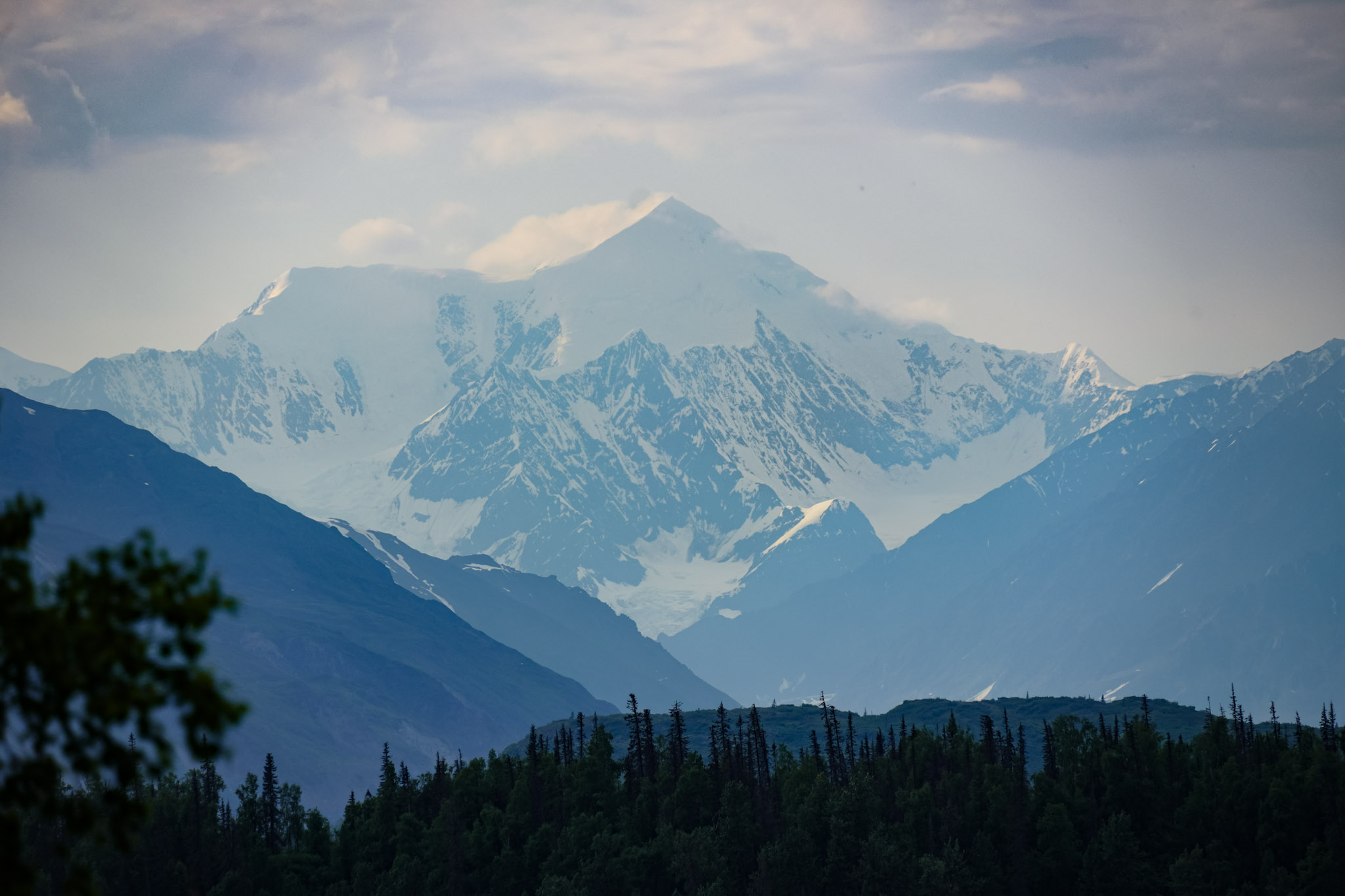
From Cantwell, we continued south on the George Parks Highway before making one final stop at Denali View North in Denali State Park. By then, the light had shifted and haze had settled across the Alaska Range. Denali remained hidden, an early reminder that seeing the mountain is never guaranteed. Its elusive presence would become part of our story over the next few days.
Even without Denali, the stop was worthwhile. A snow-covered peak rose above the surrounding range, softened by the evening haze. We never identified it with certainty, but the scene felt no less meaningful without a name. After a day of expansive landscapes, the overlook offered a quiet place to pause before continuing to our cabin.
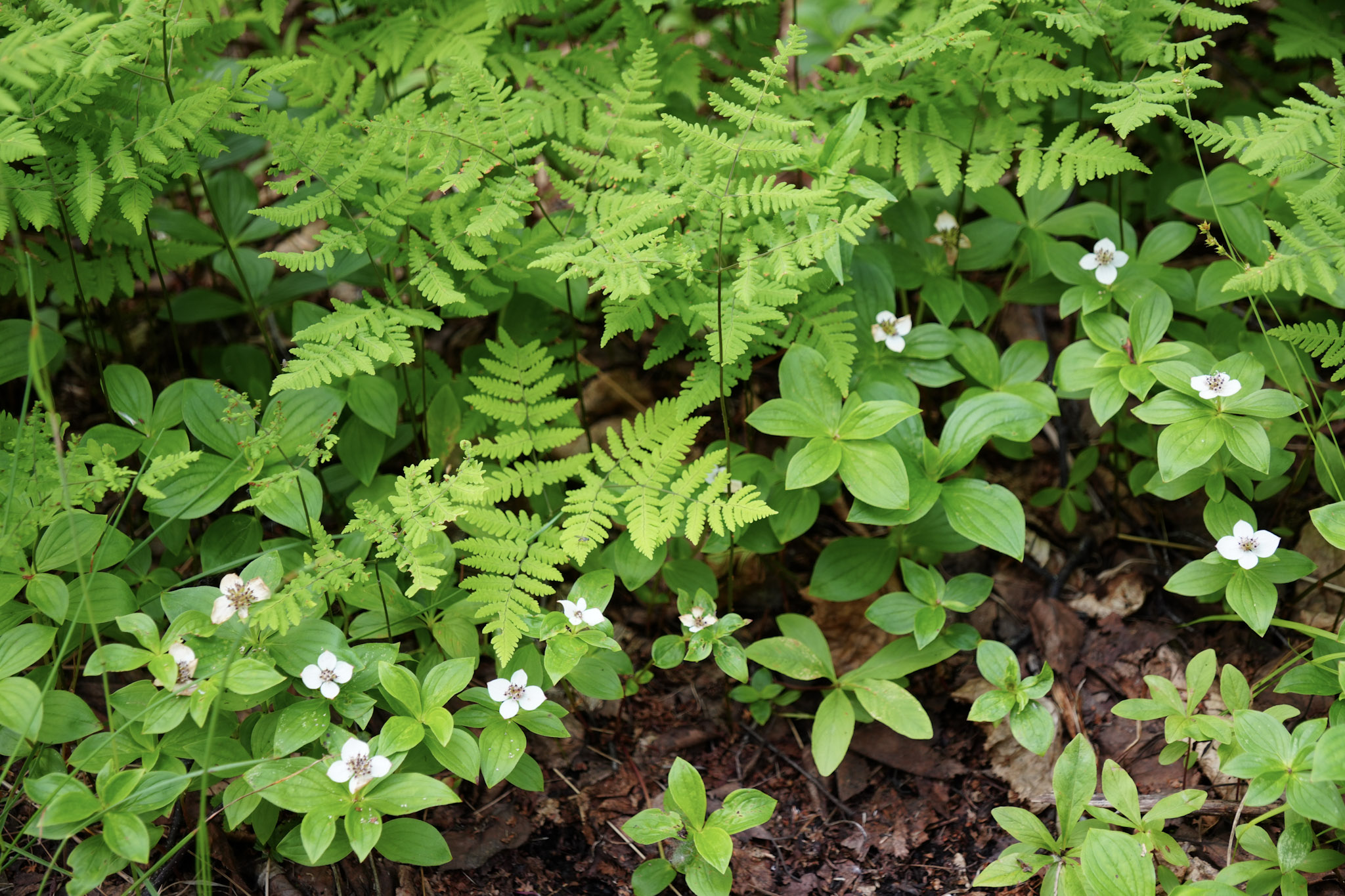
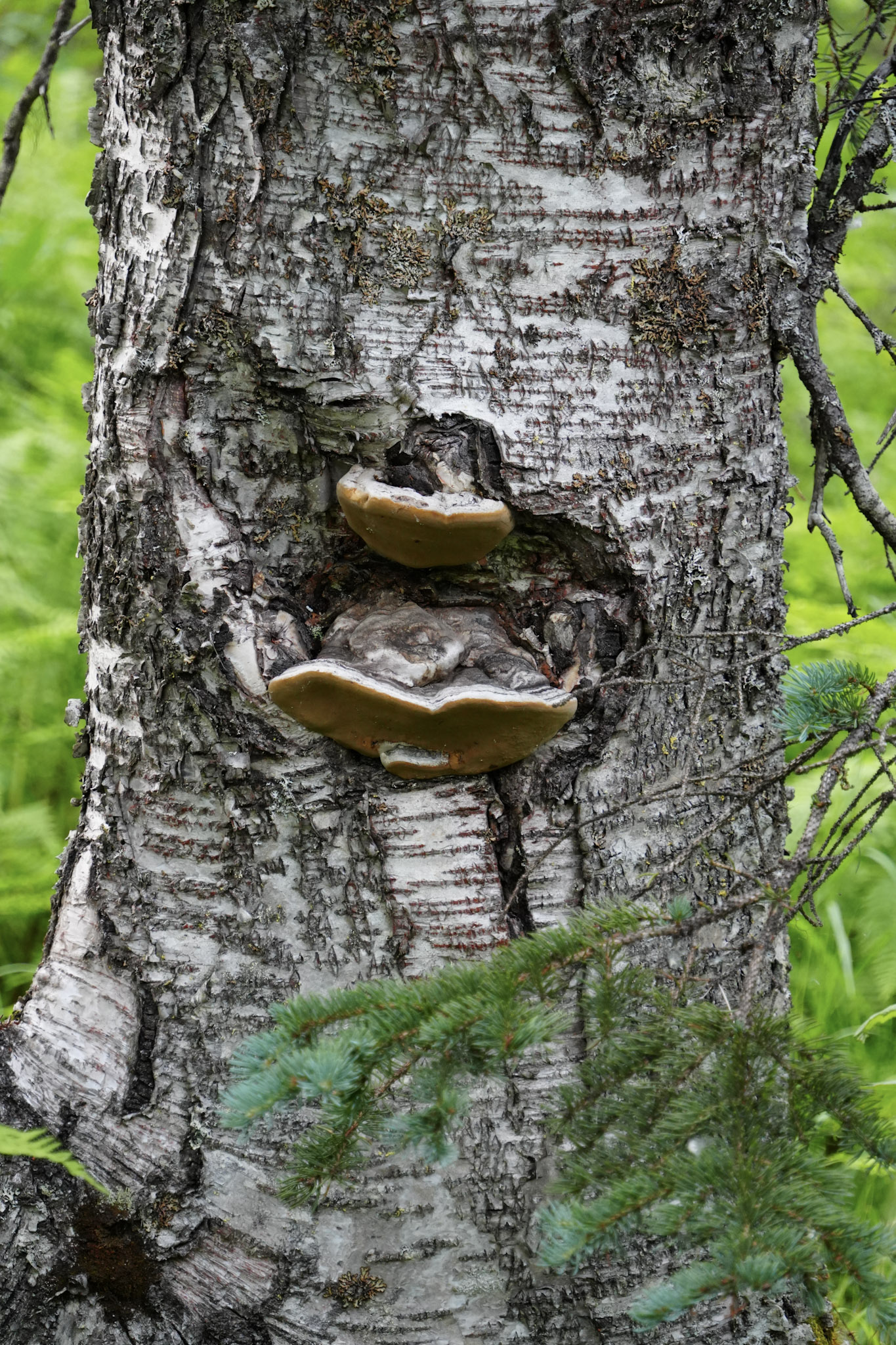
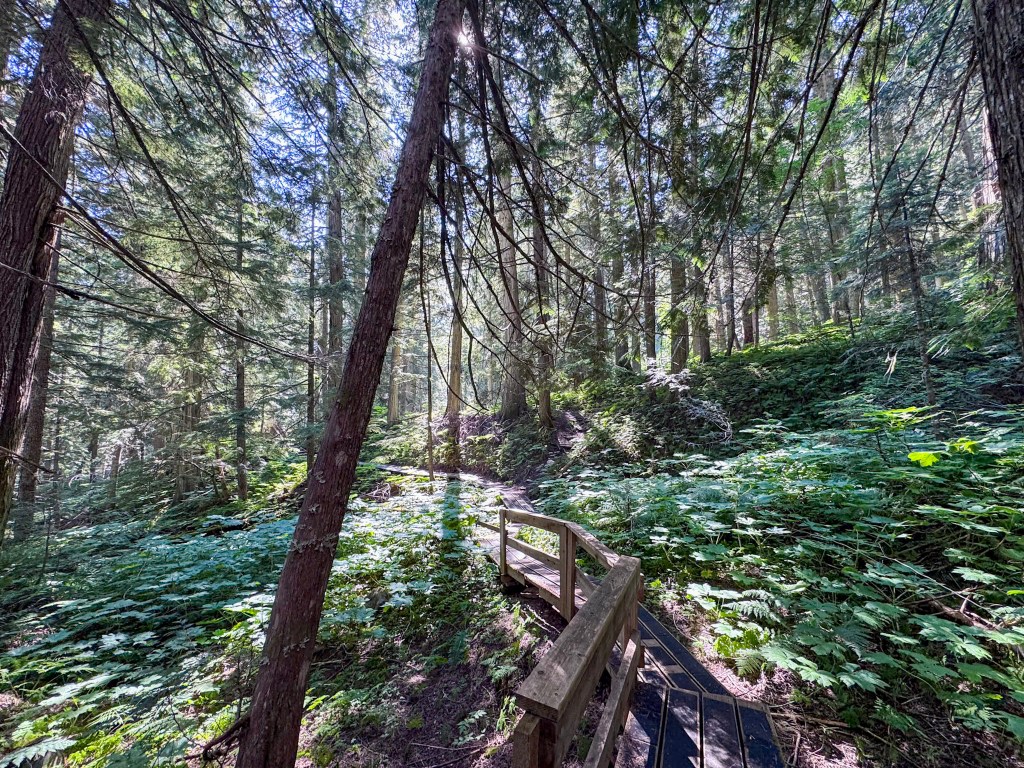
We followed the short nature trail near the overlook, turning our attention from distant peaks to the details of the forest. Ferns spread beneath spruce and birch trees, small wildflowers brightened the trail, fungi grew along a weathered trunk, and glimpses of the Chulitna River appeared through openings in the trees.
The gentle walk reminded us that Alaska’s beauty is not found only in immense mountain ranges and glacial rivers. It is also present beneath the forest canopy, waiting for anyone willing to slow down and notice it.
Home for the Night
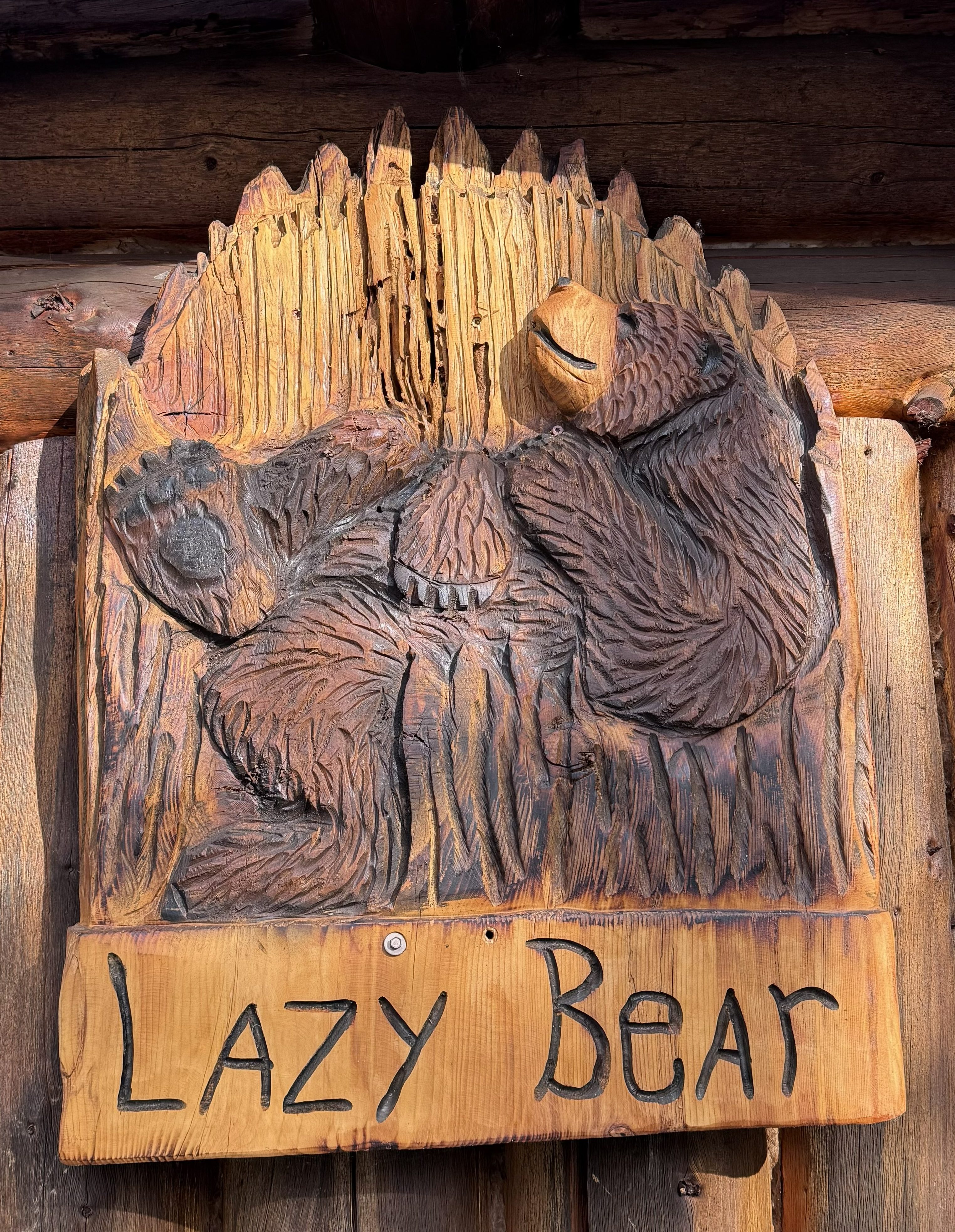
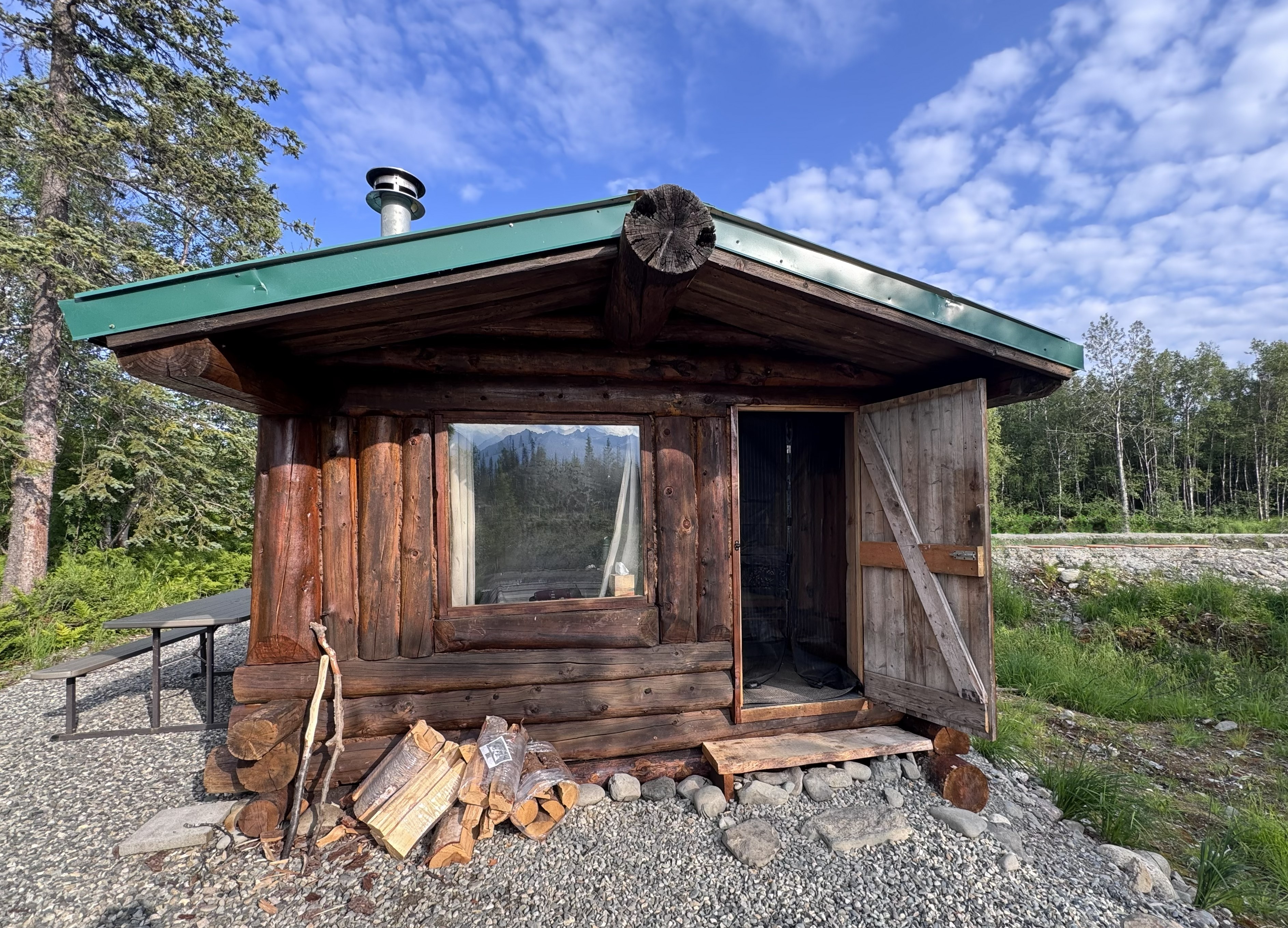
As evening settled over the Alaska Range, we arrived at the Historic Chulitna River Lodge, where the Lazy Bear Cabin would be our home for two nights. The cabin was simple and rustic, exactly the kind of place I had hoped to find in Alaska. Inside was one room with a bed, a wood bruning stove, and thick log walls carrying the unmistakable scent of aged wood. It was neither polished nor luxurious, and that was part of its charm.
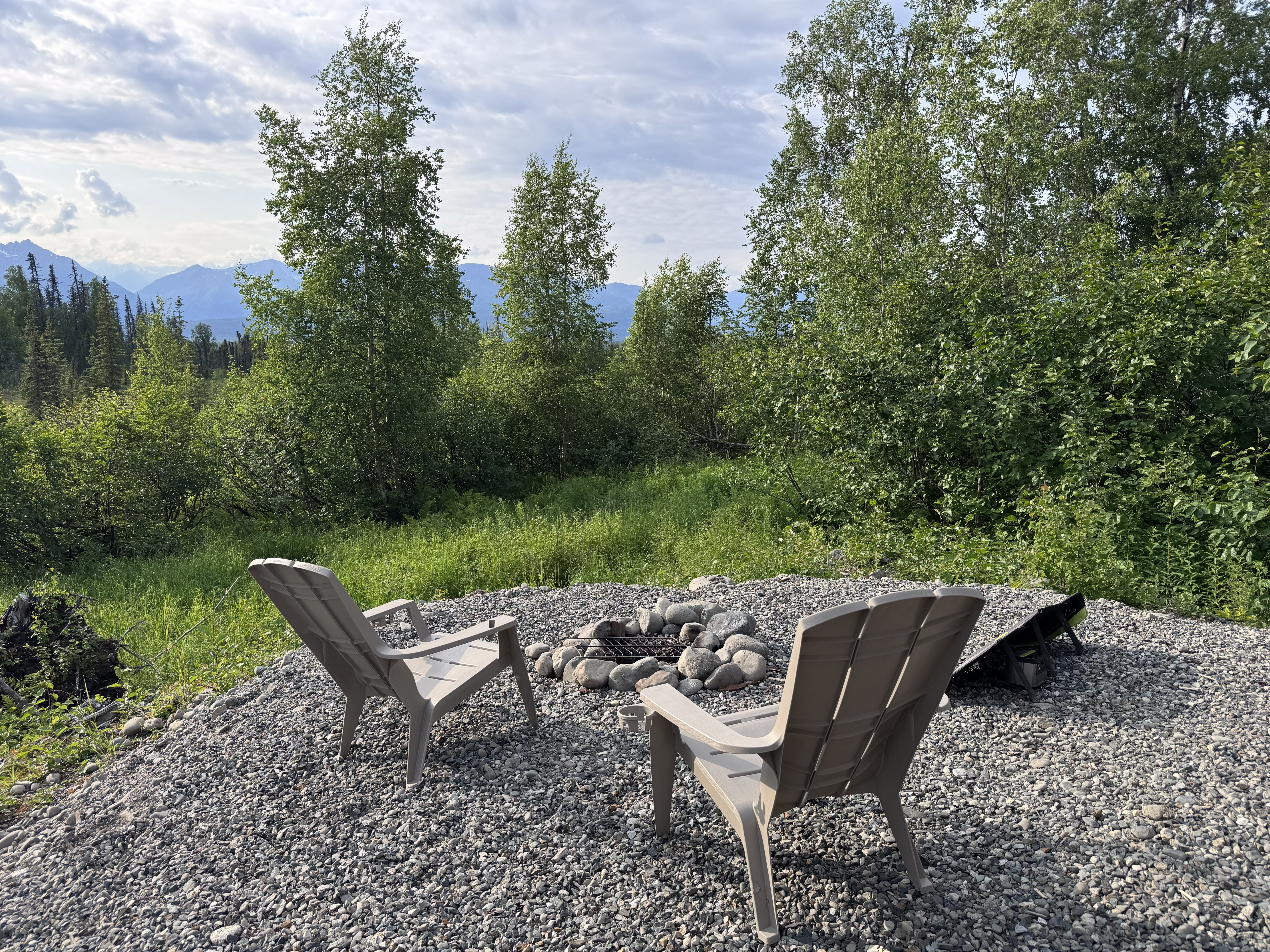
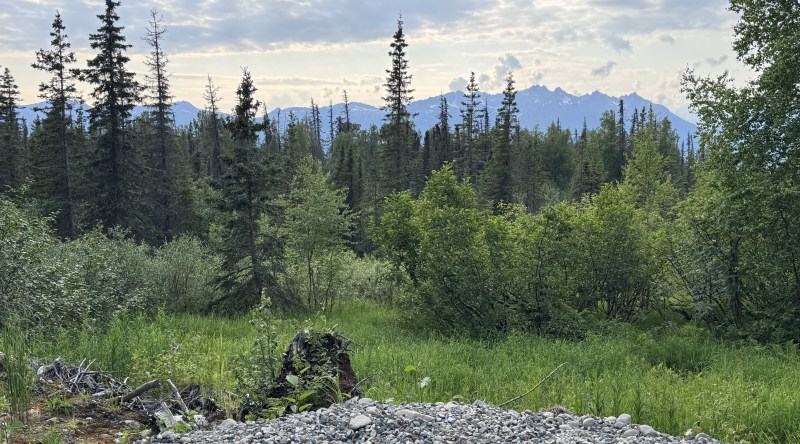
Outside, two Adirondack chairs sat near a fire ring overlooking a meadow, with the Alaska Range beyond the trees. The setting invited us to sit before we had finished unpacking, so we did. After a full day on the road, we watched the mountains deepen in the evening light while the forest remained quiet around us.
Yet it hardly felt like evening. At 8:30 p.m., the sun was still high enough that I needed a hat to keep it out of my eyes and briefly wondered whether I should put on sunscreen. Back home in Colorado, we would already have been watching the approach of sunset. Here, the daylight lingered as though the day had no intention of ending.
It had been my first full day immersed in Alaska’s wilderness, and I was already in awe. Colorado’s mountains will always feel like home, but Alaska felt greener, broader, wilder, and wonderfully untouched. Sitting beside the fire ring with the Alaska Range in front of us, I had the unmistakable sense that the entire journey was going to be breathtaking.
If this was only the first day, I could not imagine what the rest of the expedition had in store.
From My Field Journal
July 10, 2026 · 8:30 pm · Lazy Bear Cabin
It has been a very long day, but I am not ready to go inside yet. Our cabin is rustic and simple, with that old-wood scent that is easy to recognize but difficult to describe.
It is after 8:30 p.m., and the sun is still high enough that I need a hat to keep it out of my eyes. Sitting here with the Alaska Range in front of us, I keep thinking about how green and open everything feels. Day one has already left me in awe.
EXPEDITION SNAPSHOT
THE ROUTE Fairbanks → Delta Junction → Paxson → Denali Highway → Cantwell → Denali View North → Historic Chulitna River Lodge
ROADS TRAVELED Richardson Highway, Denali Highway, and George Parks Highway
LANDSCAPE Braided rivers, tundra wetlands, glaciers, forest, and the eastern Alaska Range
WILDLIFE Two cow moose with calves, a female ptarmigan with two chicks, and hawk
MEMORABLE STOPS Tanana River overlook, Richardson Monument, Sevenmile Lake, Maclaren River Lodge, Susitna River Bridge, and Denali View North
STAYED Hampton Inn & Suites Fairbanks and the Lazy Bear Cabin at Historic Chulitna River Lodge
CONDITIONS Warm summer daylight, afternoon haze over the Alaska Range, and mostly dry road conditions
The moment the pavement ended, the journey began to feel like the Alaska we had imagined.
Next Chapter
The following morning, we continued south toward Talkeetna, still watching the horizon for a clear view of Denali. Along the way, Alaska introduced us to another side of its landscape—where three glacial rivers meet and the mountain remains just elusive enough to keep travelers looking.
Next: Talkeetna, the Susitna River, and the continuing search for Denali.










Leave a comment