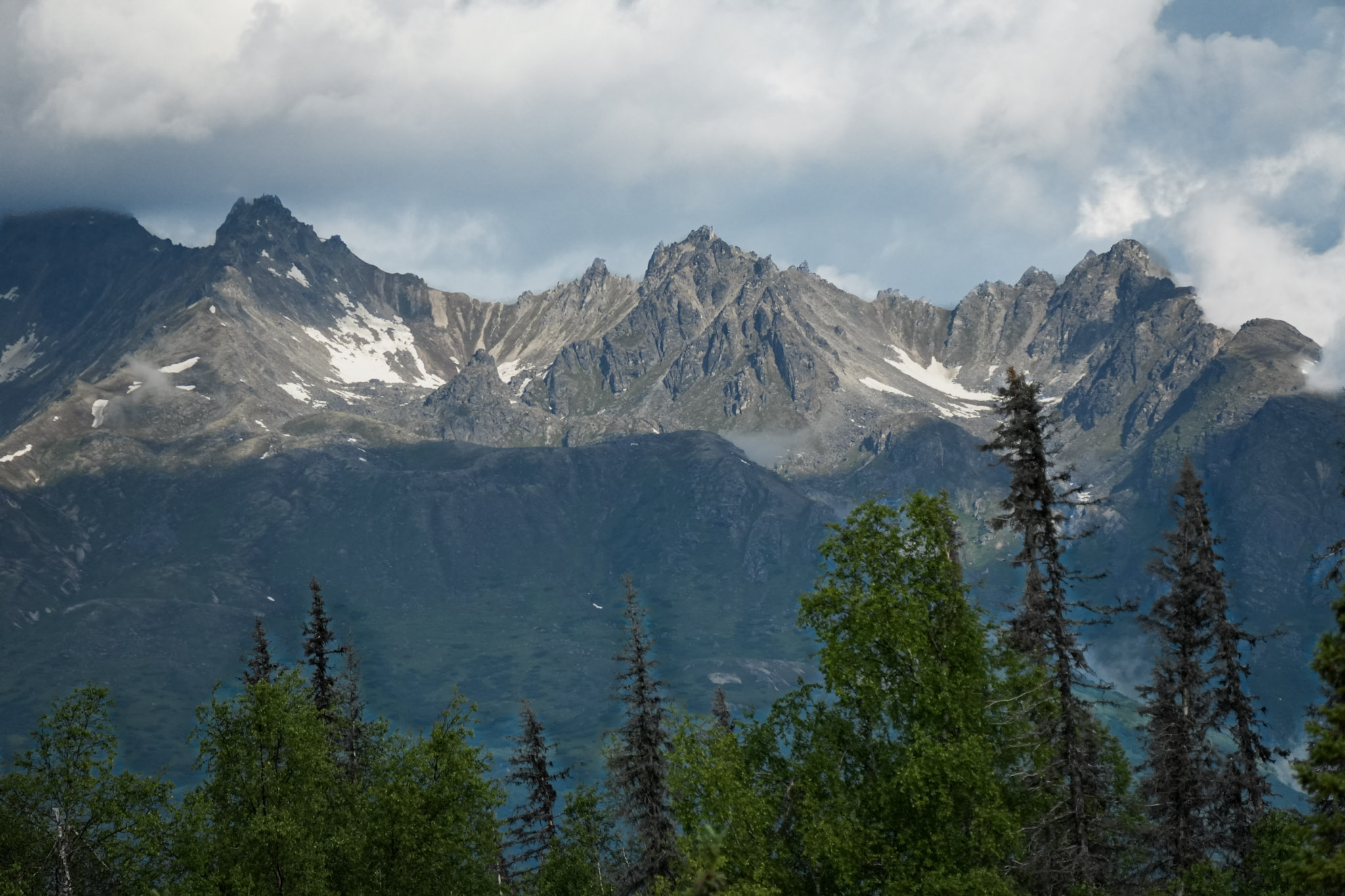
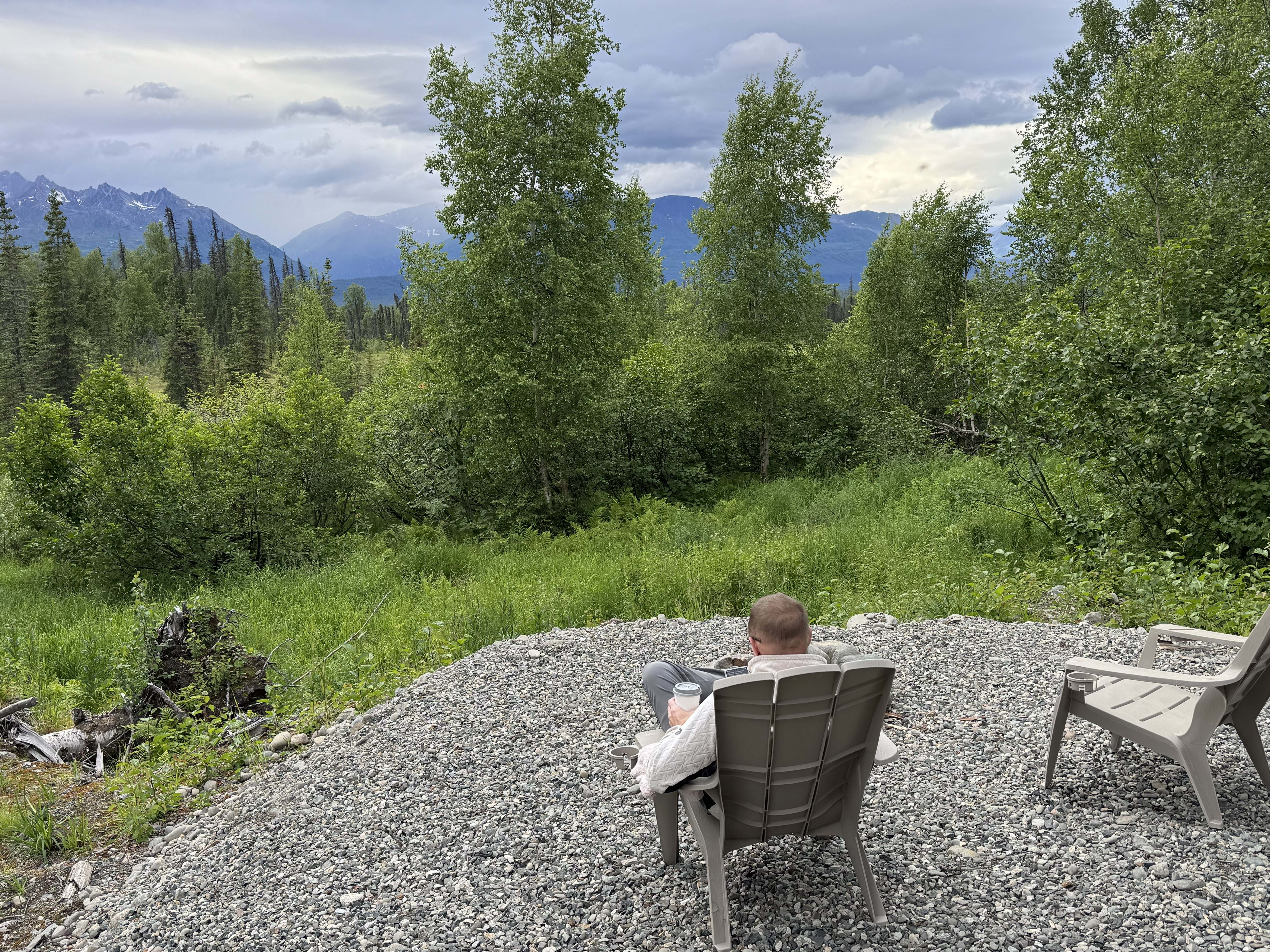
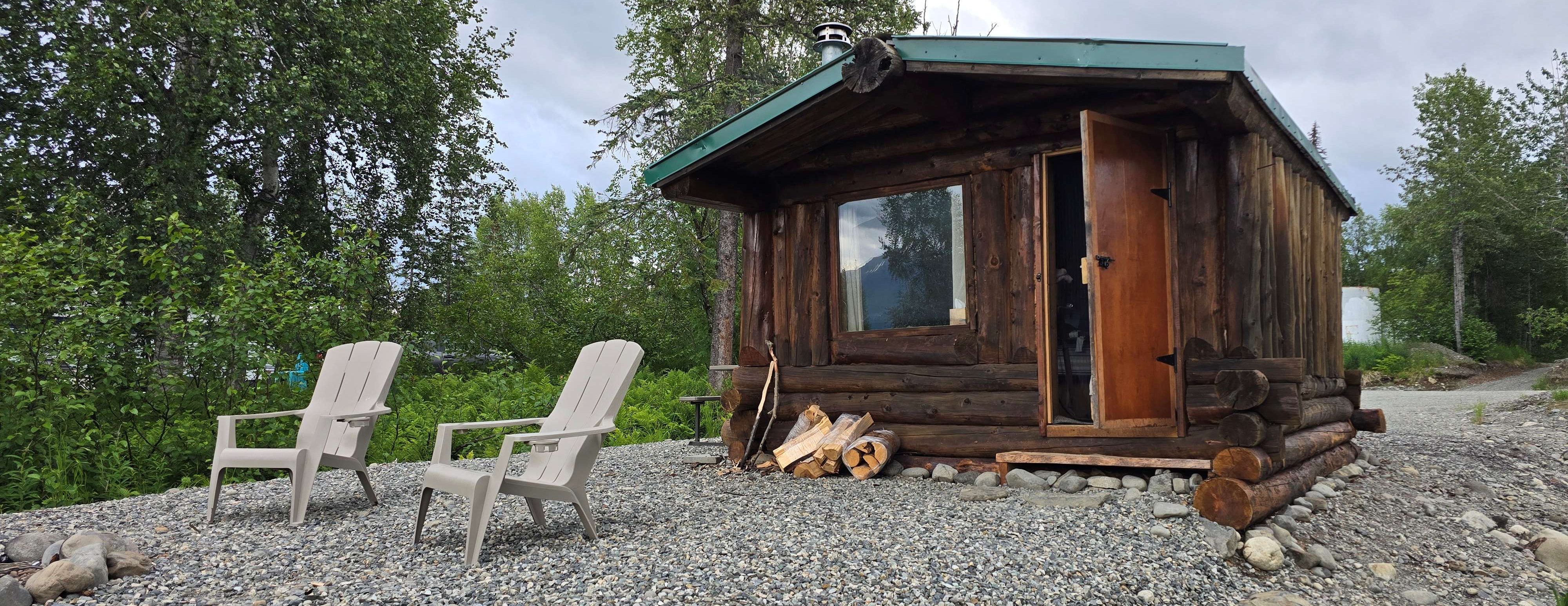
The morning began slowly at the Lazy Bear Cabin, with sunlight moving across the clearing and the Alaska Range rising beyond the trees. The mountains rose beyond layers of spruce and birch, appearing and disappearing as the light shifted. After the long drive across the Denali Highway the day before, it felt good not to rush.
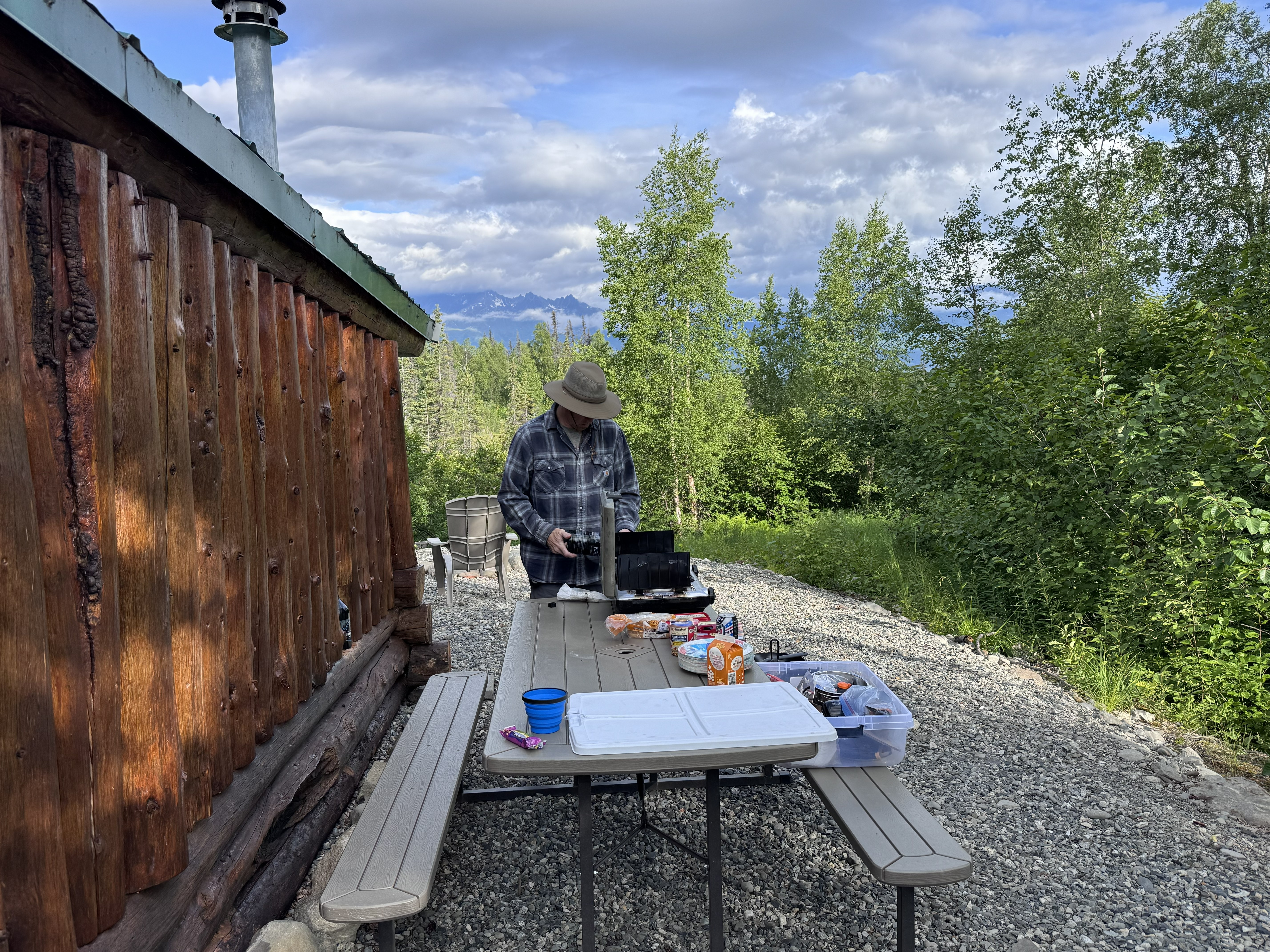
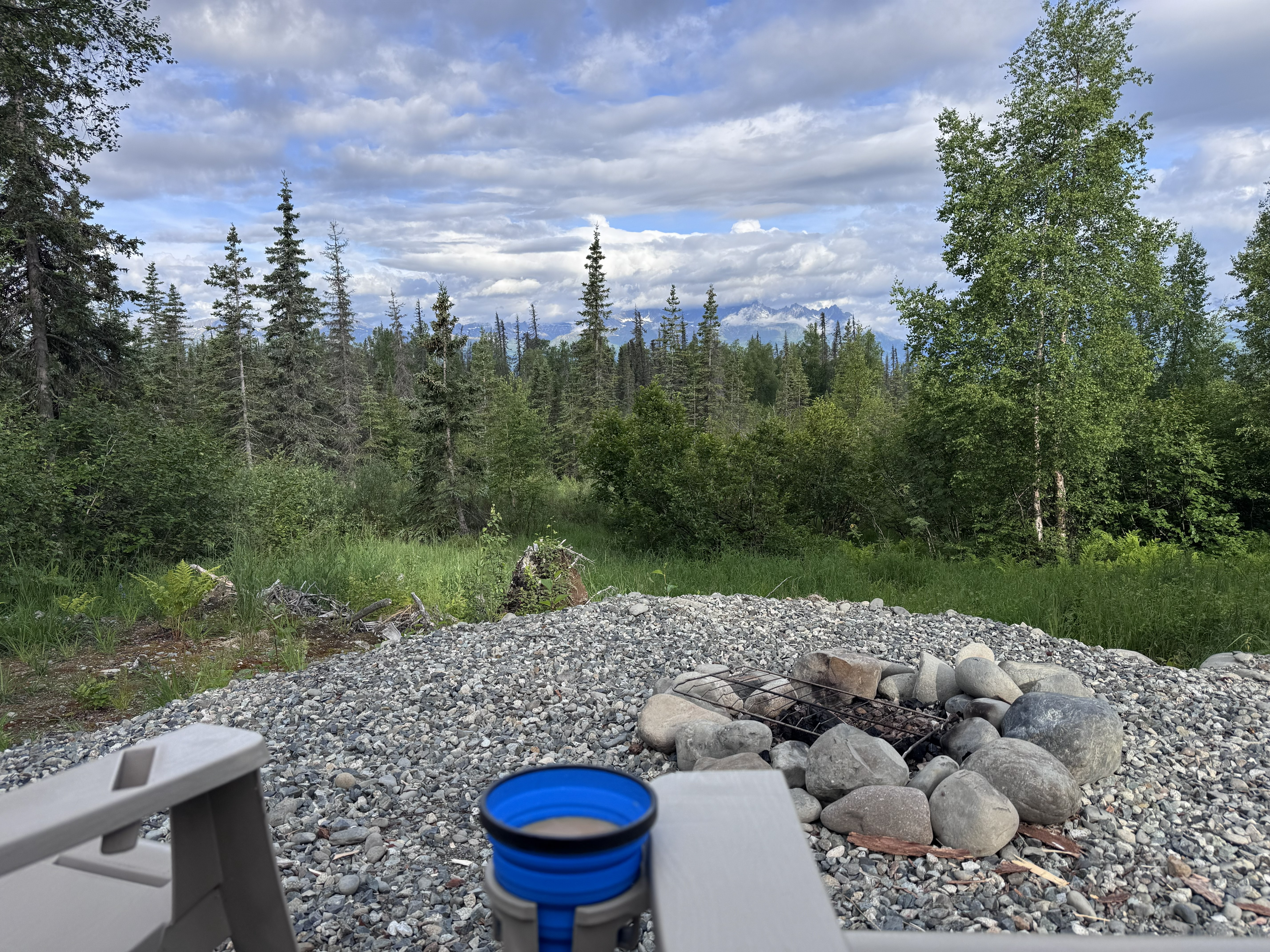
Bill set up the camp stove beside the cabin and cooked eggs, bacon, cheese, and sourdough bread while I watched the changing view. We enjoyed breakfast with a warm drink and a mountain panorama made an otherwise simple meal feel extraordinary. The morning air was cool, the forest was quiet, and every now and then sunlight broke through the clouds and illuminated the jagged peaks beyond the trees.
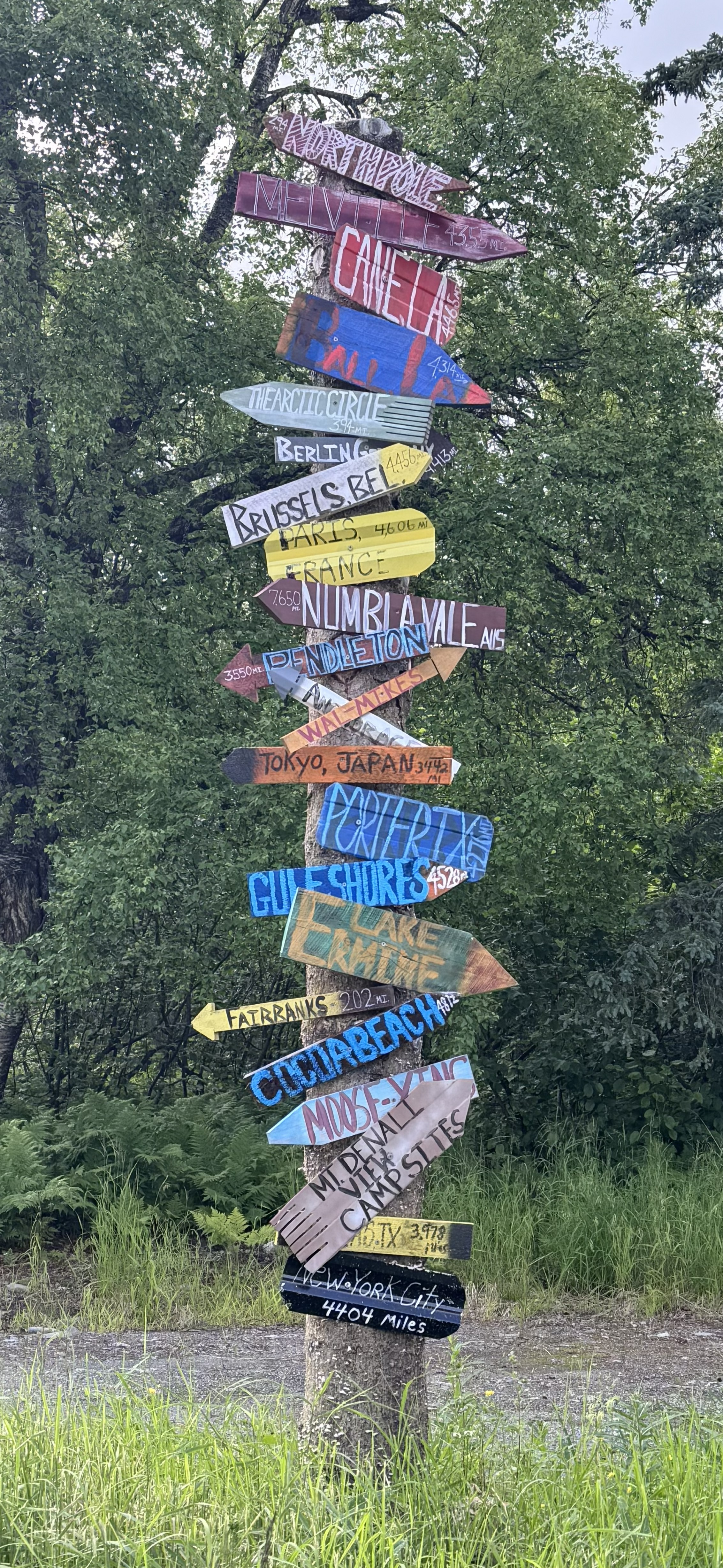
After breakfast, we spent time exploring the grounds of the Historic Chulitna River Lodge. The property had the same rustic character as our cabin, with wooded paths, a peaceful pond, and small details that gave the place a playful personality. A colorful signpost pointed toward destinations scattered around the world, while across the water a small structure stood tucked among the trees beneath the mountains. Nothing about the lodge felt polished or manufactured; it felt personal, slightly quirky, and completely at home in its surroundings.
Eventually, we loaded the cameras into the Jeep and turned south onto the George Parks Highway. Our plan was to spend the day exploring the roadside scenery before continuing to Talkeetna, where we hoped to walk through town, visit the riverfront, and take an afternoon flight around Denali.
The weather, however, was already beginning to tell a different story.
An Unexpected Memorial
Not far from the lodge, we came across the Alaska Veterans Memorial. It had not been part of our original plan, but we had already begun to learn that some of Alaska’s most memorable stops were the ones we discovered unexpectedly.
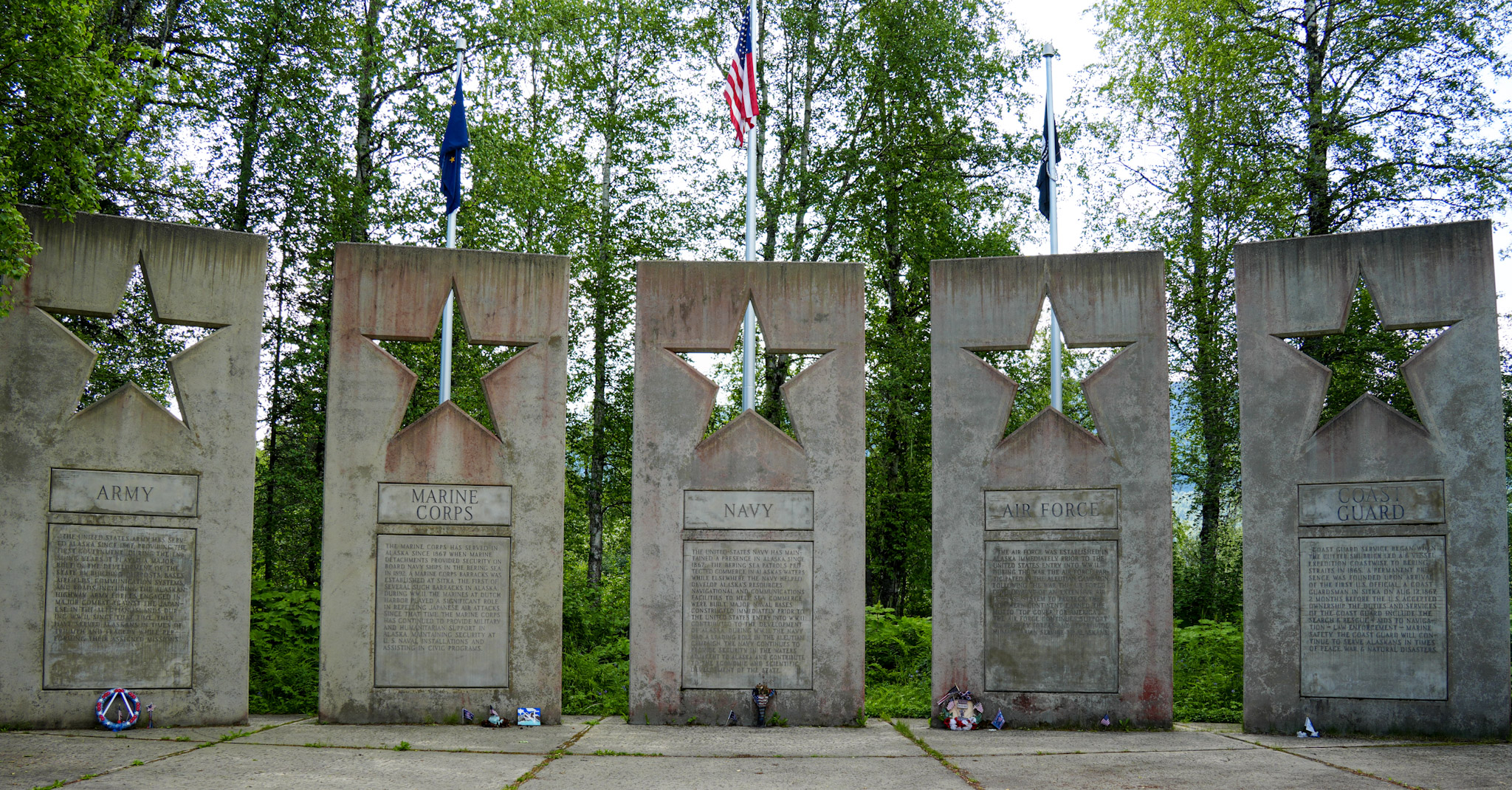
We pulled over and walked through the wooded grounds, where monuments honored the Army, Marine Corps, Navy, Air Force, and Coast Guard. Nearby interpretive displays traced Alaska’s military history across a surprisingly broad span of time. The stories ranged from a Confederate raider targeting whaling ships in the Bering Sea during the Civil War to the Army expeditions that mapped routes through Alaska’s interior and helped open the territory to future travel and settlement.
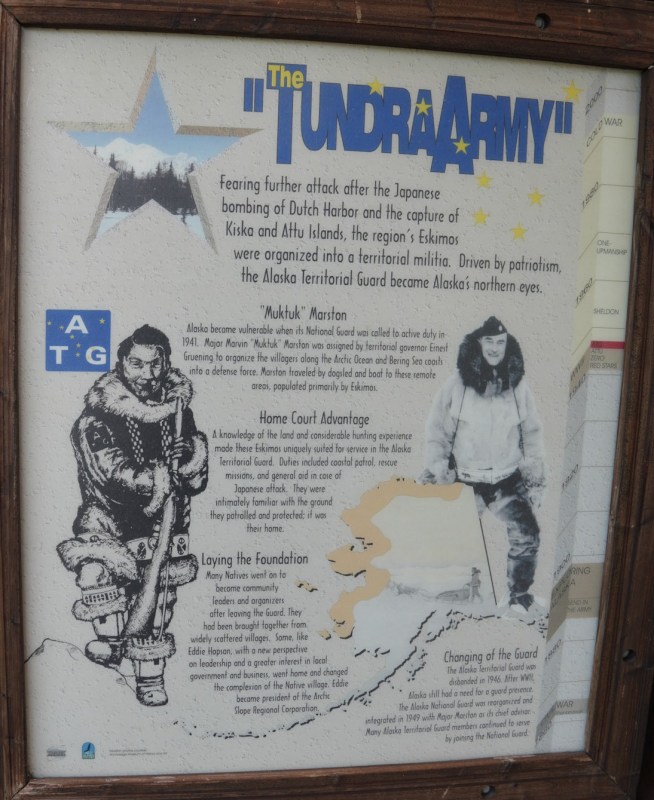
Much of the memorial focused on Alaska’s strategic importance during World War II. The displays described the Japanese bombing of Dutch Harbor, the occupation of Kiska and Attu, and the brutal Battle of Attu in the Aleutian Islands. Another panel shared the story of the Alaska Territorial Guard—sometimes called the “Tundra Army”—which organized Alaska Native volunteers in remote coastal villages to patrol the northern and western edges of the territory after the regular National Guard was called to active duty.
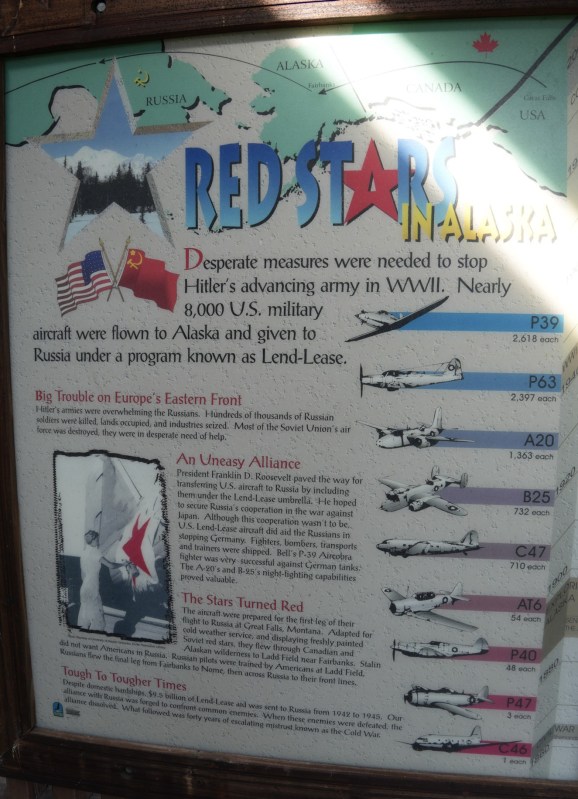
I was also fascinated by Alaska’s role in the Lend-Lease program. Nearly 8,000 American military aircraft were flown north through Alaska before being transferred to Soviet pilots at Ladd Field near Fairbanks and continued onward through Nome and into Russia. Other exhibits explained how Alaska’s proximity to the Soviet Union later placed it at the center of Cold War surveillance, radar, missile defense, and interceptor operations.
The memorial also recognized Purple Heart recipients and the sacrifices of service members from every branch. What began as a spontaneous roadside stop became one of the most meaningful historical moments of the day. It deepened my understanding of Alaska as more than a remote wilderness; its geography had also placed it at the crossroads of exploration, conflict, international cooperation, and national defense.
A Brief Glimpse of Denali
Our next stop was Denali View South, one of the major overlooks along the George Parks Highway. After the mountain had remained hidden from us the previous evening at Denali View North, we arrived knowing that another clear view was far from guaranteed. Clouds crowded the Alaska Range, obscuring the higher summits and leaving only the darker foreground mountains visible beneath them.
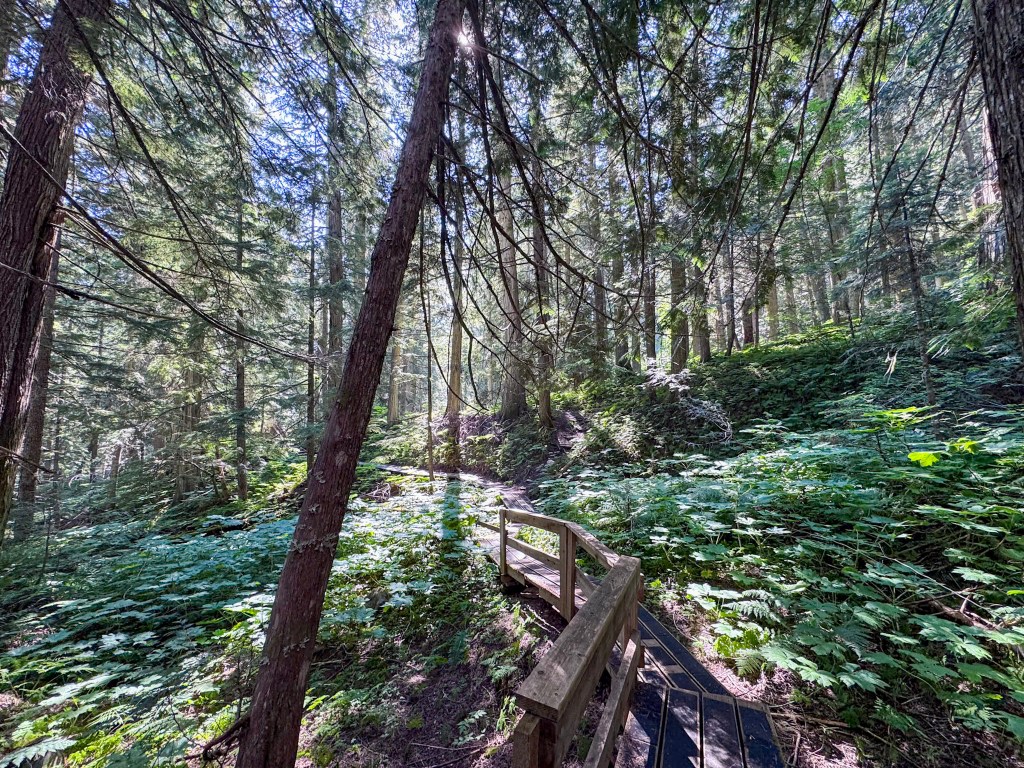
Rather than remain at the main viewing area, we followed the short trail to a second overlook. The path wound through dense summer vegetation, where bright green moss covered the forest floor and leafy plants pressed close to the trail. After the broad landscapes of the previous day, I found myself once again noticing how lush Alaska was, even in places surrounded by rugged mountains and glacial rivers.
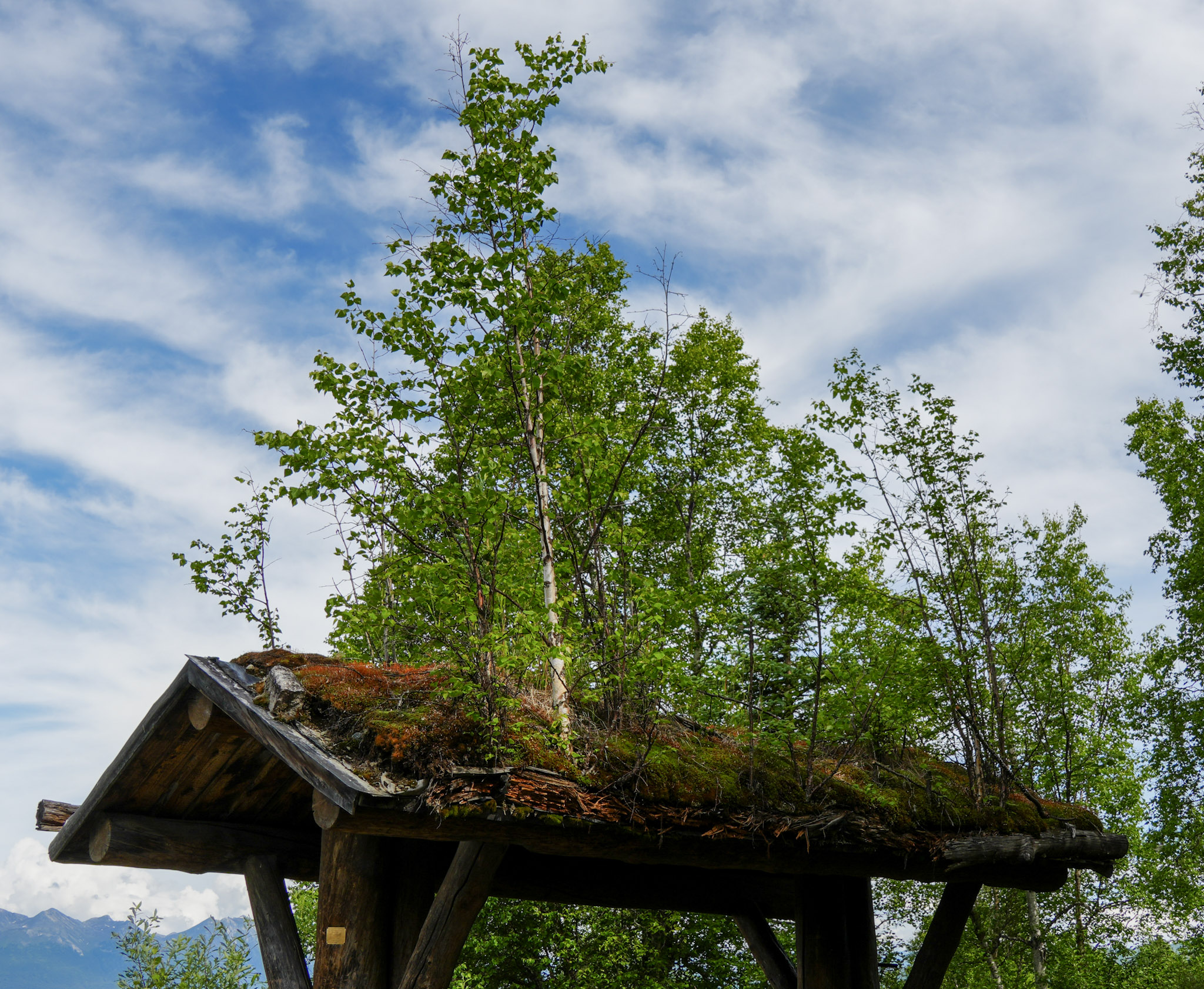
Near the overlook stood a rustic shelter with a living roof unlike anything I had seen before. Moss, grasses, shrubs, and even small trees were growing above the wooden structure, allowing it to blend almost completely into the surrounding forest. It was my first encounter with this kind of roof in Alaska, though it would not be the last.
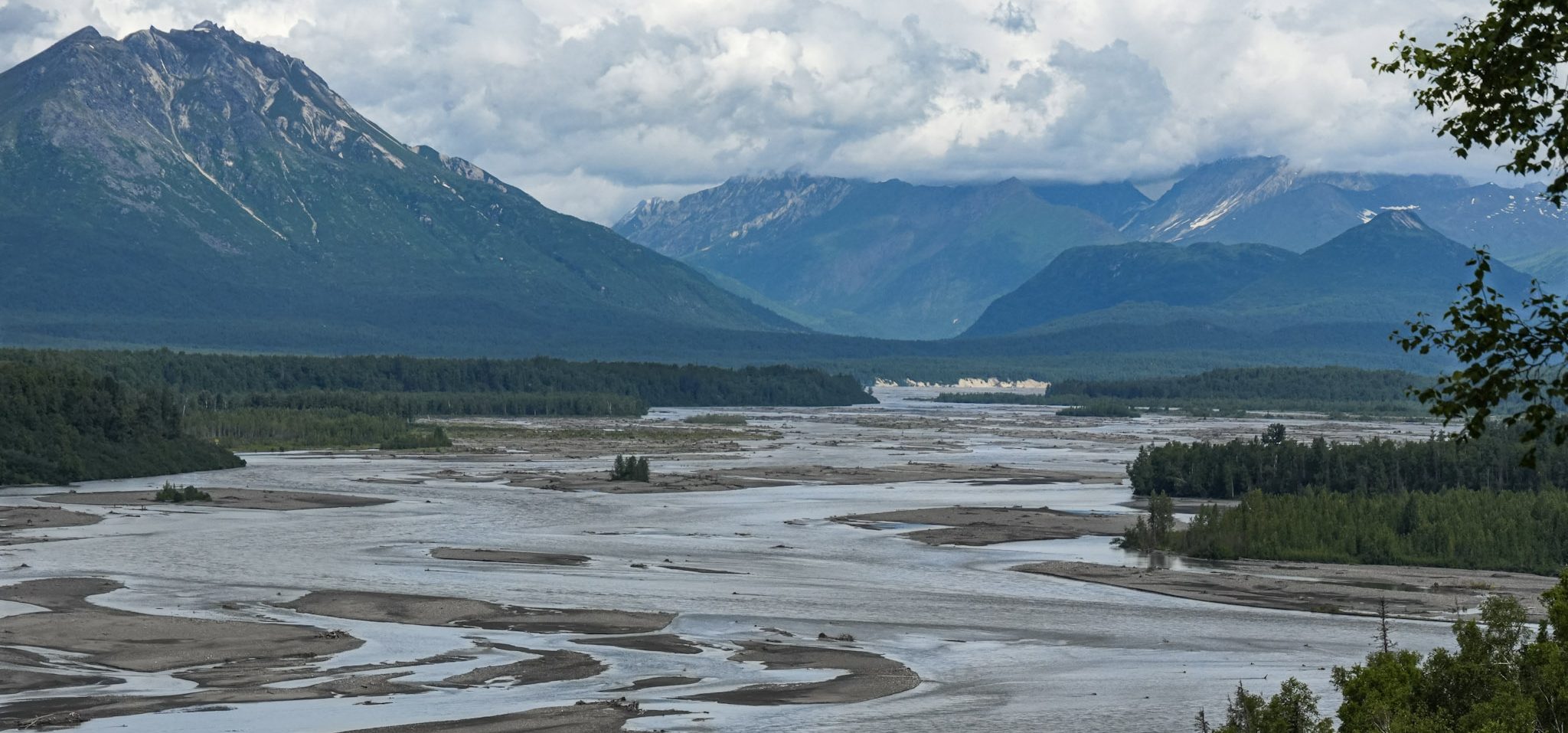
The second overlook opened onto a sweeping view of the Chulitna River, its braided channels spreading across a broad gravel-filled valley below. From above, the river’s scale became much easier to appreciate. What had appeared as a single river from other viewpoints separated into a network of silvery channels winding around exposed gravel bars before joining again downstream. Beyond the forest, a pale band of ice was visible between the mountains, appearing to be a distant glacier tucked beneath the cloud-covered peaks.
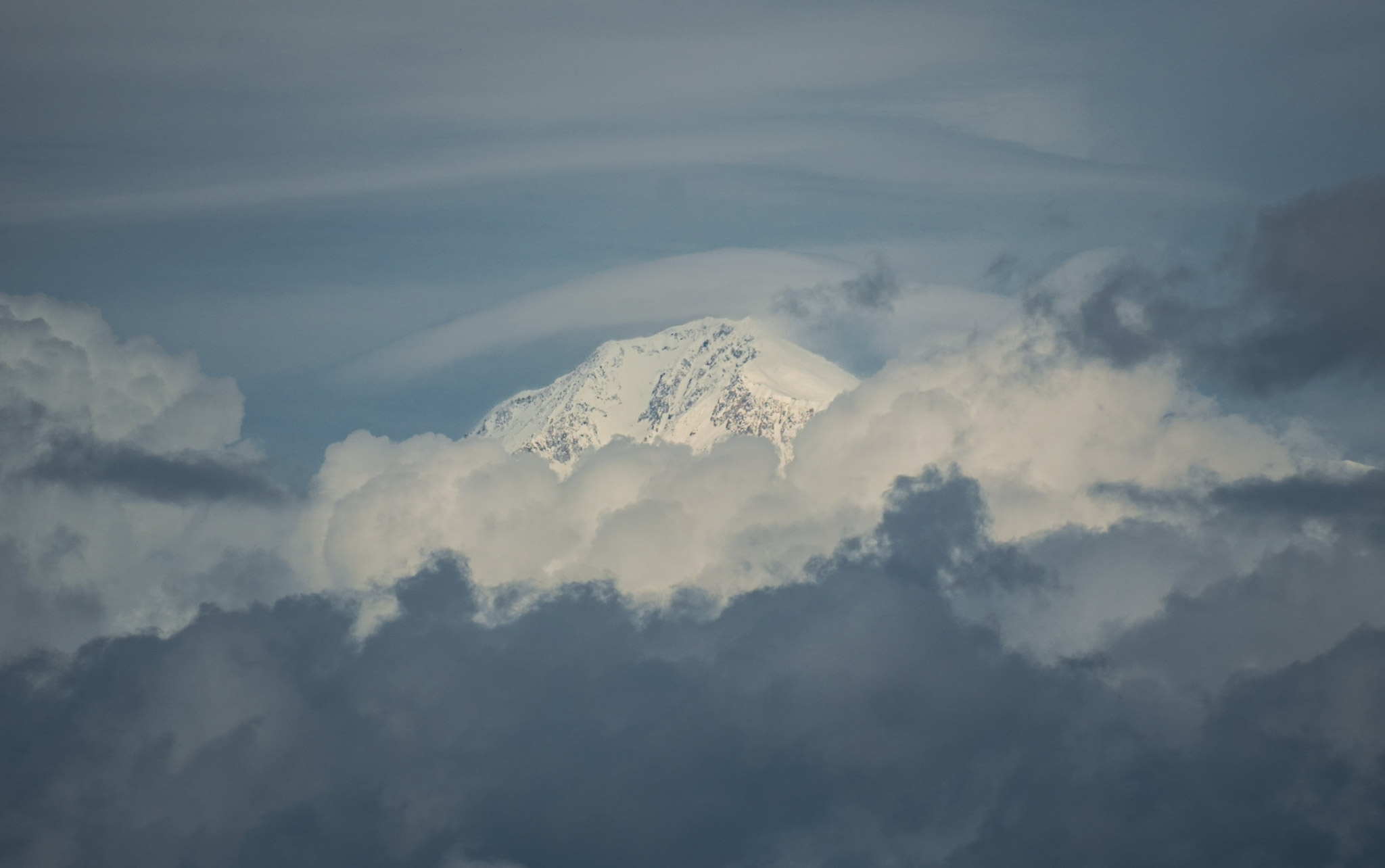
Denali itself remained hidden at first. We watched the clouds shifting across the range, revealing pieces of the landscape and then covering them again. Eventually, a narrow opening formed above the foreground mountains, and the snow-covered upper portion of Denali appeared through the clouds.
It was not the sweeping, unobstructed view shown in postcards. Most of the mountain remained concealed, and even the summit seemed suspended within layers of cloud. Yet after searching the horizon since the previous evening, there was no mistaking what we were seeing. For a brief moment, the mountain had allowed us a glimpse.
The opening closed almost as quickly as it had appeared, leaving Denali hidden once again. It would be our only view of the mountain that day, but the fleeting nature of the moment made it feel even more meaningful. We could choose the overlooks, follow the trails, and wait with our cameras ready, but Denali would reveal itself only on its own terms.
South on the Parks Highway
As we continued toward Talkeetna, the Parks Highway carried us through dense forest, low clouds, and intermittent rain. Small waterfalls appeared beside the road, spilling down rocky slopes and briefly catching our attention before disappearing behind the trees.
The landscape felt different from the previous day’s wide tundra and open mountain valleys. Here, the forest often pressed closer to the highway, creating a greener and more enclosed journey.
Alaska’s weather seemed to move with the same restless energy as its rivers. Conditions could change from one bend to the next, and the clouds that hid the mountains also gave the forest and roadside waterfalls a deeper, more saturated color.
By the time we reached Talkeetna, the town was lively despite the unsettled weather.
Talkeetna
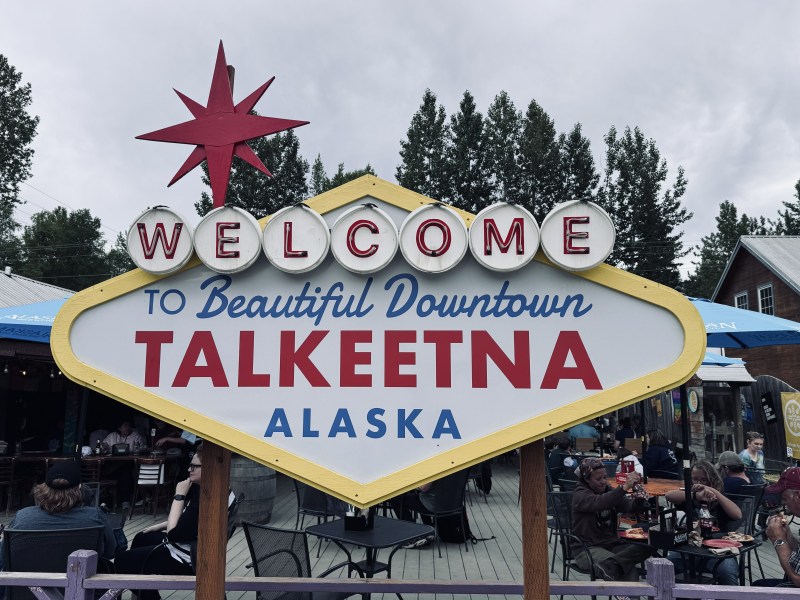
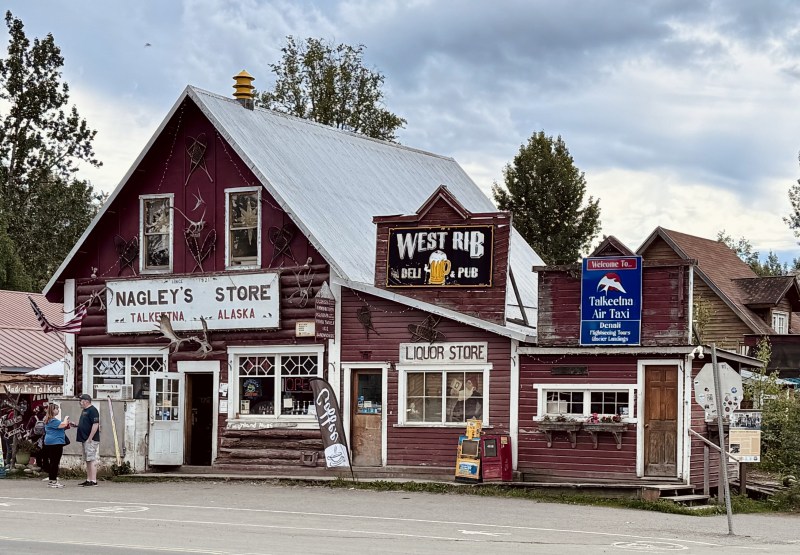
By the time we reached Talkeetna, the clouds had thickened, but the town was lively despite the unsettled weather. Main Street was filled with travelers moving between shops, restaurants, cafés, and tour offices, while conversation and music drifted from patios along the road. With its colorful storefronts, rustic buildings, local art, and steady bustle of activity, Talkeetna reminded me of some of the mountain towns we know in Colorado—historic at its core, but energetic and full of personality.
That historic character was not simply part of the atmosphere. Much of downtown belongs to the Talkeetna Historic District, which was added to the National Register of Historic Places in 1993. Interpretive signs throughout town told the story of a community shaped by the nearby goldfields and the arrival of the Alaska Railroad. Thirteen historic buildings remain within the compact district, preserving pieces of Talkeetna’s early cabins, businesses, and railroad-boom years within only a few walkable blocks.
One of the town’s most recognizable buildings was Nagley’s Store. Horace Nagley arrived in Alaska in 1908 and opened his first general merchandise business at Susitna Station in 1912. In 1916, he established a Talkeetna branch along the river, initially operating from a canvas-walled tent before constructing the store that served the growing railroad town. Although the building was later moved away from the river and altered over the years—including rebuilding after a 1997 fire—it still carries the name Nagley’s and remains part of Talkeetna’s identity.
The historic displays also introduced us to residents whose lives were woven into the town’s earliest years. Ole Dahl, for example, arrived around 1915 while following the gold rush into the upper Susitna Valley. One of the log cabins he later built for his family still stands within the historic district. These preserved buildings made Talkeetna feel less like a collection of Alaska-themed storefronts and more like a community whose history remained visible beneath the activity of the present day
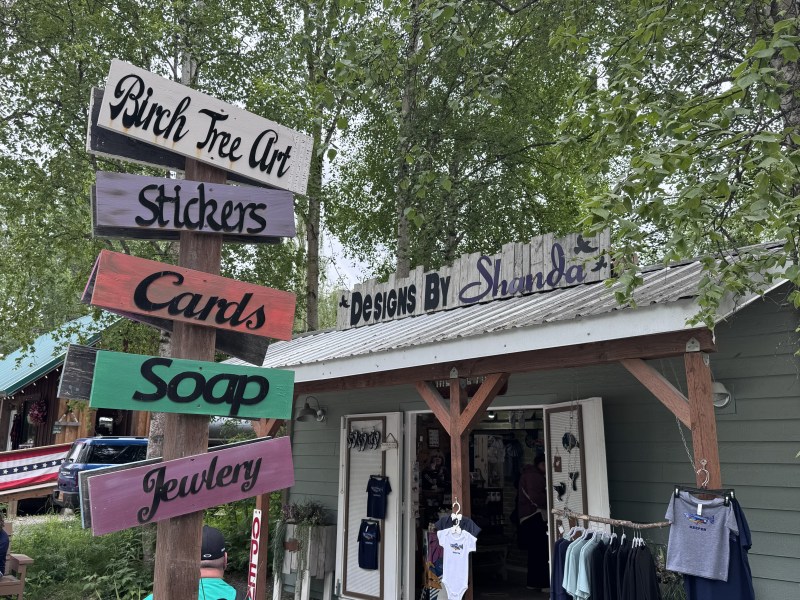
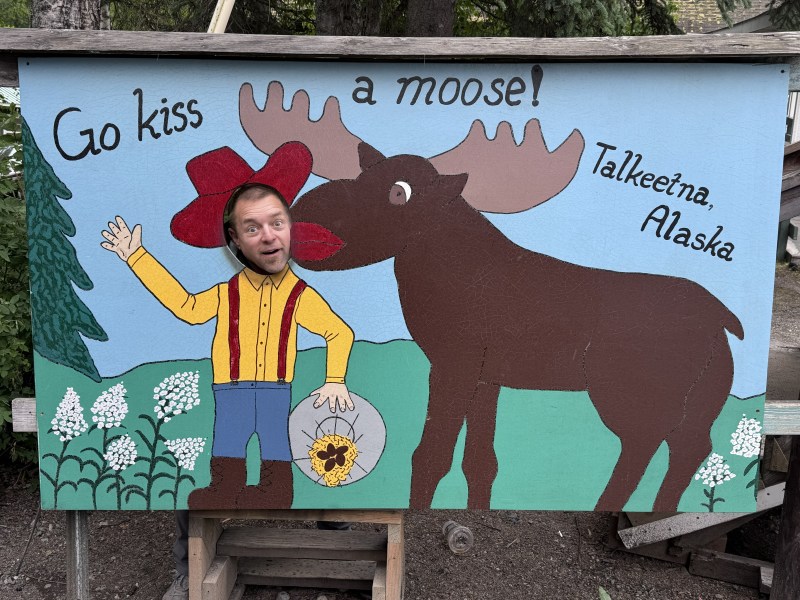
We spent the afternoon wandering through shops, browsing books, and searching for small gifts. I found a new book and a few possible Christmas stocking stuffers, while a bakery tempted us with a raspberry cinnamon roll that we saved for the following morning. There was ice cream to try, another coffee shop to investigate, handmade art tucked into small storefronts, and plenty of humorous signs and photo opportunities—including Bill bravely accepting the invitation to “kiss a moose.”
Talkeetna felt cheerful, quirky, and welcoming, but it also carried an unmistakable connection to Denali. Flightseeing tours, photographers, and travelers all seemed to pass through for different reasons, yet everyone appeared to be watching the same mountains and weather.
We were watching the weather too. Our Denali flight was scheduled for later that afternoon, but for the moment, the town gave us plenty of reasons not to hurry.
Where Three Rivers Become One
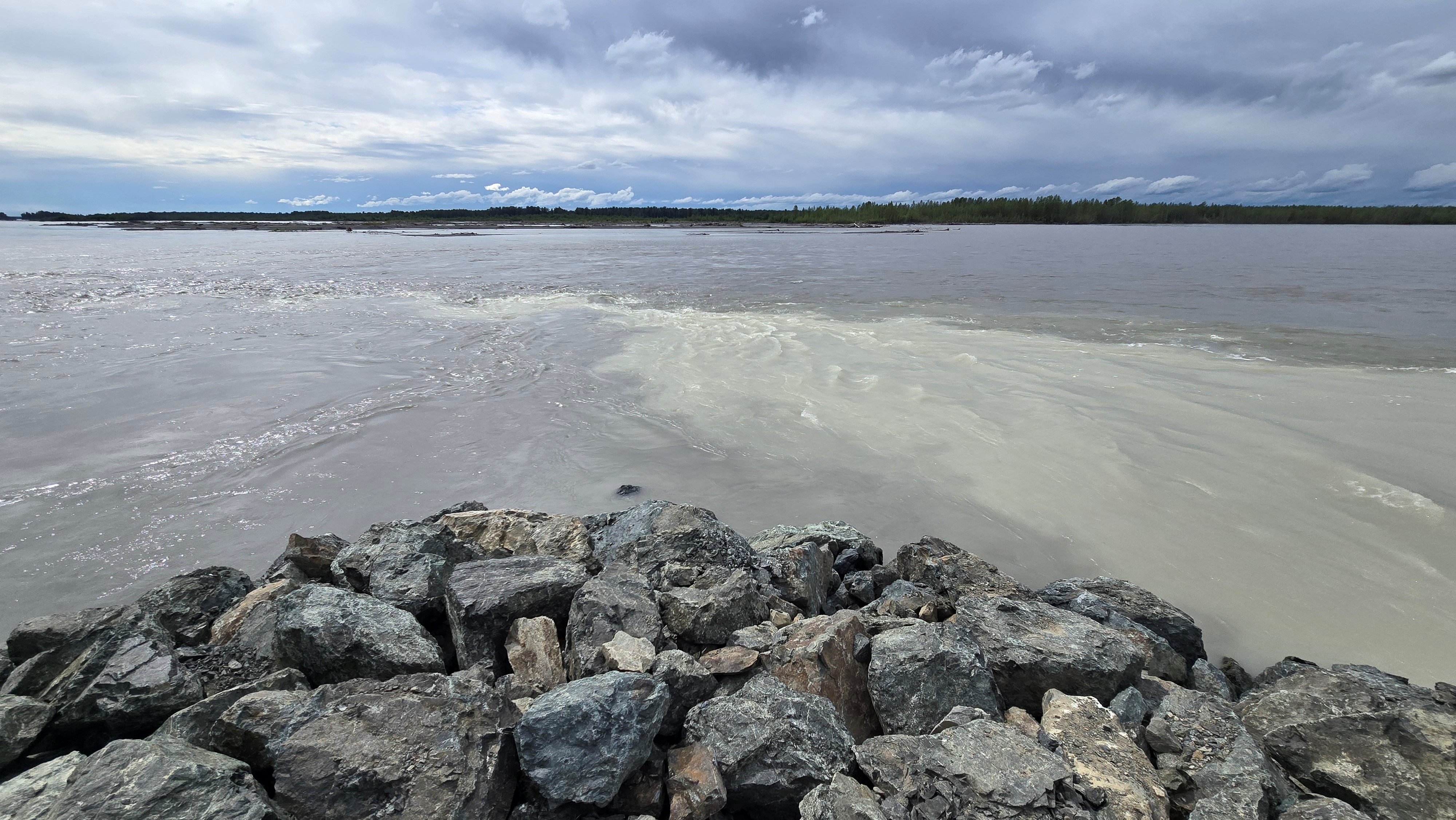
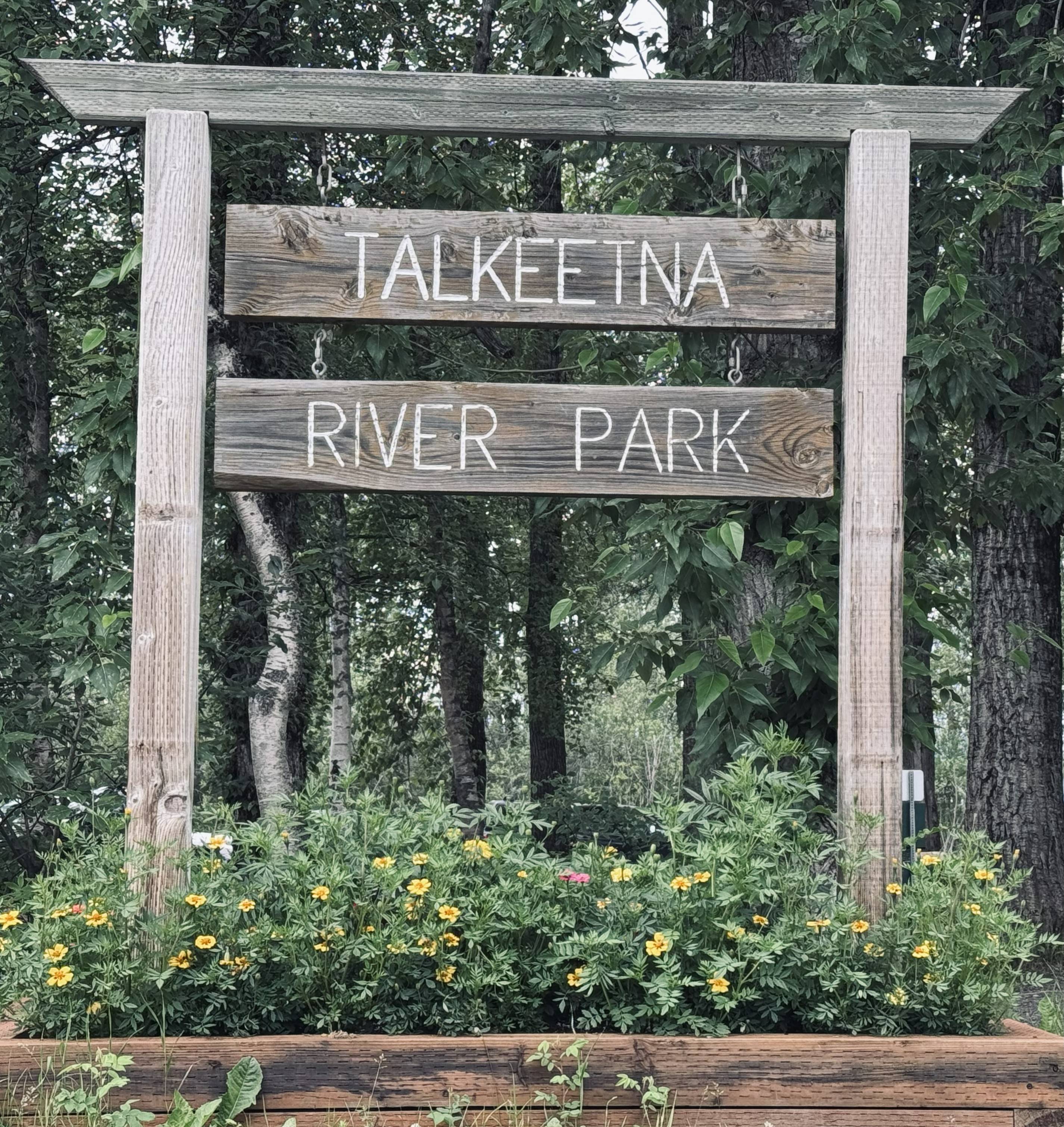
From downtown Talkeetna, we walked through Talkeetna River Park and followed the Denali View Walking Trail toward the riverfront. Denali remained hidden behind the clouds, but the view waiting at the end of the trail became one of the most unexpected highlights of the day.
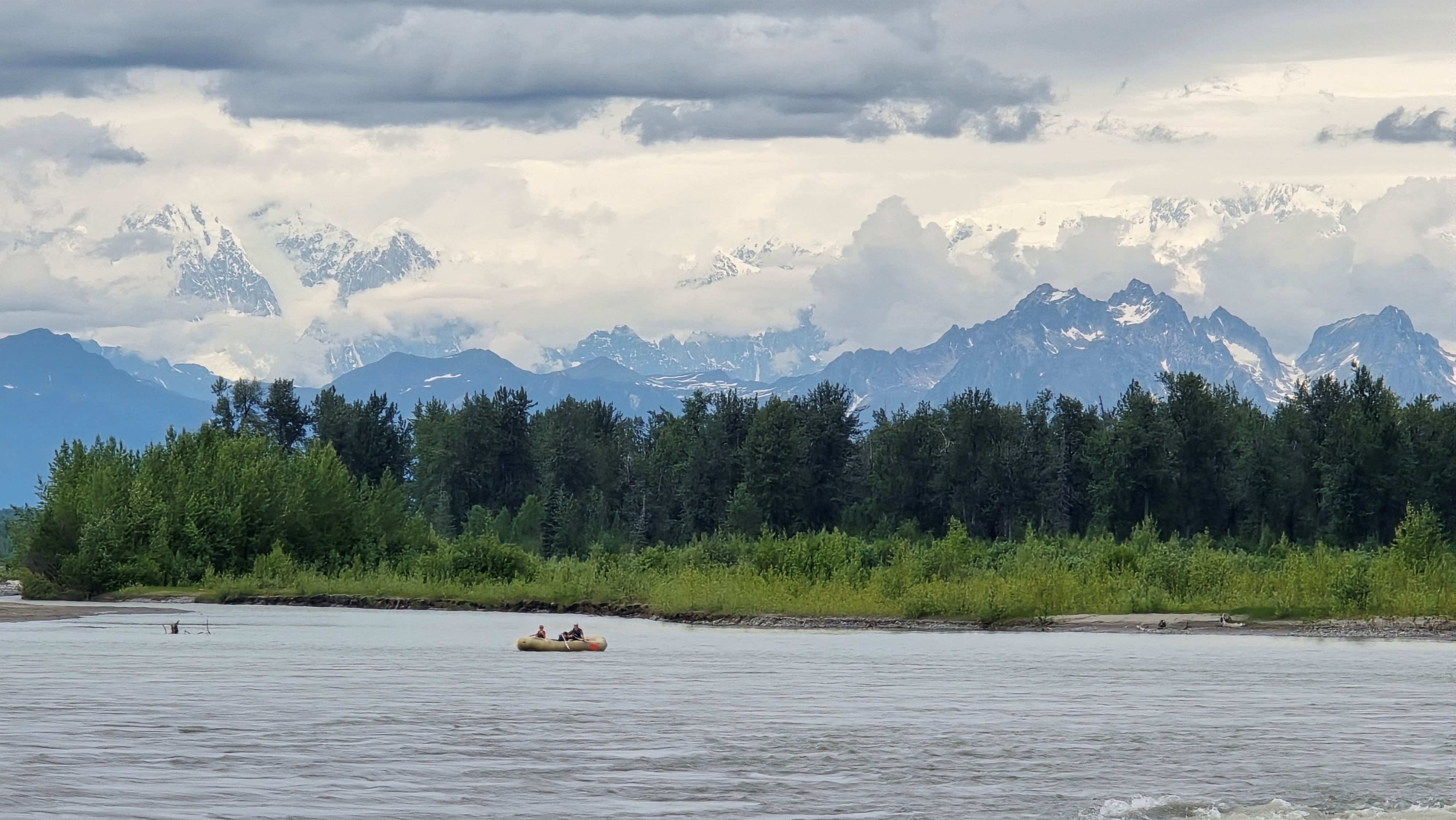
Here, the Talkeetna, Chulitna, and Susitna Rivers meet in an immense sweep of water that looked more like a lake than a river. Standing along the riverbank, we could actually see the rivers coming together. Bands of milky glacial water flowed beside darker currents, creating swirling patterns as the different colors and textures slowly mixed.
Beyond the braided channels, the Alaska Range occasionally appeared through breaks in the clouds. For a few moments, snow-covered peaks rose above the forest while rafters drifted downstream, giving the scene an even greater sense of scale and adventure. A small bush plane also passed overhead—a familiar sight in Alaska, where aviation often feels every bit as essential as the highways.
The confluence connected directly to the previous day’s journey. Along the Denali Highway, we had crossed the Susitna near its glacial headwaters, where gray water divided around gravel bars in a broad braided valley. Now, farther downstream, that same river had grown into a powerful waterway, gathering the Chulitna and Talkeetna Rivers before continuing south toward Cook Inlet.
Watching the rivers merge made the landscape feel connected in a way a map alone could not convey. These were not isolated waterways or scenic roadside stops, but parts of one larger system carrying water and glacial sediment out of the mountains and across Alaska.
I had not known about the confluence before arriving in Talkeetna, yet it became the defining moment of our visit. Not every unforgettable Alaska experience happens on a mountaintop. Sometimes it happens at the river’s edge, watching three wild waterways become one.
A Change in Plans
Later that afternoon, we checked in for our Denali flight. The flightseeing company explained that the aircraft could still depart, but it would likely remain around 13,000 to 14,000 feet while navigating through and beneath the cloud layers. Images from the mountain webcams showed dense cloud cover and very little visibility. Technically, the flight was possible; the experience we had imagined was not.
We decided to postpone until later in the trip. It was disappointing, but we had not traveled all that way simply to say we had flown around Denali. We wanted to see the mountain, glaciers, and surrounding landscape.
Changing the reservation meant adjusting our itinerary, but Alaska was already teaching us that flexibility was part of traveling here. Mountains disappeared behind clouds, rain arrived without warning, and carefully made plans remained subject to weather far beyond anyone’s control.
Sometimes changing a plan does not diminish the experience. It simply makes room for a different one.
Rain at the Cabin
By the time we began the drive back toward Trapper Creek, the temperature had dropped and steady rain was moving through the area. The forest along the Parks Highway darkened beneath the clouds, and water gathered on the pavement as we made our way north. The return drive felt quieter than the journey south. After a day spent walking, learning, watching the weather, and reconsidering our plans, we were ready to retreat to the cabin.
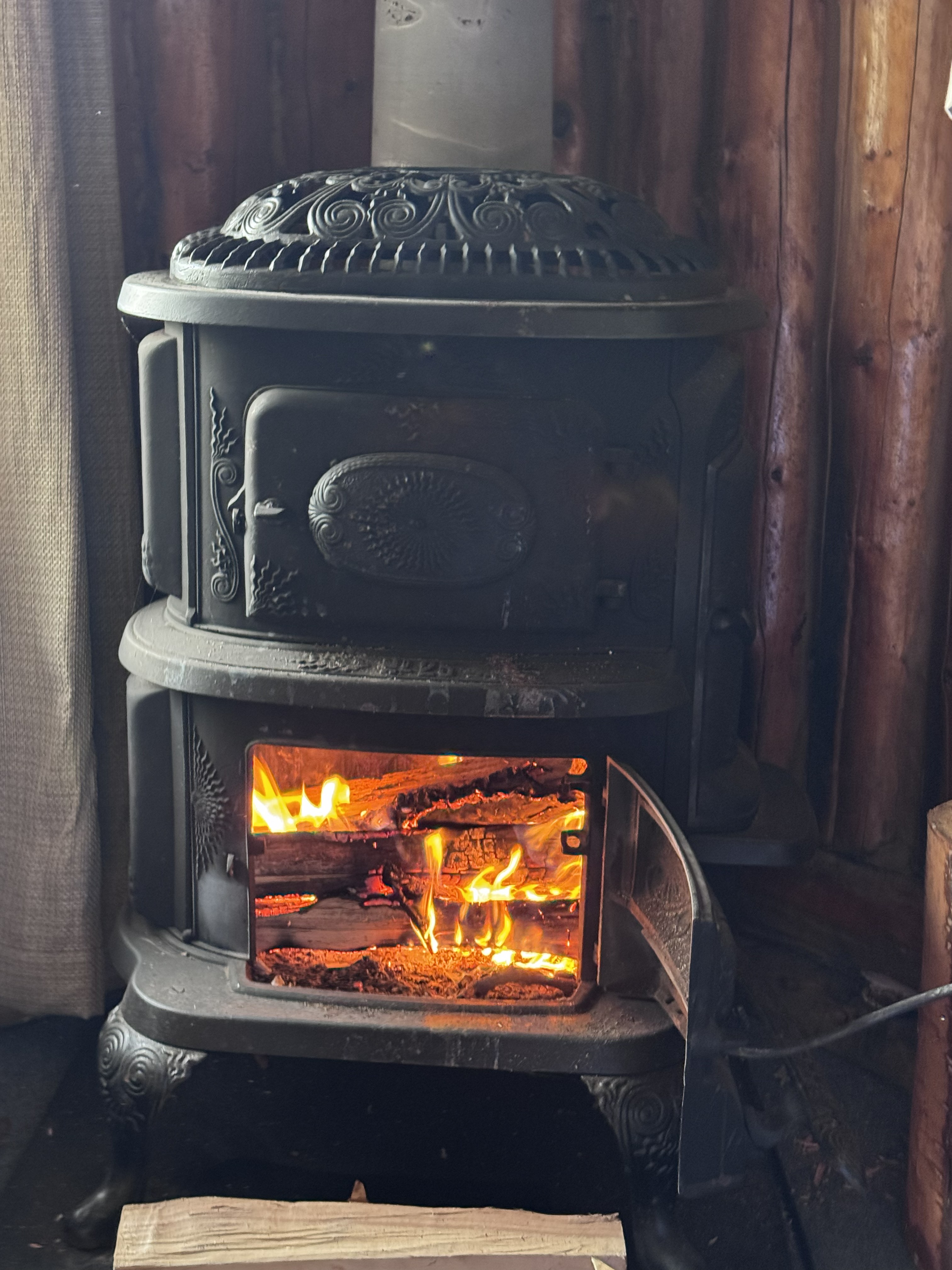
At the lodge, we picked up hot chocolate from the communal area before returning to the cabin for our final night. Bill lit the wood-burning stove, and warmth gradually filled the small room as rain tapped against the metal roof. Outside, clouds drifted across the mountains and softened the surrounding forest, while inside the stove crackled beside us as we settled in with our drinks.
It was nearly 8:00 pm, though the lingering northern light still made the hour difficult to believe. The day had begun outdoors with breakfast beneath bright skies and mountain views; it ended beside a warm stove, listening to the rain and watching clouds move across that same range.
The following morning, we would leave the cabin and turn north toward Denali National Park. Our flight would have to wait, and the mountain was still keeping much of itself hidden, but the day had given us something we had never thought to plan for. Three rivers had come together, and in many ways, the journey was doing the same—connecting roads, landscapes, history, and unexpected moments into something larger than any single destination.
From My Field Journal
July 11, 2026 · Evening · Lazy Bear Cabin
Today did not unfold as planned. Clouds kept us from taking our Denali flight, although they opened briefly enough at Denali View South to reveal part of the mountain.
What surprised me most was Talkeetna. I had no idea the Talkeetna, Chulitna, and Susitna Rivers came together there, or that the combined water would be so wide it looked more like a lake.
Now we are back in our little cabin with hot chocolate and a fire in the wood stove, listening to rain on the roof. It is our final night here, and somehow this feels like the perfect Alaska ending to the day.
EXPEDITION SNAPSHOT
THE ROUTE Trapper Creek → Alaska Veterans Memorial → Denali View South → Talkeetna → Trapper Creek
ROAD TRAVELED George Parks Highway
LANDSCAPE The Alaska Range, dense northern forest, the braided Chulitna River Valley, and the confluence of the Talkeetna, Chulitna, and Susitna Rivers
HISTORY ALONG THE WAY Alaska’s military history at the Veterans Memorial and Talkeetna’s preserved railroad-boom historic district
MEMORABLE MOMENTS Breakfast overlooking the mountains, a brief glimpse of Denali, exploring downtown Talkeetna, and watching three glacial rivers merge
STAYED Lazy Bear Cabin at Historic Chulitna River Lodge
CONDITIONS A bright morning followed by increasing clouds, intermittent rain, cooler temperatures, and limited mountain visibility
UNEXPECTED DISCOVERY The three-river confluence at Talkeetna River Park—an immense sweep of contrasting glacial currents that looked more like a lake than a river
CHAPTER HIGHLIGHT The flight we planned would have to wait, but the day made room for something unexpected: a brief glimpse of Denali, a deeper look at Alaska’s history, and three wild rivers becoming one.
Next Chapter
The following morning, we would leave the Lazy Bear Cabin and turn north toward Denali National Park. The mountain might still be hidden, but the park promised a different kind of discovery—wildlife, working sled dogs, and a journey deeper into Alaska’s interior.
Next: Denali National Park—wildlife, working sled dogs, and the road toward Pretty Rocks.






Leave a comment