Into Denali: Wildlife, wilderness, and the heart of the park on four paws
July 12, 2026
Turning North Again
After two nights at the Lazy Bear Cabin, it was time to pack the Jeep and continue north. The little log cabin had given us a peaceful beginning to the expedition—mountain breakfasts, lingering evening light, and a final rainy night beside the wood-burning stove—but Denali National Park was waiting.
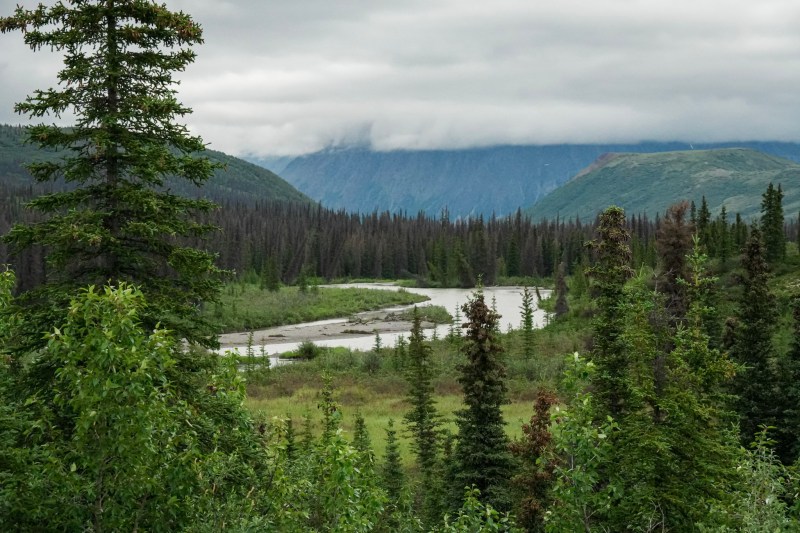
As we followed the George Parks Highway north, the morning landscape unfolded in layers of green. A pale river curved through the forest below us while low clouds rested against the mountains, hiding the highest ridges and giving the valley a quiet, misty beauty. The weather was still unsettled, but by now that felt less like an obstacle and more like part of Alaska’s character.
The previous day, Denali had appeared for only a few moments through the clouds. Today, our destination was not simply the mountain, but the wilderness surrounding it—a landscape shaped by rivers, tundra, wildlife, and weather.
Entering Denali
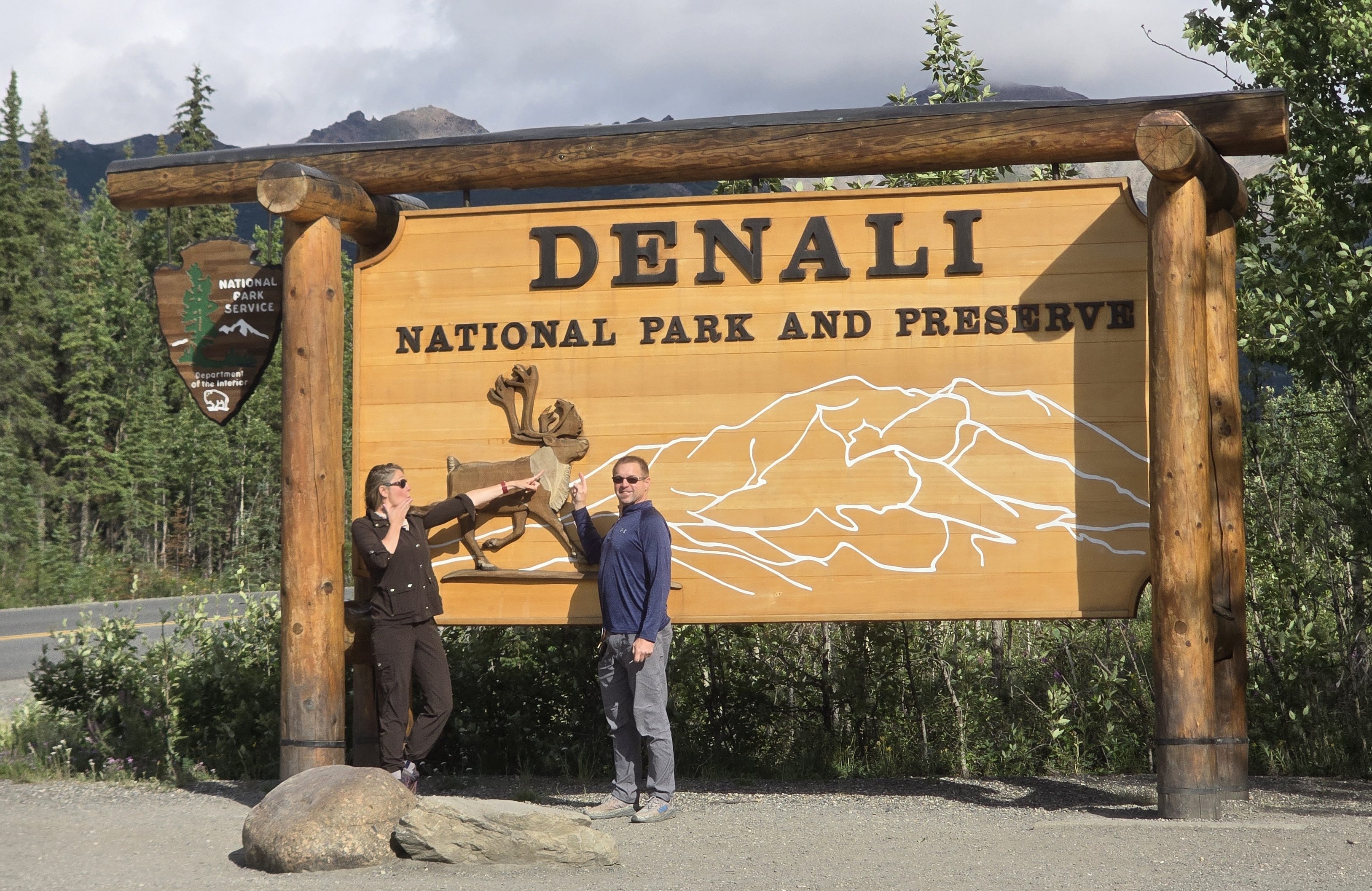
Arriving at the entrance to Denali National Park and Preserve felt like reaching one of the defining destinations of our Alaska journey. Naturally, we stopped at the large wooden park sign for the traditional arrival photo before continuing toward the visitor area.
Denali protects more than six million acres of wild land, making it one of the largest national parks in the United States. Its single road begins in the lower-elevation boreal forest near the entrance before passing through shrublands, alpine tundra, braided river valleys, and the snowy mountains of the Alaska Range. From the visitor area, the park can seem surprisingly approachable, yet most of its interior remains accessible only by foot, dogsled, aircraft, or the buses traveling the park road.
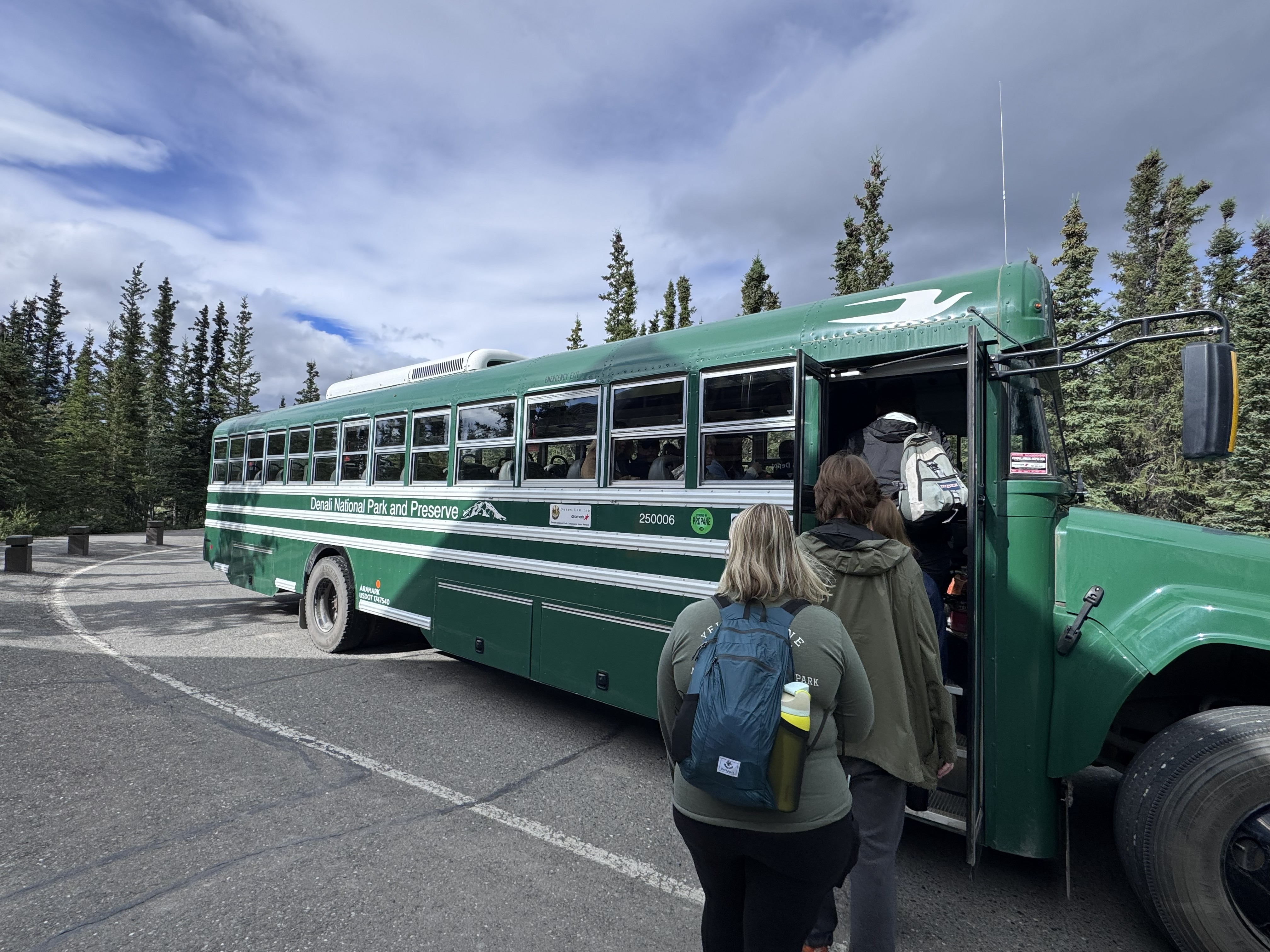
We would experience that road aboard one of Denali’s familiar green transit buses.
Into the Park by Bus
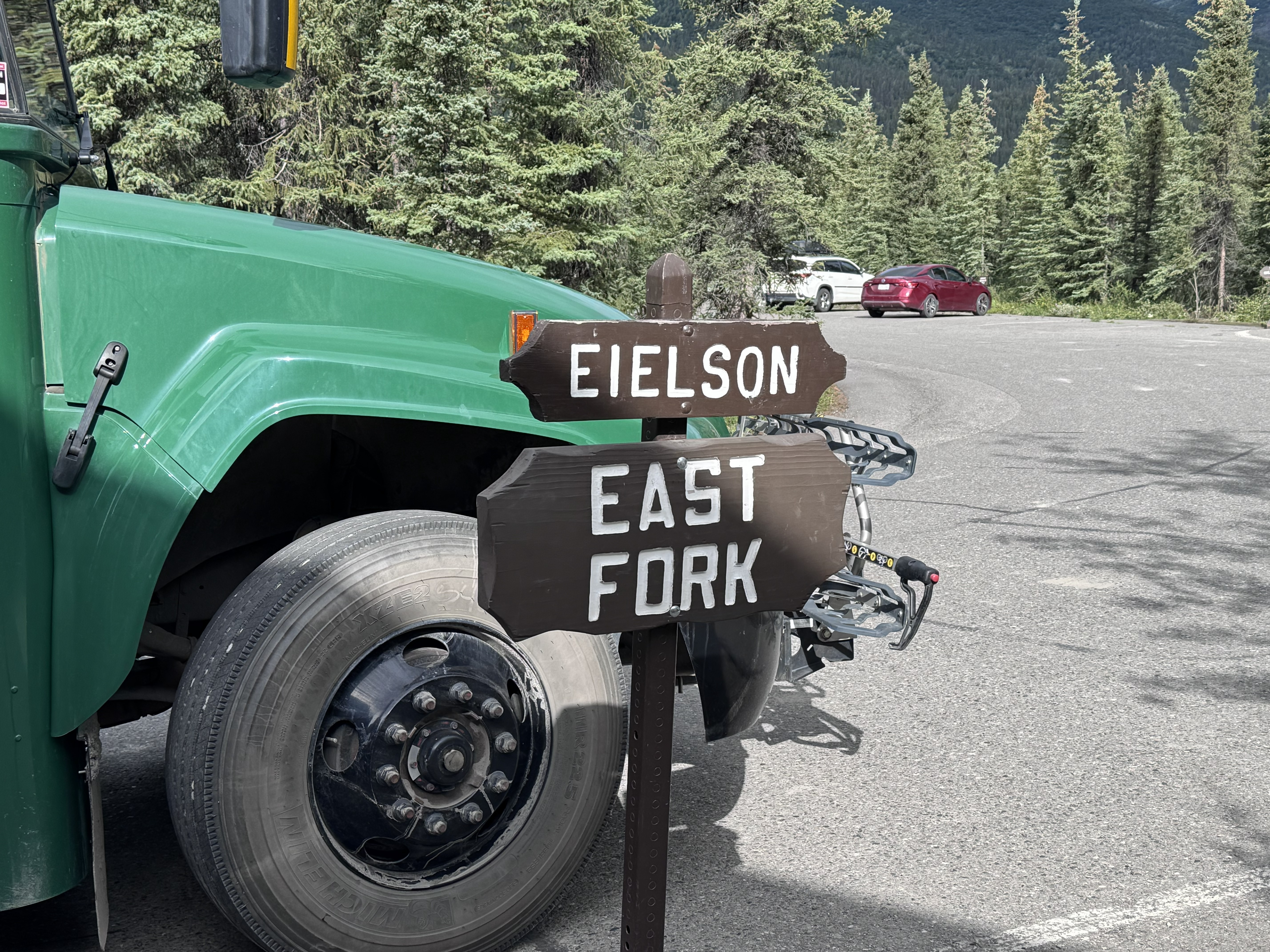
Our journey began at the Denali Bus Depot, where we boarded the non-narrated East Fork Transit bus. Unlike the tan narrated tour buses, Denali’s green transit buses are designed for travelers who want more flexibility. Riders can leave the bus to hike or explore and later board another transit bus with available space. The drivers do not provide a formal tour, although they stop for wildlife sightings and often share practical information along the way.
Our destination was the East Fork River at Mile 43, the farthest point buses could travel because of the Pretty Rocks landslide. The round trip was scheduled to take approximately four and a half hours, including wildlife stops, restroom breaks, and the slow passage along the winding gravel road.
Once aboard, we settled into our seats and began following the Denali Park Road west. Spruce and birch surrounded the bus beneath a sky alternating between patches of blue and low gray clouds. With each mile, visitor facilities gave way to forest, river valleys, and increasingly open terrain.
Near Savage River, the bus slowed for one of our first wildlife sightings: a porcupine crossing the road. Nearby, the river flowed between steep green slopes, marking the transition around Mile 15 where most private vehicles turn back and bus travel becomes the primary way deeper into the park. It also marks an important transition in the scenery, as the boreal forest begins giving way to more open terrain. It was an unexpected beginning to what would become a remarkably generous wildlife day.
Along the Teklanika River
Our next major pause came at the Teklanika rest stop and river viewpoint. After sitting on the bus, it felt good to step outside, stretch our legs, and notice the smaller pieces of the landscape surrounding us.
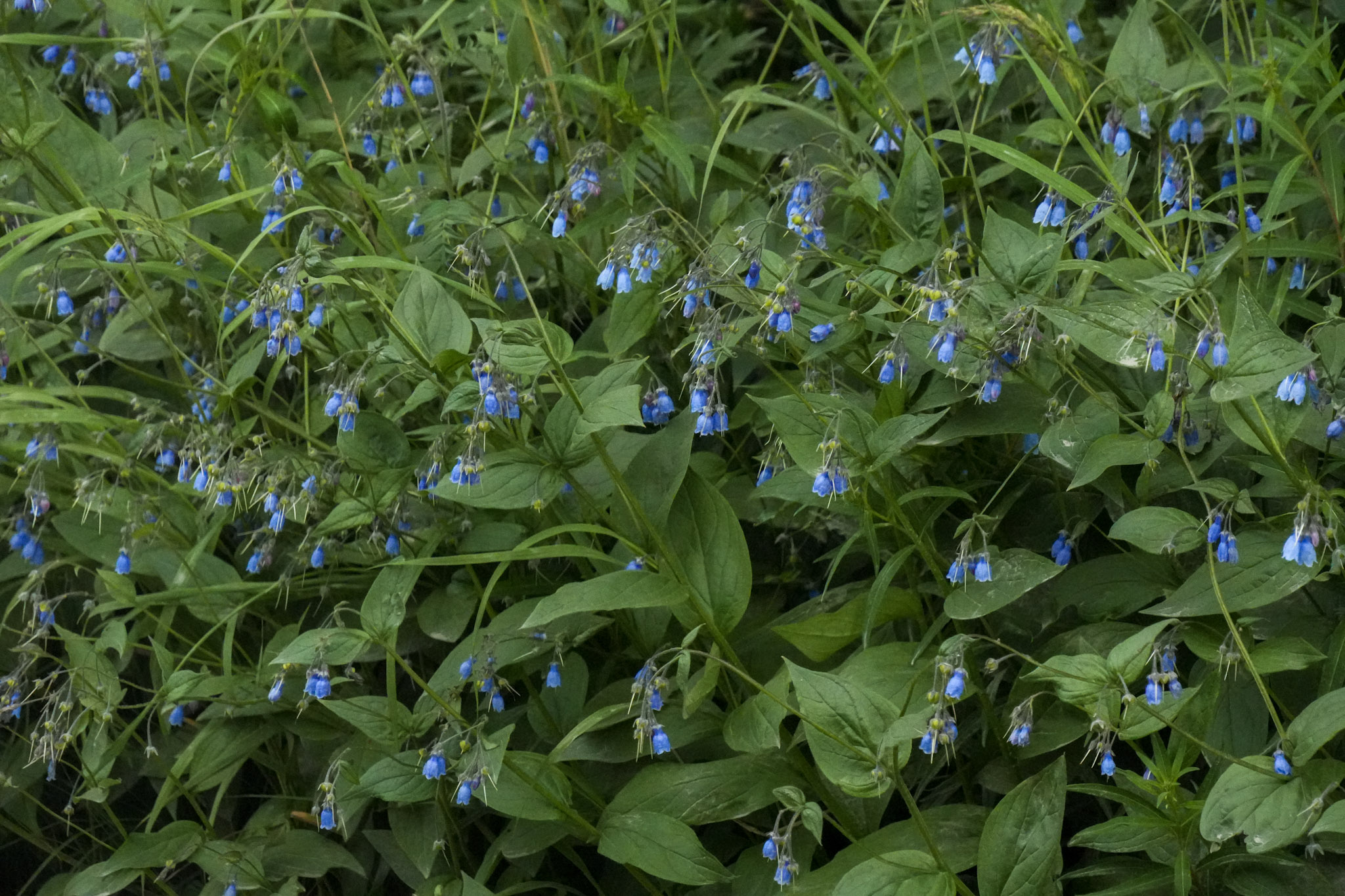
Delicate blue flowers nodded among the grasses near the rest area. They appeared to be bluebells, their small bell-shaped blossoms scattered through the green vegetation. Nearby, bright yellow shrubby cinquefoil added another burst of color. The flowers were easy to overlook beside Denali’s enormous valleys and mountains, but they reinforced something I had already begun to appreciate about Alaska: even the grandest landscapes were filled with small, intricate details.
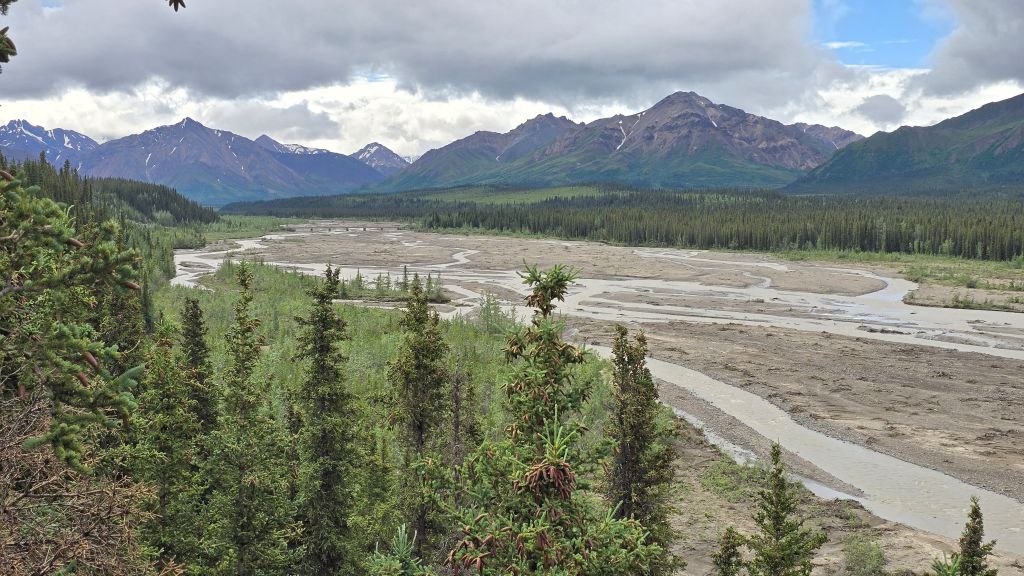
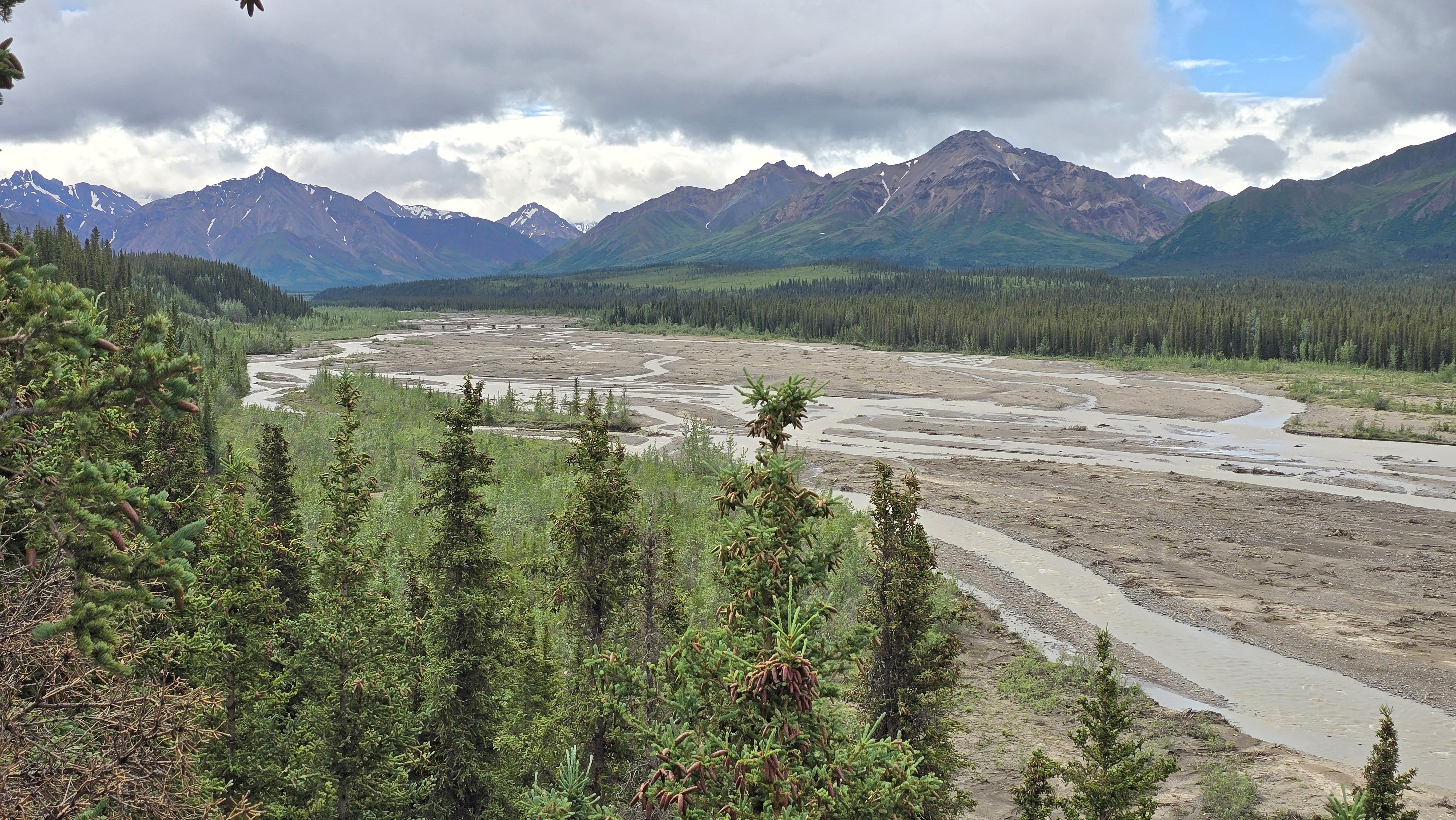
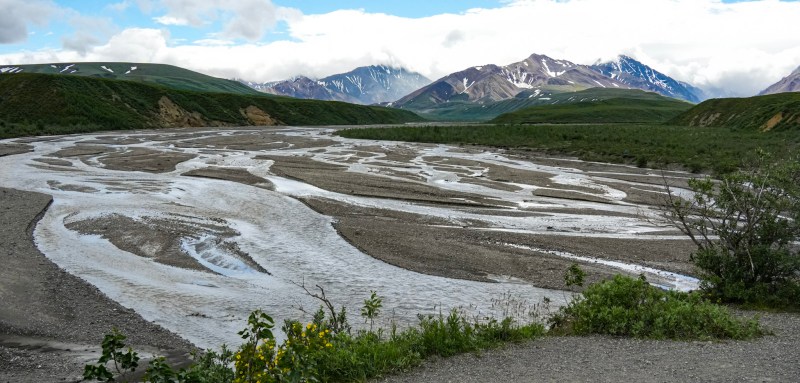
Beyond the vegetation, the Teklanika River spread across a broad gravel valley. Silvery channels divided and rejoined between exposed bars, while dark spruce forest climbed toward mountains streaked with green and reddish-brown rock. Clouds gathered over the higher ridges, creating the kind of layered, moody view that had come to define our first days in Alaska.
Denali’s rivers are constantly reshaping their channels as they carry water and sediment out of the Alaska Range. The Teklanika is one of the waterways encountered along the park road, its changing channels reflecting the glacial and seasonal forces still shaping the landscape.
Standing at the viewpoint, it became clear that the bus was not simply carrying us to Mile 43. Every stop introduced another layer of Denali—wildlife near the forest, flowers beside the road, braided rivers beneath the mountains, and a landscape becoming broader and more dramatic as we traveled west.
The Road Toward Pretty Rocks
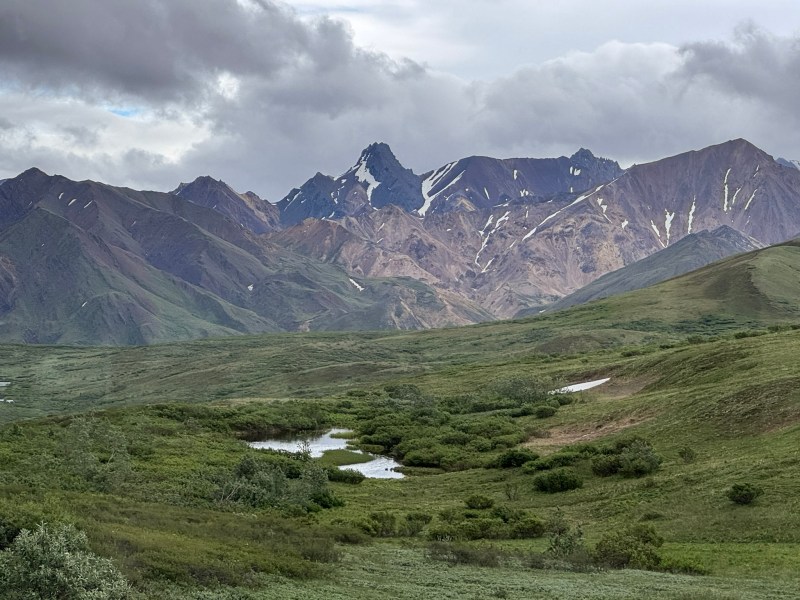
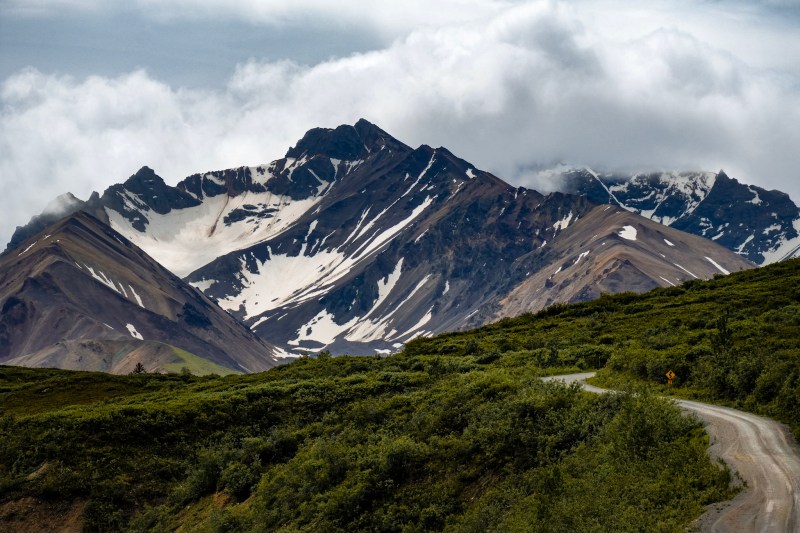
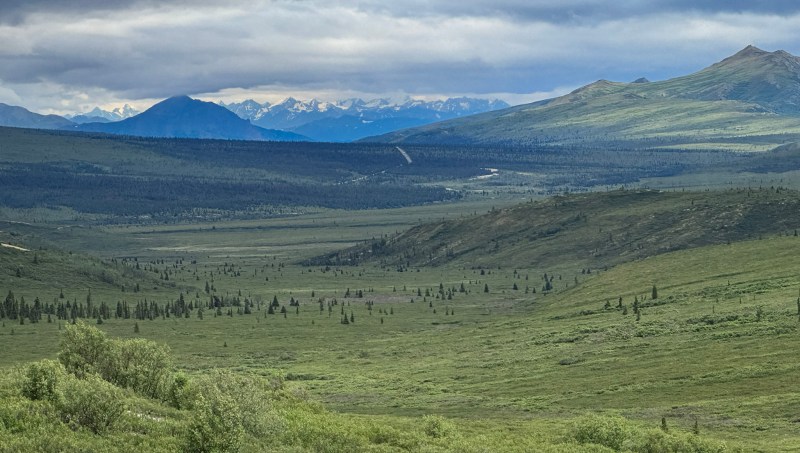
Beyond Teklanika, the road narrowed and curved through broad valleys, braided river basins, and slopes stretching toward the Alaska Range. This was the portion of the day I had most anticipated—the journey to Mile 43, where buses currently turn around near Pretty Rocks.
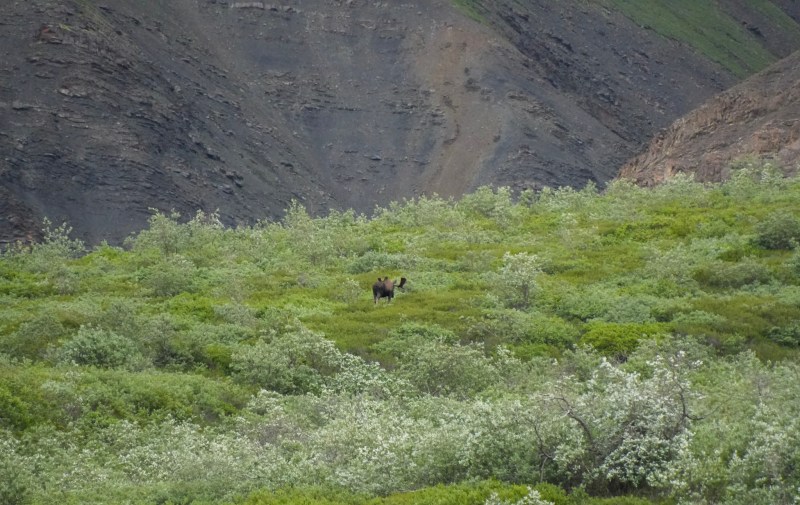
Along the way, wildlife continued to appear. We spotted a moose moving through the brush, and farther off, a grizzly bear stood high on a distant mountainside—small against the scale of the valley, but unmistakable even from far away. Encounters like that were part of what made the bus ride so compelling. Every curve in the road held the possibility of another animal, another view, or another reminder that this park still belongs first to the wild.
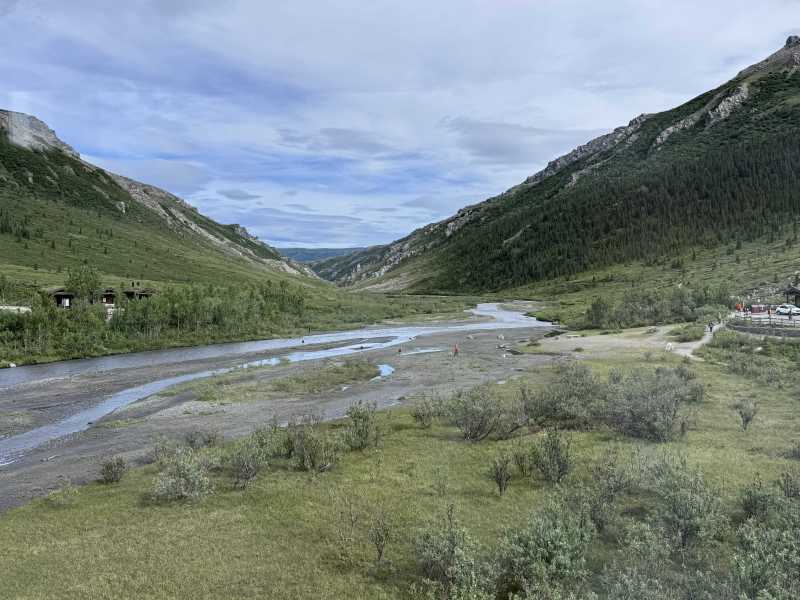
By the time we reached Mile 43 at the East Fork area, the weather had shifted noticeably. At the visitor center, the day had felt bright and relatively warm. Here, the air was cooler and the wind sharper, and when we stepped off the bus we immediately felt the difference. Snow clung to the mountains beyond the river, and the cooler air gave the landscape a more rugged, almost austere character.
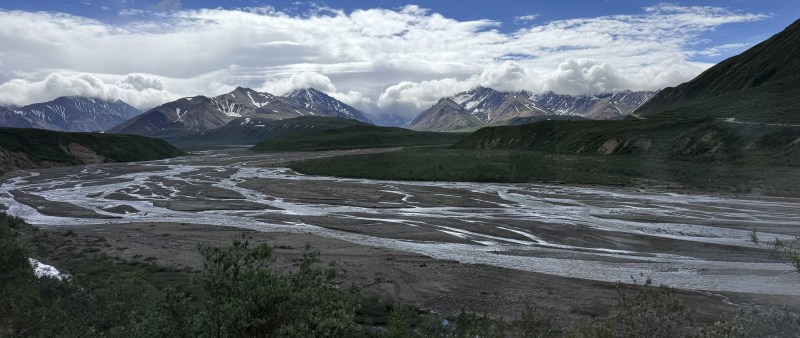
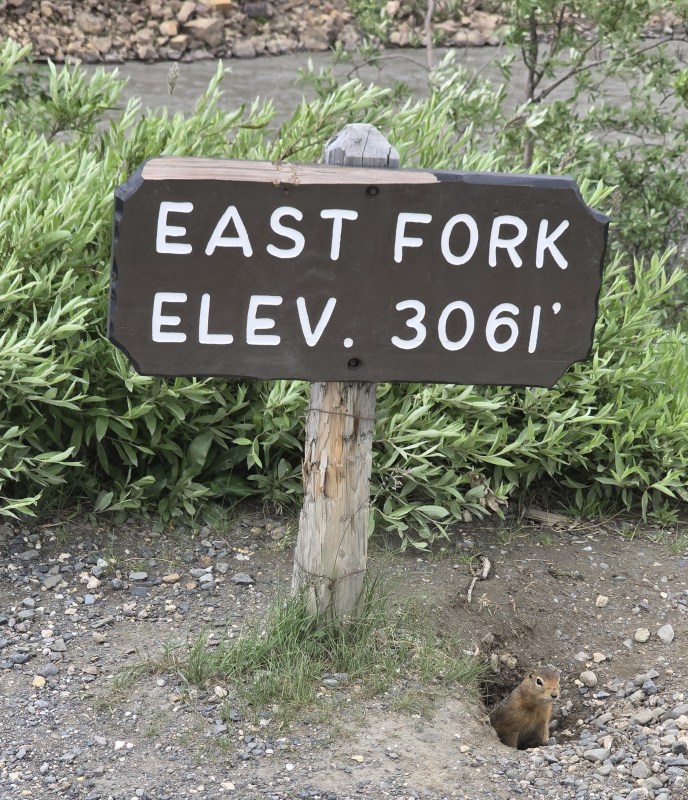
The East Fork River spread across the valley below in pale braided channels, with dark ridges and snow-streaked peaks rising behind it. Even without seeing Denali itself, the setting felt dramatic and unmistakably Alaskan. An arctic ground squirrel popped up near the East Fork sign, adding a little humor to the stop as we took photos and looked out across the river basin. It was one of those moments that felt both grand and oddly playful at the same time.
Denali also differs from parks such as Rocky Mountain or Yellowstone in its approach to hiking. Most maintained trails are clustered near the entrance, while deeper in the park visitors often travel cross-country across tundra, gravel bars, and drainages. The lack of an extensive trail system disperses use, limits concentrated damage, and preserves the feeling of undeveloped wilderness. It also demands greater preparation, awareness, and respect from anyone who ventures off the road.
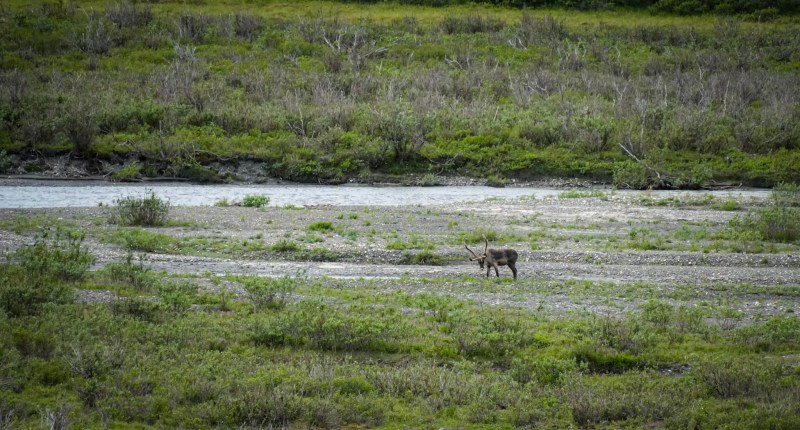
On the return trip, the road appeared as a thin line across an immense valley of tundra and shadowed hills. Near Savage River, we saw ptarmigans and caribou moving across the gravel flats. By then, the bus ride had already given us wildlife, braided rivers, changing weather, and a much clearer sense of Denali’s scale. Yet one of the park’s most memorable experiences was still waiting near the visitor center: its working sled dogs.
The Heart of Denali Has Four Paws
Back near the visitor area, we arrived in time for the sled dog demonstration and a visit to Denali’s working kennels. After hours spent watching the landscape through the windows of the transit bus, the kennels offered a completely different way to understand the park—one built not around roads or viewpoints, but around partnership.
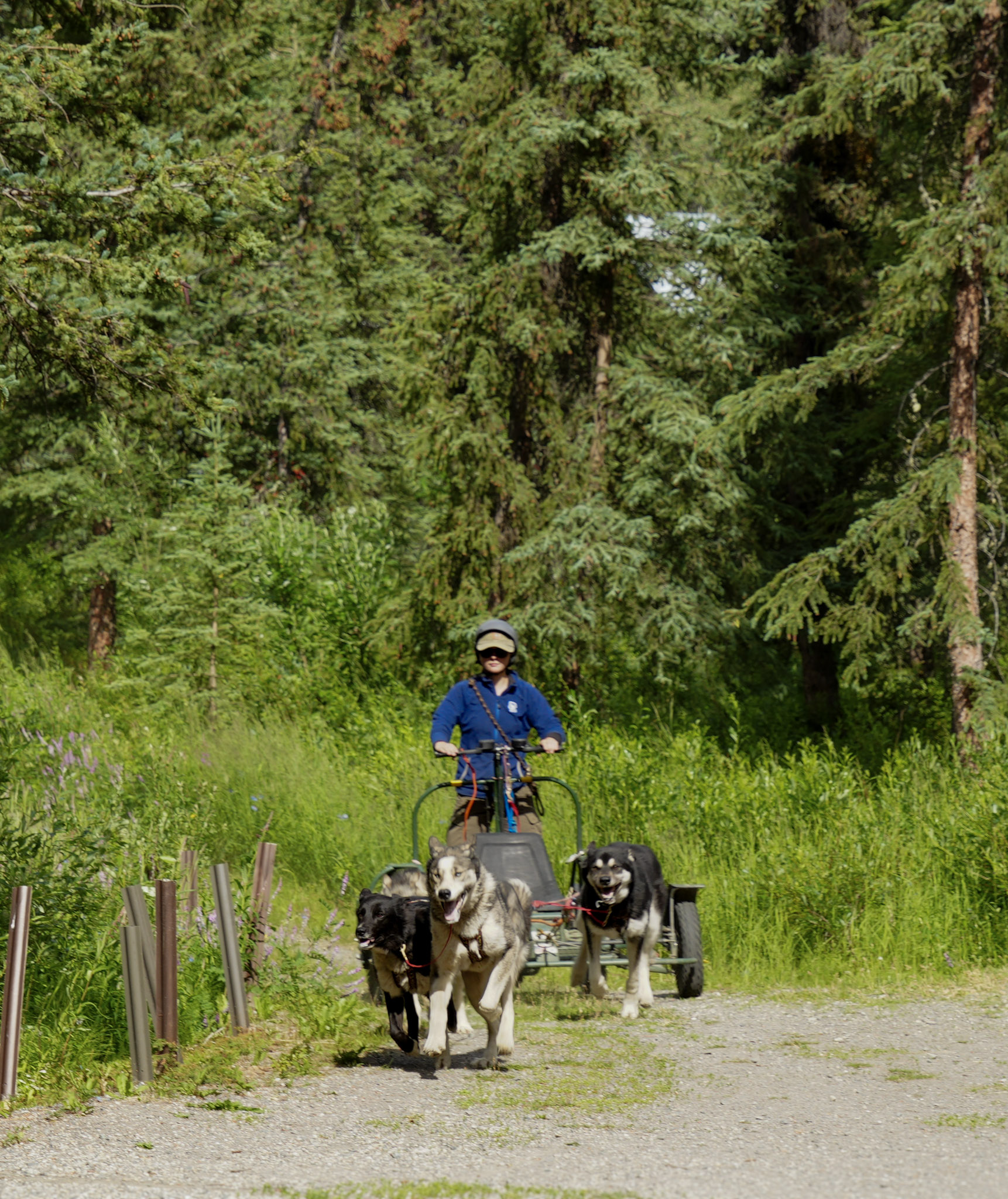
Denali is the only national park in the United States with an active working sled dog program. Often called canine rangers, the dogs are not merely part of a visitor demonstration or a reminder of the past. When winter closes the park road, their teams help rangers break trail, haul supplies, support research, and reach areas inaccessible by vehicle. Their ability to travel quietly through deep snow makes them especially well suited to work in Denali’s wilderness.
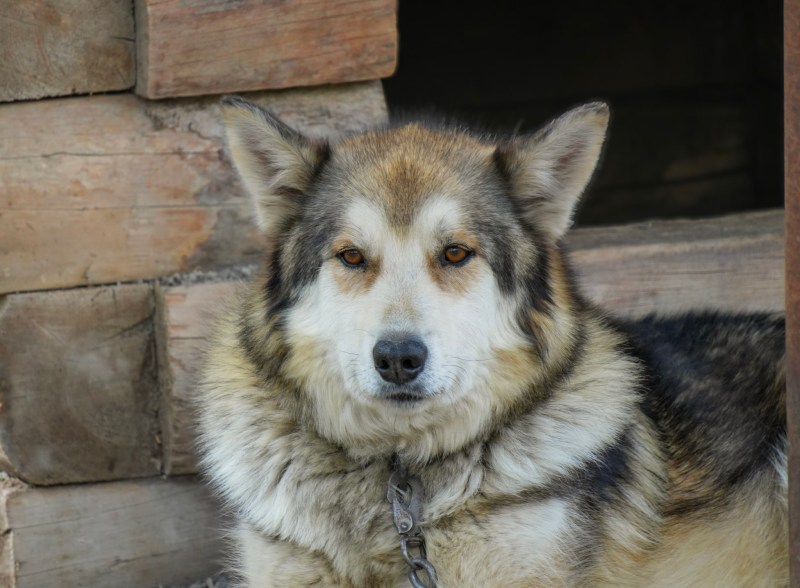
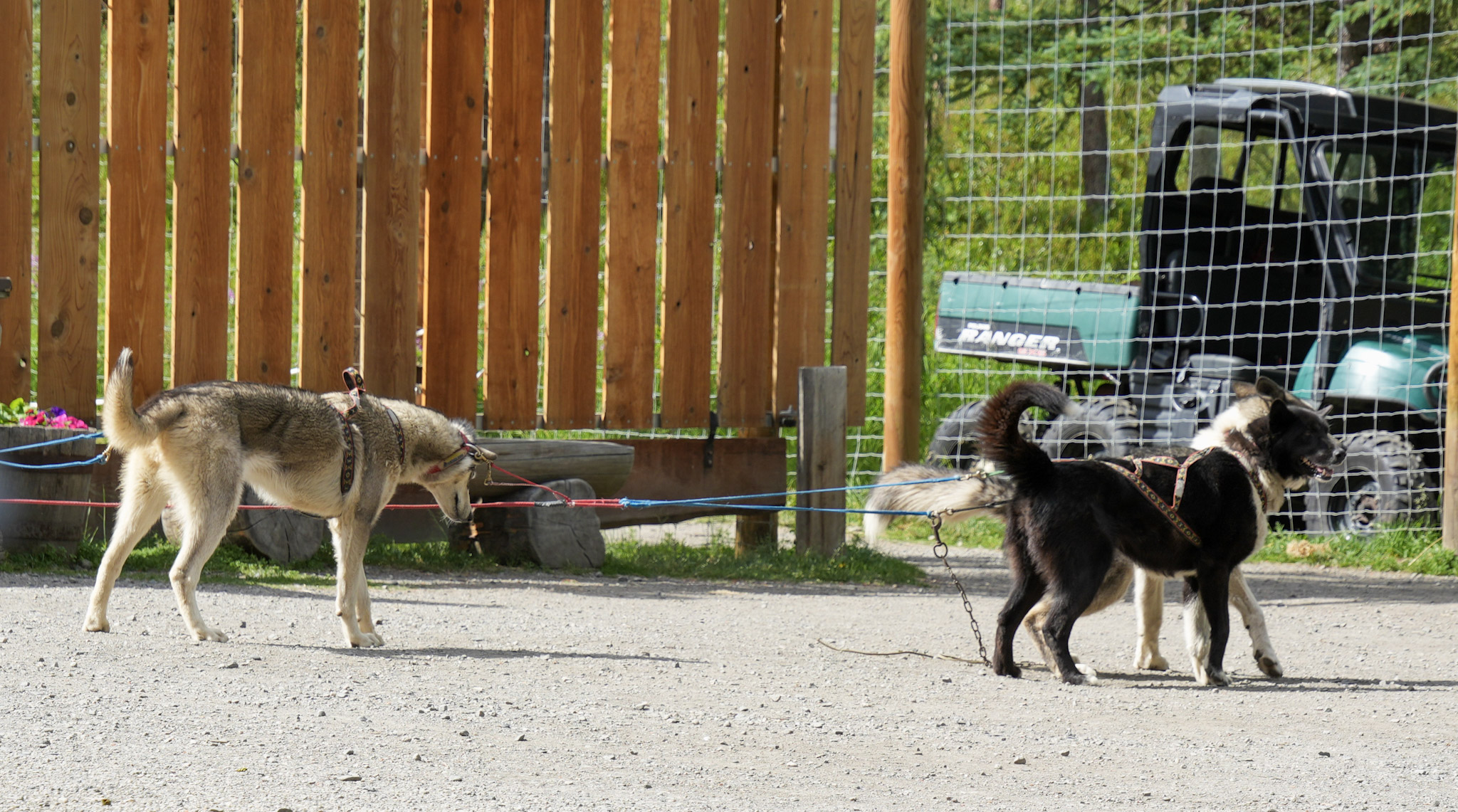
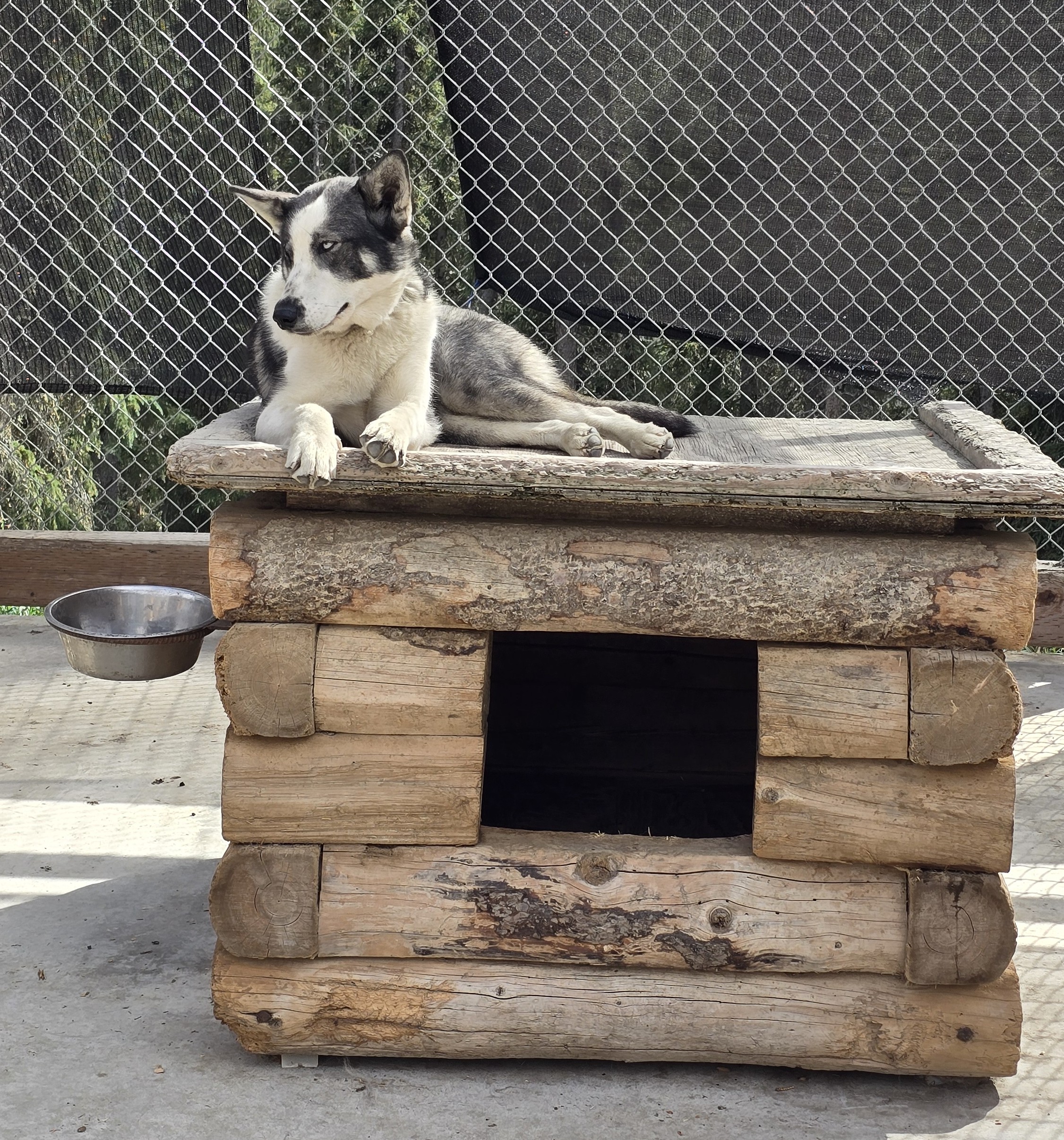
We learned that the kennel usually includes about twenty-five to thirty dogs. Unlike the lean racing dogs built primarily for speed, Denali’s dogs are freight dogs—strong, steady athletes bred for endurance and the ability to pull substantial loads across long distances. Their thick coats and sturdy builds also allow them to work in temperatures that can fall to forty degrees below zero and sometimes even colder.
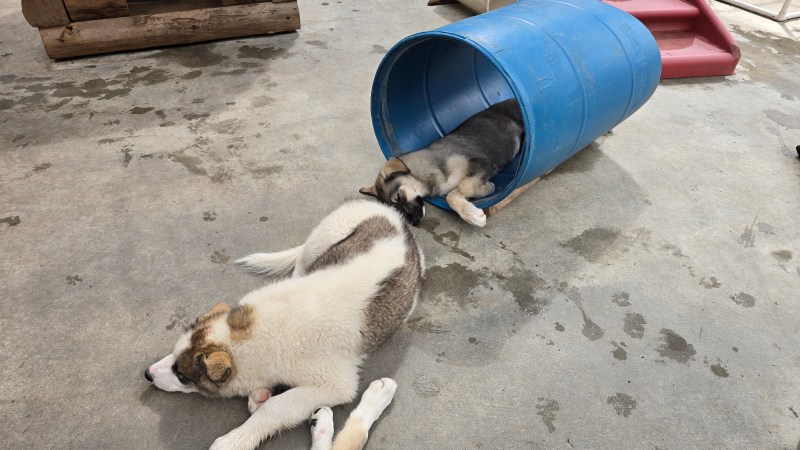
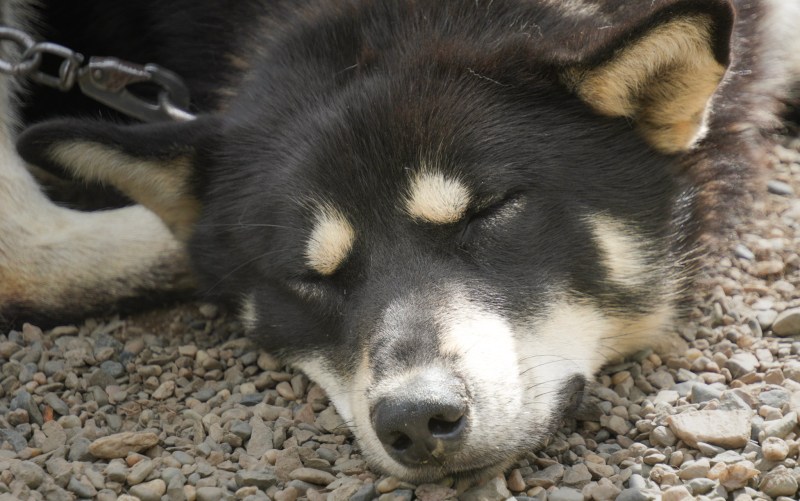
Becoming a sled dog involves far more than physical strength. Puppies begin with play, short walks, and gradual exposure to kennel routines before learning commands, patience, teamwork, and their place within a coordinated team. Lead dogs require an especially strong combination of confidence, discipline, and responsiveness to the musher, while every position depends on trust and cooperation.
The kennel’s family displays made the program feel especially personal. Photographs introduced the canine rangers by name and traced the litters that form the working team. Rather than seeing an anonymous group of sled dogs, we began to understand them as individuals, each with a role in the kennel’s continuing history.
That tradition reaches back more than a century, when sled dogs were essential to early winter patrols across the park. Although equipment and park operations have changed, the dogs remain one of the most effective ways to move through Denali’s backcountry. Watching the demonstration made that purpose clear: they were energetic and eager, but also focused, responding as a team to work generations of Denali dogs had been trained to perform.
Afterward, we walked through the kennel area and met some of the dogs. Seeing their personalities and understanding the work they perform through the long winter made their role in the park feel real.
I had expected the mountains, braided rivers, and wildlife to define our day, and they certainly shaped it. Yet the sled dogs revealed another side of Denali—one grounded in endurance, tradition, and partnership. They were not simply ambassadors for visitors but working members of the park team. By the time we left the kennels, it was easy to understand why the heart of Denali has four paws.
A Cozy Landing in Fairbanks
After leaving the kennels, we returned to the Jeep and continued north toward Fairbanks. It had been a full day—nearly five hours on the park bus, wildlife across the tundra, changing weather, and an afternoon with Denali’s canine rangers. By the time the park disappeared behind us, we were ready to settle in, and an entirely different kind of Alaska experience was waiting: a night in the Chickadee Treehouse.
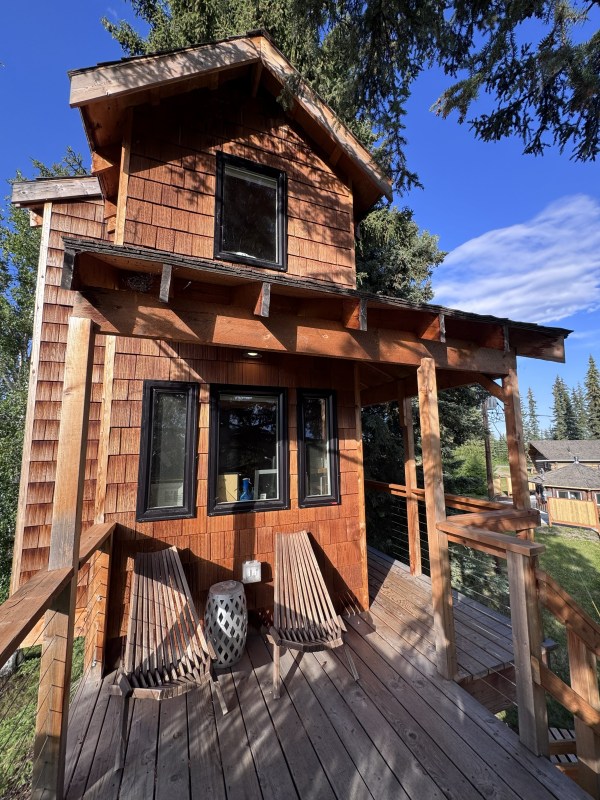
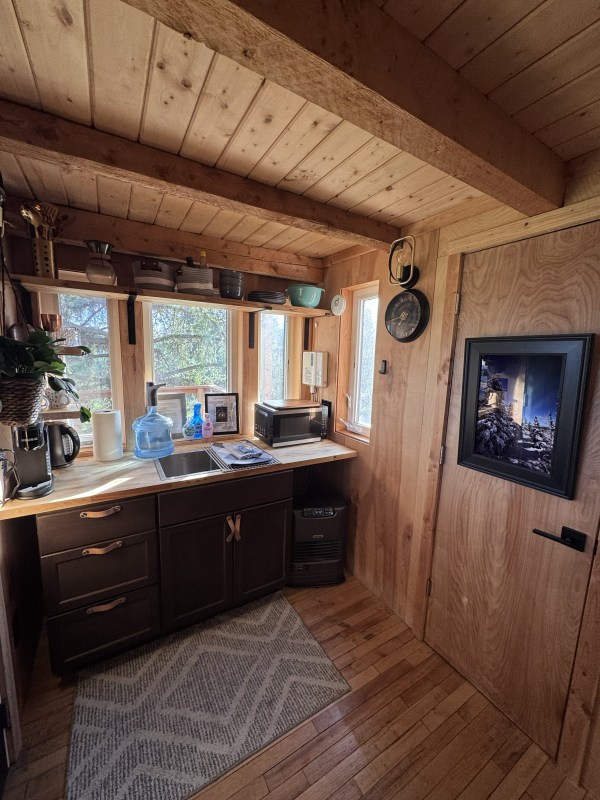
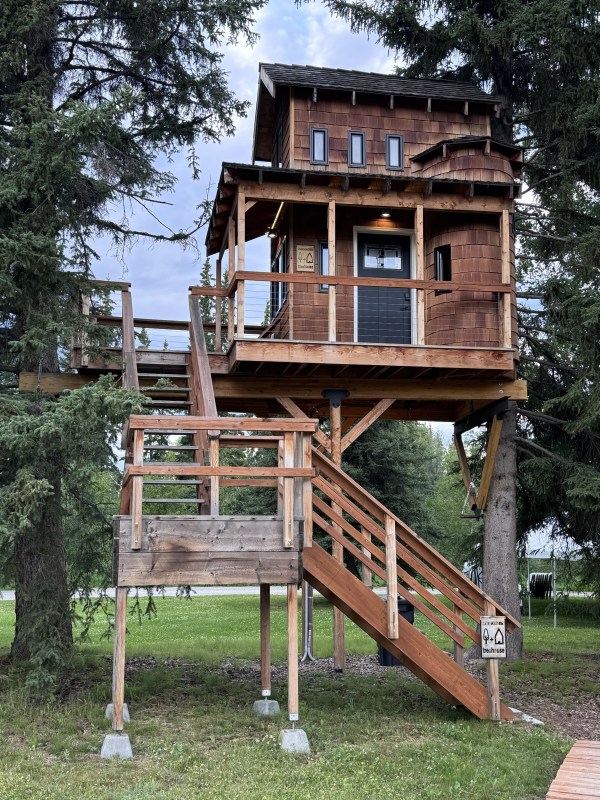
Our lodging for the night was the Chickadee Treehouse, a cozy little hideaway tucked among the trees in Fairbanks. After the immense scale of Denali, stepping into such a small and thoughtfully designed space felt like entering a different kind of Alaska adventure.
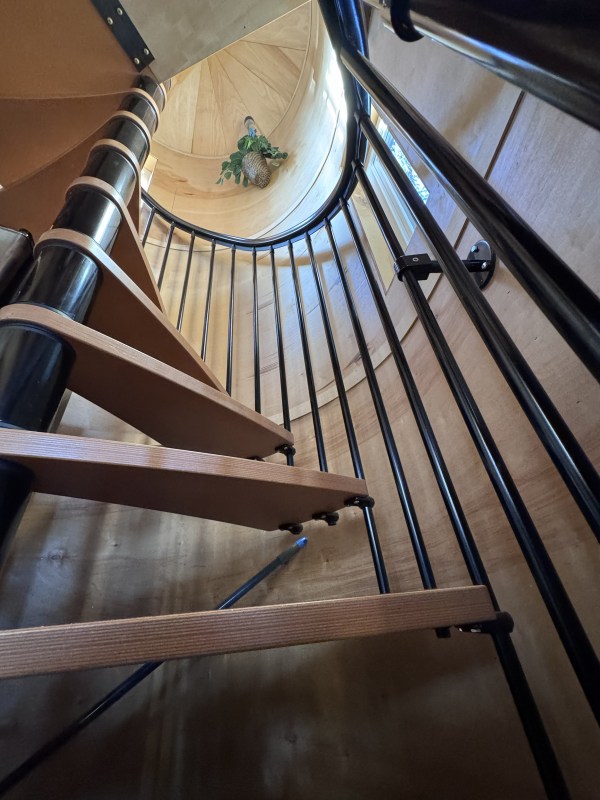
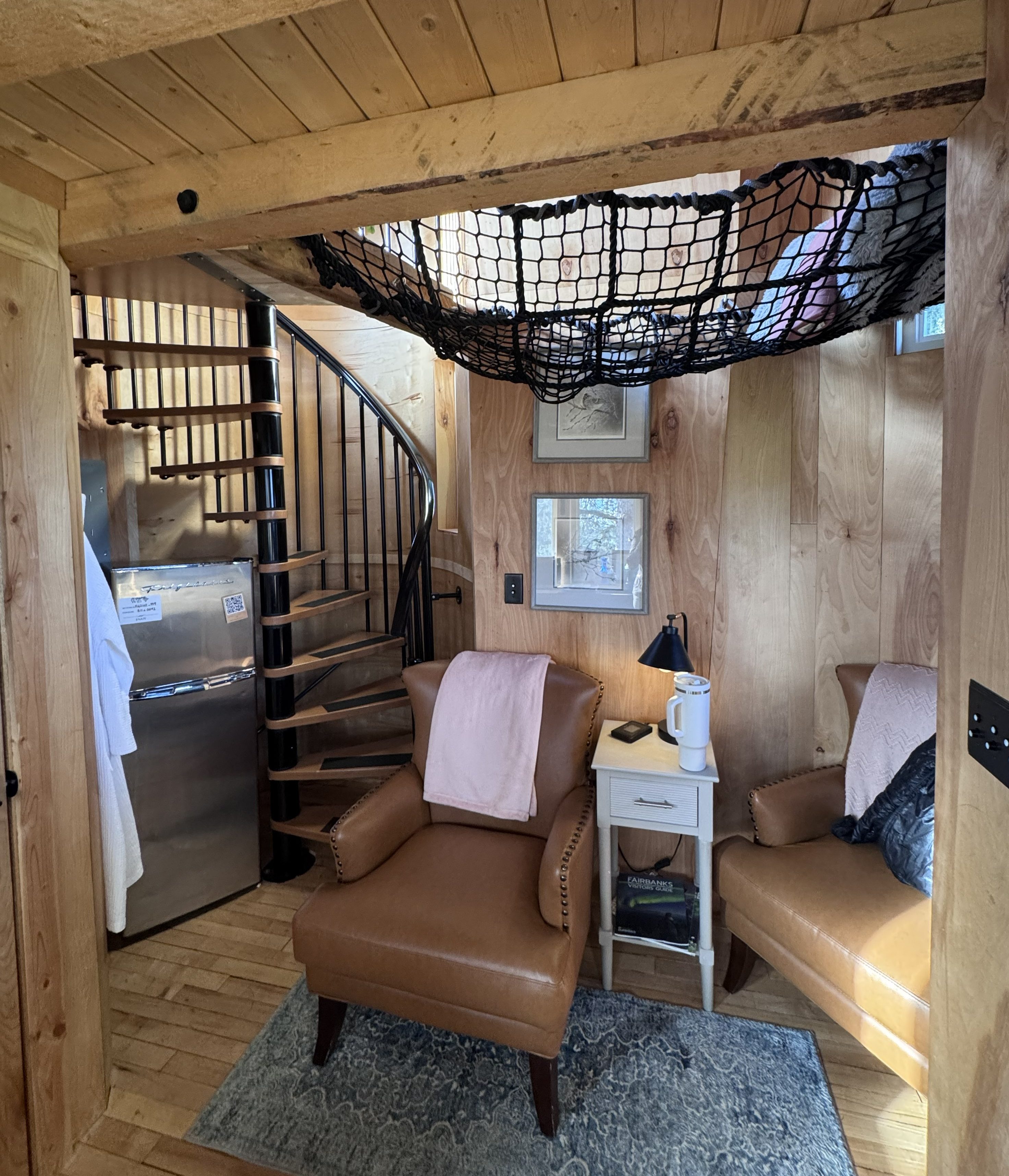
The treehouse was full of charm. A spiral staircase led to the loft, where a hammock stretched beneath the roof. Bill quickly claimed it as the perfect place to relax while eating the cannoli we had picked up from a local pizza restaurant. Downstairs, I found a comfortable sitting nook where I could open my journal and capture the details of the day before they began to blur together—the moose in the brush, the distant grizzly, caribou crossing the river flats, and the excitement of the sled dogs waiting to run.
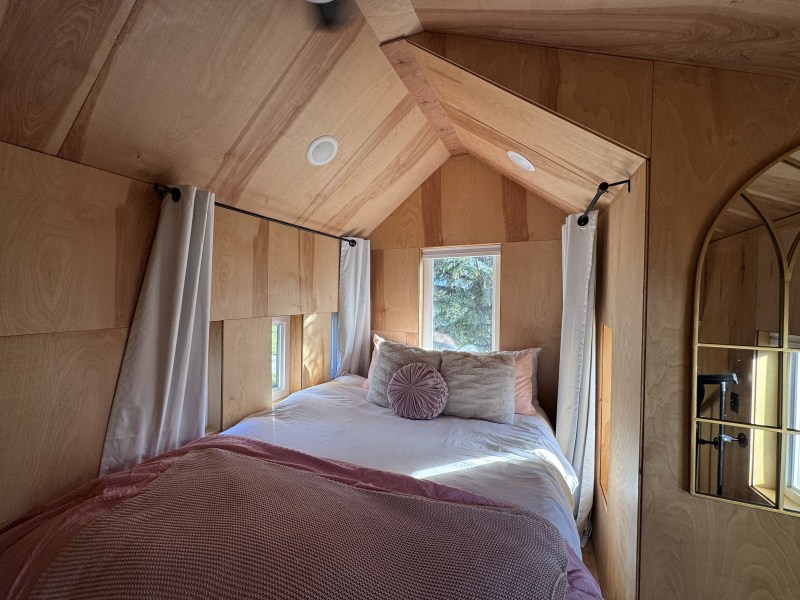
We had hoped to use the hot tub and sauna, but our long day left too little time for either. By then, the soft bed was more appealing. I sat down and seemed to sink straight into it, grateful for a comfortable place to rest before the next stage of the expedition.
We had come to Alaska expecting towering mountains, wildlife, and remote roads. I had not expected sleeping in a treehouse to become one of the trip’s sweetest surprises, yet that was part of what made it so memorable. Not every favorite travel moment comes from a dramatic landscape or a carefully planned stop. Sometimes it is simply the delight of discovering that you are never too old to feel excited about spending the night in a treehouse.
That evening gave us a brief pause between two very different versions of Alaska. Behind us was Denali’s tundra wilderness. Ahead waited the Dalton Highway and the long road toward the Arctic.
For one night, though, we were content to remain tucked among the trees.
From My Field Journal
July 12, 2026 · Evening · Chickadee Treehouse
Today felt like a classic Denali day—wildlife across the tundra, braided rivers, low clouds, snow-streaked mountains, and a much longer bus ride than I expected. We made it to Mile 43, but the four-and-a-half-hour trip meant giving up our planned hike so we could return in time for the sled dog demonstration.
I thought the wildlife would be the highlight, especially after seeing a moose, caribou, ptarmigans, a porcupine, and a distant grizzly. Instead, it was the canine rangers. Learning how they haul supplies, break trail, and help protect the park through temperatures far below zero made them feel like such an important part of Denali.
Now we are tucked into the Chickadee Treehouse. Bill is relaxing in the loft hammock with his cannoli, and I have a quiet little nook to write about the day. Tomorrow begins the next stage of the journey—the Dalton Highway and the road north toward the Arctic.
EXPEDITION SNAPSHOT
THE ROUTE Trapper Creek → Denali National Park → Fairbanks
ROAD TRAVELED George Parks Highway and Denali Park Road
LANDSCAPE Boreal forest, alpine tundra, braided river valleys, low clouds, and snow-streaked mountains
PARK EXPERIENCE Green transit bus from the Denali Bus Depot to East Fork at Mile 43, with stops near Savage River and the Teklanika River
WILDLIFE Porcupine, moose, distant grizzly bear, ptarmigans, caribou, and an arctic ground squirrel
MEMORABLE MOMENTS Reaching Mile 43, watching wildlife from the transit bus, meeting Denali’s working sled dogs, and ending the day in the Chickadee Treehouse
STAYED Chickadee Treehouse in Fairbanks
CONDITIONS Mild and partly sunny near the park entrance, then cooler, windier, and cloudier deeper in the park
CHAPTER HIGHLIGHT The wildlife and landscapes revealed Denali’s immense wilderness, but its working sled dogs revealed the heart of the park.
Next Chapter
The following morning, we would leave Fairbanks and turn north onto one of the most remote roads in North America. The Dalton Highway would carry us alongside the Trans-Alaska Pipeline, across the Arctic Circle, and deep into a landscape where services were scarce and the wilderness seemed to stretch without end.
Next: The Dalton Highway—north through pipeline country toward Coldfoot and the Arctic.





Leave a Reply