From Denali to the fjords—and the adventure we never expected
July 16–18, 2026
The Mountain Reveals Herself
For much of our Alaska journey, Denali had behaved exactly as Denali often does—appearing when she felt like it and disappearing just as quickly. We had already rearranged plans around the mountain more than once. Our original flightseeing tour had been canceled because of weather and then rescheduled, and the possibility of finally making that flight was the reason we had driven the entire Dalton Highway back to Fairbanks in one long day instead of taking the two days we had originally planned.
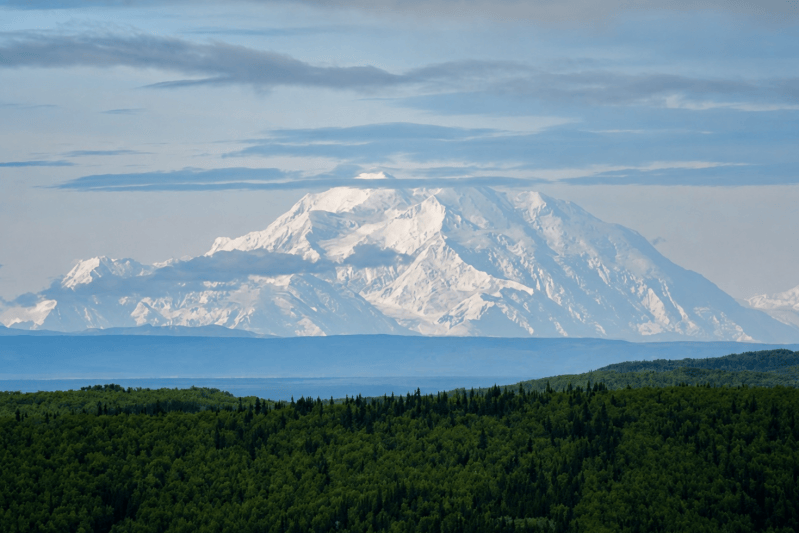
So, on the morning of July 16, tired from nearly twelve hours on the Haul Road but still hopeful, we left Fairbanks and pointed the Jeep south toward Talkeetna. Somewhere along the highway, Denali gave us the view we had been waiting for. The entire mountain rose above the landscape, completely visible in a way we had not yet seen during the trip. At 20,310 feet, Denali is the highest peak in North America, but numbers do little to capture what it feels like when the mountain finally emerges from behind the clouds.
After days of glimpses and partial views, seeing Denali so clearly felt like a gift—and wonderfully ironic. We were driving toward Talkeetna because we hoped to see the mountain from the air, yet one of our best views came unexpectedly from the highway.
By then, I had learned that Denali could not be scheduled. We could make reservations, rearrange an itinerary, drive hundreds of miles, and watch the forecast as carefully as we wanted, but the mountain would reveal herself on her own terms. That morning, she finally did.
By the time we reached Talkeetna, however, the clouds had returned. The flight operator could still take us up, but once again the aircraft would remain beneath the cloud layer rather than circling the summit. We had already experienced Denali from the ground and traveled deep into the national park by bus. The summit flight was what we had been holding out for, and it simply was not going to happen.
This time, though, the disappointment did not feel quite as heavy. We still would have loved the flight, but Denali had already given us a moment that no reservation could have promised.
One More Afternoon in Talkeetna
Instead of immediately deciding what came next, we did something much simpler: we went to lunch.
Talkeetna had become familiar from our earlier visit, and returning gave me another chance to try something I had missed the first time. The town has a fun collection of food trucks and casual eateries, and I had been thinking about the salmon cakes at The Salmon Spot since our previous stop. This time I finally got them, and they were worth coming back for.
Over lunch, we talked through our options. The easiest choice would have been to make the four-hour drive back toward Fairbanks, but Seward had been one of those places Bill hoped we might somehow fit into the trip, and our original schedule had never left enough room.
Now there was room.
Instead of returning north, we turned south toward the coast. Within a short time, our itinerary had changed completely. We were no longer chasing Denali; we were heading toward Seward and our first glimpse of coastal Alaska.
Following Turnagain Arm
We passed through Anchorage and continued south along the Seward Highway, where the road begins tracing Turnagain Arm beneath the steep Chugach Mountains. After days of Interior forests, tundra, and the immense openness of the Dalton Highway, we were suddenly traveling beside coastal water with mountains rising directly from the shore.
Turnagain Arm is the eastern branch of Cook Inlet, and that connection made the landscape feel strangely familiar. Earlier in the trip, we had followed the Susitna River along the Denali Highway and later stood in Talkeetna where the Susitna, Chulitna, and Talkeetna Rivers come together. Farther downstream, the Susitna empties into Cook Inlet. Now, hundreds of miles later, another piece of that same watershed had appeared along our route.
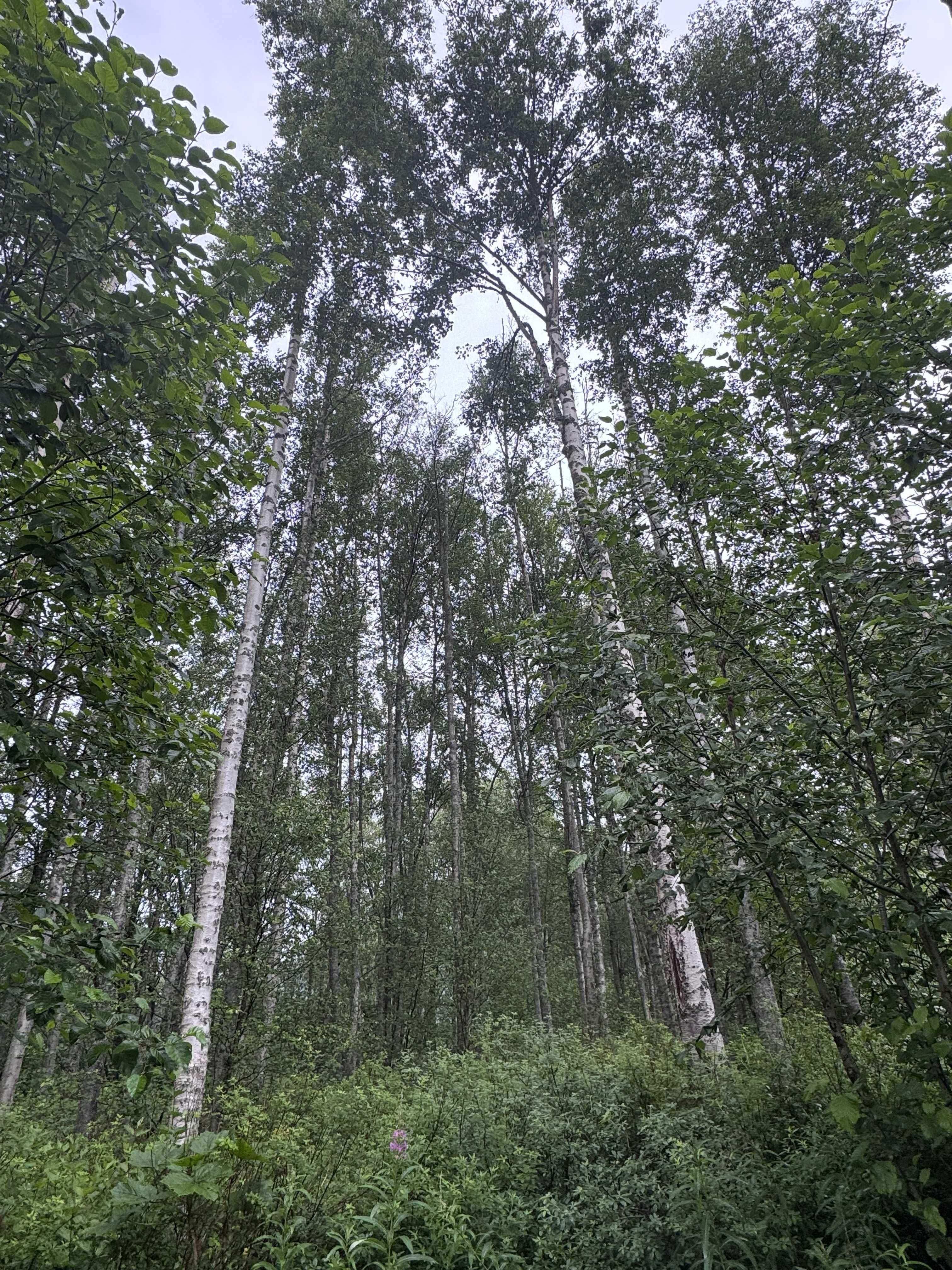
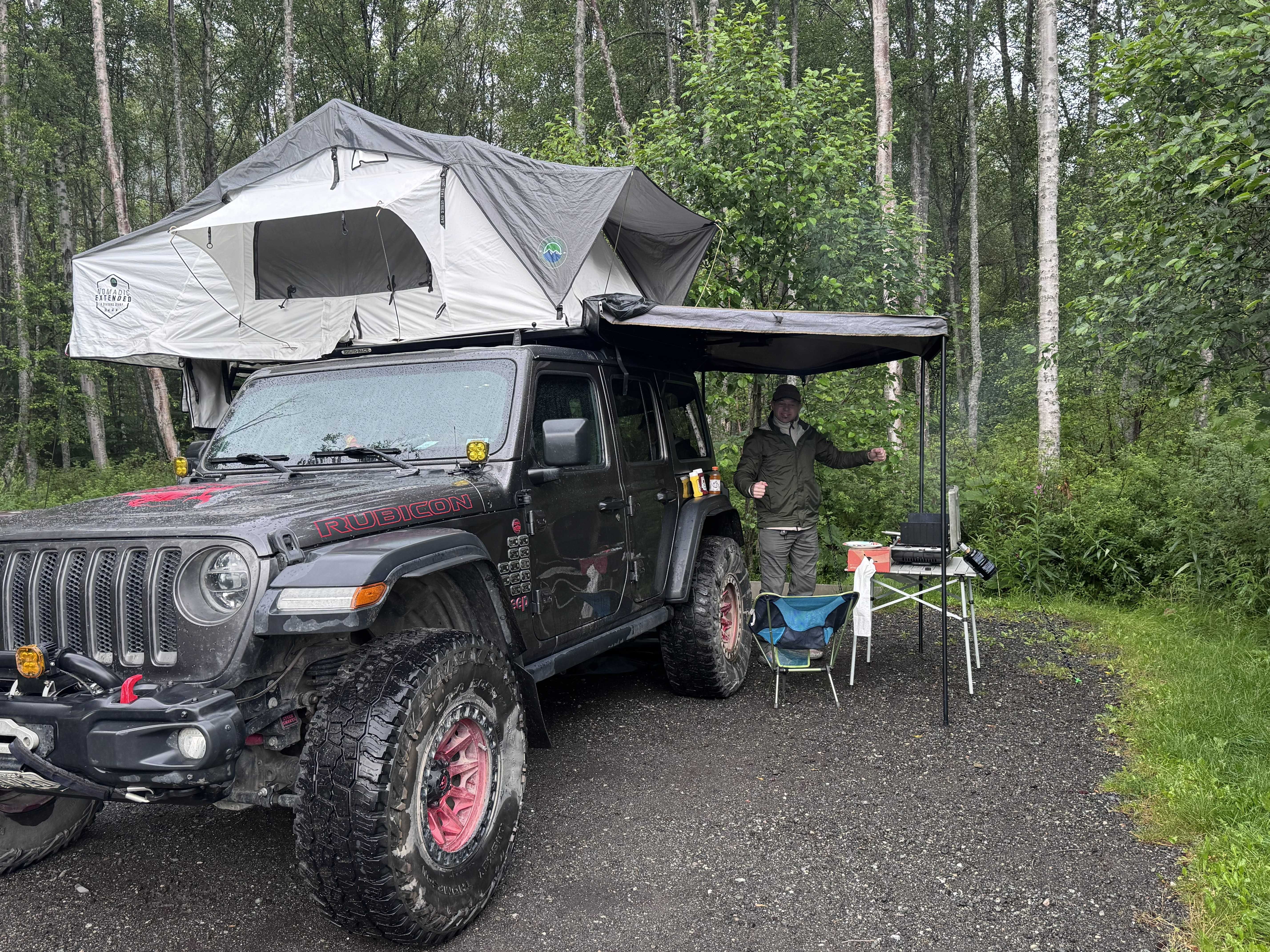
Rain followed us south that evening, and rather than push all the way to Seward, we stopped at Bird Creek Campground in Chugach State Park. The campground was wonderfully lush, tucked into thick spruce and birch forest only a short distance from Turnagain Arm. We set up the rooftop tent beneath the trees while Bill cooked dinner under the awning.
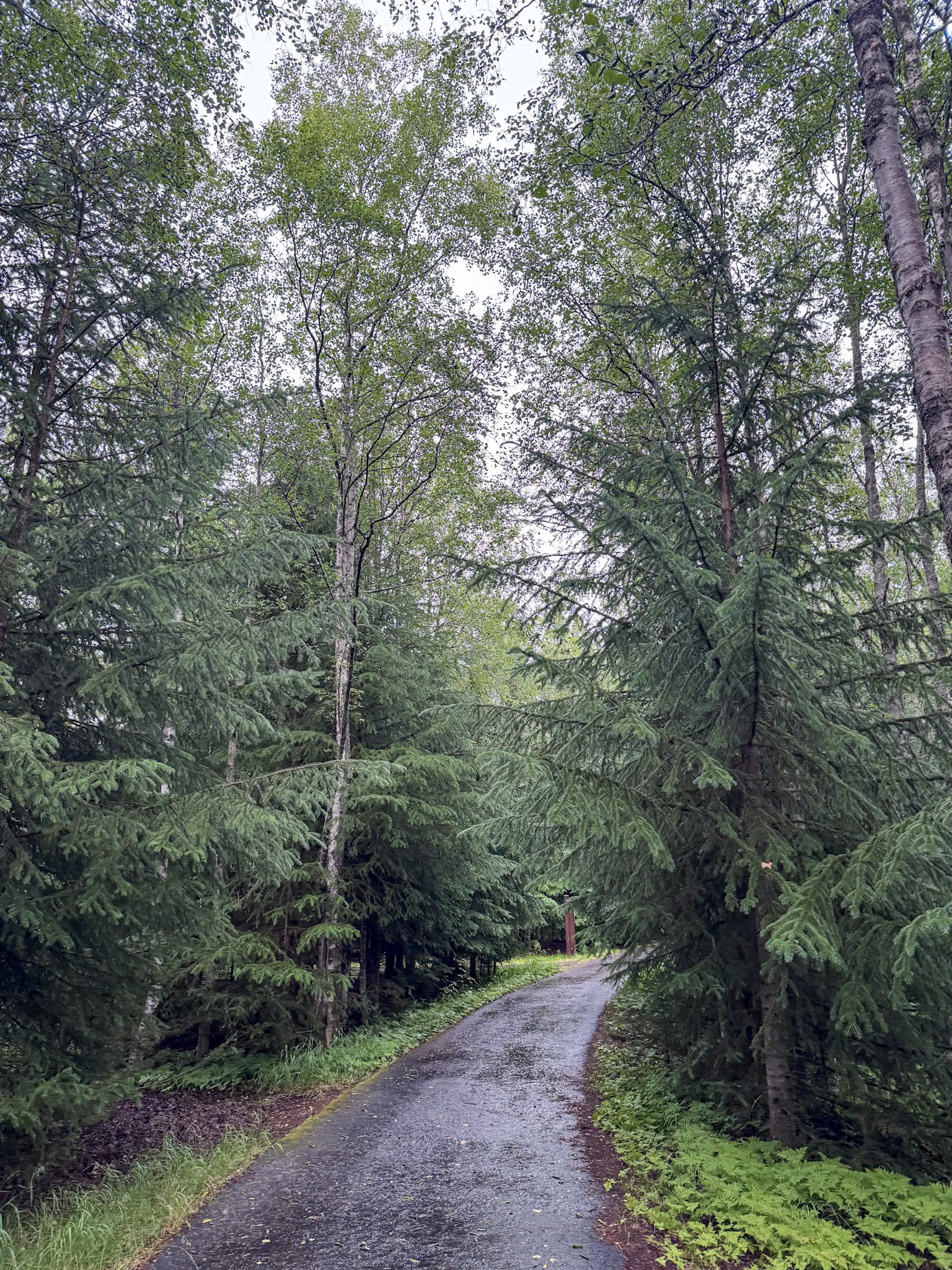
Afterward, we walked a section of the Indian-to-Girdwood pathway. At first, the paved trail carried us through dense forest, with wet spruce branches arching overhead and ferns crowding the edges. Then the trees opened and the water appeared.
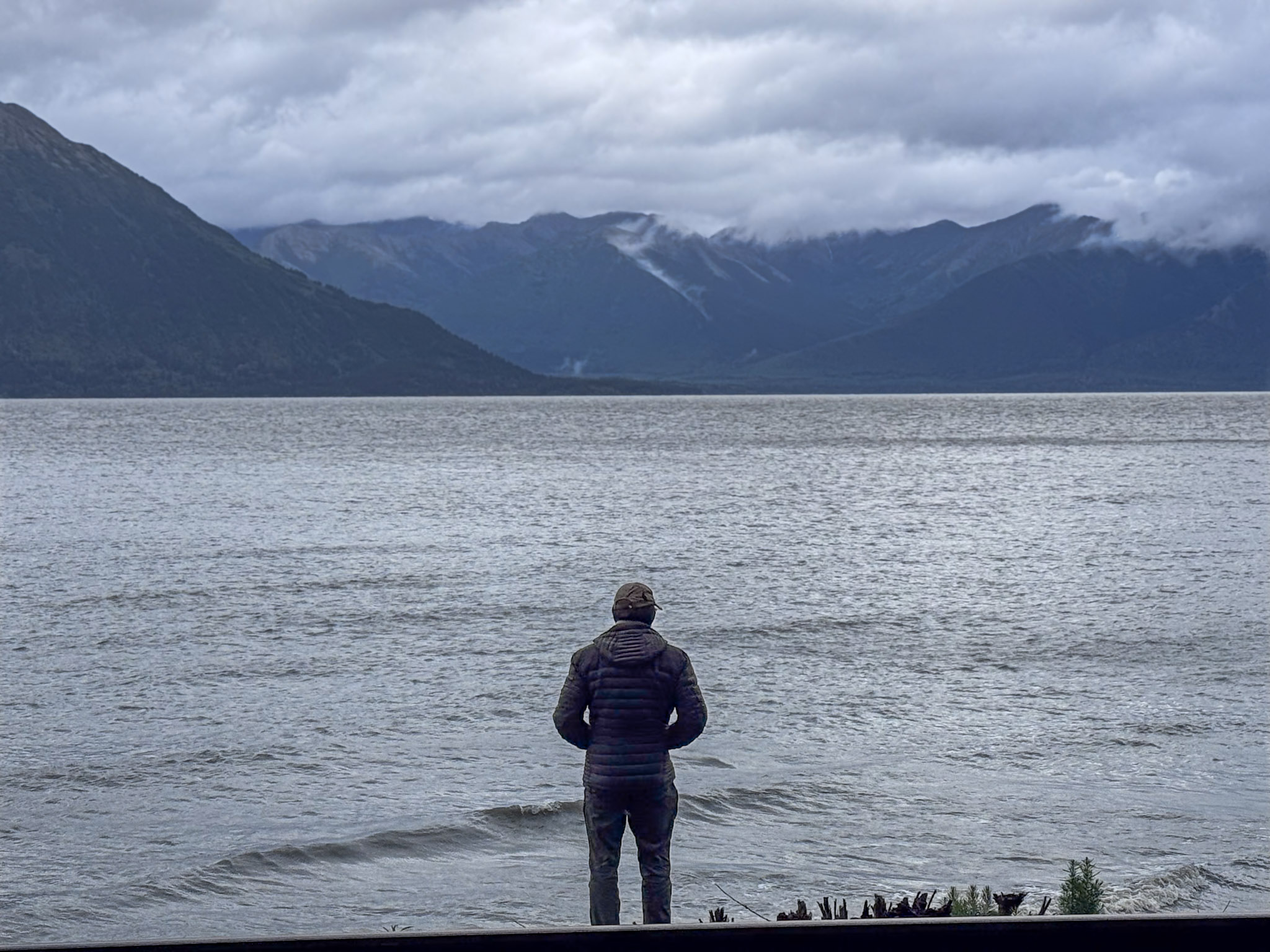
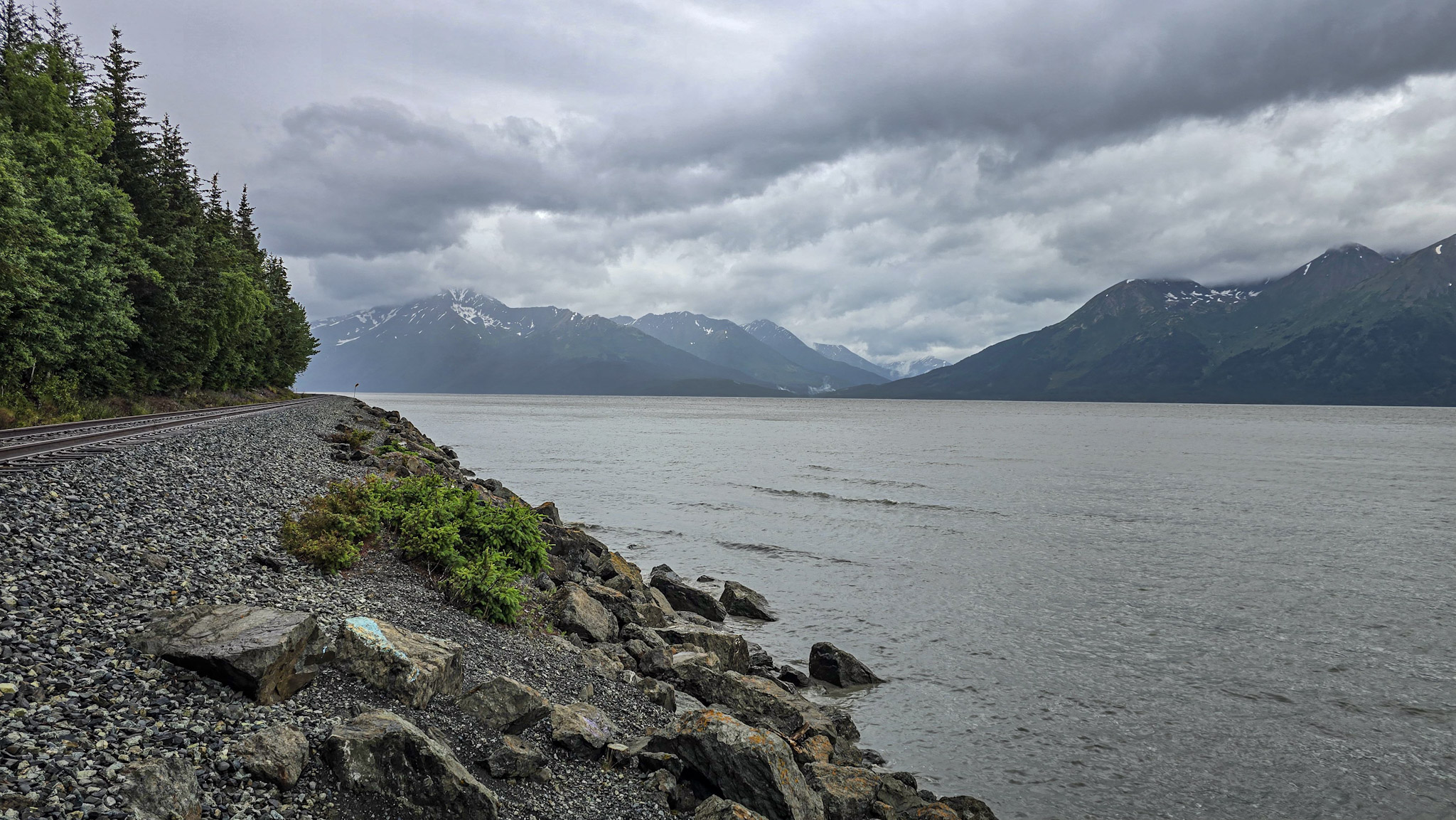
Turnagain Arm stretched beneath low clouds while dark mountains disappeared into mist on the opposite shore. The rocky beach dropped toward gray water, and the Alaska Railroad tracks followed the edge of the Arm. Looking east, the shoreline curved toward the narrow head of Turnagain Arm; in the other direction, the water opened toward Cook Inlet.
Bill stood quietly near the water for a while, looking across toward the cloud-covered mountains. After so many days defined by reaching somewhere—the Arctic Circle, Atigun Pass, Deadhorse, the Arctic Ocean—it felt good simply to stop and look.
The rain never completely left us, but it suited the landscape. By the time we returned to camp, the sound of it tapping lightly against the rooftop tent felt more comforting than inconvenient.
South to Seward
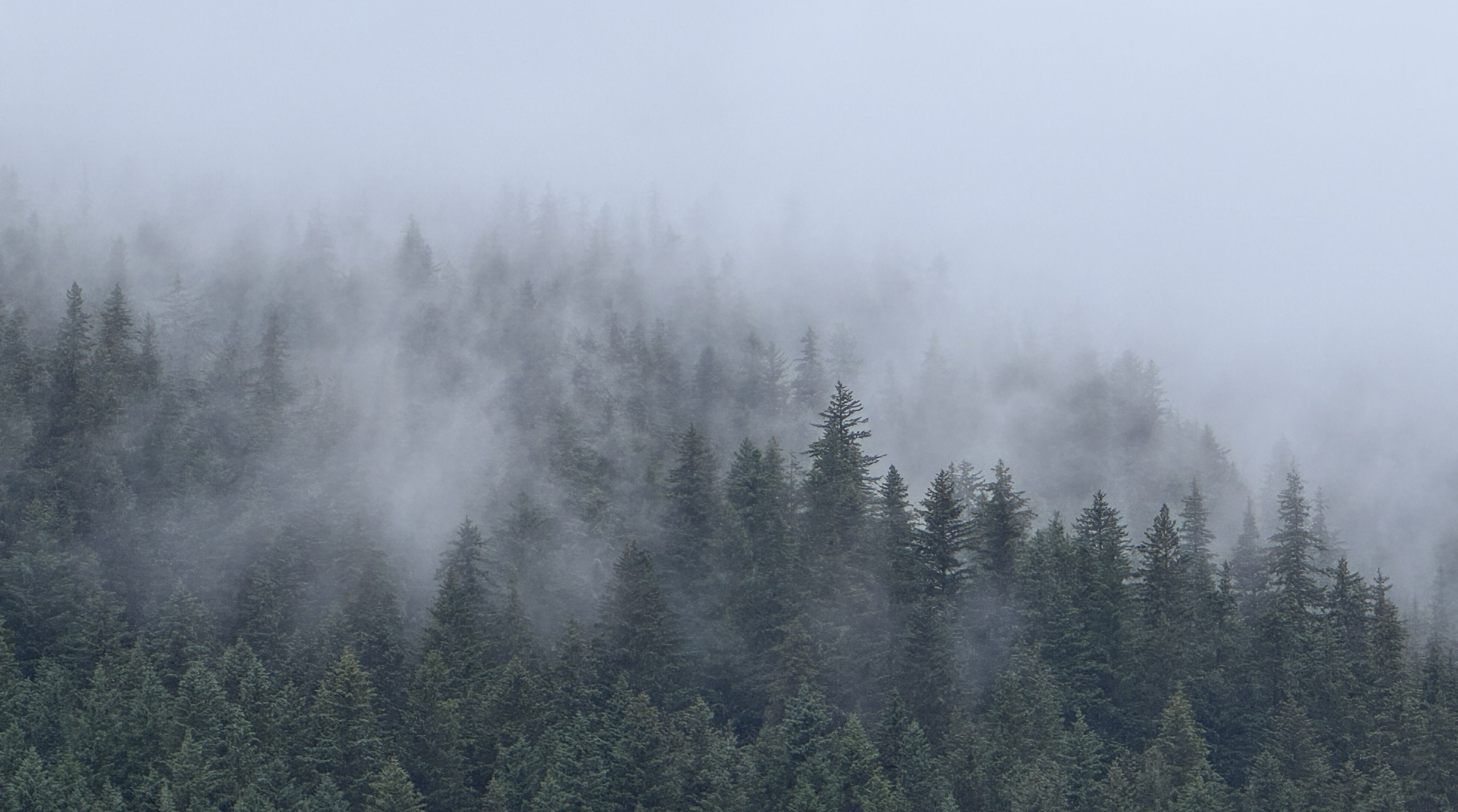
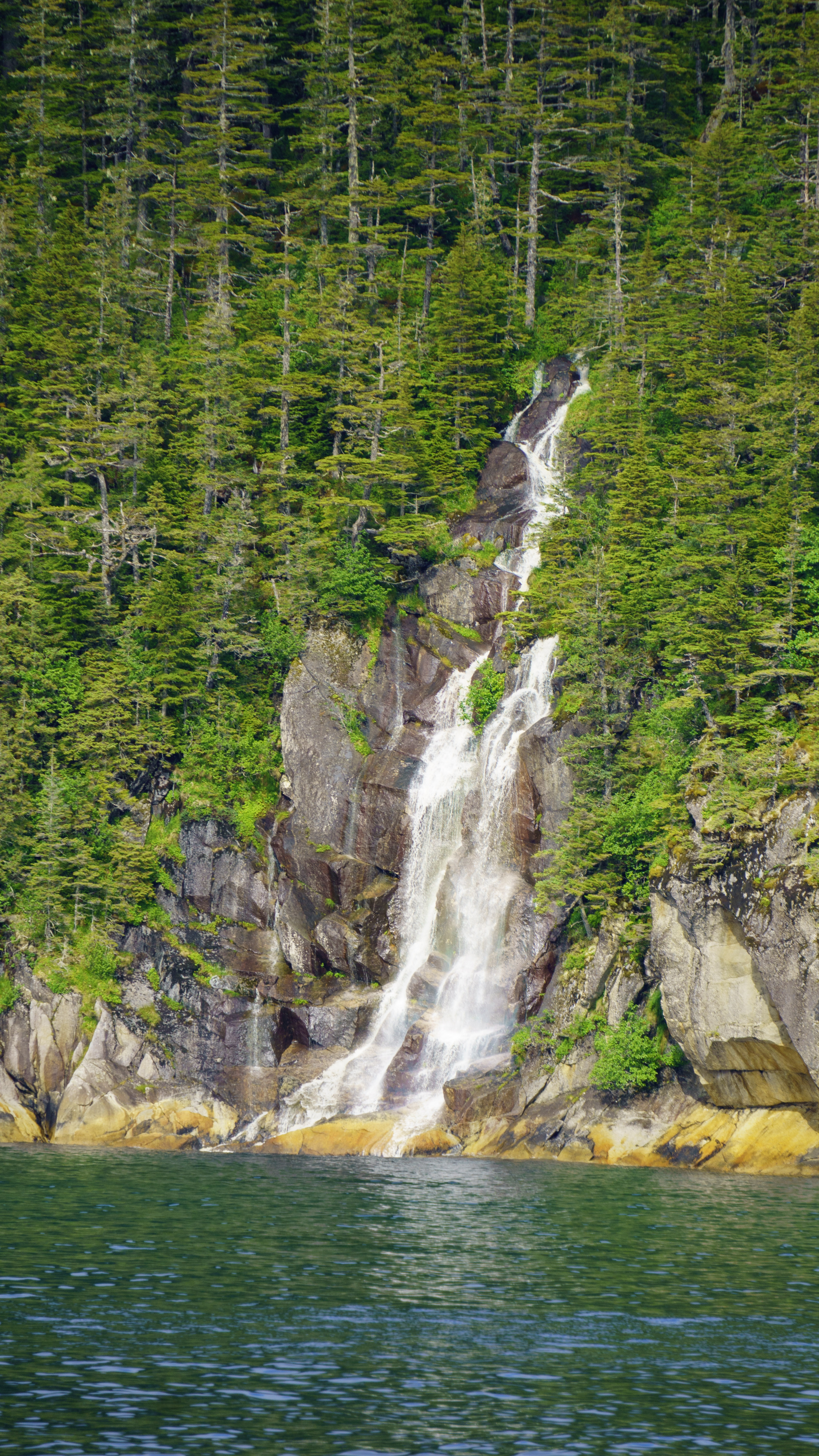
The next morning, I wished we had more time to explore Chugach State Park, but Seward was waiting. We packed the rooftop tent and continued onto the Kenai Peninsula, where forested mountains crowded close to the highway and waterfalls streamed down green slopes beneath low clouds.
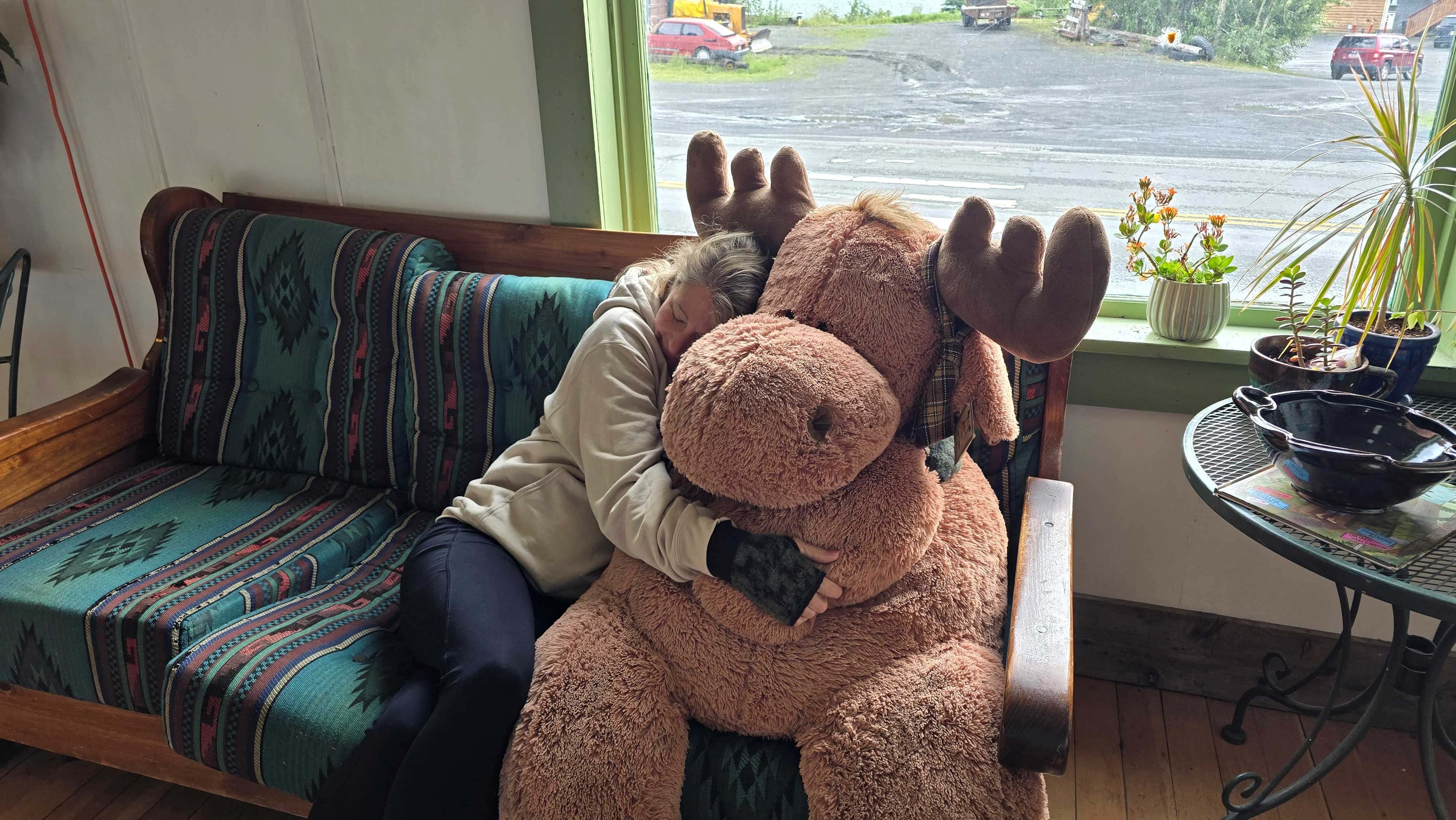
Along the way, we stopped in Moose Pass, a tiny community beside Upper Trail Lake. At Estes Brothers Grocery we grabbed coffee and pastries and found one more reason to linger—a giant stuffed moose sitting inside. Naturally, I had to give it a hug. After thousands of miles of wildlife watching, it seemed only fair that one moose finally held still long enough for a photo.
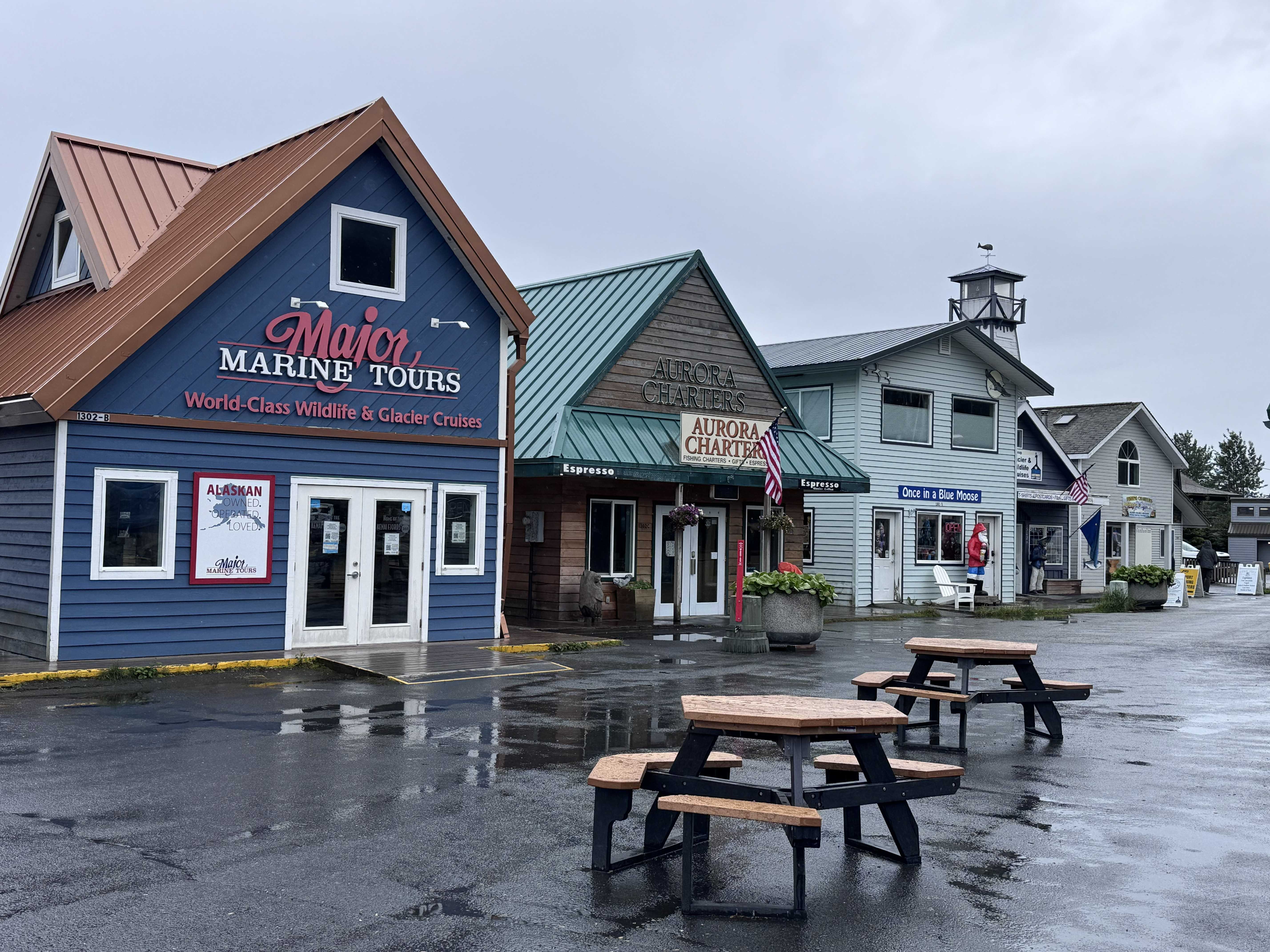
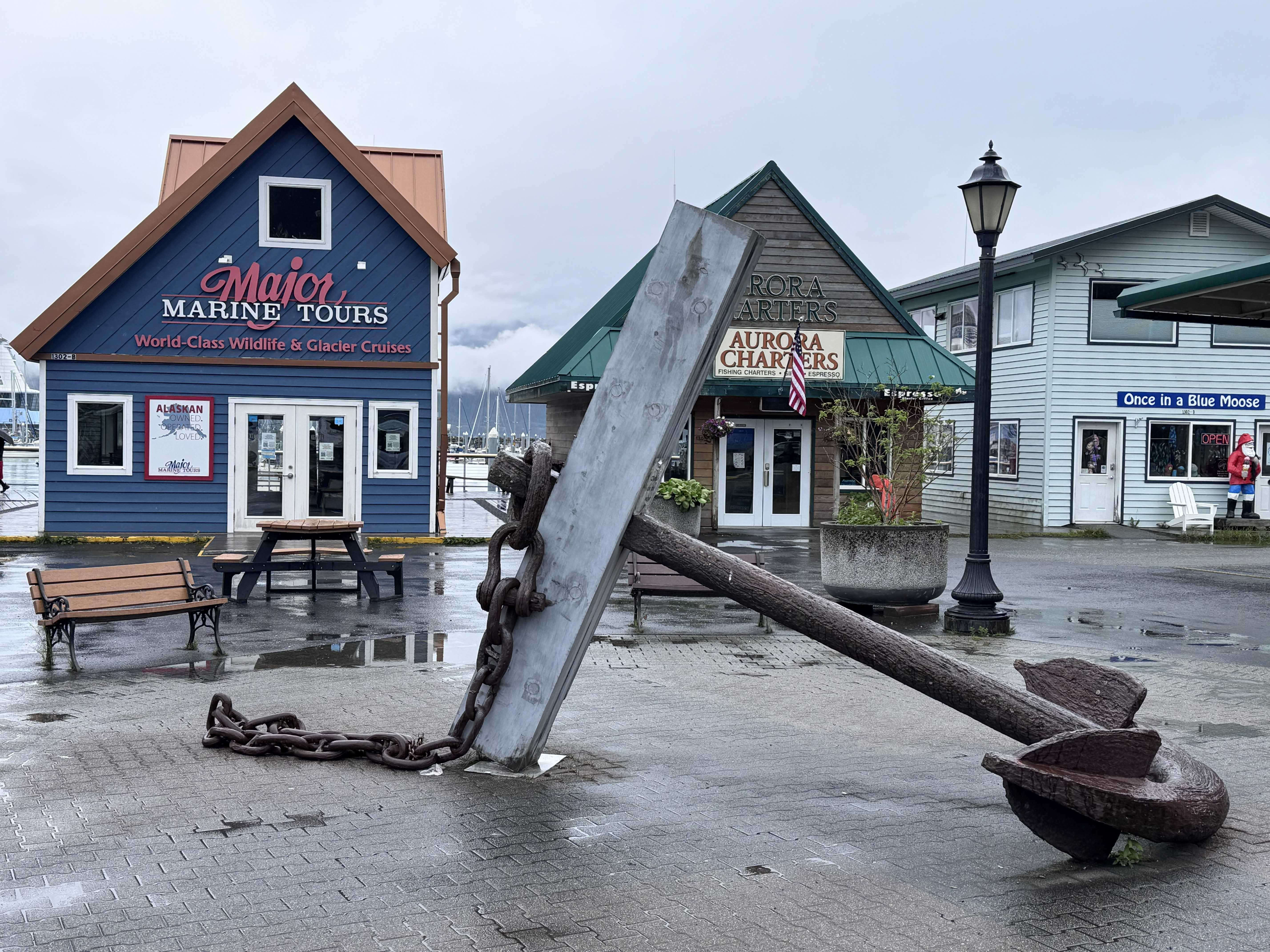
Not long afterward, we reached Seward. The town felt immediately different from the Interior communities we had visited. Colorful storefronts lined the streets near the harbor, while homes and small gardens gave the residential areas their own charm. Fishing and tour businesses sat beside cafés, shops, and weathered buildings, and nearly everything seemed connected in some way to the water. Gray skies and wet pavement deepened the colors, while steep mountains rose behind town and Resurrection Bay opened beyond the marina.
Only a few days earlier we had been at the Arctic Ocean. Now we had reached Alaska’s southern coast, more than 2,300 shared miles into our journey.
A Harbor Town and a Load of Laundry
Reality had also caught up with us. We needed clean clothes.
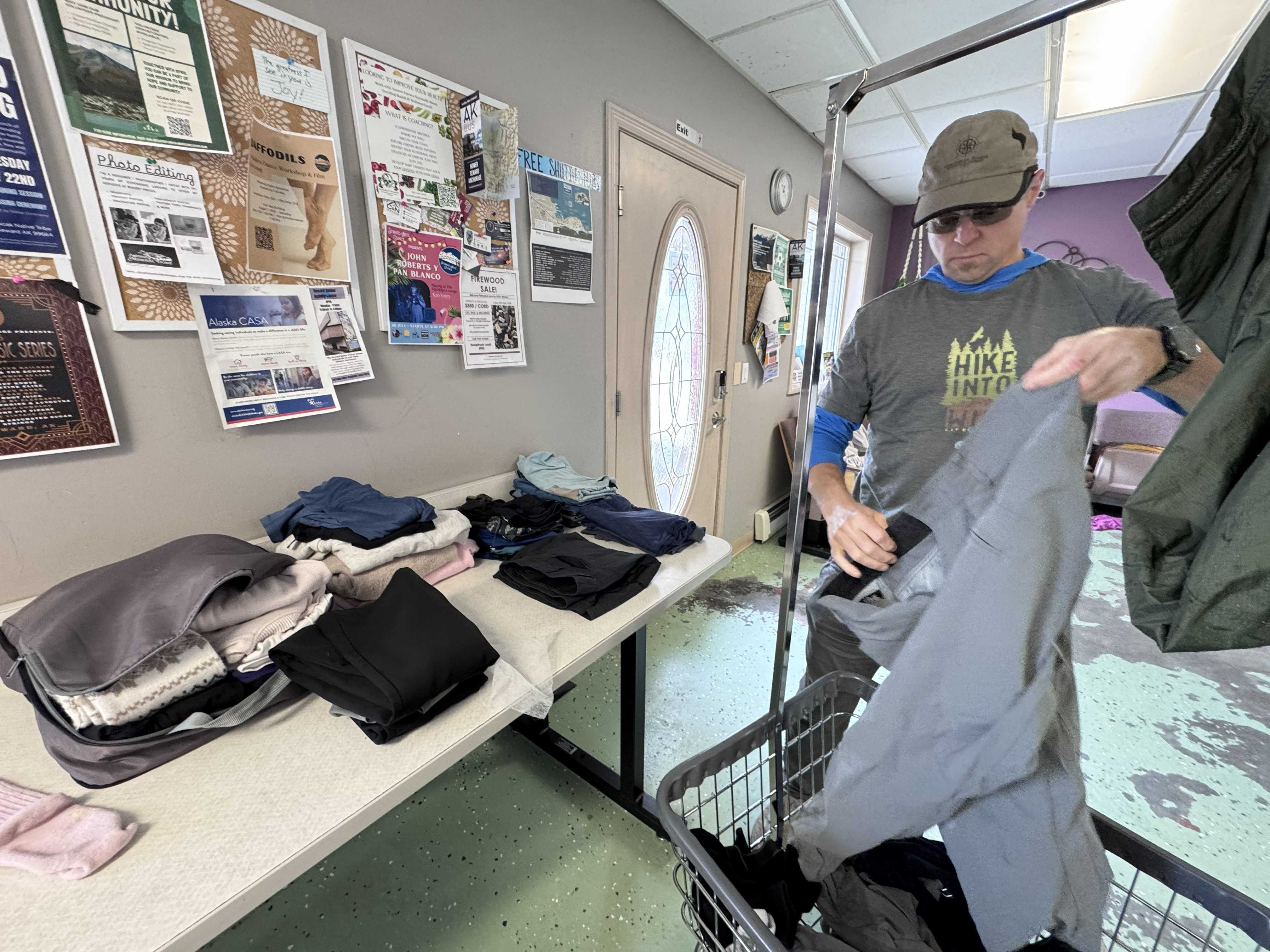
After hundreds of miles through rain, dust, tundra, campground nights, and the Dalton Highway, our layers were overdue for washing. With several hours before our afternoon cruise, we started the machines and used the downtime to explore town.
It did not take long to realize there was much more to Seward than its marina and glacier cruises. Fourth Avenue has been at the center of the town’s commercial life since Seward was founded in 1903, when the community developed as an important transportation gateway between Alaska’s coast and Interior. Interpretive signs paired historic photographs with the same streets we were now walking, making it easy to picture the railroad workers, businesses, and families that once filled them.
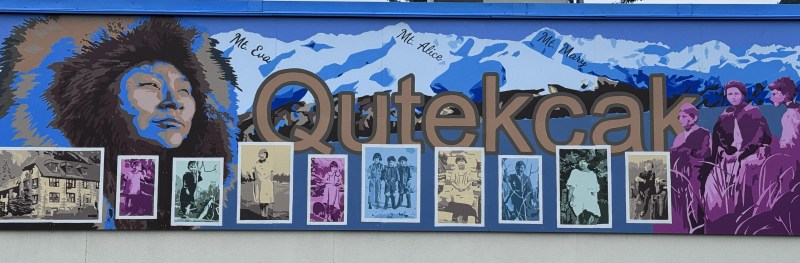
Seward’s story began long before the railroad. At Northern Roots Trading Post, connected with the Qutekcak Native Tribe, handmade jewelry, clothing, carvings, and artwork reflected the heritage of Seward’s Native community. Nearby, a colorful Qutekcak mural brought together faces, family photographs, mountains, and community history—a reminder that the modern harbor town rests within a much older cultural landscape.
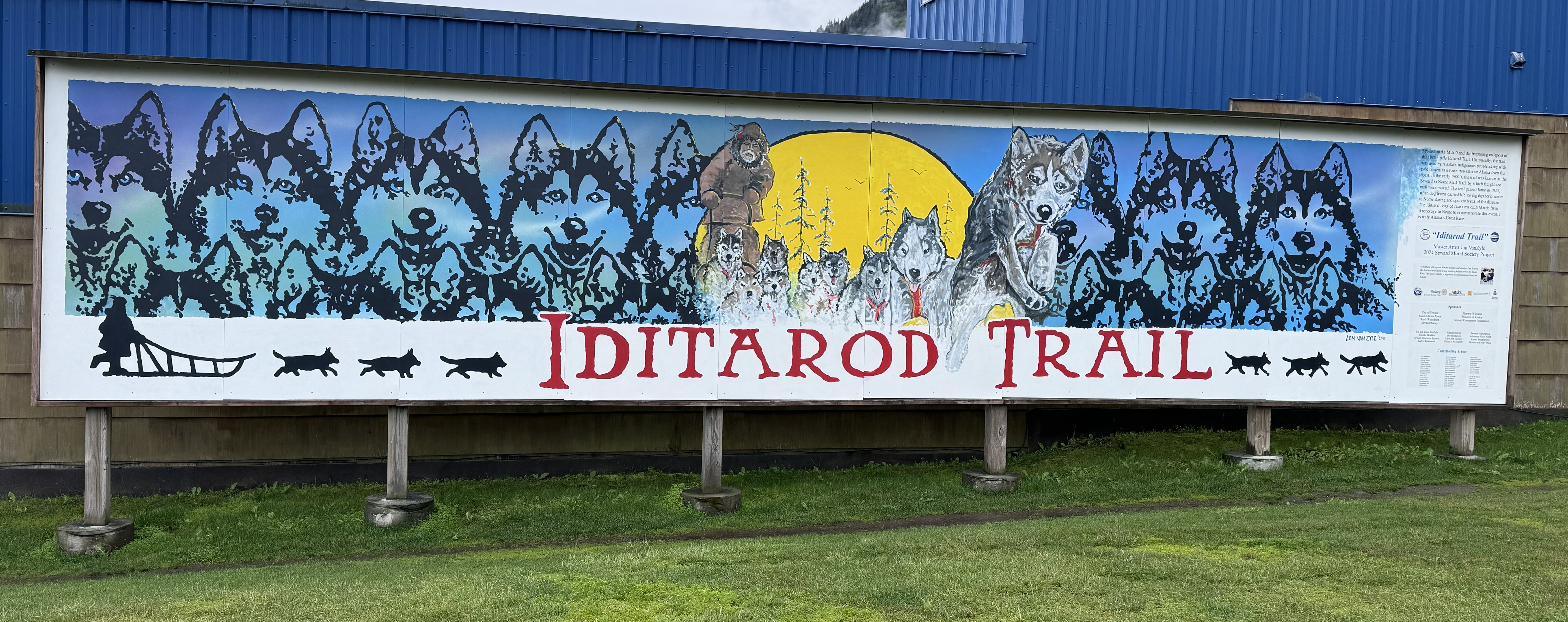
A little farther along, we reached another piece of Alaska history: Mile 0 of the Iditarod Trail. Long before the name became synonymous with the modern sled-dog race, the trail connected Alaska Native travel routes and later carried mail, freight, miners, and travelers between the coast and the Interior on its roughly 1,000-mile route toward Nome.
Earlier in the trip, we had met Denali’s working sled dogs and learned how dog teams still help rangers travel through winter wilderness. Standing at the southern end of the historic Iditarod Trail gave that tradition another layer of meaning.
Between those discoveries, we browsed shops, stopped for ice cream and cookies, and periodically checked the laundry. It was an ordinary travel chore woven into a surprisingly interesting morning.
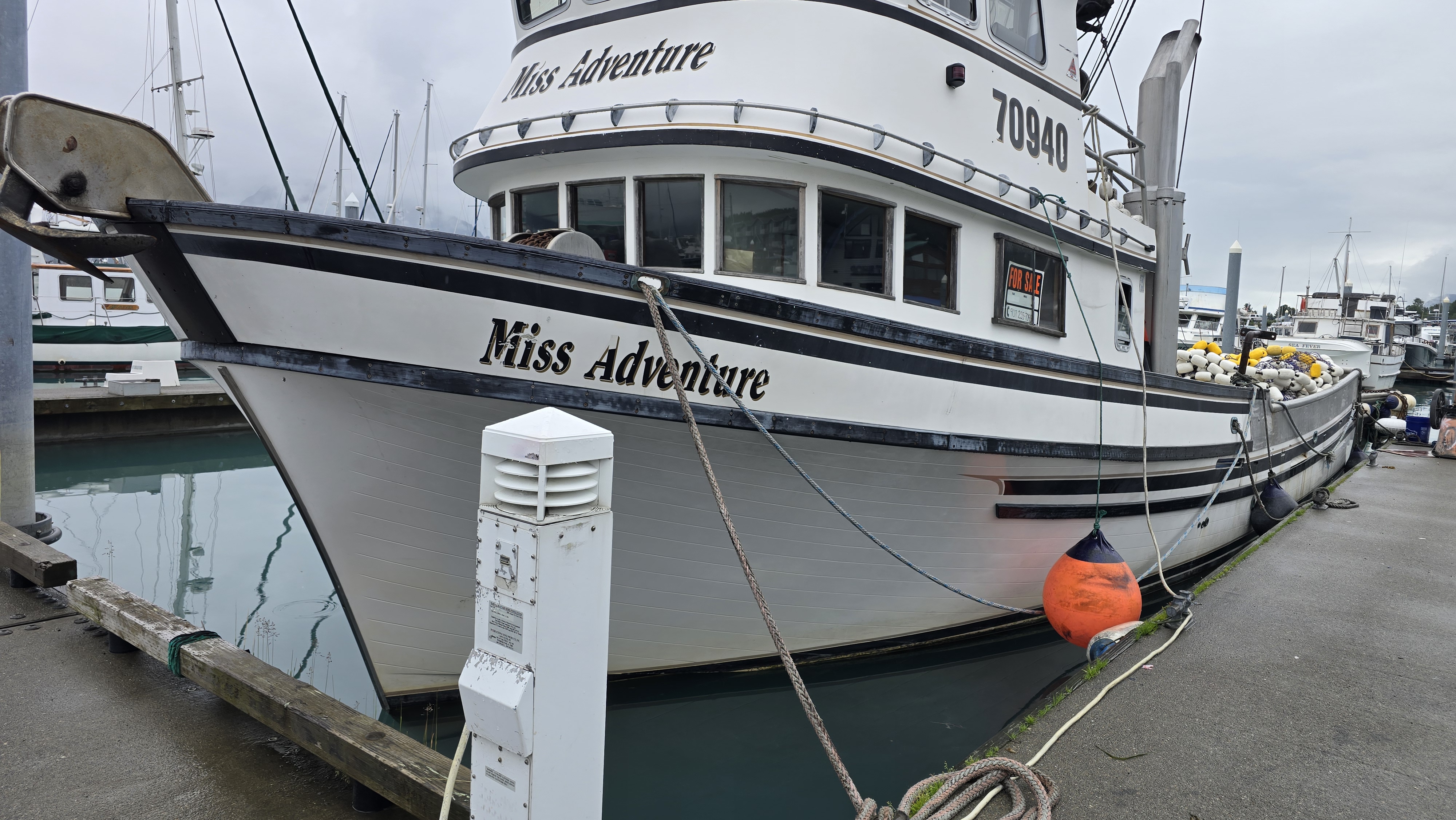
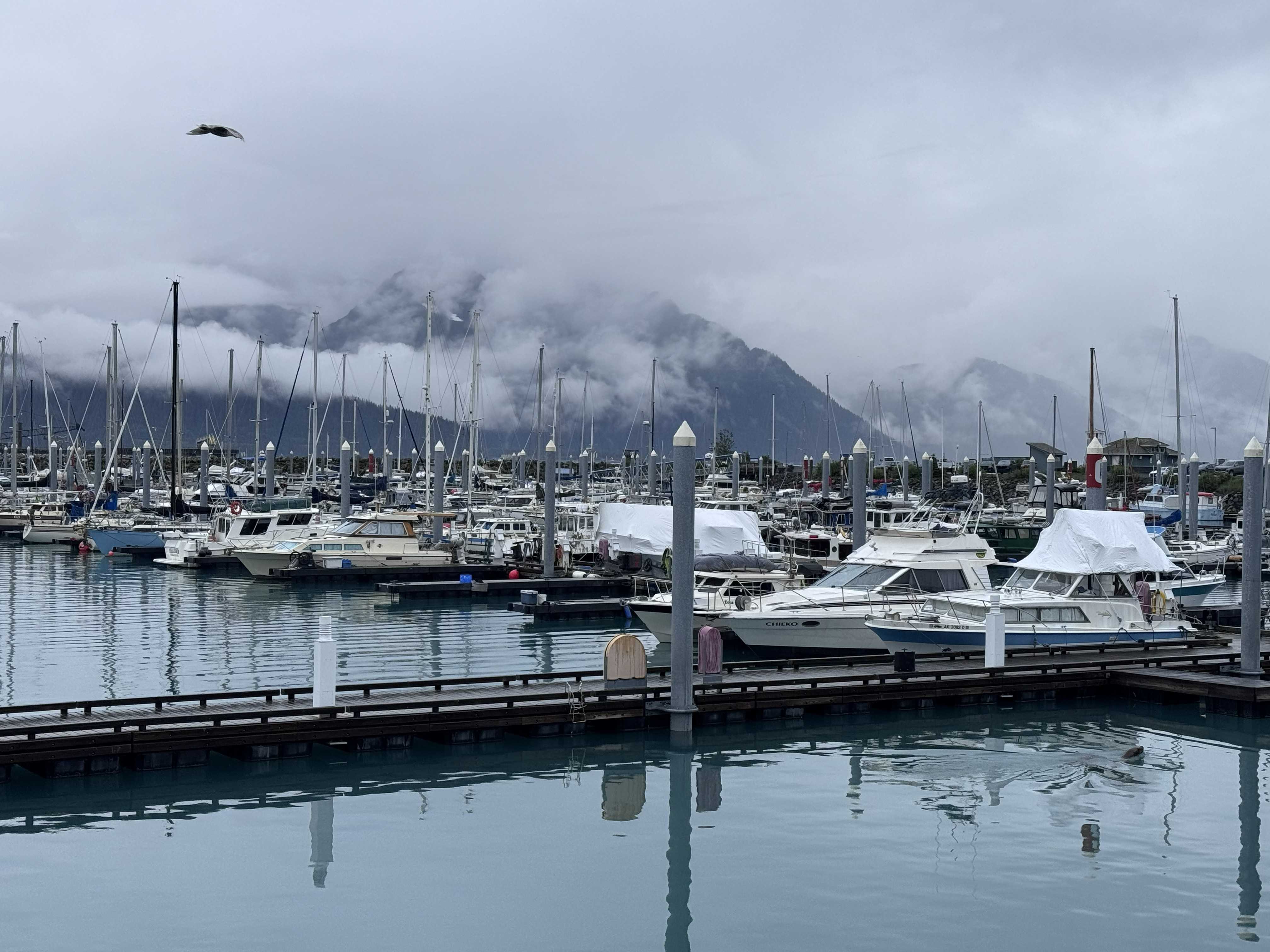
By early afternoon, we made our way toward the marina. Boats filled the slips beneath a cool gray sky, their reflections barely moving in the calm water while low clouds wrapped around the mountains behind them. The damp streets and misty peaks did not make Seward feel dreary; they seemed to belong to the coastal landscape.
Before long, the laundry was clean, the bags were repacked, and it was time to trade Seward’s streets for the water beyond the harbor.
Into Kenai Fjords
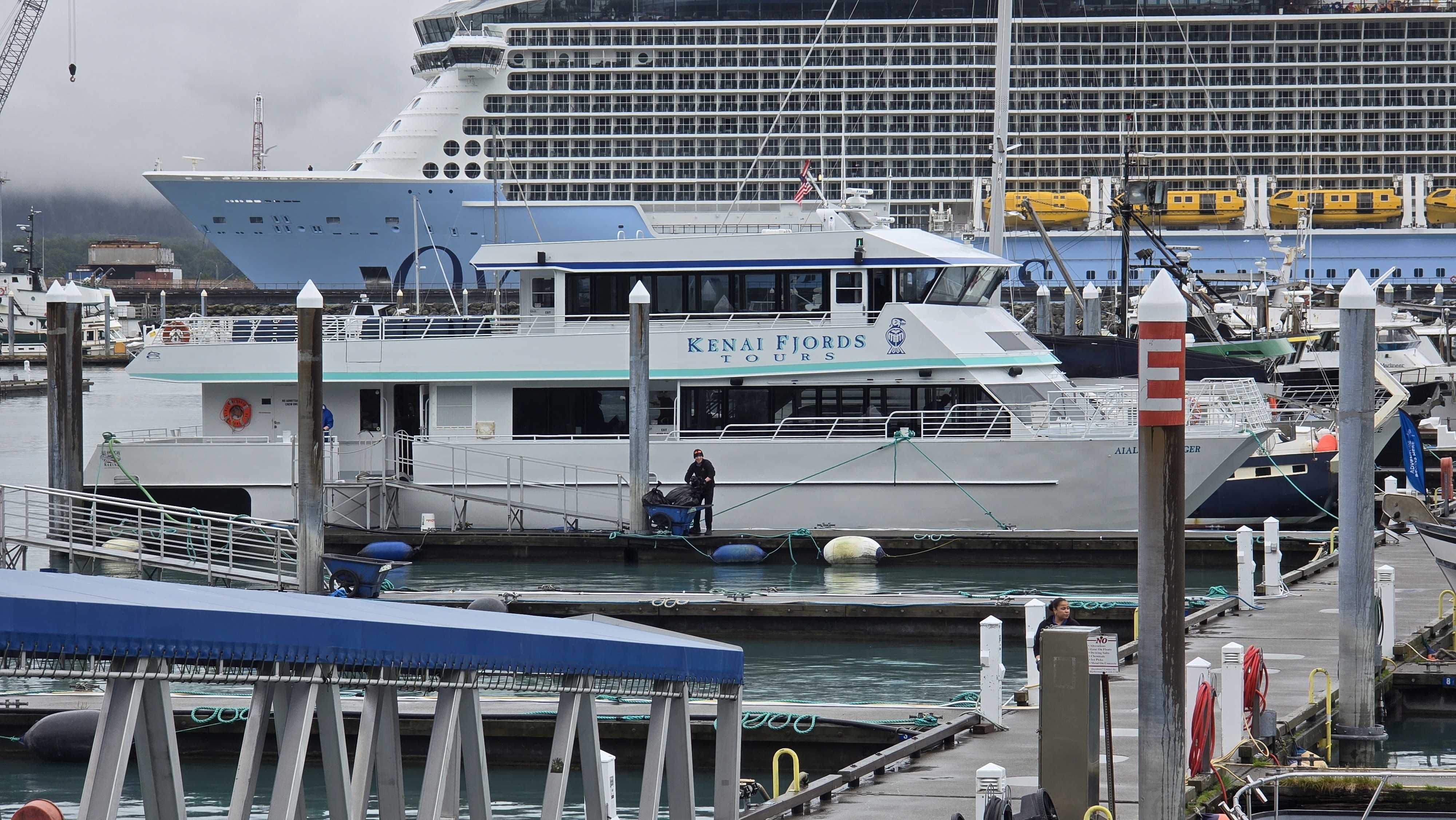
We boarded our boat for a six-hour dinner cruise that would carry us more than a hundred miles through Resurrection Bay and into Kenai Fjords.
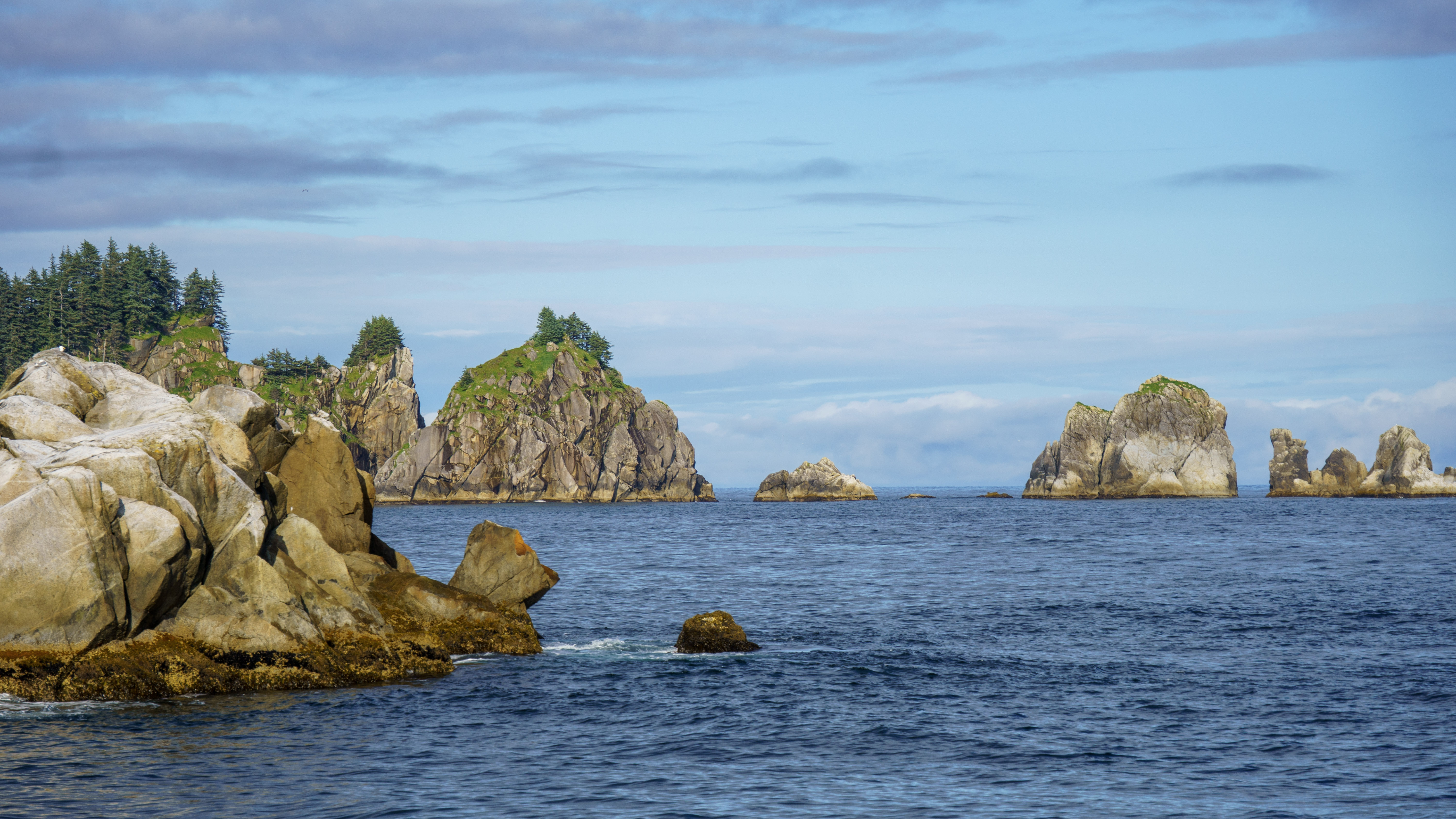
From our seats on the second deck, we watched Seward disappear behind us as steep mountains closed in along the water, their upper slopes still wrapped in clouds. The route eventually carried us around the outer coastline and into Aialik Bay, past rocky islands, narrow coves, sea cliffs, and glacier-carved valleys.
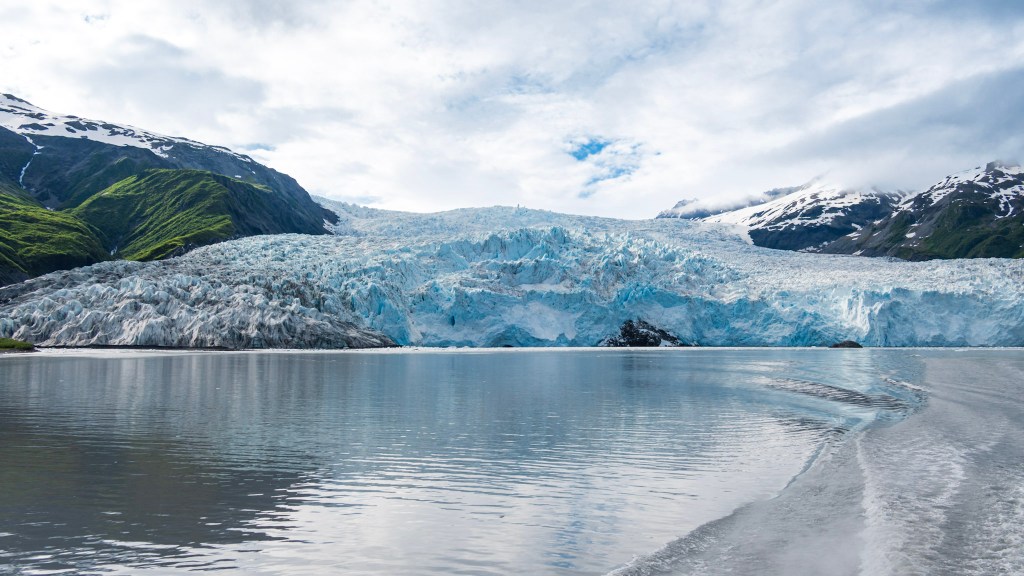
Much of Kenai Fjords National Park is shaped by the Harding Icefield and the glaciers flowing outward from it. Aialik Glacier, one of the park’s tidewater glaciers, would become the icy centerpiece of our journey, but wildlife began appearing long before we reached it.
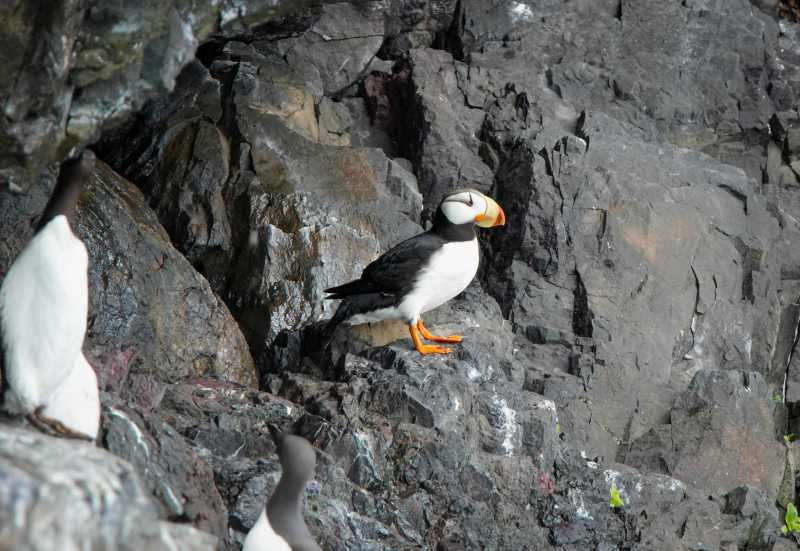
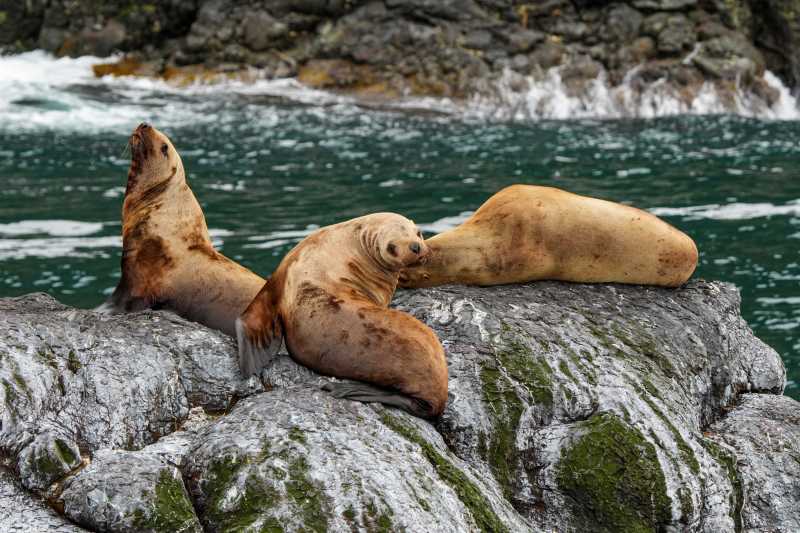
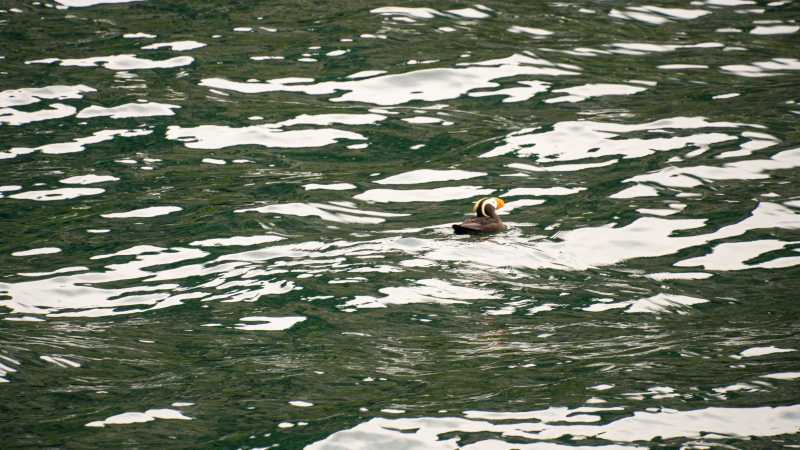
Steller sea lions lounged across rocky outcrops while bald and golden eagles watched from the coast and gulls circled above the boat. Then came the puffins. I had never seen one in the wild before, and I was surprised to learn that we could see both horned and tufted puffins here. Horned puffins flashed bright bills and white faces, while tufted puffins were unmistakable with their sweeping golden plumes.
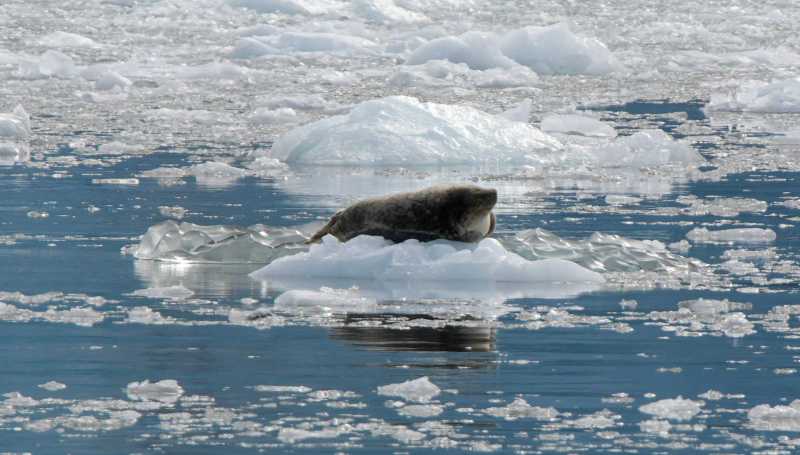
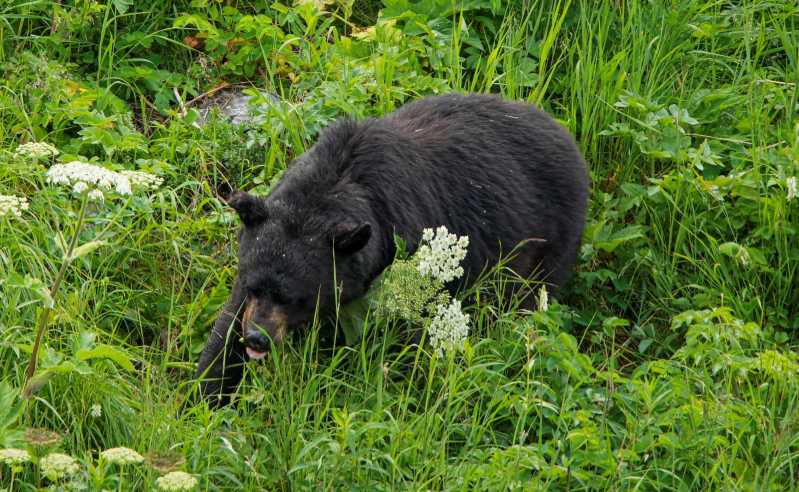
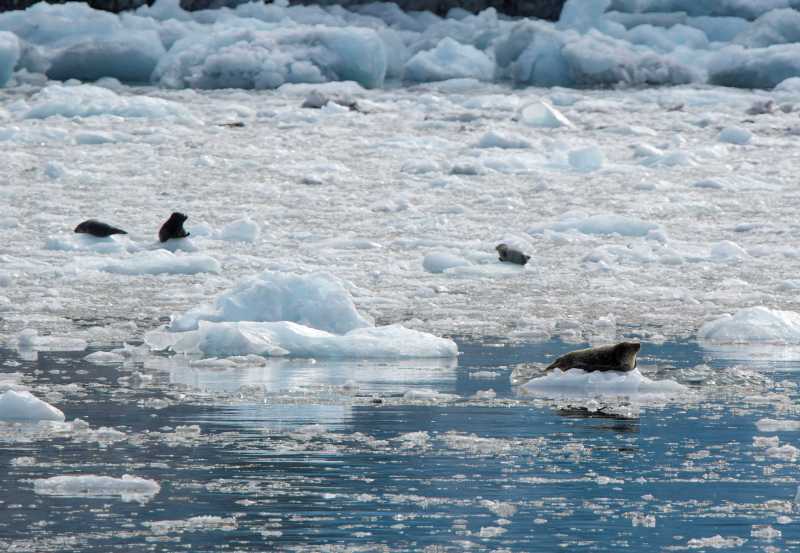
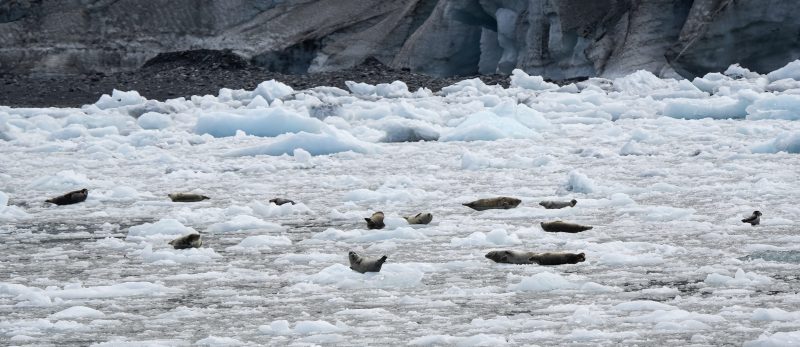
Dall’s porpoises sliced through the water beside the boat with astonishing speed. A black bear moved through thick vegetation along the shoreline, and closer to the glaciers, harbor seals rested among floating pieces of ice.
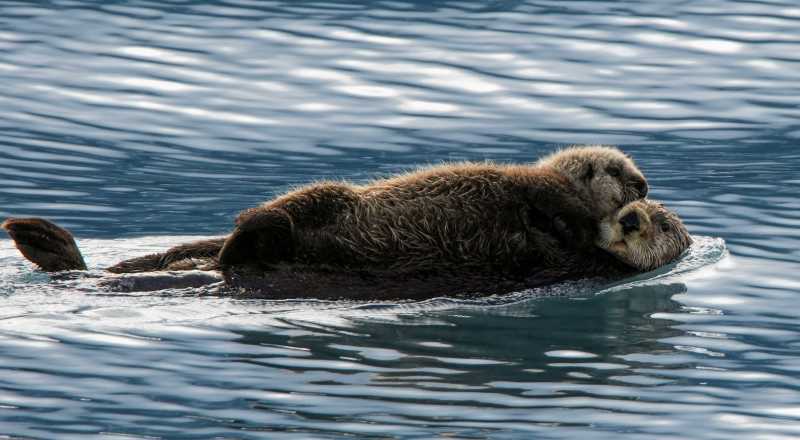
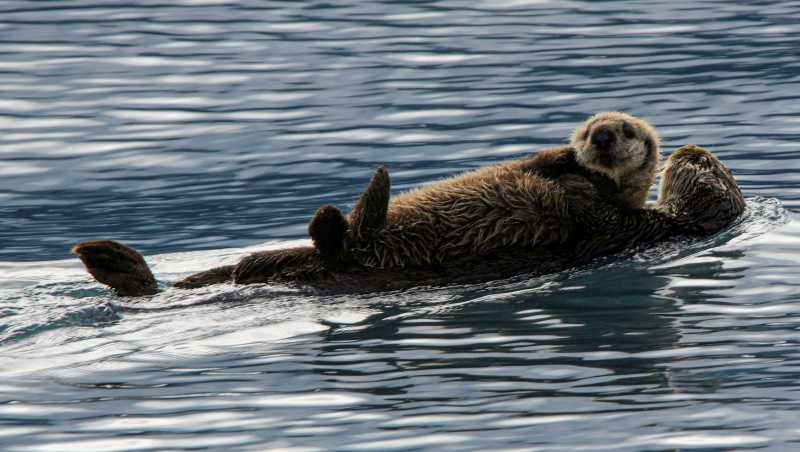
One of the quietest encounters became one of my favorites: a mother sea otter floating on her back with her pup resting against her. Amid the movement of porpoises, puffins, and seabirds, there was something wonderfully peaceful about watching the pair drift together.
Every new announcement seemed to pull us toward another window or another side of the boat. All the while, the landscape unfolded around us—dark cliffs, waterfalls, forested slopes, rocky islands, and glacier-fed water shifting between deep blue and milky turquoise.
Horned Puffin
Steller sea lions
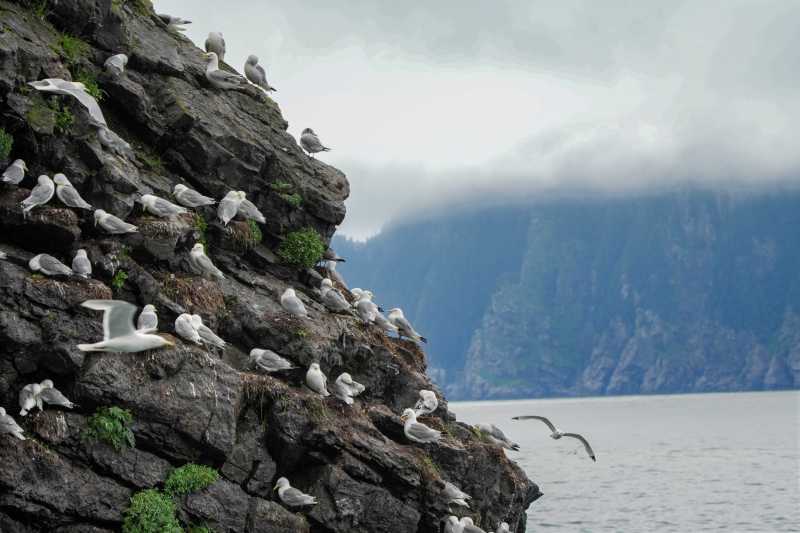
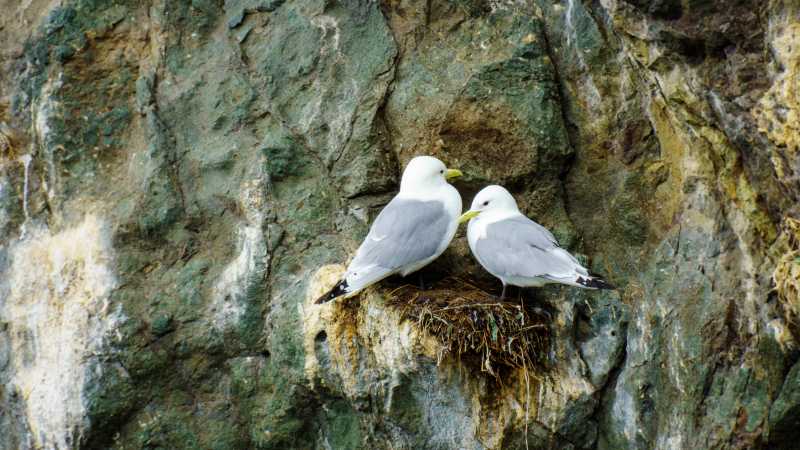
Black-legged kittiwakes
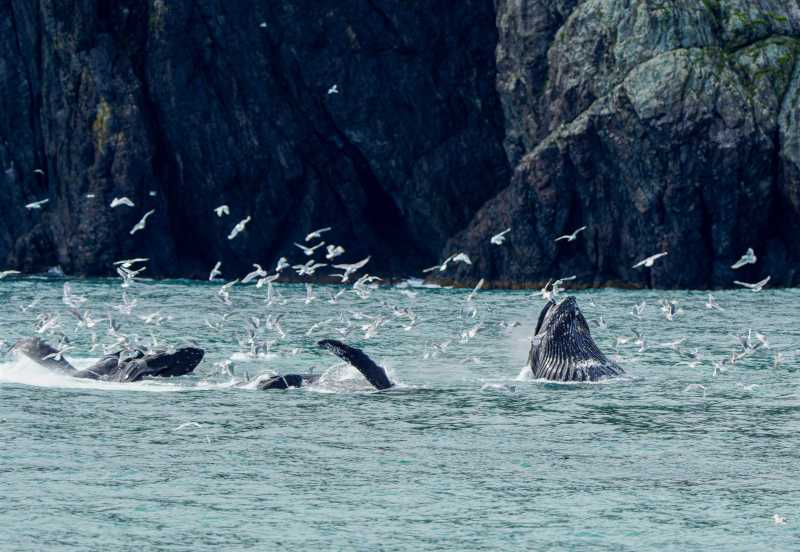
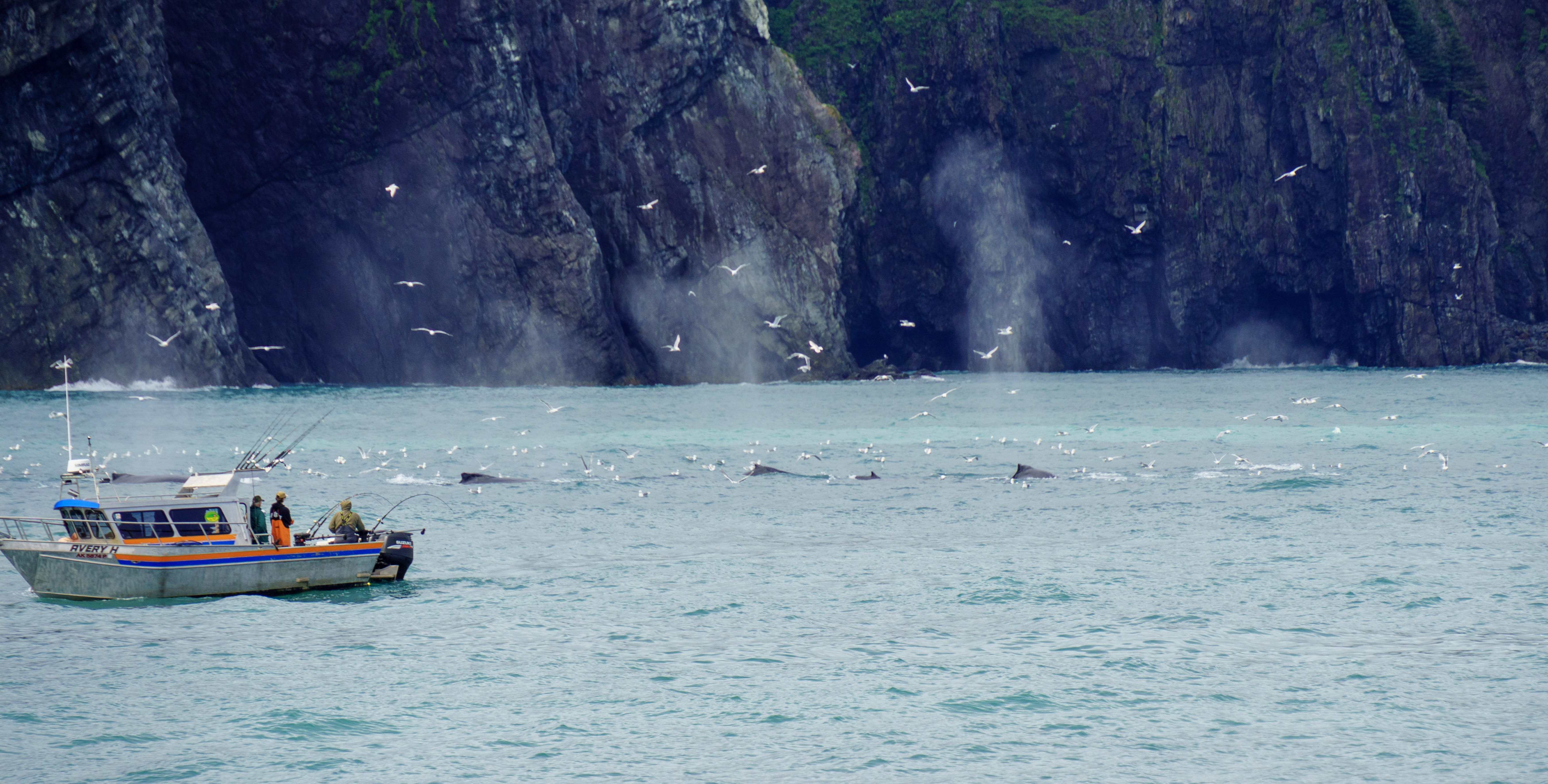
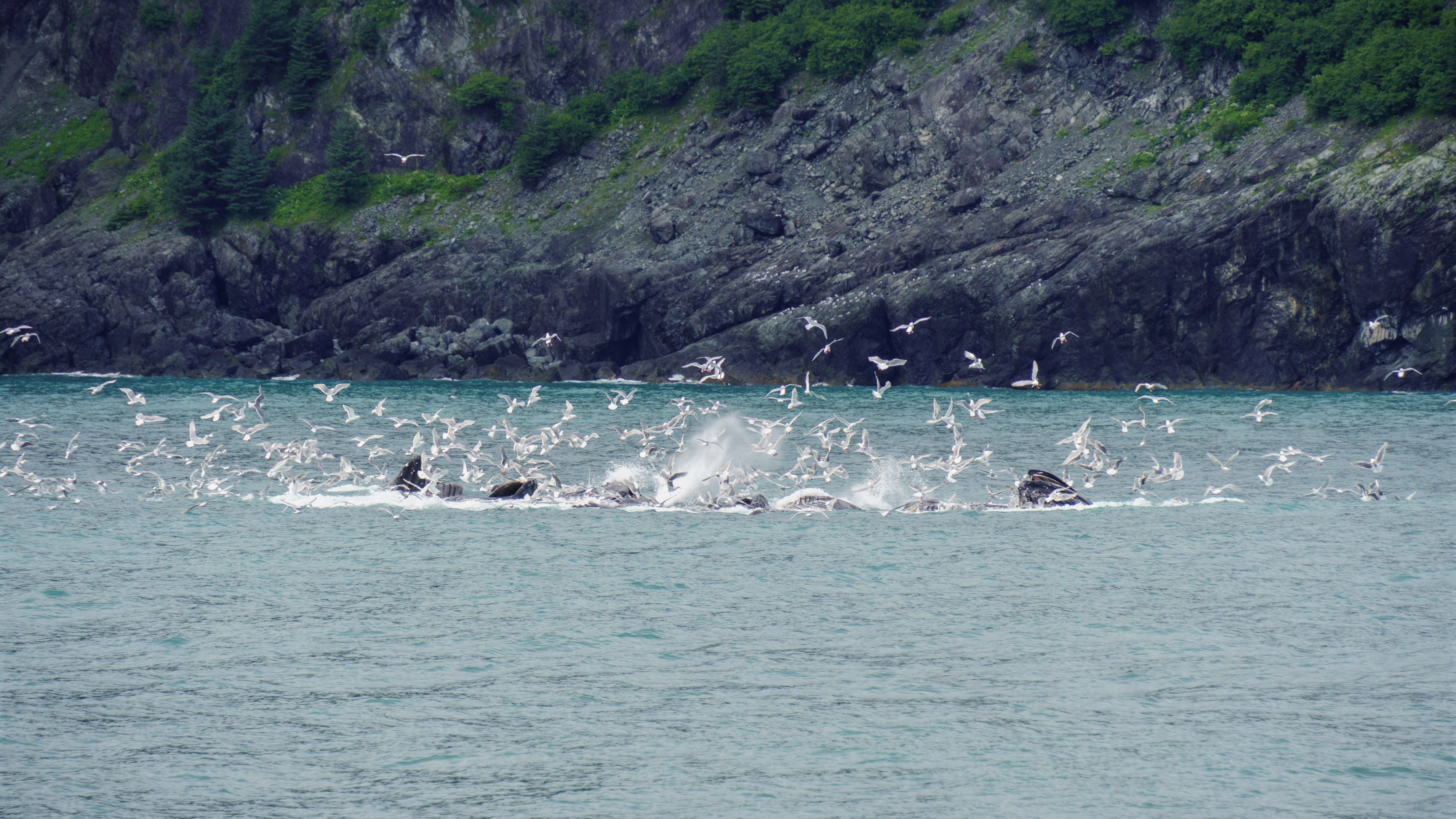
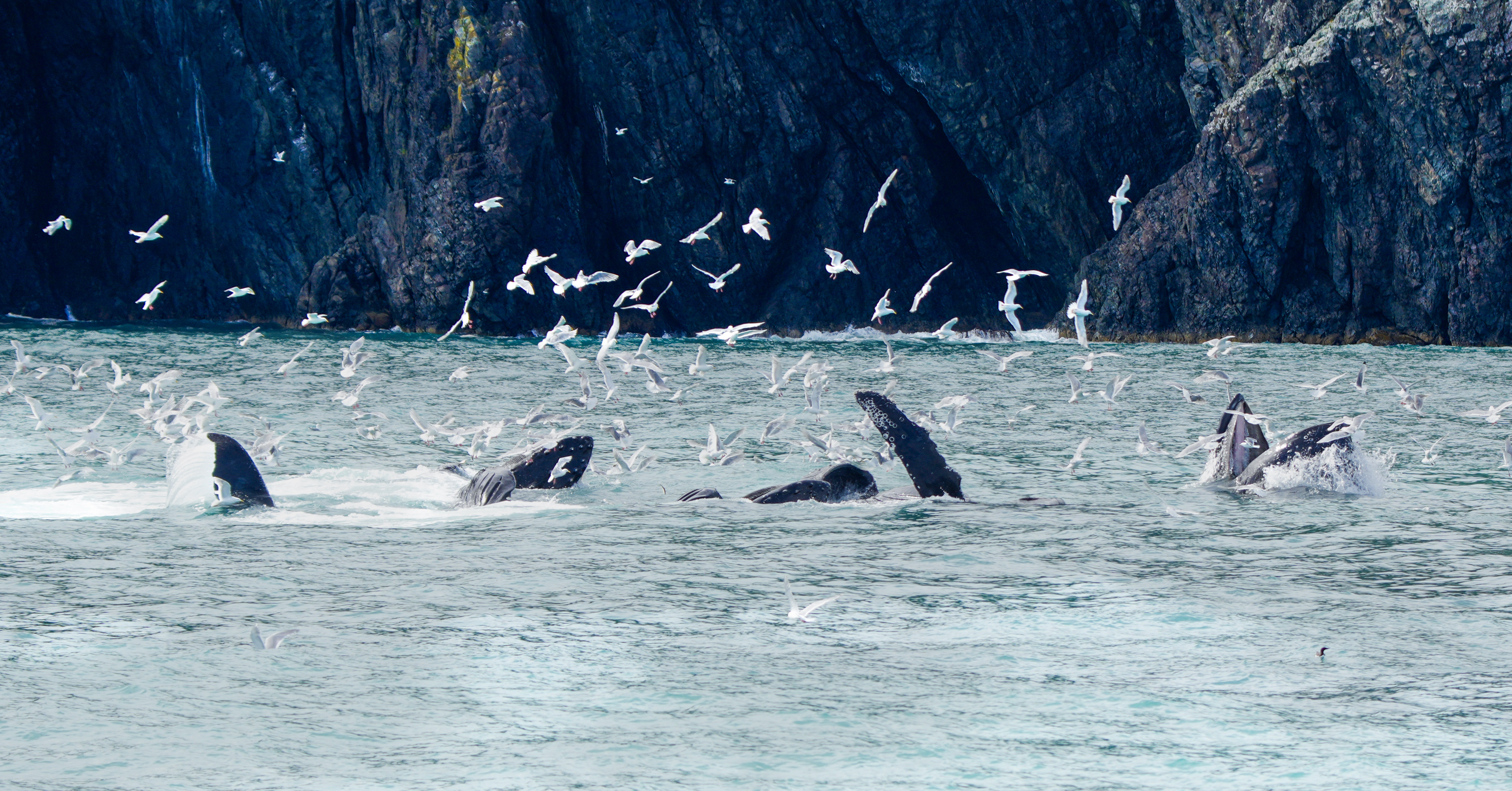
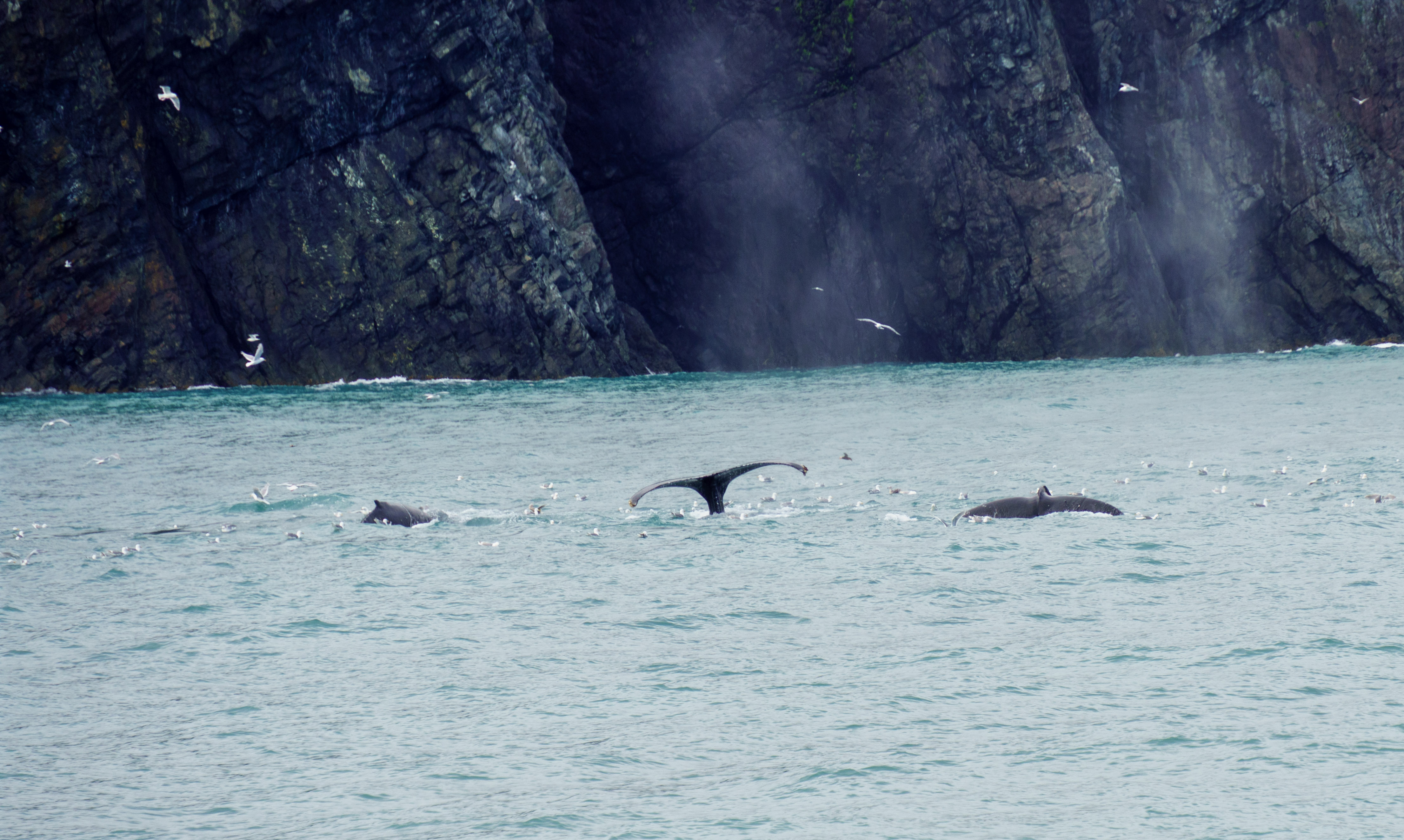
Humpback whales bubble-net feeding
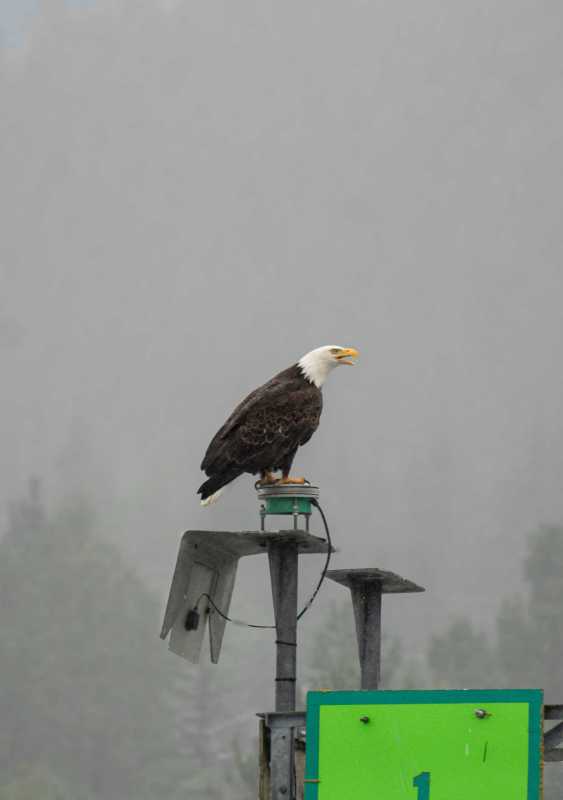
Bald eagle
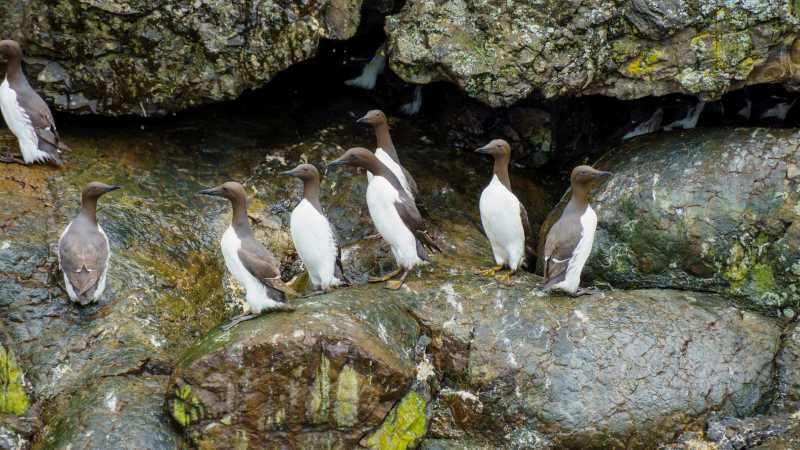
Murres
Mother sea otter floating with her pup
Black-legged kittiwakes
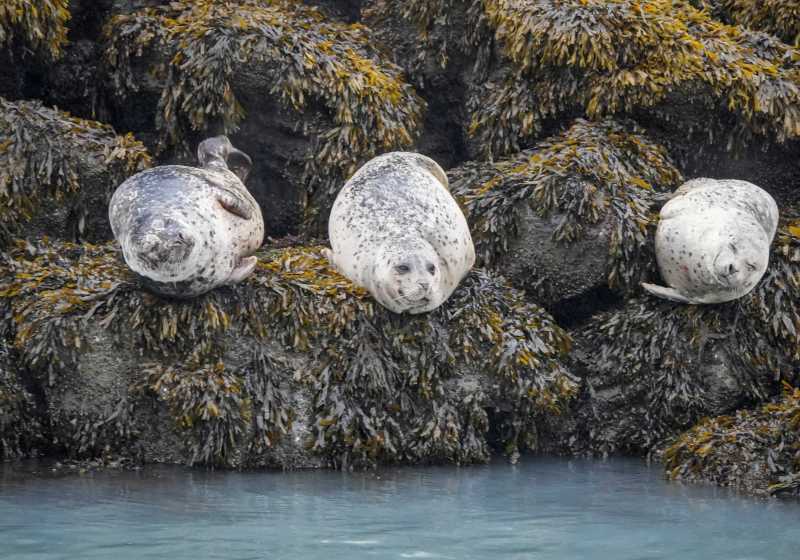
Harbor seals
Tufted Puffin
Mother sea otter floating with her pup
Harbor seal
Black bear
Harbor seals
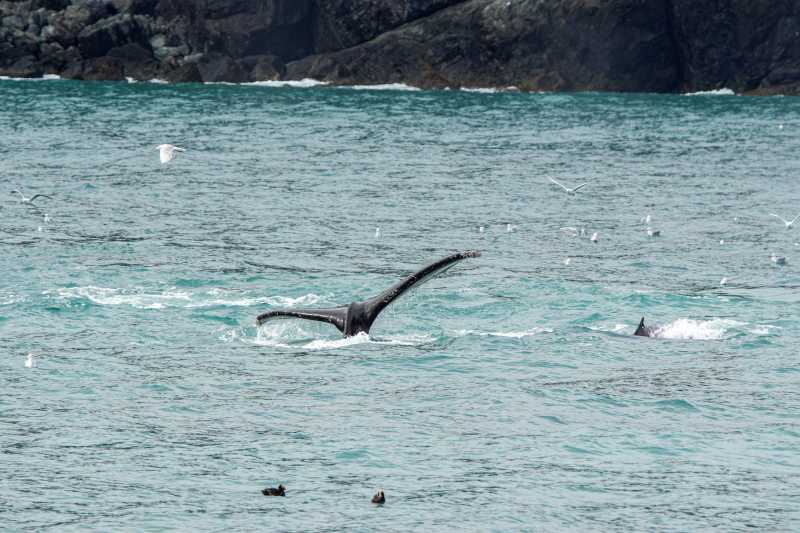
Humpback raises its fluke before disappearing beneath the water, while puffins float in the foreground
When the Water Came Alive
We had hoped to see whales, but what unfolded was far more memorable than a distant back or tail slipping beneath the surface.
Several humpbacks began bubble-net feeding, working beneath the water to concentrate schooling fish before rising together to feed. We watched the surface for clues about where they might emerge next, until suddenly the sea erupted and several enormous whales surged upward, mouths open, while gulls gathered above them.
After the first eruption, the anticipation became part of the experience. We watched the birds, scanned the surface, and waited, knowing the whales were working somewhere below us.
Then the captain lowered a hydrophone into the water. Suddenly, we could hear them.
The whales we had been watching from above now occupied an unseen world beneath the boat. Hearing their sounds through the speakers made the encounter feel completely different, as though we had briefly been allowed into a part of their world normally hidden from us.
We also saw fin whales during the cruise, but it was the combination of bubble-net feeding and hearing the humpbacks beneath us that stayed with me most.
There are wildlife encounters that are exciting because you see an animal. Then there are moments that make you feel briefly invited into its world. This was one of those moments.
Ice at the Edge of the Sea
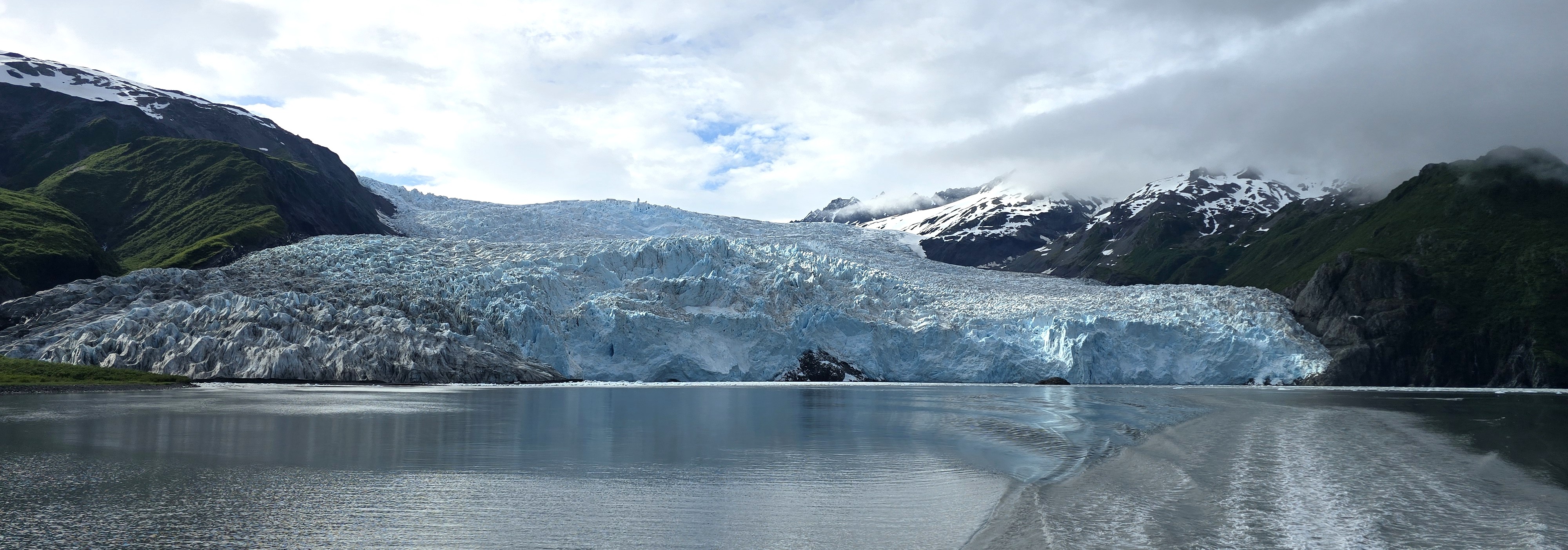
At the head of Aialik Bay, the glacier finally came fully into view—a massive wall of blue-white ice descending from the Harding Icefield toward the sea.
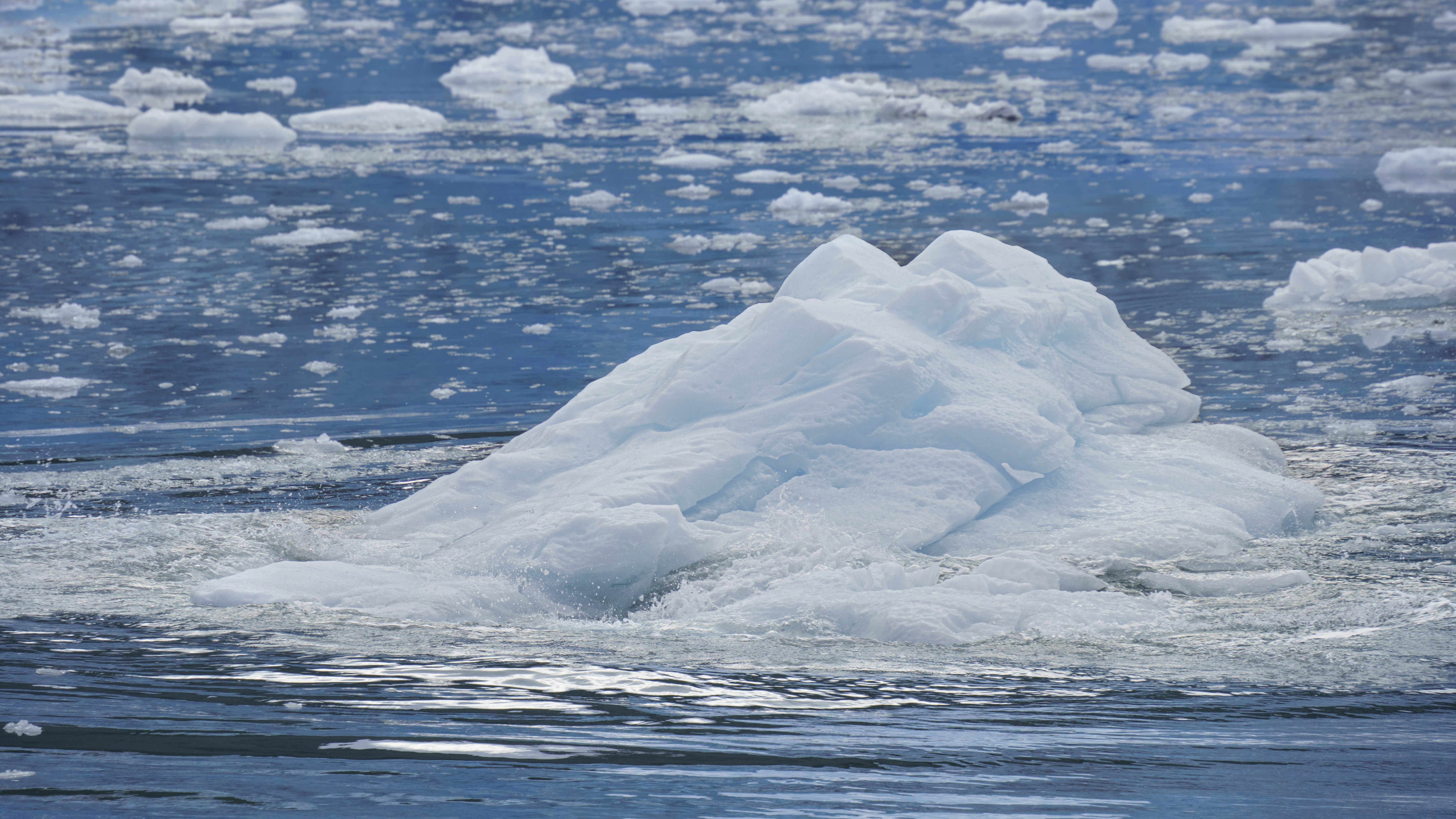
As we moved closer, crevasses and jagged ridges became more distinct, while floating pieces of glacial ice scattered across the water. Some were small and translucent; others were large enough for harbor seals to use as resting platforms. There was something peaceful about the scene. The glacier itself felt powerful and immense, but the seals seemed completely at ease in its shadow, using the floating ice as places to rest between dives.
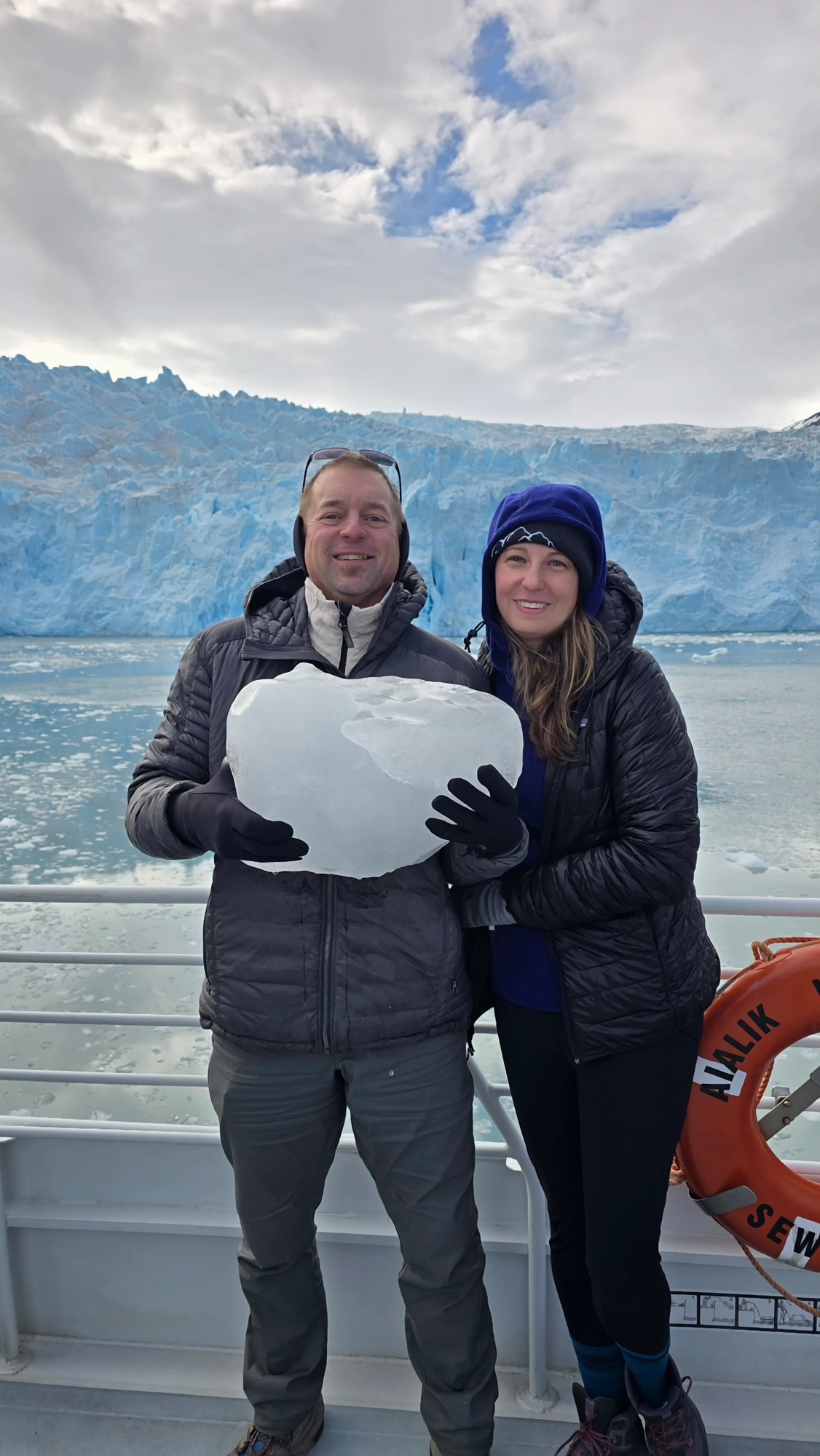
We spent time lingering near Aialik Glacier, watching the face of the ice and taking in the landscape. The blue tones became more vivid the closer we were, and the water around us reflected the glacier in shifting shades of gray, turquoise, and icy blue. At one point, the crew retrieved a large piece of floating glacial ice and brought it aboard. Bill got to hold it, and of course we had to get a photo.
After seeing glaciers from trails and distant viewpoints, there was something wonderfully tangible about standing before Aialik Glacier while holding a piece of ice that had broken away from it. For a moment, something enormous and distant became something we could actually touch.
Spire Cove
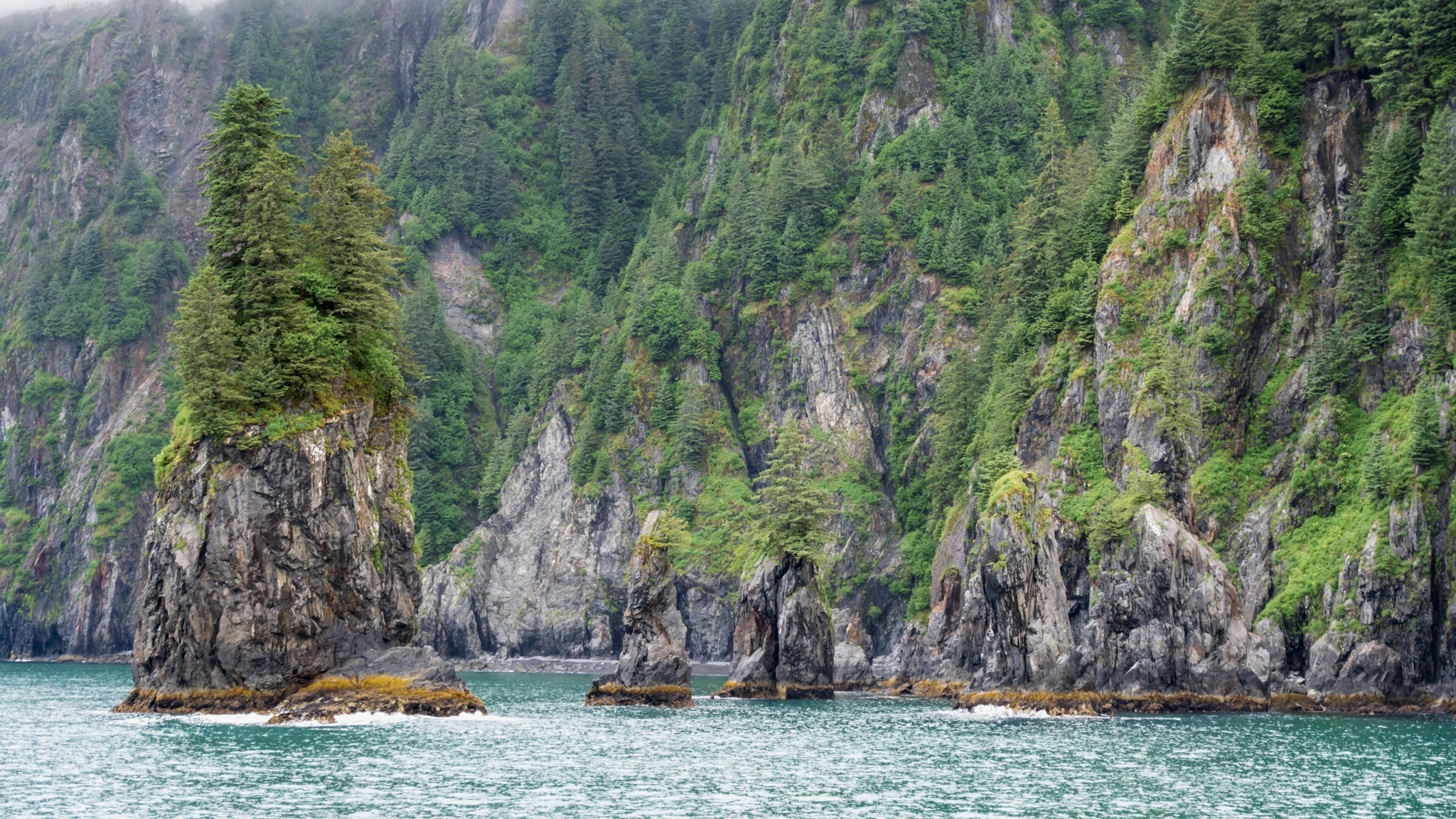
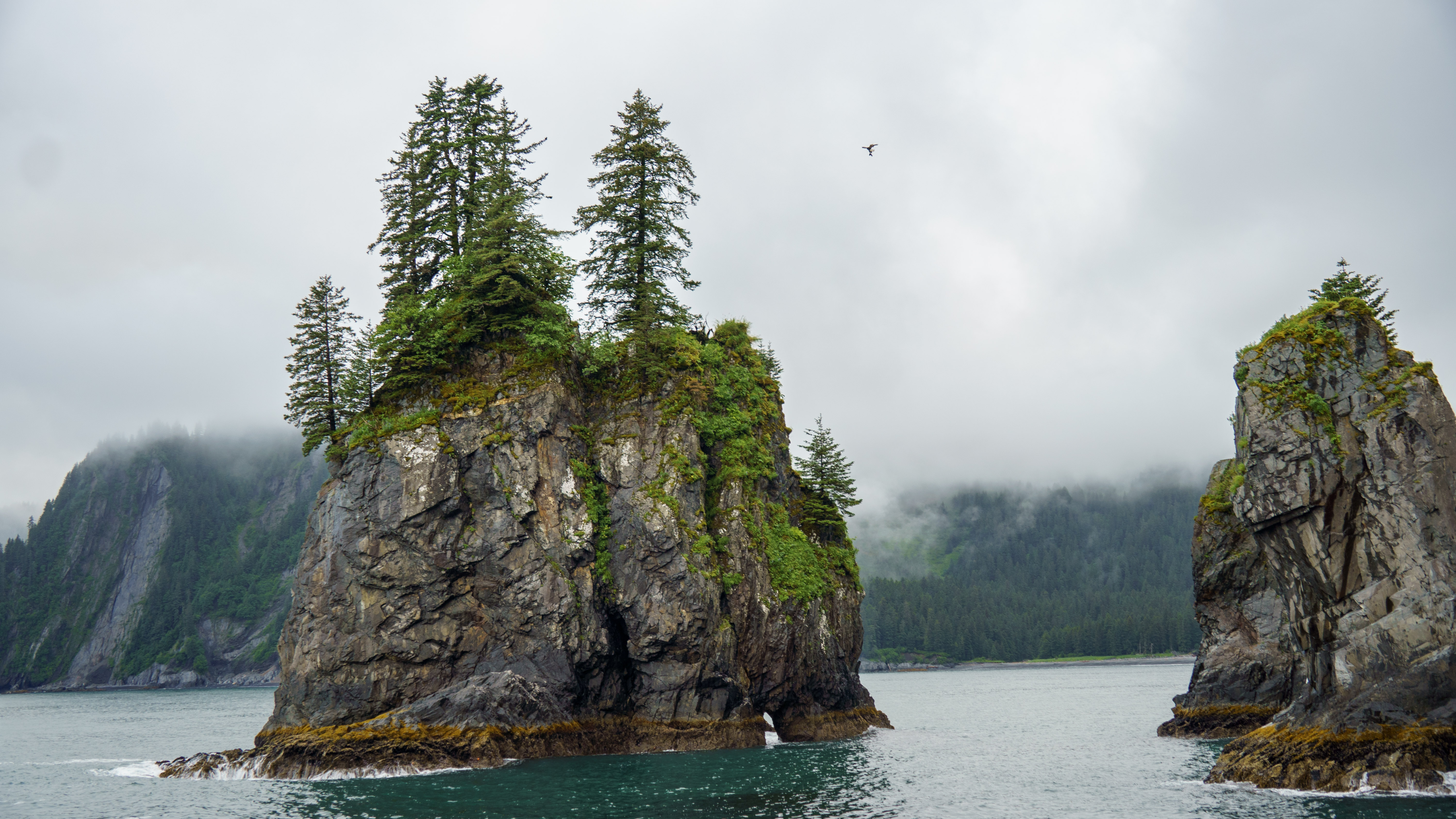
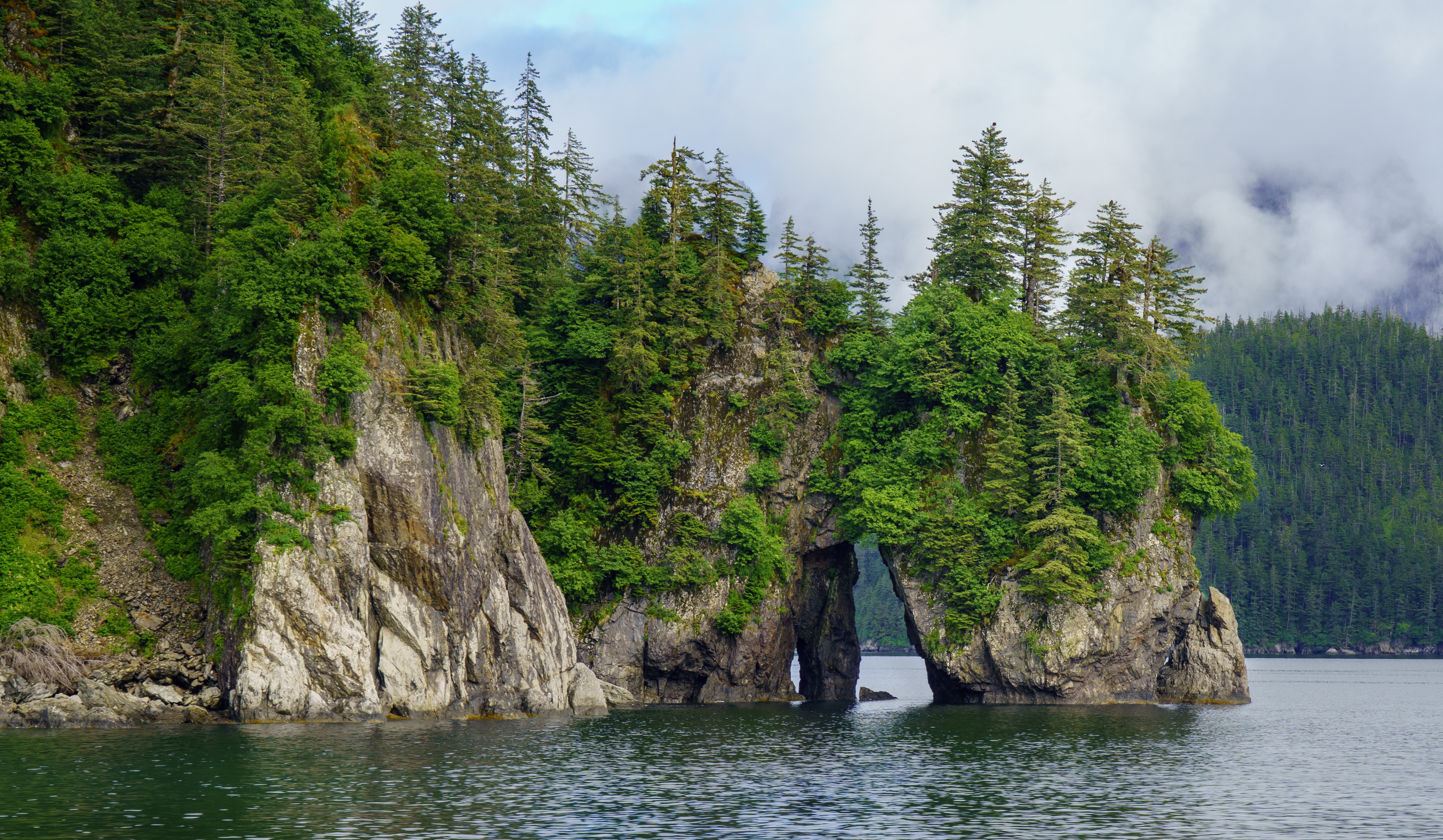
Later in the cruise, the coastline changed again as we reached Spire Cove near Bear Glacier Point. After the broad water and glacier-filled landscape of Aialik Bay, this area felt tighter and more dramatic. Dark rock spires rose directly from the sea, some standing alone like narrow towers while others formed jagged walls along the shore. Spruce trees somehow clung to the tops of several formations, and low clouds drifted through the surrounding cliffs, giving the cove an almost mysterious quality.
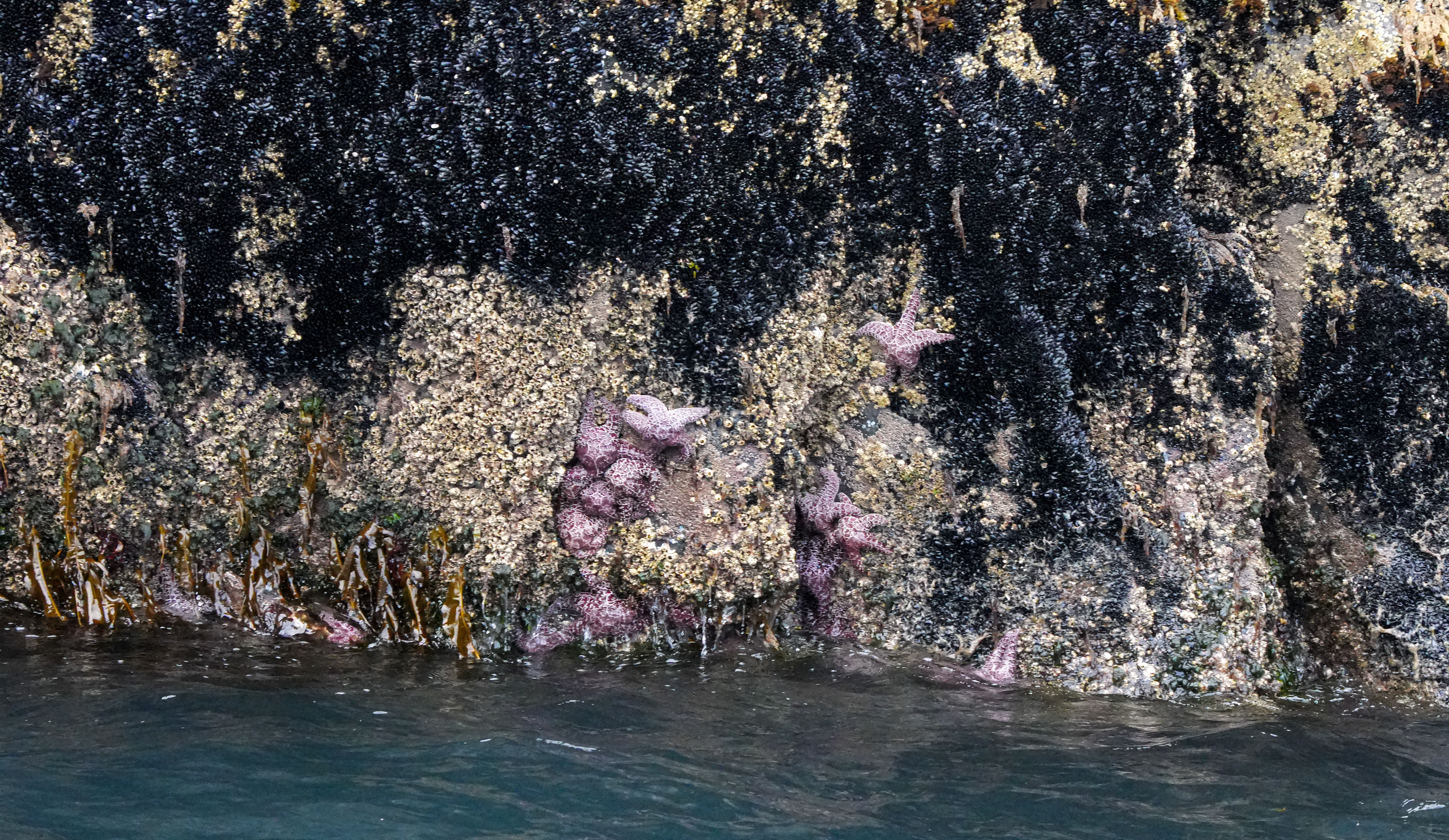
As the boat moved closer, the rugged rock revealed smaller details. Brilliant purple and orange ochre sea stars clung to the lower faces of the cliffs among mussels, seaweed, and other intertidal life—their color striking against the dark stone.
Spire Cove felt completely different from Aialik Bay. There, the landscape had been defined by broad water and ice; here, it was intimate and vertical, with narrow passages, sea stacks, and forested cliffs rising almost directly beside the boat.
Over more than a hundred miles on the water, Kenai Fjords had become much more than a trip to see a glacier; it was a journey through a coastline that seemed to change character every few miles.
From the Arctic to the Fjords
Only two mornings earlier, we had been standing in the Arctic Ocean at Prudhoe Bay. Now we were returning toward Seward through a version of Alaska that could hardly have felt more different.
On the North Slope, the landscape had been open and exposed beneath an enormous sky. Here, mountains dropped toward the sea, glaciers filled the heads of bays, and wildlife moved through the water around us.
As the boat headed back toward Seward, I thought again about the Denali flight that had not happened. I still would have loved to circle the mountain and land on a glacier. But if the weather had cooperated, we would never have been on this boat—watching humpbacks rise through the surface, hearing them through the hydrophone, seeing my first puffins, or standing before Aialik Glacier while Bill held a piece of glacial ice.
Travel rarely offers only one version of a good day. Sometimes the adventure you lose creates room for another one to find you.
By the time we returned to the marina, it was late. We had reserved a room nearby at the Marina Motel, allowing us to trade the rooftop tent for a real bed. After six hours on the water, that sounded pretty perfect.
Walking Toward a Glacier
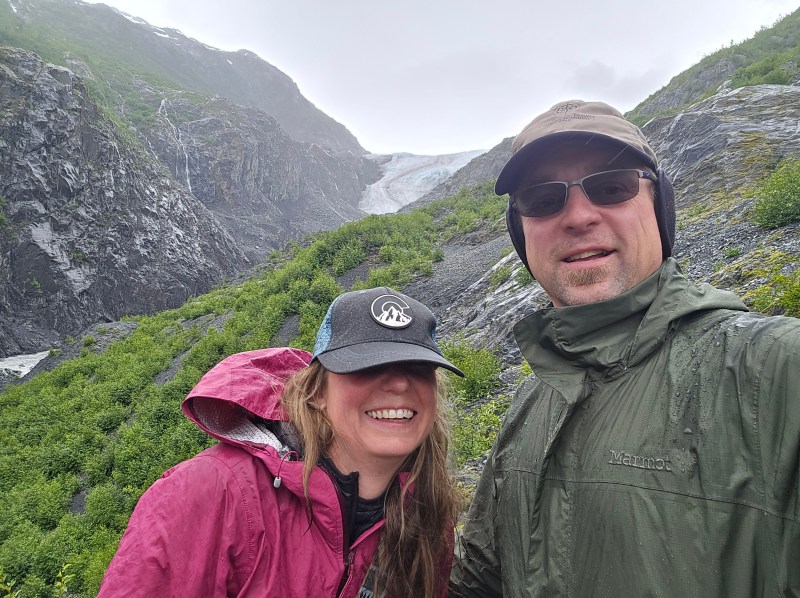
The next morning, July 18, we were not quite finished with Kenai Fjords National Park. Rain had settled in again the next morning, so we pulled out our rain jackets and headed toward Exit Glacier.
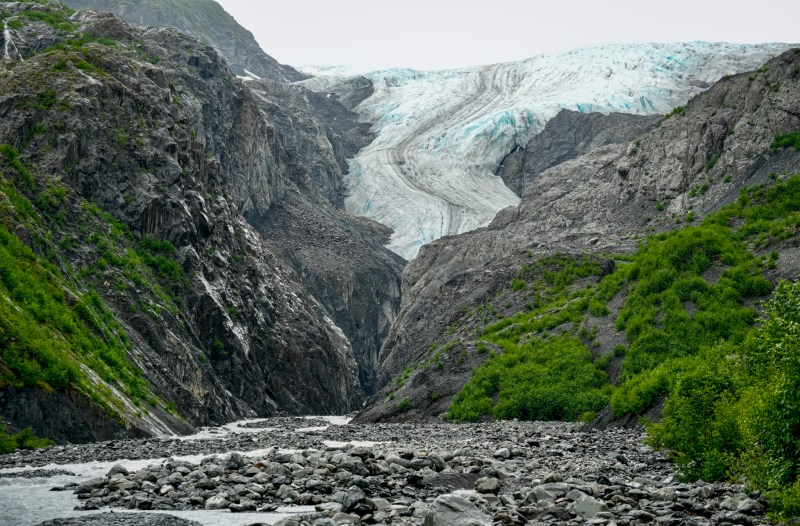
I had seen several glaciers before and had even walked on one the previous year along Canada’s Icefields Parkway, but Aialik had been my first tidewater glacier—ice flowing all the way to the sea. Exit Glacier offered another side of the same story. Both flow from the Harding Icefield, but Exit terminates on land rather than in ocean water. More than thirty glaciers flow outward from the Harding Icefield, each shaped by the terrain it travels through.
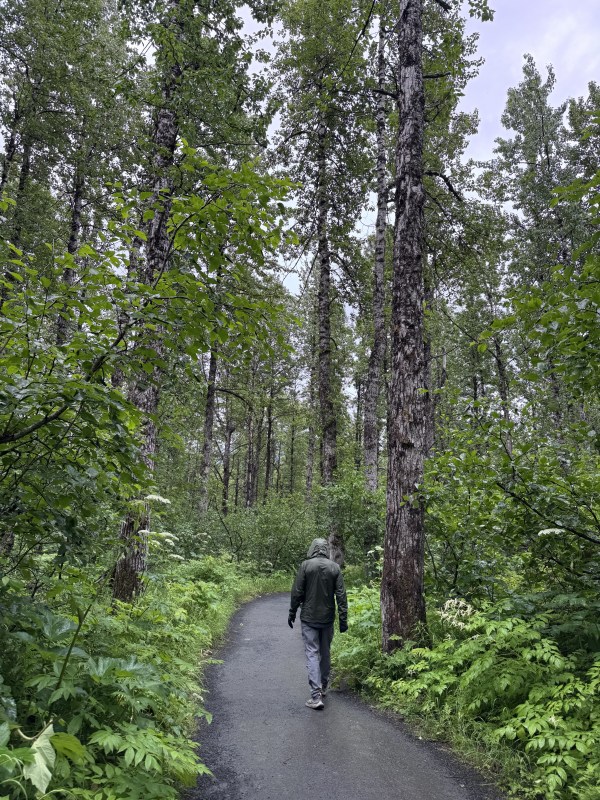
We followed the Glacier View Loop and continued toward the Exit Glacier Overlook through a landscape that seemed almost impossibly green beneath the gray sky. Thick vegetation gave way to views of the glacier curving between dark rock walls, while streams and narrow waterfalls spilled down the surrounding slopes.
The rain actually suited the setting.
Markers along the trail showed where Exit Glacier had once reached, turning the walk into a visible timeline of its retreat. Areas now covered with shrubs and trees had once been buried beneath ice, making it easier to understand the glacier not as something fixed, but as a force that had shaped—and continued to reshape—the valley.
The previous afternoon, we had watched a glacier meet the sea. That morning, we stood in a valley carved by another branch of the same icefield.
A Different Kind of Wildlife Encounter
Before leaving the coastal mountains, we made one more stop in Portage Valley at the Alaska Wildlife Conservation Center.
After so many wildlife encounters in the wild, I wondered whether seeing animals in a managed setting would feel less meaningful. Instead, it gave us something the road rarely did: time. Portions of the center can be driven, but walking paths also lead closer to many of the habitats, allowing us to linger rather than catching a fleeting glimpse through a windshield.
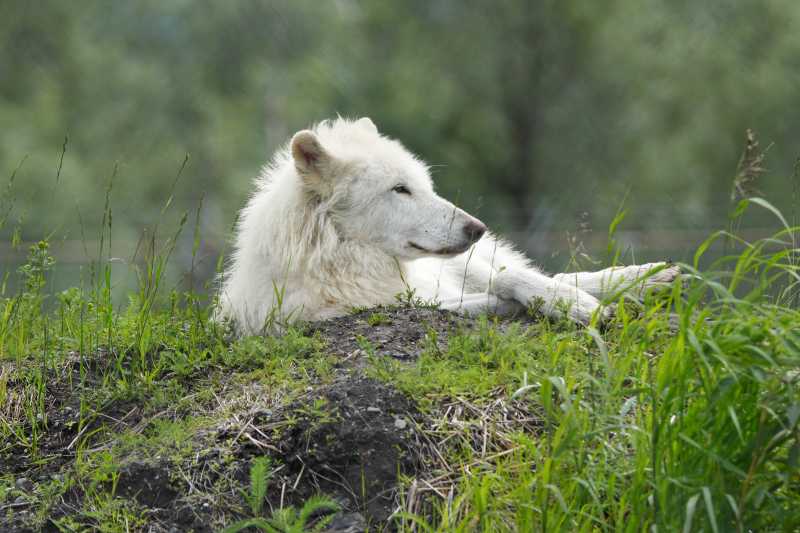
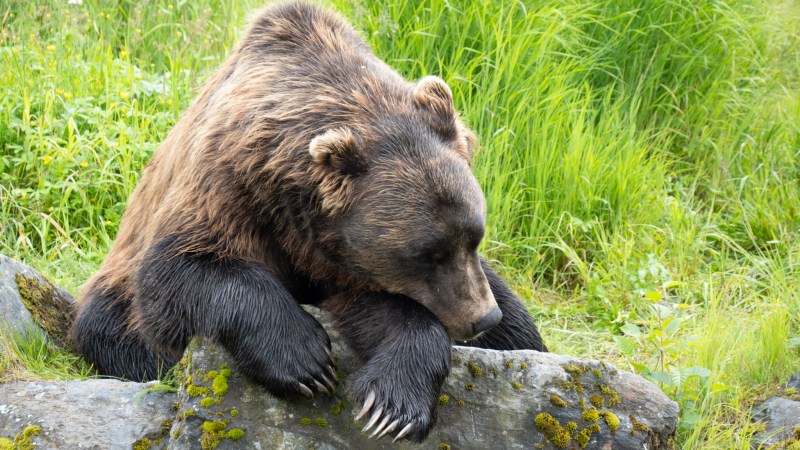
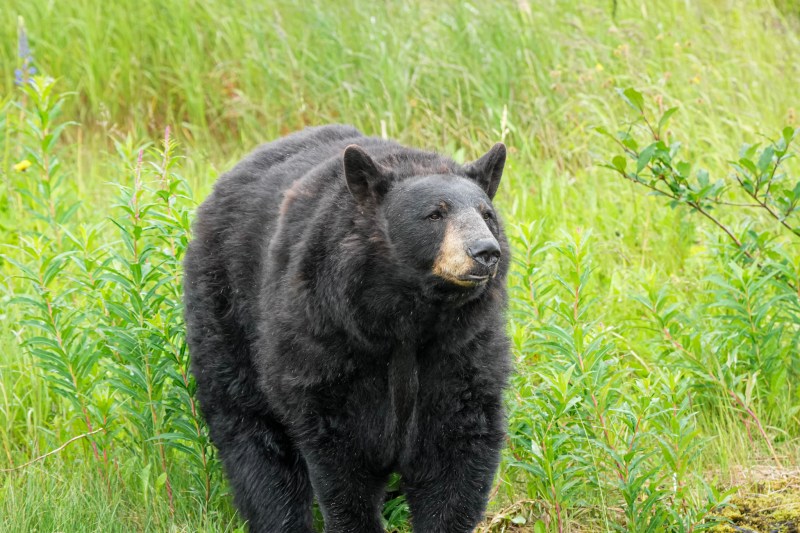
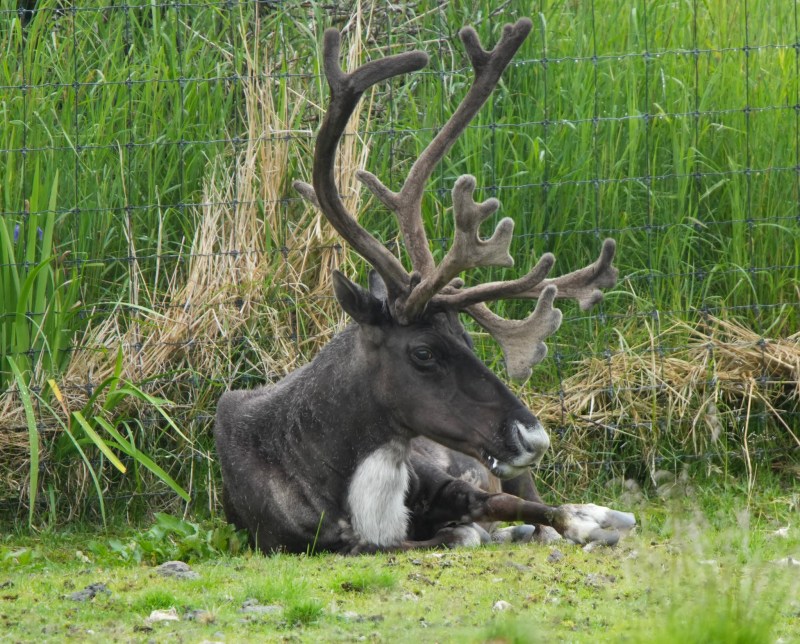
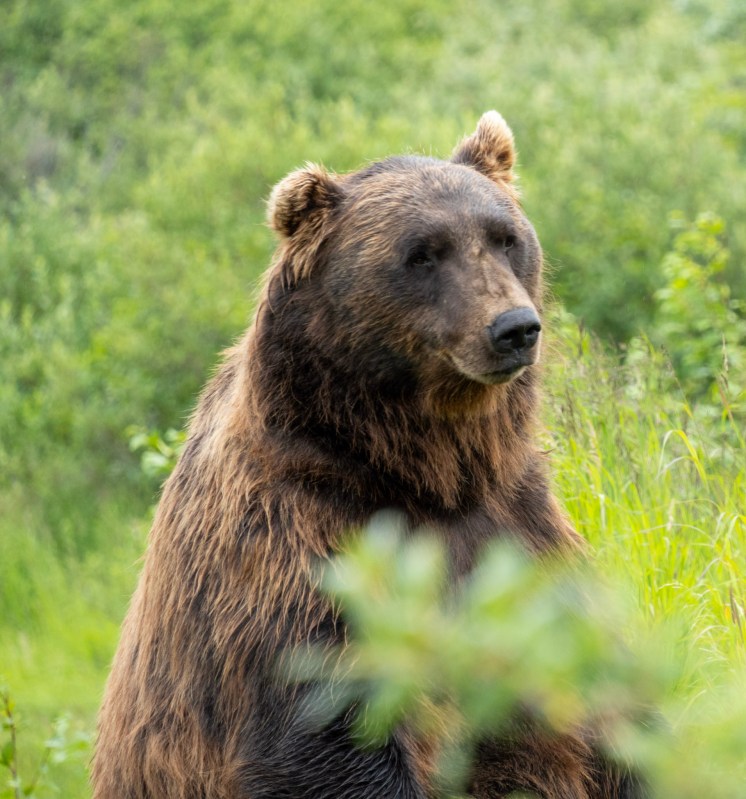
Some of the animals seemed equally content to linger. One grizzly had settled against a large rock in what looked like an exceptionally comfortable lounging position, while a black bear entertained itself with a broken tree branch, wrestling with it like an oversized stick. A bull moose rested in tall grass with broad velvet-covered antlers, a white wolf stretched quietly nearby, and a small marten came close enough for us to get a good look at a species we would have been lucky to spot at all in the wild.
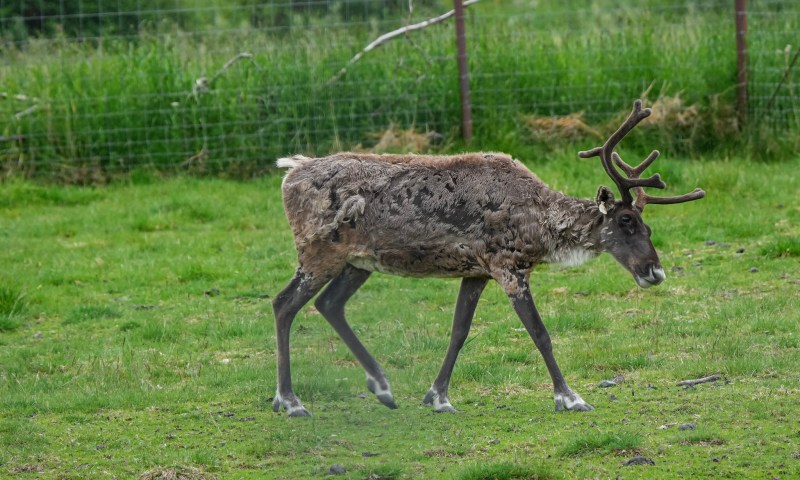
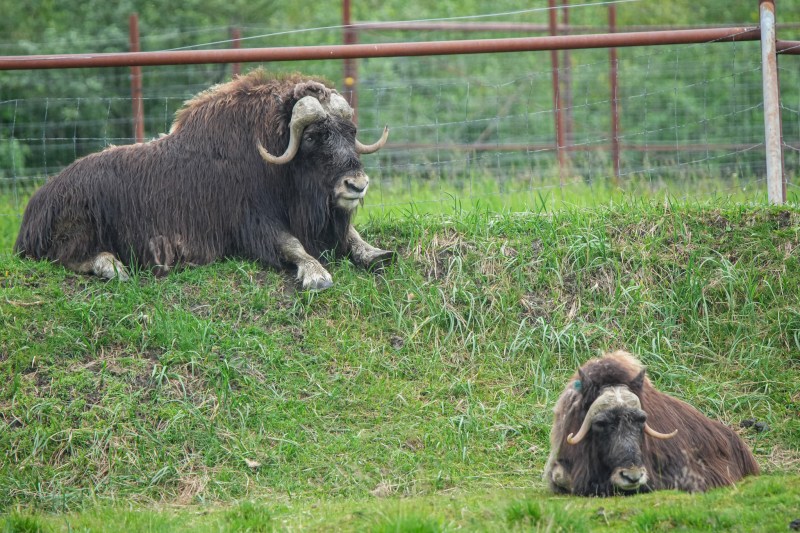
The center provides long-term care for injured, orphaned, and non-releasable Alaska wildlife while supporting conservation, education, and research. We saw brown and black bears, moose, wolves, musk oxen, caribou, reindeer, elk, porcupines, foxes, wood bison, and several other native species.
The reindeer were especially interesting because we had just seen wild caribou on the North Slope. Reindeer and caribou are actually the same species, but they can look noticeably different. The caribou near Prudhoe Bay had appeared leaner and longer-legged, while the reindeer here looked stockier and heavier-coated.
The center also participates in broader conservation work, including Alaska’s wood bison restoration efforts, which made the visit feel like much more than simply seeing animals in enclosures. It was part sanctuary, part classroom, and part chance to notice details and behaviors that our faster wildlife encounters rarely allowed.
By the time we left, we had seen some familiar Alaska animals from a completely different perspective—and a few that added something new to the trip.
Wolf
Brown Bear
Caribou
Black Bear
Muskox
Reindeer
Brown Bear
The Journey Between the Destinations
After leaving the Alaska Wildlife Conservation Center, we headed back through the Anchorage area and turned east onto the Glenn Highway toward Gakona.
What could have been just a long transfer day quickly became another scenic drive. The road followed the Matanuska Valley between the Chugach and Talkeetna Mountains, with river valleys, steep peaks, and changing views appearing around nearly every bend. At one point, a bull moose stood beside the highway, giving us yet another reason to slow down.
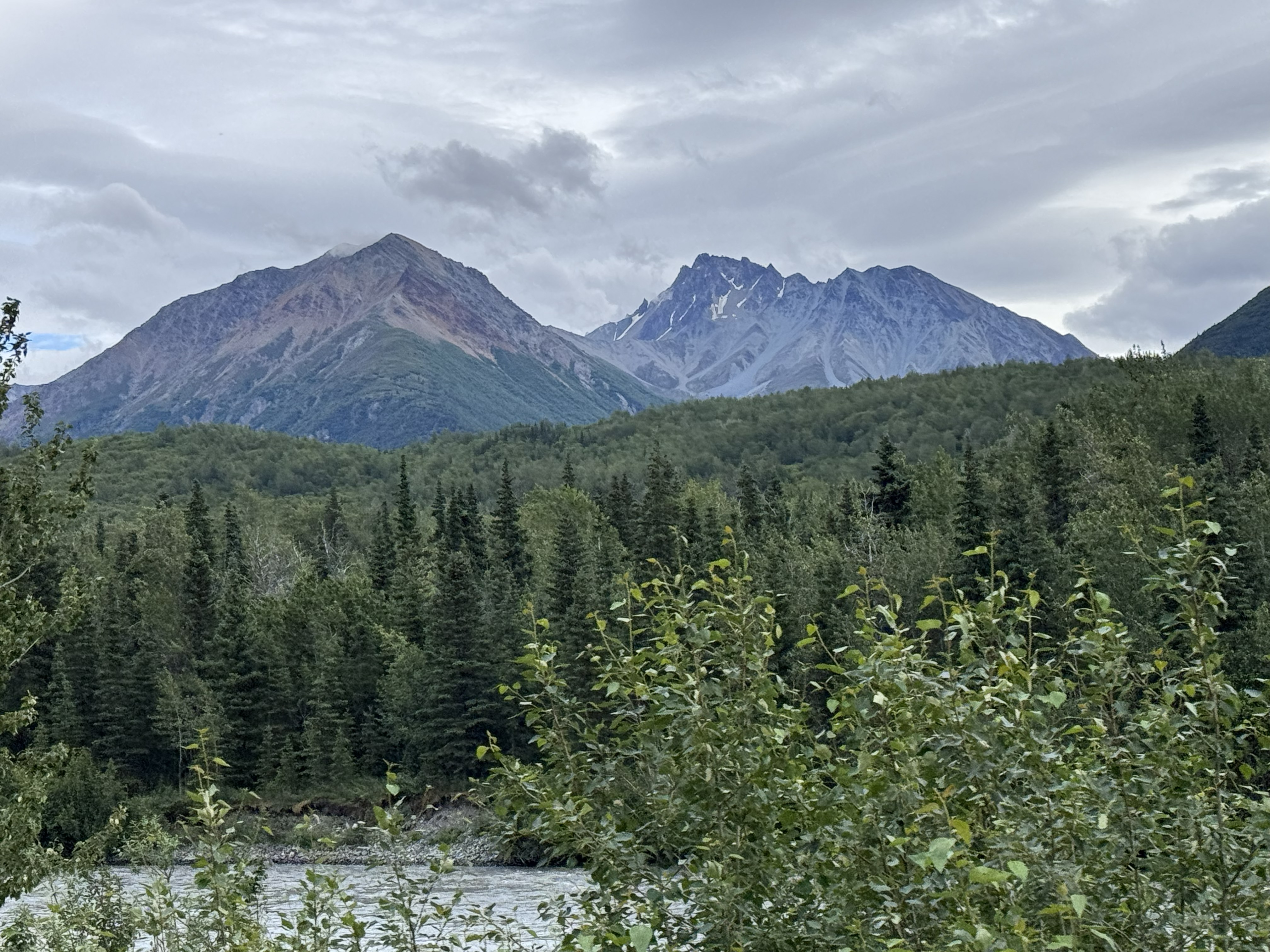
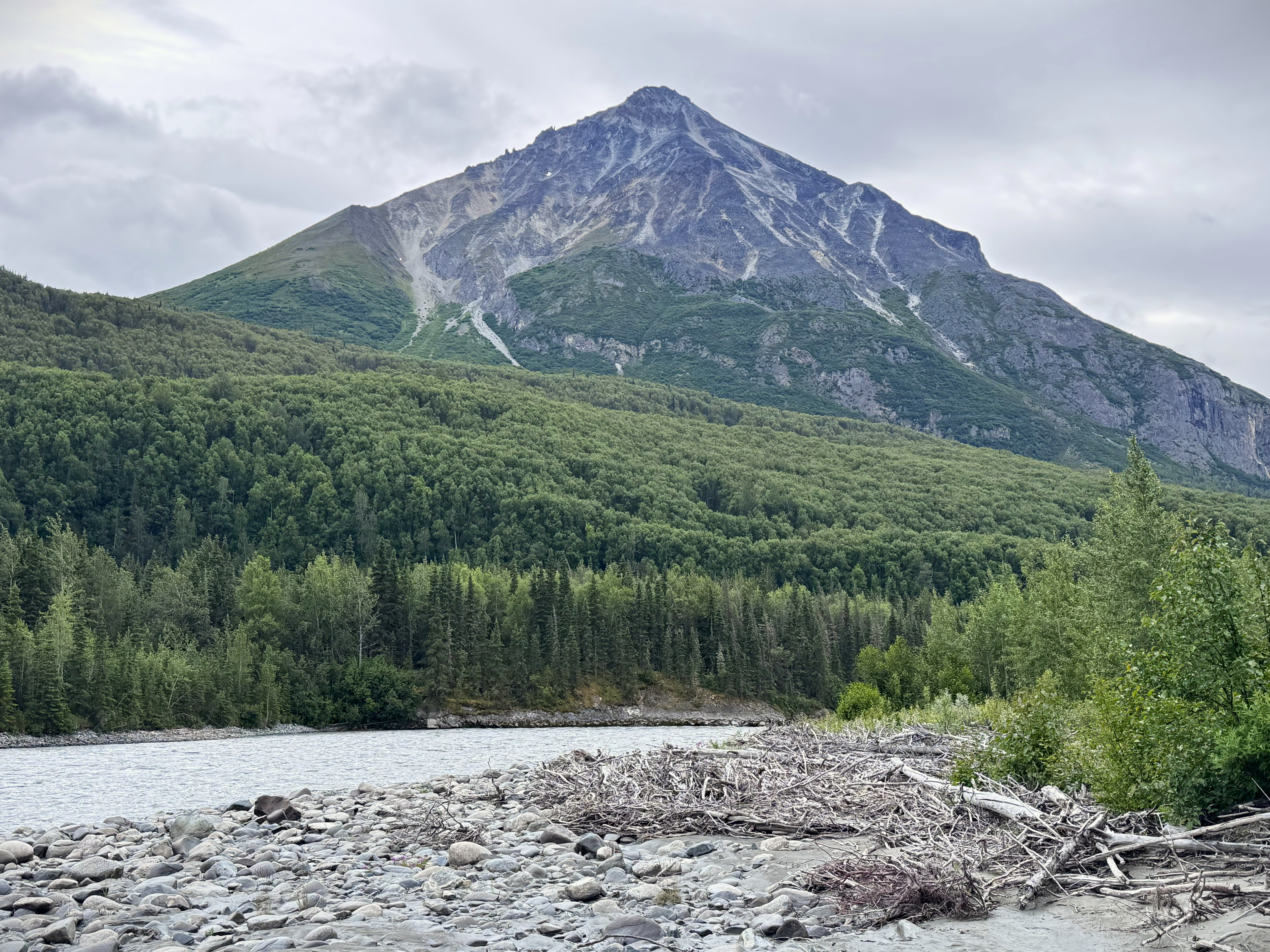
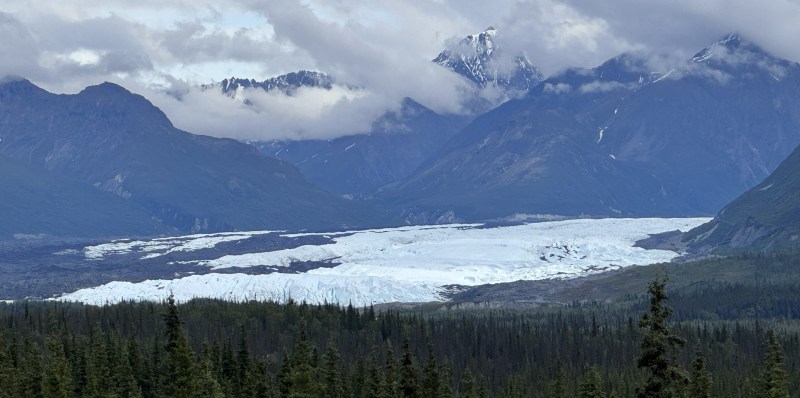
Before long, King Mountain rose beside the road, and farther east the Matanuska Glacier came into view. What had started as simply getting from one place to the next was becoming another reminder that in Alaska, the miles between destinations often carried their own surprises.
A River of Ice Beside the Highway
By this point in the expedition, we had seen glaciers from boats, trails, and distant viewpoints, but Matanuska Glacier offered something different: it appeared right beside the road.
Stretching more than twenty miles from the Chugach Mountains into the Matanuska Valley, the glacier is one of Alaska’s most accessible major glaciers. From viewpoints along the Glenn Highway, its blue-white ice spills between the mountains like a frozen river.
We pulled over more than once to take it in, each stop offering a slightly different perspective across the valley. By then, we had settled into the rhythm of the afternoon: drive for a while, find something worth stopping for, and let the road decide how long the journey would take.
Beside Grizzly Lake
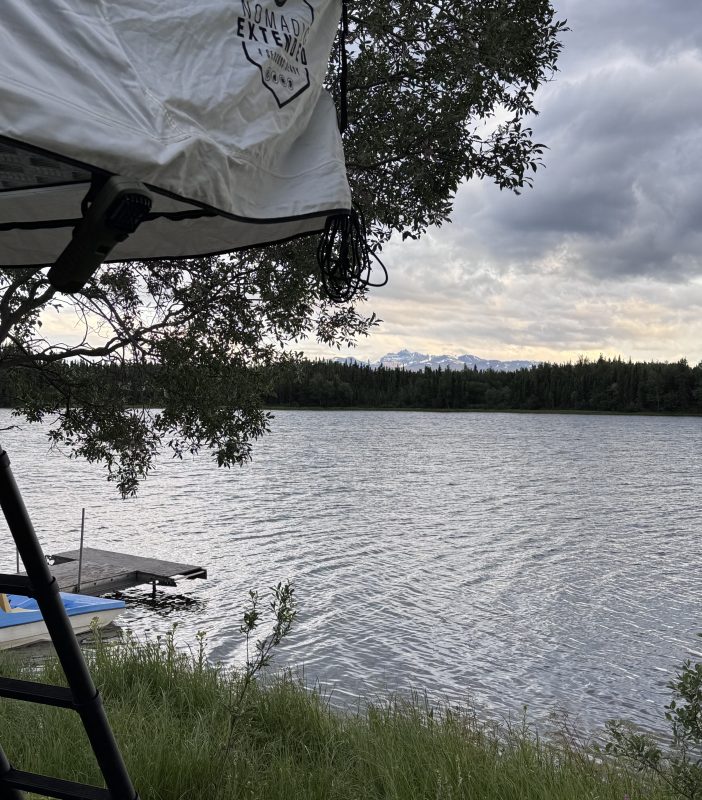
By the time we reached Grizzly Lake Campground near Gakona, we were ready to stop moving.
We were fortunate to get a campsite right along the water, with the lake stretching out in front of us and distant mountains rising beyond the trees. After another long day of hiking, wildlife, and roadside stops, the view from camp felt like exactly what we needed.
We set up the rooftop tent, settled in beside the lake, and spent a little time admiring some of the other adventure rigs around the campground before turning our attention back to the water.
As evening settled in, the lake grew quiet beneath a sky still heavy with clouds. It was a peaceful end to three days that had taken us from Denali to Turnagain Arm, Seward, Kenai Fjords, and finally back inland toward Gakona.
The route had changed completely from what we originally planned, but by then that no longer felt unusual. It simply felt like Alaska.
From My Field Journal
July 18, 2026 · Evening · Grizzly Lake Campground
These last three days felt like a completely different Alaska. We left Fairbanks still hoping for the Denali flight, then turned south when the weather changed our plans again.
That pivot brought us to Seward, Kenai Fjords, puffins, whales, Aialik Glacier, and one of my favorite wildlife moments—hearing humpbacks through the hydrophone.
Tonight we are camped beside Grizzly Lake with the mountains across the water. None of this was on the original itinerary, yet somehow that feels fitting now. The trip keeps reminding me that some of the best moments are the ones we never planned for.
EXPEDITION SNAPSHOT
THE ROUTE Fairbanks → Talkeetna → Anchorage → Chugach State Park → Seward → Gakona
ROADS TRAVELED George Parks Highway, Seward Highway, and Glenn Highway
NATIONAL PARK Kenai Fjords National Park
COASTAL EXPERIENCE More than 100 miles by boat through Resurrection Bay, Aialik Bay, and the Kenai Fjords coastline
GLACIERS Aialik Glacier, Bear Glacier, Exit Glacier, and Matanuska Glacier
WILDLIFEHIGHLIGHTS Horned and tufted puffins, humpback and fin whales, Dall’s porpoises, Steller sea lions, harbor seals, sea otter with pup, black and brown bear, bald and golden eagles, moose, reindeer, caribou, musk oxen, wolves, and marten
SCENIC STOPS Turnagain Arm, Moose Pass, Spire Cove, King Mountain, and Matanuska Glacier
STAYED Bird Creek Campground · Marina Motel · Grizzly Lake Campground
MEMORABLE MOMENTS Seeing Denali fully from the highway, hearing humpback whales through the hydrophone, watching bubble-net feeding, seeing my first puffins, Bill holding glacial ice, and Exit Glacier in the rain
Next Chapter
The road would carry us deeper into Alaska one more time, this time into Wrangell–St. Elias National Park, where a remote road, an old mine trail, and the vast Wrangell Mountains offered a final taste of Alaska’s wild interior.
Then came another milestone: crossing into the Yukon for my very first time. By evening, we would be camped beside the brilliant blue waters of Kluane Lake, with Alaska behind us and an entirely new chapter of the journey beginning.
Next: Wrangell–St. Elias, the road into the Yukon, and a night beside Kluane Lake.
Oh my gosh, the puffins, the otters, the seals, all the animals. The moose… real and stuffed. I have that exact giant stuffed moose, by the way, I bought him at Costco about 15 years ago! This seems like such an amazing trip. Alaska is a bucket list destination for me, and seeing your roadtrip makes me want to do something similar to experience the vastness of its landscape.






Leave a Reply